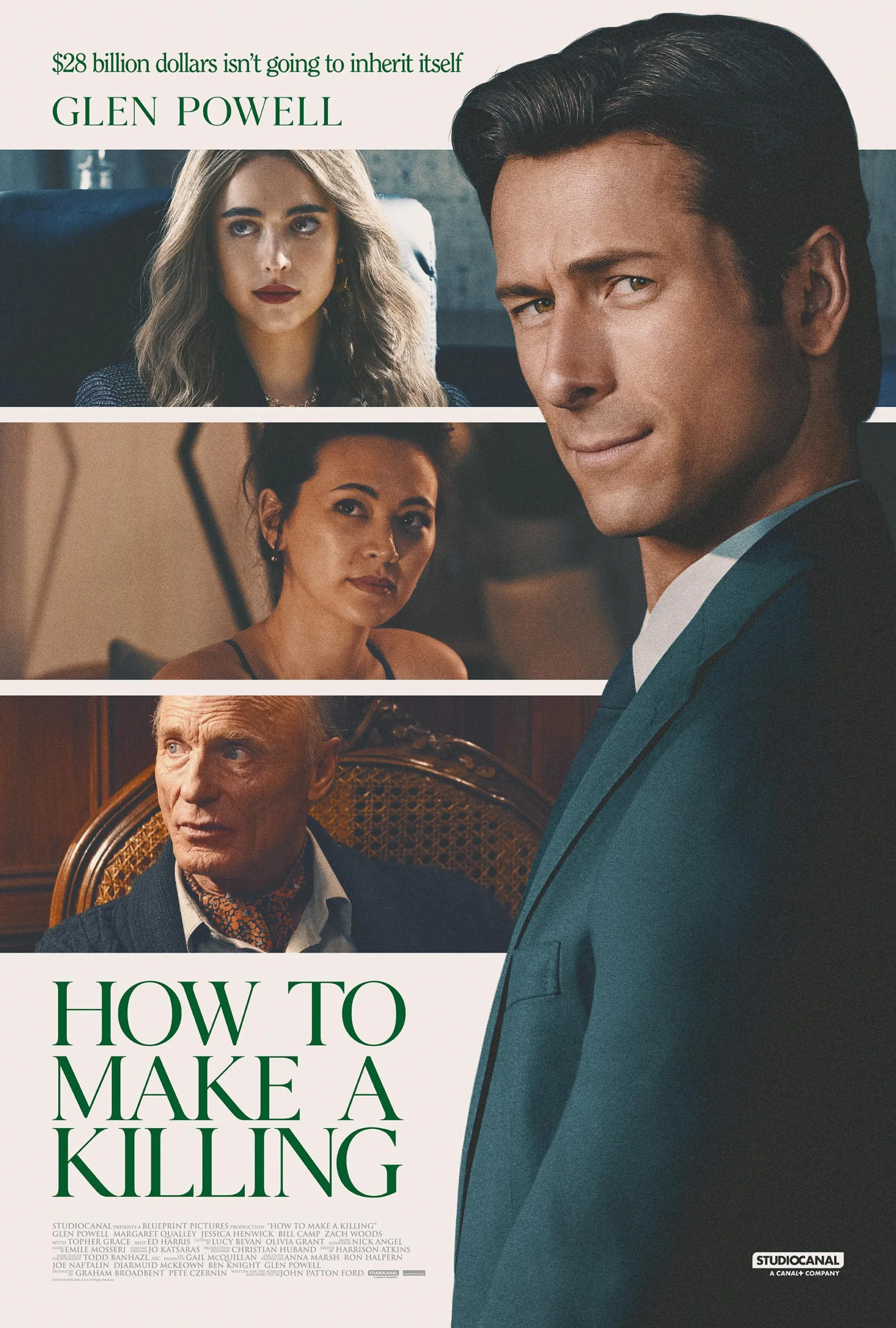
In a world where we’re bombarded with unnecessary and uninspired remakes of films such as “Road House,” “White Men Can’t Jump” and “War of the Worlds,” I give mad respect to “How to Make a Killing” for its deep-cut source material. John Patton Ford’s black comedy thriller reaches all the way back to the 1949 British gem and film school staple “Kind Hearts and Coronets”—which was loosely based on a 1907 novel—for inspiration, changing the setting from Edwardian-era England to modern-day New York. All right, color me intrigued.
Additional reasons for my pre-screening optimism: I was a huge fan of writer/director Ford’s directorial debut “Emily the Criminal” (2022), an edgy and crackling good working-class neo-thriller featuring a peak Aubrey Plaza performance. Plus, there’s a killer (sorry) cast for Patton’s sophomore effort, with the admirably risk-taking Glen Powell, who has genuine movie star power, in the lead. Add to that an ensemble led by the ubiquitous and always interesting Margaret Qualley and the reliably funny Topher Grace, with Hall of Fame character actors Ed Harris and Bill Camp along for the ride as well. The ingredients are all there!
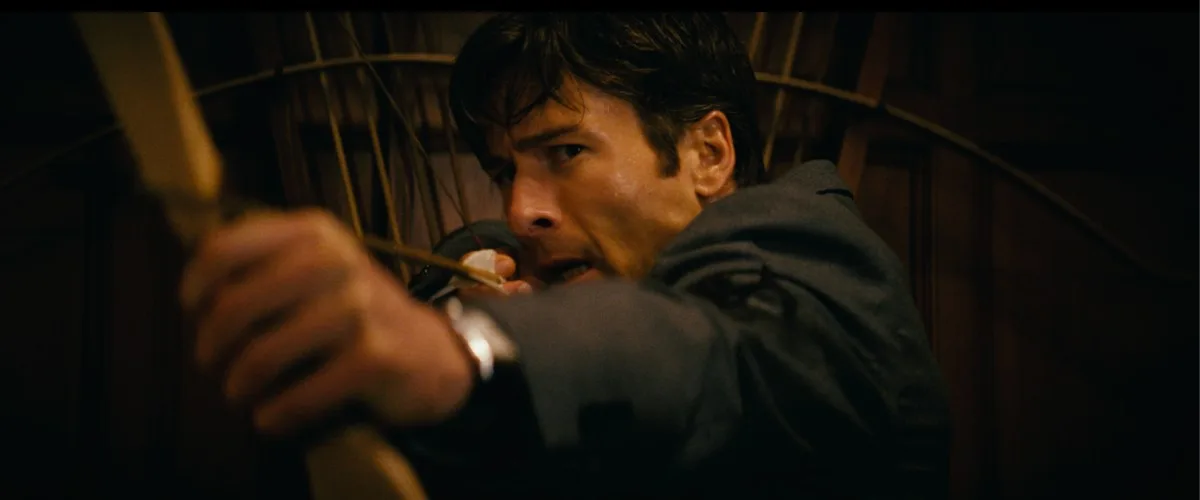
Alas, the recipe falls flat, and we’re left with a curiously uninvolving, half-baked dish that develops its own flavor. Even as the body count piles up and a few semi-clever twists and turns are sprinkled in, “How to Make a Killing” has little of the banshee commitment and social commentary of films such as “The Menu” and “Blink Twice,” only a whisper of the dark cleverness and shockingly funny brutality of the “Knives Out” films, and nothing approaching the unforgiving and gruesome brutality “Caught Stealing”. It’s one of the frothiest and most inconsequential R-rated murder/comedies in recent memory. And whereas Powell found just the right notes to hit as a fake triggerman in Richard Linklater’s superb “Hit Man,” he gives a surprisingly superficial performance here (the script doesn’t help), never allowing much insight into what makes his character tick, or why his behavior suddenly changes.
“How to Make a Killing” opens with Powell’s Becket Redfellow (cringe name alert) in prison, four hours away from being put to death and giving his final confession to a priest (Sean C. Michael)—and that’s the framing device for Becket to serve as the Somewhat Reliable Narrator. We learn Becket is a member of an obscenely wealthy family, but after his mother (Nell Williams, in flashback scenes) got pregnant with him when she was a teenager, her cold and cruel father, Whitelaw Redfellow (Ed Harris) banished her, leaving Becket to grow up as the son of a working-class New Jersey single mom. (Becket’s father exits the picture in the seconds after his birth). Even after Becket’s mother dies, his billionaire grandfather refuses to even acknowledge the lad’s existence.
Cut to present-day New York, which often doesn’t look much like New York and there’s a reason for that, because “How to Make a Killing” was filmed in Cape Town, South Africa. Becket seems to be an amiable if underachieving fellow, but after he’s demoted from his going-nowhere job at a men’s suit store, and he’s embarrassed by his lot in life when he encounters his former childhood crush, the spectacularly self-assured and gorgeous Julia Steinway (Margaret Qualley), he decides he’s going to claim what’s his. As luck (and plot device) would have it, Becket is eighth in line to inherit the Redfellow family fortune. All he has to do is eliminate a series of cousins and other relatives, and he’ll become obscenely, generationally wealthy. That’ll show ‘em!
To this point, we’ve seen little to indicate Becket is a stone cold sociopath—yet he becomes kind of a human plush toy version of Patrick Bateman, bumping off one relative after another with little or no pangs of conscience. The killings are usually carried out in absurdist fashion, but the jokes rarely land—with most of the victims getting little more than glorified cameos before they meet an untimely end. Raff Law is Becket’s Wall Street cartoonishly over-the-top party bro of a cousin, who becomes Becket’s first victim. Zach Woods scores a few laughs as Noah Redfellow, a pretentious and untalented artist who autographs a photo, “The White Basquiat.” Topher Grace is a perma-tanned evangelist who complains he was unfairly maligned for his friendship with El Chapo. Sure, they’re all terrible people—but they’re not memorably awful or dangerous, and we get no bloodlust vicarious thrill from their fates.
Bill Camp adds some humanity and depth as Becket’s uncle, who turns out to be a good guy, which complicates matters, and Jessica Henwick gives a grounded and endearing performance as Ruth, a warmhearted and smart schoolteacher who was mismatched with the obnoxious Noah but strikes a connection with Becket that seems real. Every once in a while, Qualley’s Julia drops in on the proceedings, extending her long legs like weapons and acting like she’s a femme fatale who wandered off the set of a much better movie. “How to Make a Killing” makes a half-hearted effort to surprise and maybe disturb us with some late developments, but by that point we’ve been numbed by the film committing the unforgivable crime of being dull.