
There’s a particular subgenre of story that I like to call the “contamination drama”—tales of corporate or bureaucratic malfeasance, often based on true events, filtered through the stalwart efforts of one or more honest people to blow the whistle and hold the powerful to account. It’s your “Erins Brockovich,” your “Darks Waters,” your “Chersnobyl.” “Lead Children,” the six-episode Polish miniseries that hits Netflix this week, is the latest of these, a furtherance of the streamer’s clear interest in these kinds of imported true-life tales of toxicity (after last year’s “Toxic Town“). It plays all the same beats as these, and hardly gets the lead out, so to speak, in terms of pace. But as a patient glimpse into an ugly chapter of Polish history that few outside the country know about, it’s worth taking in.
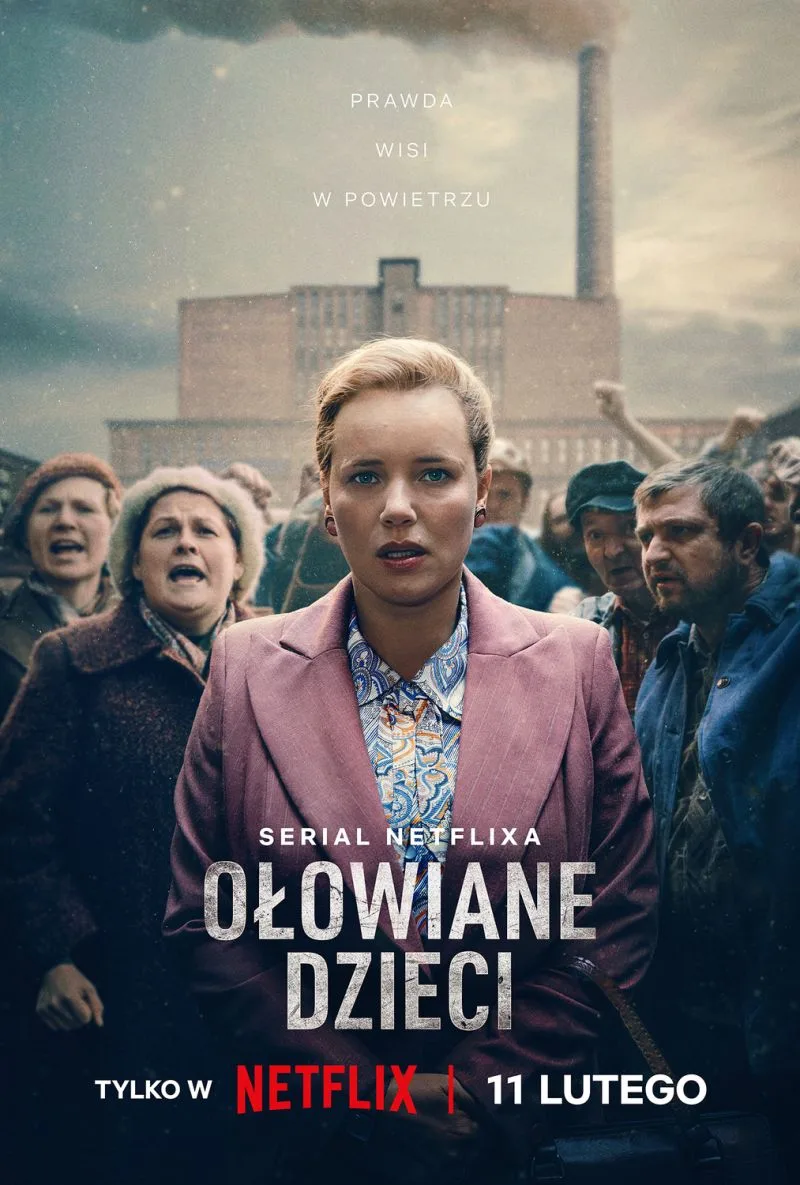
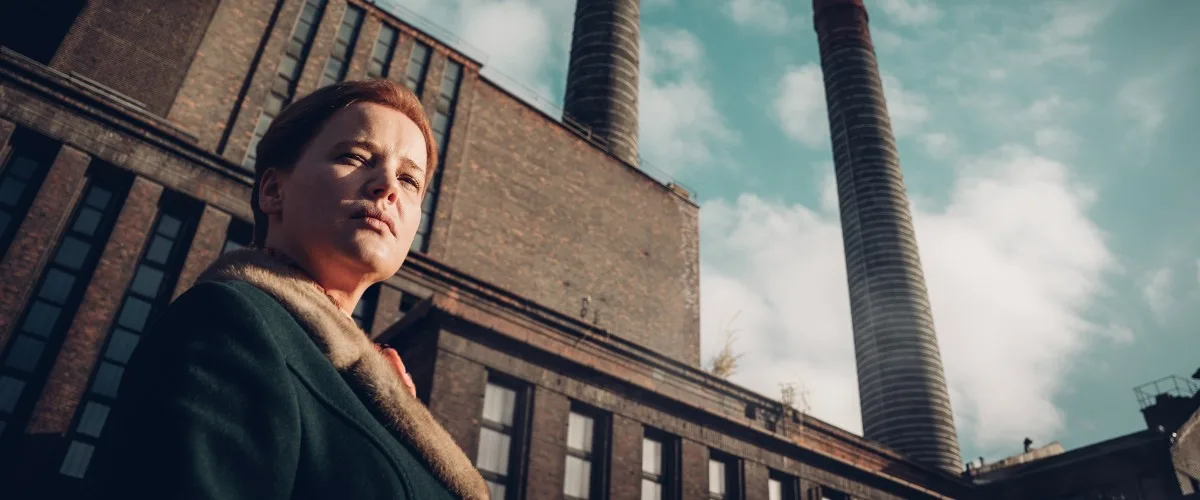
Directed by Maciej Pieprzyca, “Lead Children” is set in Communist-era Poland in the 1970s, centered around the small district of Szopienice, in the city of Katowice; it’s a modest, working-class community whose major source of industry is the nearby smelting plant (which looms large over the mud-covered streets, chimneys billowing black smoke in terrifying CG rivulets). Children play in the mud, drink from the water, swim in the nearby pools—all while disquieting particulate matter floats around the characters we see. Children start falling ill, sick with what appears to be anemia; babies begin to arrive stillborn. Enter Jolanta Wadowska-Król (Joanna Kulig, a stalwart player in Pawel Pawlikowski’s films), a headstrong young medic whose husband (Sebastian Pawlak) works at the nearby hospital. Concerned about the illness spreading among their children, Jola begins to investigate and quickly zeroes in on the metalworks as the source of their misery.
But as “Lead Children” illustrates across its six hour-long episodes, Jola will face the kind of intransigence that comes from bureaucratic gridlock, police-state animus, and even personal apathy. We see an early example of Jola’s resolve when she bickers with a shifty food truck vendor to get what they paid for; her husband criticizes her for rocking the boat. “You’d rather get conned just to keep the peace?” she asks. His response? Sometimes, getting scammed is the price you pay for peace of mind.
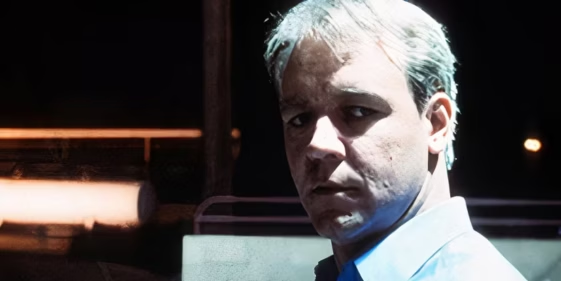
That critical conflict sits at the center of the miniseries, as Jola’s inconvenient questions begin to ruffle the feathers of both the local politburo (including local governor Zdzisław Grudzień (Zbigniew Zamachowski), a petty tyrant concerned with this controversy affecting his influence) and her own neighbors, whose own livelihood and careers depend on employment at the plant. It even begins to tear her family apart, as both she and her husband face friction in their careers and their relationship starts to fracture. There’s no question how far it will go from the very beginning: The series opens in media res, with Jola dragged to a junkyard to be threatened at gunpoint by an SB officer. But this is a testament to Jola’s resolve, and the myriad forces that face her as she tries to protect her friends and neighbors from the lead digging its way into their systems—to say nothing of the lingering fear that her own unborn child may suffer its effects.
Pieprzyca’s direction is clear, cogent, and unobtrusive, befitting the rather utilitarian script. Shades of “Chernobyl” abound in the setting’s grim, overcast cinematography, the modest, mud-covered period costumes, the downcast professionalism of its performances. Kulig, like Jola, stands out as bolder and more idiosyncratic than her castmates, which makes her a very compelling lead; she carries that Erin Brockovich fire in her belly (in fact, the real Wadowska-Król is celebrated in her home country as “the Polish Erin Brockovich”), leveraging eagle-eyed amateur sleuthing with brief moments of respite dancing in her home or her car. She’s a welcome spark to personality among the dour faces around her, with the brief exception of Hubert Niedziela (Michał Żurawski), the aforementioned SB officer, a strikingly handsome man who struggles to gain Jola’s trust while also trying to bury her efforts to expose the contamination.
At six hours, all this bleakness and misery can start to tar the soul a bit; “Lead Children” is probably best enjoyed over a few sittings rather than binged at once. But that tone is necessary to sell the desperation and fragility of the human condition that the miniseries explores. It’s harrowing to see a town, and a people, and a government, do nothing to stop poisoning itself simply to save face, or protect their livelihood, or just allow themselves to pretend everything is fine. In an age where this happens with great regularity even in our country, it’s important to see people like Jola standing up for what’s right, even when it’s inconvenient. In this respect, “Lead Children” is a valuable, if hardly revolutionary, watch.
Entire series watched for review. All episodes stream February 11th on Netflix.