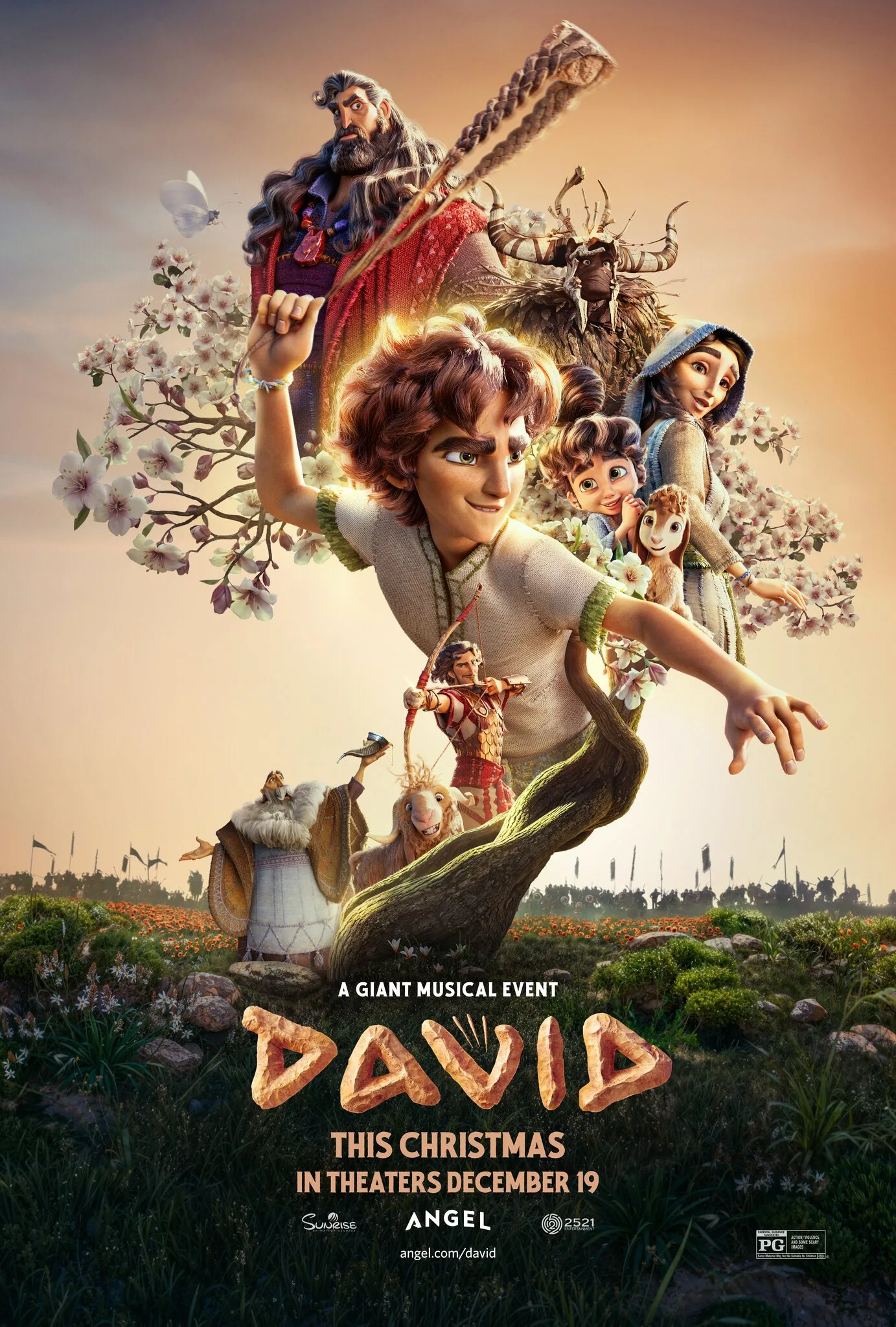

The story of the shepherd boy turned poet and warrior king David has been given the Hollywood treatment almost since the beginning of film and later television—first with simplified and sanitized silent shorts, e.g., “David and Goliath” (1908), continuing through traditional, mid-20th century Biblical epics such as “David and Bathsheba” (1951), and continuing with the admirably ambitious but wobbly Richard Gere vehicle “King David” in 1985. This year brought about the first two seasons of the sweeping and popular Amazon Prime Video series “House of David”—and now comes the animated musical drama release “David,” landing in some 3,000 theaters across the USA on Dec. 19th and clearly intended to transcend the “faith-based” core and reach mainstream audiences.
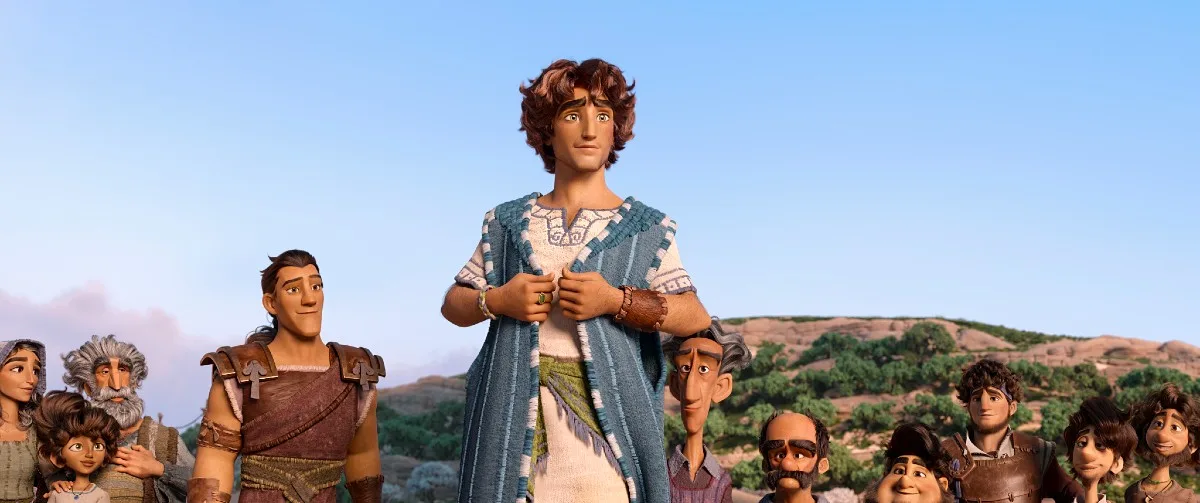
For the most part, it succeeds. Produced by the South African computer animation studio Sunrise Productions and released by Angel Studios, “David” has the highly detailed, brightly colored and screen-popping visuals of a DreamWorks or Disney film, a bounty of catchy tunes, and a storyline that manages to be faithful to the Books of Samuel, even as most of the characters talk as if they’re modern Americans. (The better to be accessible to the viewers, my dear.) I was reminded of “The Prince of Egypt” and classic animated coming-of-age tales such as “The Lion King” and “Mulan.” Co-directors and co-writers Brent Dawes and Phil Cunningham have created a family-friendly adventure that verges on being a bit too precious at times, but also includes occasional moments of PG-level action and violence and a few psychologically and spiritually mature passages.
“David” kicks off with the young shepherd (voiced by Brandon Engman) celebrating that a lamb named Shira is on the verge of giving birth—“The flock’s about to get a little bigger!”—and then employing his slingshot to stop a lion who is about to tackle the flock. Ah, but we know David is a good dude because after the lion gets trapped in a rock formation, he frees his foe, albeit from a safe distance. (The animals are lightly anthropomorphic; they don’t speak or wear clothes, but they do express emotions in a human-like fashion through their eyes and movements.) He’s happy tending to his flock and spending time with his loving family in their Bethlehem home, but his world is turned upside down when the prophet Samuel (Brian Stivale) visits the house and anoints David as the next king. When David protests, “I don’t want to be king,” Samuel wisely replies, “That is surprisingly good criteria for being a king.”
The musical numbers dovetail nicely with David’s musicianship; he wrote dozens of psalms and played instruments such as the lyre, the harp, and castanets. (Bono of the band U2 has called David “the Elvis of the Bible”.) The story of David and Goliath marks a pivotal moment in David’s journey, with David declaring, “It doesn’t matter how big he is. With God on our side, even I could fight him.” Goliath (Kamran Nikhad) is rendered in gargantuan and frightening fashion—he looks like something out of a video game—and the moment when David fells him is a highlight of the film.
With Phil Wickham voicing David as an adult, we follow the conflict between the young warrior and King Saul (Adam Michael Gold), who develops a voracious thirst for more wars, more victories, and becomes increasingly paranoid and threatened by David. (The darkest passages of the film chronicle the battles between the Israelites and the foreboding and treacherous Amalekites.) Loyalties are questioned, family ties are tested, faith is put to the test — in other words, the usual Biblical stuff. Songs such as the warm and funny and beautiful mother-and-son duet “Tapestry” (with Brandon Engman, and Miri Mesika as David’s mother Nitzevet), the upbeat and invigorating “Follow the Light” and the spiritually stirring “I Will Not Be Afraid” advance the story; one can envision “David” becoming a stage musical if the movie is a hit.
It’s also kind of refreshing that the voice actors aren’t known to most American audiences. Nothing against star-turn work in animated films—much of it is fantastic—but it’s become de rigueur for a generation now to have major names voicing characters, and sometimes it’s hard to forget it’s Eddie Murphy or Jack Black or Kristen Bell or Samuel L. Jackson behind the character. With “David,” there’s no such distraction. We settle back and enjoy a well-produced, visually impressive, character-driven fable about the man who would be king.