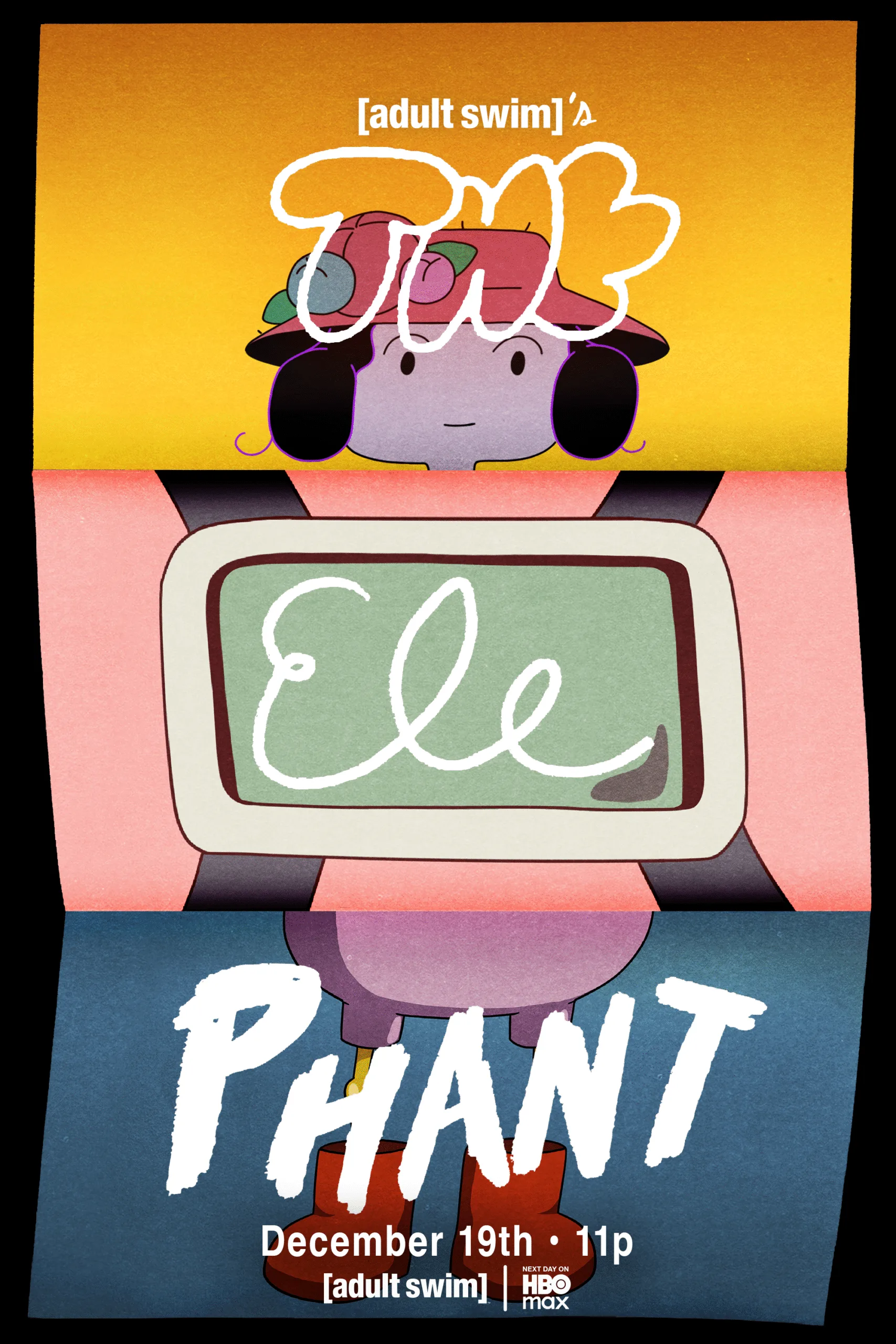

Recall the folk tale of the blind men and the elephant—a trio of blind men come across an elephant and try to describe it to each other with their own limited understandings of the creature. It’s the ultimate lesson in subjectivity and communication, about how each of us attempts to write our own stories and connect them with others. It’s also the logline between Adult Swim’s latest animated special, “The Elephant,” which gave four acclaimed animators a very specific brief: Three teams write, create, and animate one act of the special, without knowing what the other teams are doing, exquisite corpse-style. It’s experimental, weird, and in line with the brief, but it doesn’t make much logistical sense from a plot perspective, front to back. But in its beautiful weirdness, its creators manage to weave together (accidentally) some beautiful parables about the anxieties of self-actualization.
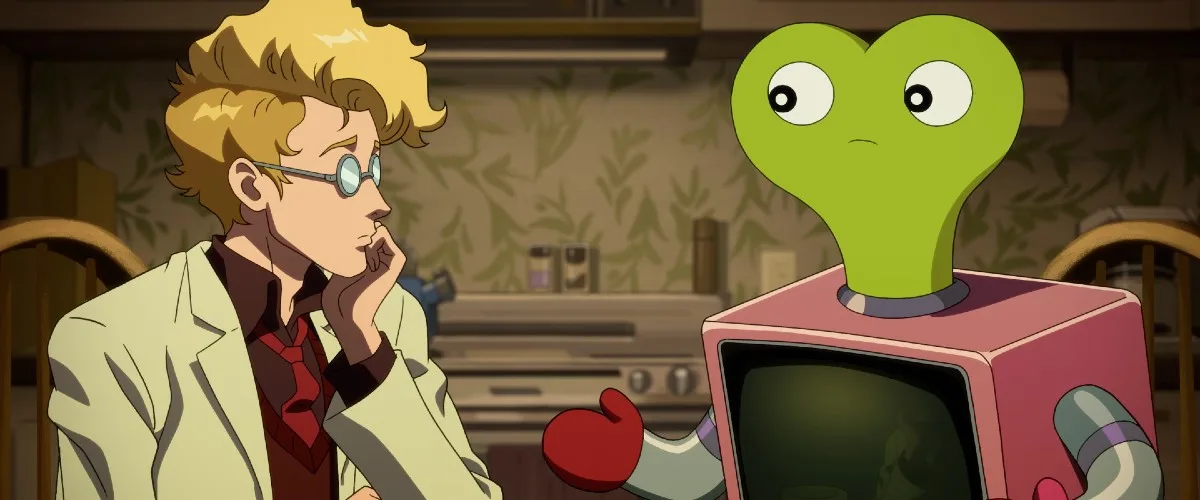
Clocking in at a mere twenty minutes, “The Elephant” concerns (such as it is) a nameless protagonist that’s spat out of a robotic factory and scooped up by a mysterious clown-cat who helps it escape and sets it about its journey of discovery. (This first act, courtesy of “Adventure Time”‘s Pendleton Ward, is a dizzying sci-fi thriller filled with retro video game aesthetics and characters whose shapes morph and undulate and transform at a moment’s notice.) From there, “Steven Universe”‘s Rebecca Sugar and “OK K.O.! Let’s Be Heroes”‘s Ian Jones-Quartey examines the elephant as a lonely party animal, fated (or so it thinks) to turn up the party with a dance-music button festooned on its chest. Finally, “Over the Garden Wall”‘s Patrick McHale envisions their protagonist as a scientist’s broken invention, working up the courage to move beyond its programming.
This is set to premiere late at night on Adult Swim, so “The Elephant”‘s kaleidoscopic joys are probably best enjoyed with the kind of substances one might expect of that programming block’s target audience. Even so, there’s a deceptive charm to seeing such an animation dream team take on such a difficult task; you’re in for a bevy of deliberately clashing animation and art styles, from Ralph Bakshi-esque urban realism to poppy Adventure Time sci-fantasy to Little Golden Book-esque gentleness. The character design of each protagonist feels like an exquisite corpse in the classic Surrealist tradition, all three bodies sporting warped heads, torsos, and legs incongruous with one another. It’s beautifully bizarre, but also hammers home that these are outsiders, all scrambling for life and meaning and purpose, clambering through the world in the awkward bodies that fate has bestowed them. (It’s a deeply relatable impulse, no matter who you are.)
Whether you consider the titular elephant one character across all three stories, or each the protagonist of their own little drama, “The Elephant” lets its character stand in for any number of concerns about agency and identity. The creature(s) is unceremoniously spat out into a cruel, unfeeling world, in a body they did not ask for and barely understand, and often subject to the whims and desires of others. It’s not hard to glom a trans allegory around this character, and the deliberate work it takes to change your body and self to fit who you really are inside. “If you’re really creative, you’ll reinvent yourself into something entirely new,” its catlike companion says in Act One; its hedonistic pals in Act Two place stifling expectations on it to dance and party in its fishnets, and maintain a place in the queer-coded club culture it finds itself in. “I keep ending up in the wrong form,” it tells its creator in Act Three. “What’s the right form?” Is the response. Throughout the tale, we see a being struggling to ask questions of itself and the world; that it ends on such a bittersweet, self-possessing note makes the whole tale all the sweeter.
That “The Elephant” manages to touch on such big questions, even amid what are essentially three seven-minute shorts awkwardly linked together, is a remarkable testament to the minds of these incredible animators. There’s a chaotic joy in watching each act progress, the anticipatory excitement that comes from seeing a story’s baton passed from one storyteller to another. It’s an anthology that masquerades as collage, and can be easily enjoyed as either.
What’s more, it feels like the kind of unfettered creativity that is rare to see in today’s animation landscape: This is not a pilot for an “Elephant” TV show, nor is it based on an existing property. No toys will be sold of this, no merchandise set to be churned out at Hot Topics nationwide. This is simply what it is: Adult Swim giving trusted creatives the keys to a silly little experiment, and room to make merry play for our amusement. It’s the television equivalent of a salon, and a testament to the trust and collaboration of enterprising animators.