As a journalist, I only had a few interactions with the late Michael Wright, mainly at industry functions and movie premieres. The one I think about most had nothing to do with his filmography, which included “The Principal,” “The Five Heartbeats,” “Sugar Hill,” and HBO’s long-running prison drama Oz. It happened at a party for a friend in a dive on the Lower East Side, maybe 25 years ago. At that time, Wright was on Oz playing Omar White, a charismatic, bleakly funny, chronically self-destructive inmate who seemed impervious to reform.
I was there that night with friends who lived in the neighborhood. Wright happened to be drinking there that night. I recognized him instantly. Anyone who had seen even one of his performances would’ve recognized him instantly. His narrow, chiseled face and deep-set, searching eyes had such richness and depth, it was as if he’d been painted into our reality by one of the Old Dutch Masters.
While visiting the bar to order a round of drinks for our table, I said, as nonchalantly as possible, “I love your performances.”
The conversation that followed was entirely unexpected, and so fascinating that I forgot why I’d walked over there until one of my friends showed up to ask what happened to those drinks.
Our talk continued over the course of the evening and covered a range of subjects, including method acting (he studied at Stella Adler’s academy), ‘70s American cinema (his favorite John Cassavetes movie was “The Killing of a Chinese Bookie”), and postwar poetry and painting (mainly the Beats and the Abstract Expressionists). He had the energy of a man of culture who enjoyed talking and thinking about art as much as experiencing it. He said the word “art” in such a way that you imagined it capitalized.
The conversation turned to travel. At that point, I had only been outside of the United States twice, both times to Mexico. Suddenly Wright raised one finger as if to ask for a moment’s silence, which of course he got. His eyes squeezed shut for a moment. He seemed to get lost in a reverie. Then he opened his eyes, looked at me very seriously, and said, “Bali. You must go to Bali. You must.” He rhapsodized about Bali’s sunsets and welcoming, cosmopolitan culture. He said he went there regularly, usually alone, and hoped to go again soon.
“Do you ever think of living there?” I asked.
“All the time,” he said quietly.
The above may seem a strange way to open an appreciation of an actor, but it’s offered in the spirit of the subject. Michael Wright, who died this week at 70, was one of those actors whose commitment to, and absorption by, the characters he played made him stand out, even amid a cast of equally experienced actors. This held true even when he had a much smaller role than his castmates, which was usually the case. Your eye sought him out in frames full of people. He was magnificent.
And he rarely did what you expected him to do, based on the sort of movie he was in. That’s not to say that ignored whatever the point of a scene was and hijacked it, but that he made his own path to the point. Along the way, Wright couldn’t help making you wonder how deep a movie or show could’ve gone, even when it was good already.
He got some attention from his very first film acting job, as the chief of the Del Ray gang in Philip Kaufman’s 1979 film “The Wanderers,” which he won soon after his stint at Stella Adler, where he enrolled on a sort of “work study” program, answering phones and mopping floors while he studied. Wright was officially anointed an actor to watch by the great Robert Altman, who cast him as the needy, troublemaking, homophobic soldier Carlyle in the 1983 Vietnam War drama “Streamers” (which also gave breakout roles to Matthew Modine and David Alan Grier).
But like a lot of moviegoers, I first noticed Wright as Victor Duncan, the bad guy in the 1987 thriller “The Principal,” one of many films from the post-1960s era that endorsed vigilante violence as a solution to urban decay. It stoked white fears of the Black “Other” even as it teamed the white hero with a Black coworker (Louis Gossett, Jr.) who validated his views, and made sure the gang menacing the school included a scruffy blond white kid.
As Victor, Wright was scary as hell. The movie wouldn’t work if he wasn’t. But I believe Victor’s scariness ultimately had less to do with the characters’ physical actions than the way Wright played him. It was as if the character was in thrall to impulses he did not understand and that battered him with many conflicting feelings at once, not just a cartoon villain’s exhilaration at doing bad things. In the final confrontation, Victor’s energy is so unstable that it’s as if he’s taking orders from demons we can’t see.
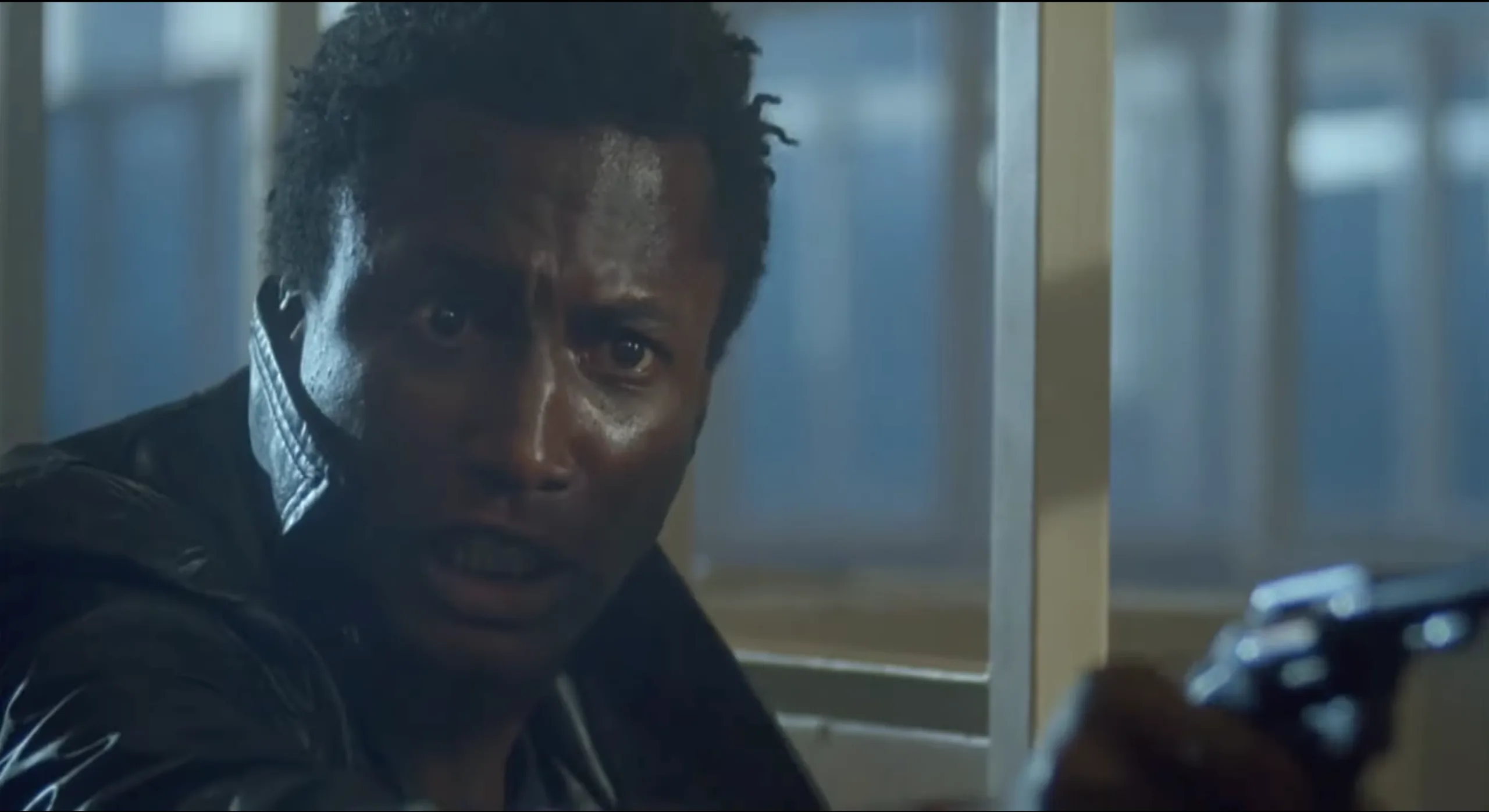
Sometimes the performance evoked a malignant version of tortured teenager Jim Stark, the role James Dean played in “Rebel Without a Cause”—and not just because both actors were visibly too old for their roles. Dean played Jim as an adolescent who felt things so intensely, and with so little guidance on how to manage those feelings, that it seemed to have short-circuited the part of his brain that knew how to interact with others. Considering Wright’s deep knowledge of cinema, it would be a mistake to assume that he didn’t want us to think about “Rebel.”
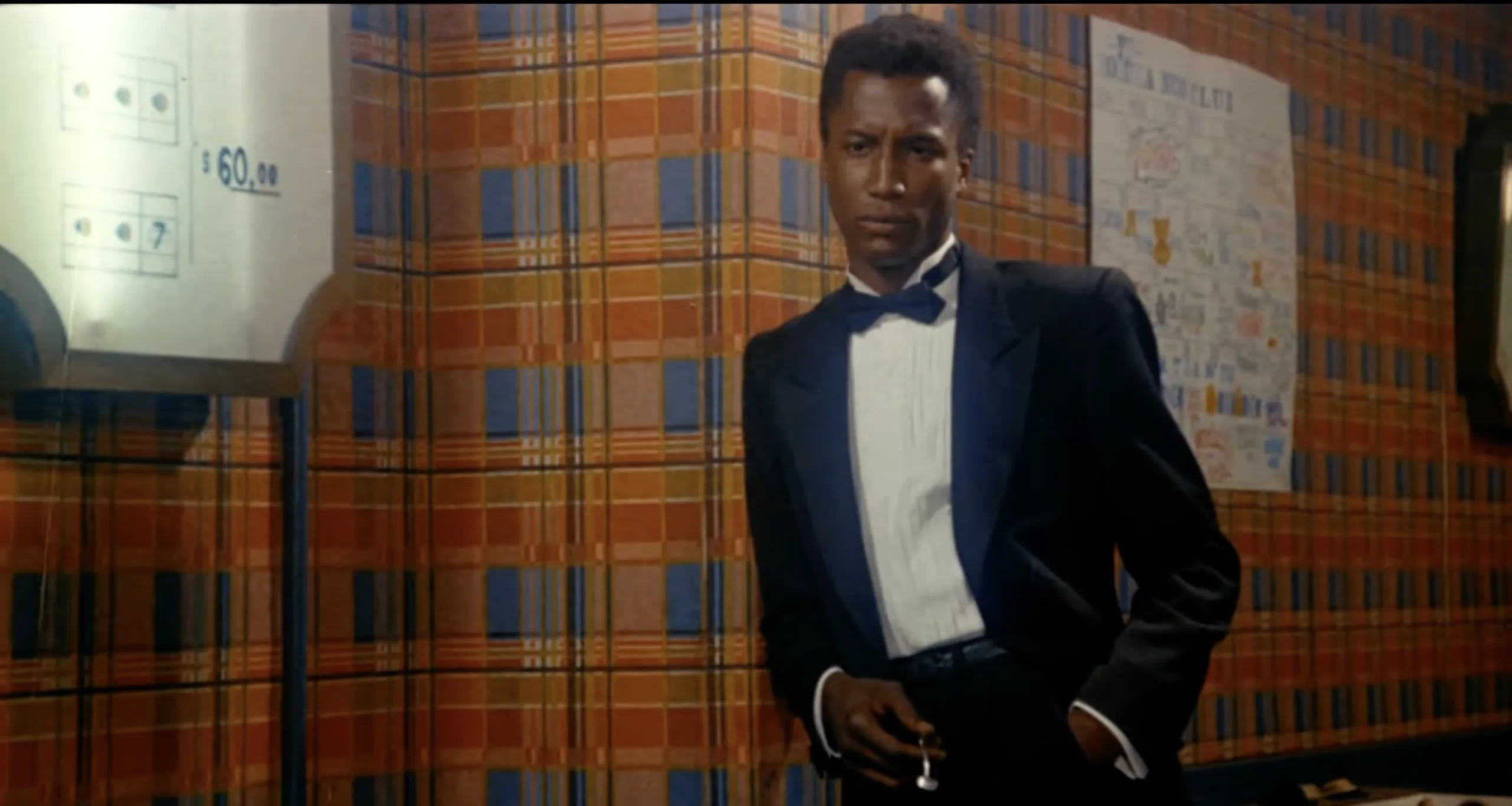
That same year brought a performance that hinted at what Wright had the stuff to become: a leading man specializing in characters who were both troubled and troubling, but so compelling that it didn’t matter if you liked them. The film was an international production called “Bed Time Eyes,” about an irresponsible and anti-authoritarian Black U.S. army soldier in Japan and the woman he falls in love with, a nightclub singer who isn’t good enough to make the big time and is sad about it.
“Bed Time Eyes” follows in the footsteps of the 1959 classic “Hiroshima, Mon Amour,” about a French Jewish woman and a Japanese man whose intense sexual relationship is partly about exorcising the trauma of having survived genocides (she escaped Nazi-occupied France; he lost loved ones to the U.S. nuclear attacks). It’s about the thrill of ignoring racial taboos when it comes to love and sex, and the social punishments levied as a result.
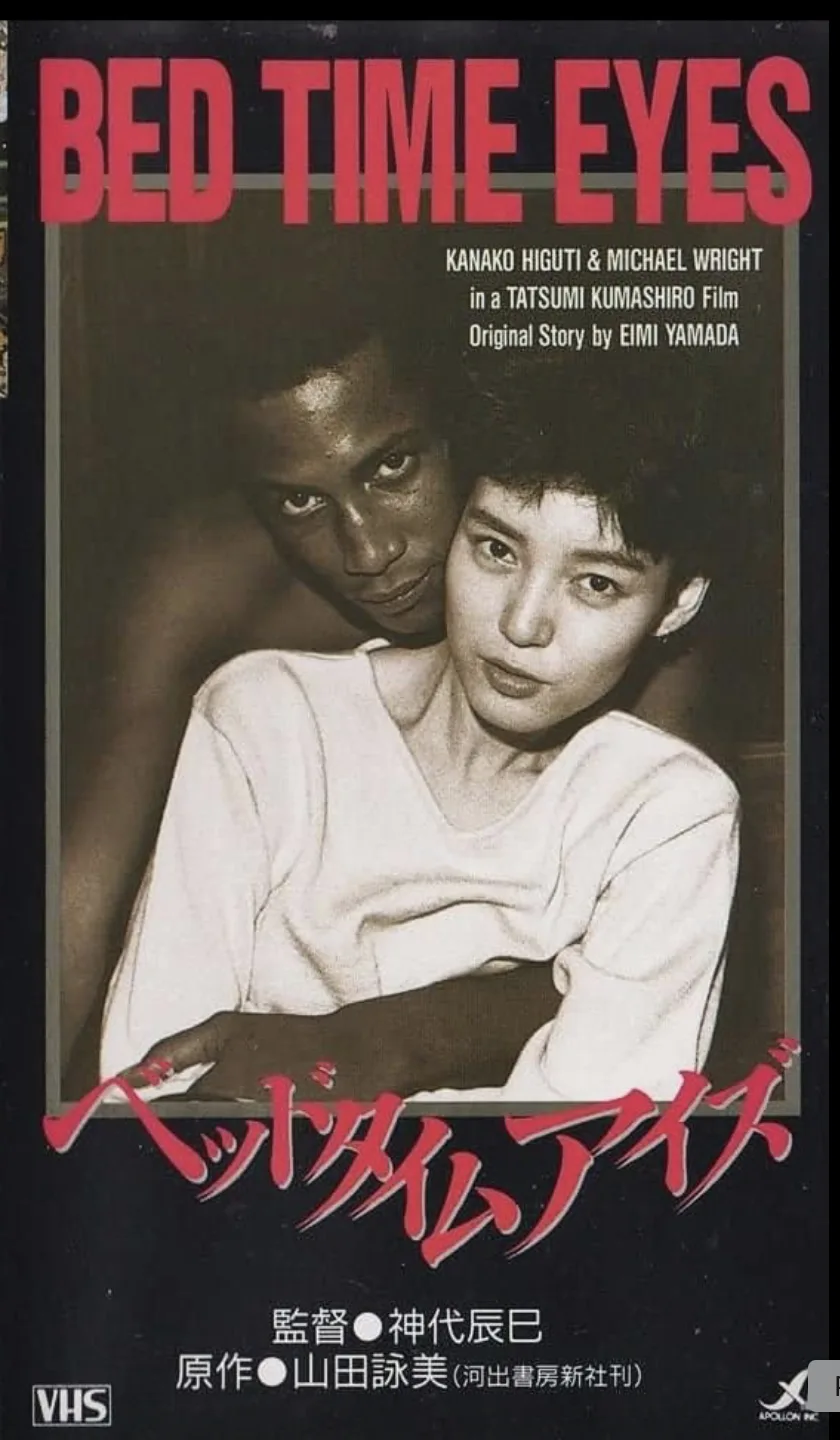
The author of the source novel, Amy Yamada, became fascinated by Black American culture as a middle schooler after encountering soul music, steeped herself in fiction by Black writers, and went on a literary career that often focused on this specific type of culture clash. The movie barely got a release in the United States and is, as far as I can tell, impossible to stream legally (although VHS and DVD copies can be bought from dealers).
That’s a shame, because the movie lets you see another side of Wright. He’s playing a man who is brought low by unchecked appetites and self-annihilating choices (he uses and deals drugs) and can be a hateful or mindlessly cruel person, but is also a magnetic, brooding bad-boy character—the kind of man women warn each other to avoid, even as they swoon over him. Wright gets to wear a tuxedo in this one. He looks like he could step into “For the Mood for Love” and tango.
Speaking of gorgeous clothes: “Sugar Hill,” a 1994 drug drama scripted by “New Jack City” writer and Village Voice contributor Barry Michael Cooper, and directed by Cuban filmmaker Leon Ichaso (“Crossover Dreams,” “Pinero”), is one of the best dressed movies of the ‘90s, as well as one of the most voluptuously lit, shot, and scored (by Terence Blanchard, Spike Lee’s regular composer).
Despite an aggressive PR build-up focusing on star Wesley Snipes, who was on a hot streak from “Jungle Fever,” “New Jack City,” “Passenger 57,” “White Men Can’t Jump,” the film passed through theaters quickly, and not without reason: Snipes’ character, Romello Skuggs, is a morose drug dealer employed by the Italian mobsters who still rule Harlem; the love story between Romello and his schoolteacher girlfriend Melissa (Theresa Randle) is bland and thin, and the whole thing is suffused in fog of despair that was off-putting to viewers who went in expecting the kinetic intrigue of “New Jack City.”
But it’s worth seeing because the main story is affecting enough to overcome all manner of missteps—and, of course, for how it looks and sounds. “Other films have adapted and explored these themes with a bit more nuance,” wrote Sean “S.A.” Cosby in an essay published at the crime fiction blog Do Some Damage, “but none of them had Wesley Snipes sporting a full length leather coat by Versace over a suit by Armani.”
The relationship between Romello and his older brother Raynathan (Wright) is one half Charlie and Johnny Boy in “Mean Streets” (Romello is the guilty, tormented one, Raynathan the live wire who’ll zap anybody). The other half is Michael and Fredo Corleone in the “Godfather” movies: Raynathan resents that his younger brother was always the one who excelled in school and was trusted with important jobs and family obligations.
But the family they’re part of seems cursed, literally, as if in a horror movie. When the boys were young, their mom died from an overdose of heroin, a drug brought into their lives by their father A.J. (Clarence Williams III), who dealt drugs for the Italians and became hooked himself. Between A.J. ‘s parental uselessness after years of heroin use and lingering damage from being shot by his employers as punishment for incompetence, it’s up to Romello to become the head of the family, even though he’s a prep school kid who won a scholarship to Georgetown. He declines it and stays put, because he feels responsible for his brother, his father, and the neighborhood. When the story begins, Romello already wants out, and of course Raynathan wants him to stay in. It’s clear that Romello has PTSD from his childhood. Grim flashbacks materialize in his mind like accusing specters.
It’s not until you get to the very end of “Sugar Hill” that you realize the story of the Skuggs family and the criminals they interact with is as much a Shakespeare-styled family tragedy with elements of ghost stories and horror movies as it is a Black gangsta flick in an era that produced so many great ones. In a spiritual sense, the Skuggs men are already dead, and so are the Italians they answer to. They’re remnants of an underworld that functionally ceased to exist, still puttering around their cursed home, mechanically re-enacting rituals and habits.
Raynathan is arguably Wright’s finest performance, and certainly the one that did the best job of containing and channeling the intense but digressive energy that his racing mind brought to every role he played. It’s one of those performances that goes up to the edge of Too Much and sometimes tumbles into the abyss, but that you accept because the actor has made the character’s flamboyant eruptions of self-pity, misdirected anger, and spotlight-hijacking melodrama seem integral to who this man is, and inevitable considering all that he’s been through.
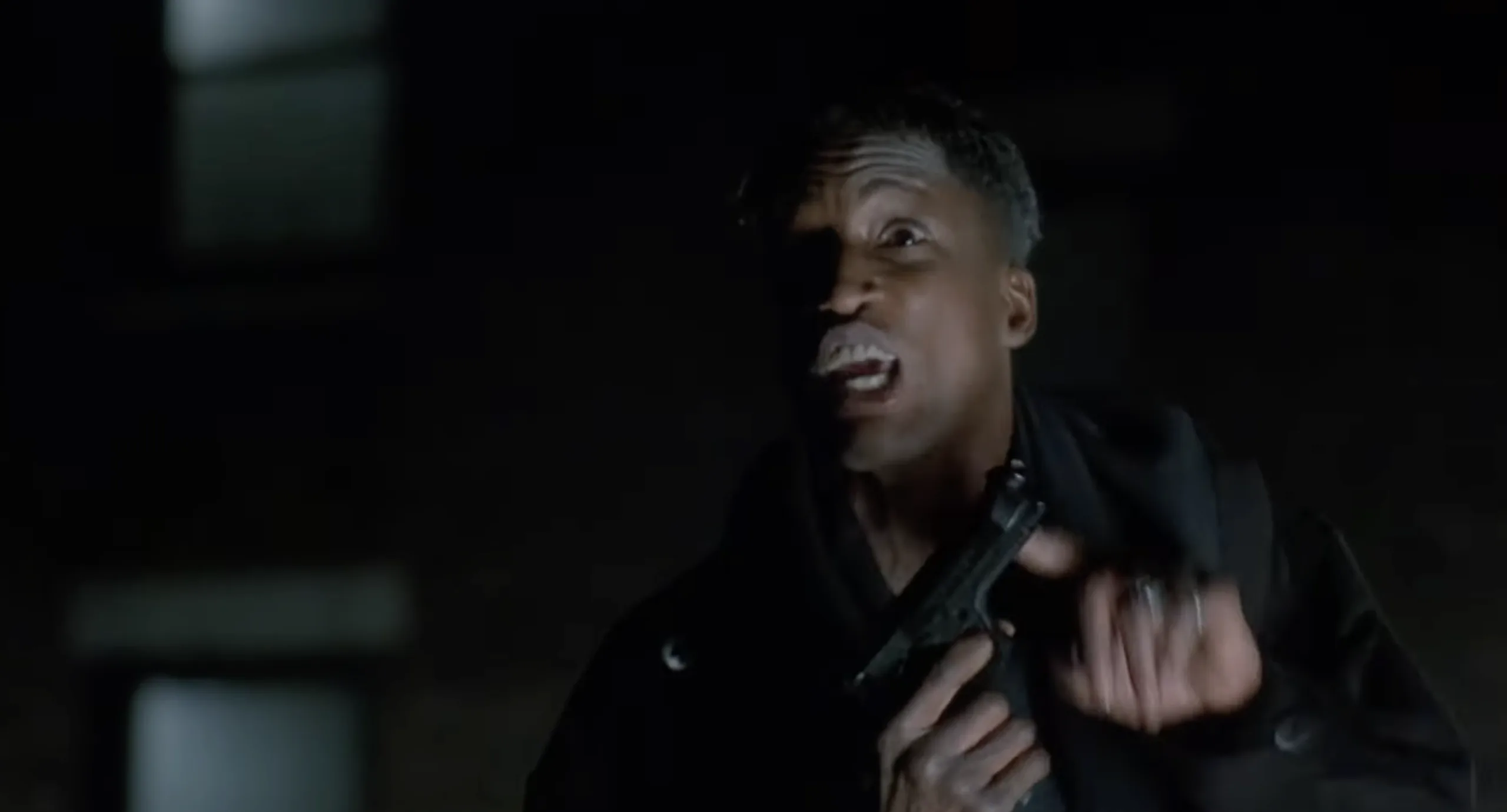
The final act is driven by Raynathan, who takes it upon himself to fix problems he believes Romello is too distracted by new love and old miseries to deal with on his own. The results are as horrible as you’d expect, given that Raynathan is nowhere near as smart as he needs to be to step into Romello’s Gucci loafers. The climactic face-off between the brothers is agonizingly real, and Snipes, who tends to play cool customers, is more unguardedly emotional than he’s ever been onscreen, before or since. Perhaps the sheer force of Wright’s performance shook Snipes out of any self-protective habits he might have developed after becoming a movie star.
Wright stayed hungry as an actor even though the pickings were always slim for a performer like himself. He was striking, in the way that certain mid-century jazz musicians were (what a Miles Davis he could’ve played, had the material been available to him)., He wasn’t radiantly beautiful like the young Snipes, or Denzel Washington, or earlier icons like Sidney Poitier or Harry Belafonte. He was slender, dark-skinned, and raspy-voiced. He had a latent incendiary quality, reminiscent of actors like Gary Oldman and Christopher Walken, who played weirdos, villains, and creeps a lot, but were still given lead roles in smaller movies because, let’s go ahead and say it, they were white.
There was a brief moment right after the release of Robert Townsend’ s 1960s soul music biopic when it seemed as if Wright might have a shot at the kind of stardom that transcended racial constraints. His character, lead vocalist Eddie King, Jr., was an electrifying mess of an alpha male, gifted by God with a voice that could uplift the spirit and speak to the heart, but eventually brought low by substance abuse and his own arrogance. Even in a cast stacked with great actors, he stood out.
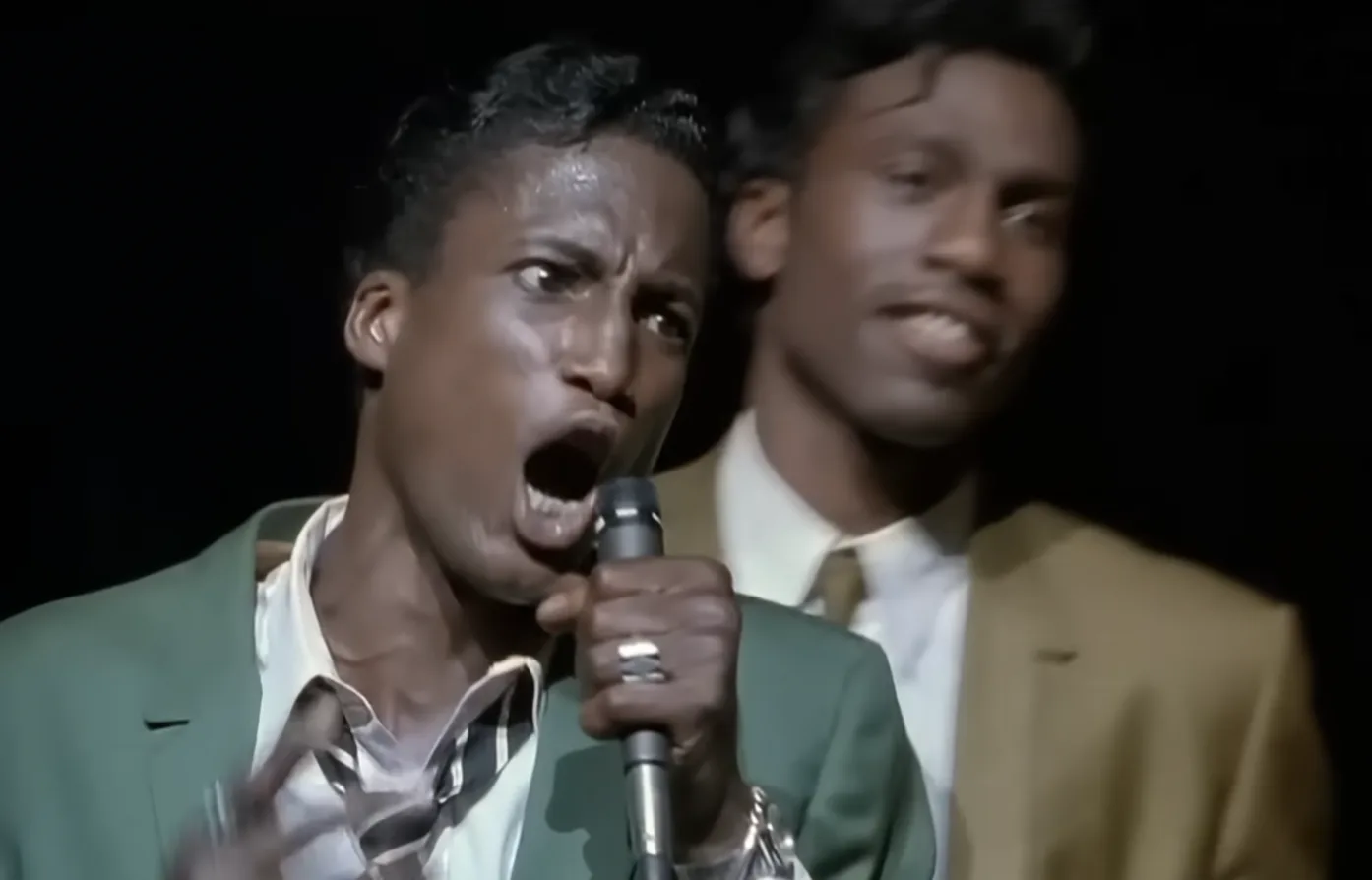
But it didn’t happen. And it would be foolish to say it was only because both Hollywood and society at large weren’t willing to extend Wright the opportunities given to the likes of Oldman, Walken, Sean Penn, Nicolas Cage, and other actors who brought an acting student’s eagerness to experiment even to parts that didn’t require it.
There were rumors that Wright was difficult, in the sense that he wanted to explore every conceivable aspect of a character with directors even when the priority was staying on schedule; but also in the sense of being hard to keep track of during a production. His lifelong battles with alcohol and drugs were an open secret. He acknowledged them himself after a 2012 arrest in New York City for driving under the influence, which led to him entering recovery and reportedly staying sober after that.
“The greatest sin an actor can commit is to fail to be interesting,” he once told an interviewer. “I always try to make my characters interesting. I want you to be riveted and wonder what’s going on behind my eyes. I want the audience to think along with me and go on an internal journey.”
He achieved all that and more, remarkably so when you think about what he was personally up against. He seemed to want to expand our horizons, not just his.
I still haven’t been to Bali. I hope to go someday. When I see my first sunset there, I’ll think of Michael Wright.