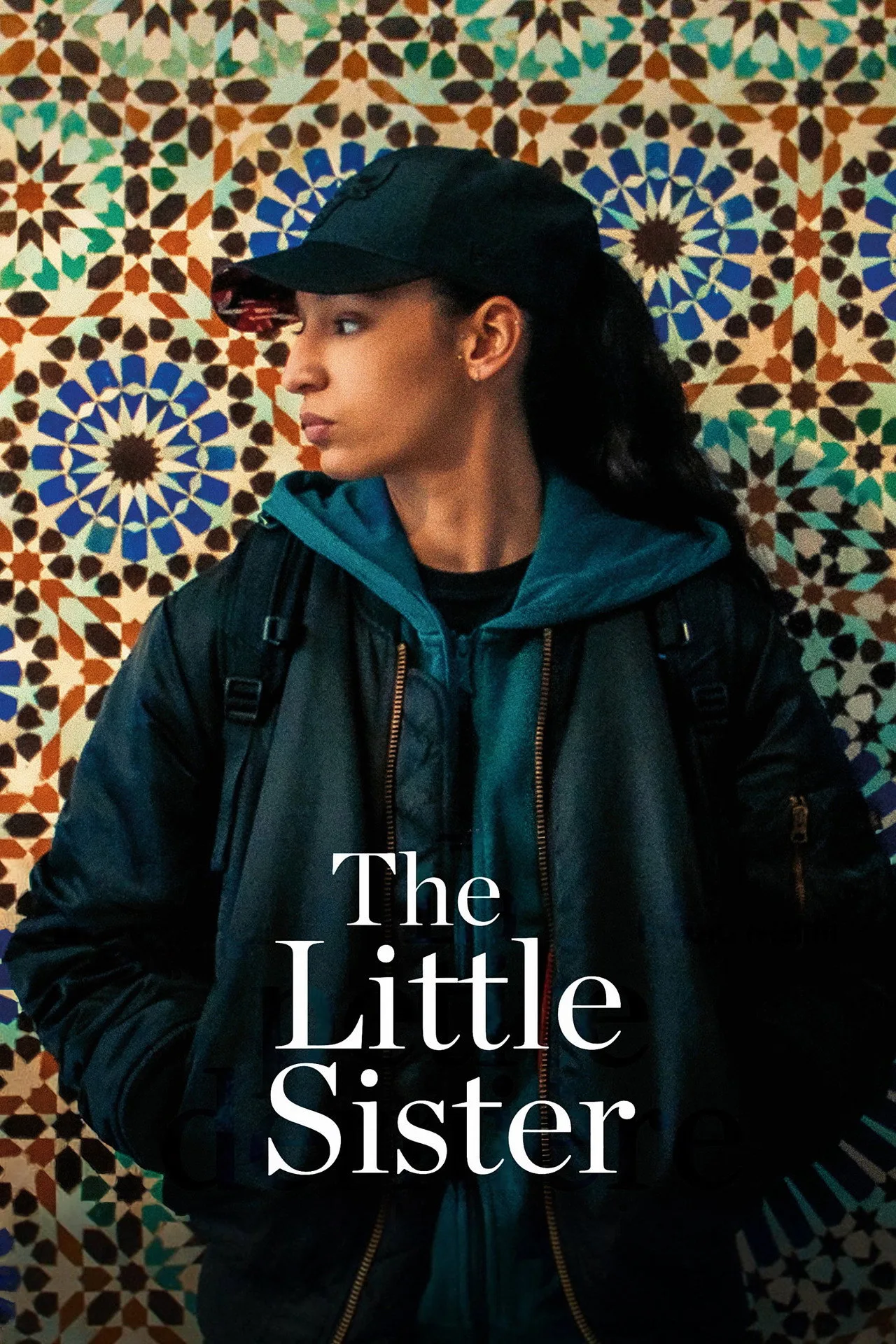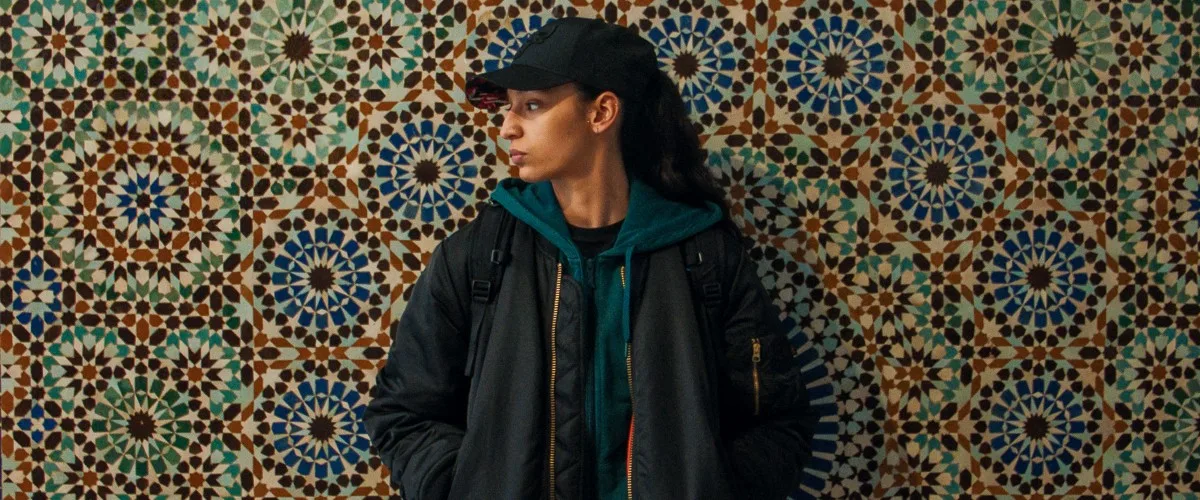
Set over the span of a single year, Hafsia Herzi’s “The Little Sister” navigates through the potent queer awakening of its curt protagonist: Fatima (Nadia Melliti). A 17-year-old French-Algerian woman, she is the youngest in a family that includes a doting mother, a laid-back father, and two endearing sisters. Intelligent and quiet yet competitive, Fatima observes the life she’s expected to lead: she gets good grades in school, is devoutly religious, and has a boyfriend whose motorbike she rides to class. Even when her friends spout homophobic slurs, she drags on a long cigarette in between guarded giggles.
Herzi’s adaptation of Fatima Daas’s 2020 autofiction novel The Last One takes great interest in the moments when Fatima’s mask slips slightly, allowing these instances to reach for something so real that it delivers a palpable fright to her protagonist’s core.
Fatima is ready to admit her lesbianism to herself, a recognition that requires the price of someone else’s pain to reveal. She hides deep in the closet. Every day she arrives at school dressed in inconspicuous clothes: hoodies and hats. Near the film’s opening, her friends discuss having intercourse with two older women who performed anilingus on them. The other boys immediately recoil, calling the act gay. Her friends pick on a Black gay teenager in their class by hurling objects and slurs at them. Fatima watches, but doesn’t wholly participate. That changes when the teenager quips to the boys that Fatima is clearly a lesbian. The truth pierces Fatima with such precision that she launches at the teen in a rage. From that moment on, she begins to question everything.
Fascinatingly, we never see that kid again. He drifts away into Fatima’s memory, a personal negotiation that’ll become a constant for her. Over the next year, she creates a dating profile and begins secretly hooking up with women. These early flings imperatively give her the freedom and confidence to embrace her sexuality. Her first encounter with an older woman, for instance, is simply a conversation in a car about what’s intimately possible with a woman. Neither Herzi nor Melliti ever alludes to the importance of these early encounters after the fact. Melliti might crack a smile or flutter with an anticipation during the scene, but she never returns to these people or these feelings later in the film—a creative decision that disrupts the possibility of “The Little Sister” turning into the first-love, headlong romance you expect of most queer coming-of-age movies.
Instead, it takes time for Fatima to find someone she can open up to. See, on these dates, she routinely gives fake names and nationalities. But when she visits an asthma seminar to treat her illness, she meets her doctor’s assistant: Ji-Na (Park Ji-min). Park, in her best performance since “Return to Seoul,” and Melliti have immediate chemistry, turning a breathing exercise into a bomb fire. Ji-Na Fatima embraces her queerness, attending a deliriously shot pride parade and dancing longingly in clubs. Herzi smartly knows that romance, however, isn’t a fix if the emotional hole it’s filling is hollow underneath.
We know that Fatima must eventually square herself with her religion and her family, an expectation that Herzi alludes to with intermittent interest. Because the closer cinematographer Jérémie Attard’s lens gets to Fatima, the more distant she appears. While Herzi and Attard can sometimes give themselves over to the commonplace visual language—mirrors and blurred reflections—of the psychologically and emotionally displaced, it’s Melliti, who won Best Actress at Cannes, she gives them life when the sharpened angles of her face so eloquently contrast with the tenderness of her eyes. That combination creates an arresting relationship with the camera, prompting one to wait in anticipation to catch a glimpse of the depths hidden within Fatima.
Herzi boldly resists the impulse to deliver a thematically easy scene. The film’s final sequence, in fact, features Fatima with her mother. It’s Fatima’s birthday. Will she choose this day of all days to come out to her mom? Does her mom already suspect her daughter is a lesbian? In a lesser filmmaker’s hands, this scene would be the centerpiece, probably somewhere in the middle of the film, for a cathartic kind of messaging meant to beat the viewer into submission. Instead, Herzi holds it until the end. But even in that spot, one might still expect her to make Fatima’s heartache into an instance of cheap empathy. Herzi protects this woman from such tawdry tricks. The result is a complicated overflow of human recognition, one that’s as real as the beating heart and as earned as “The Little Sister” makes it feel.