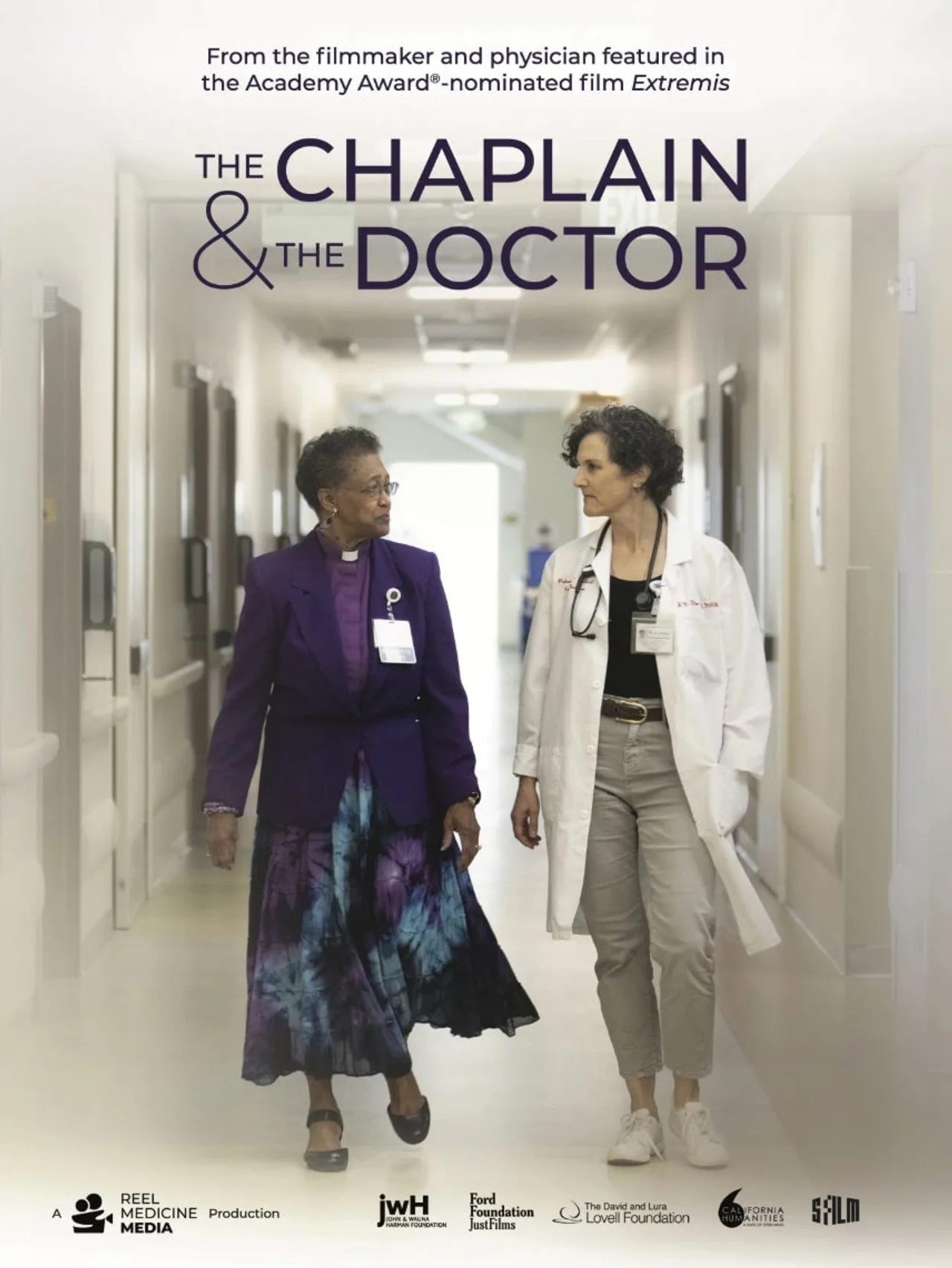

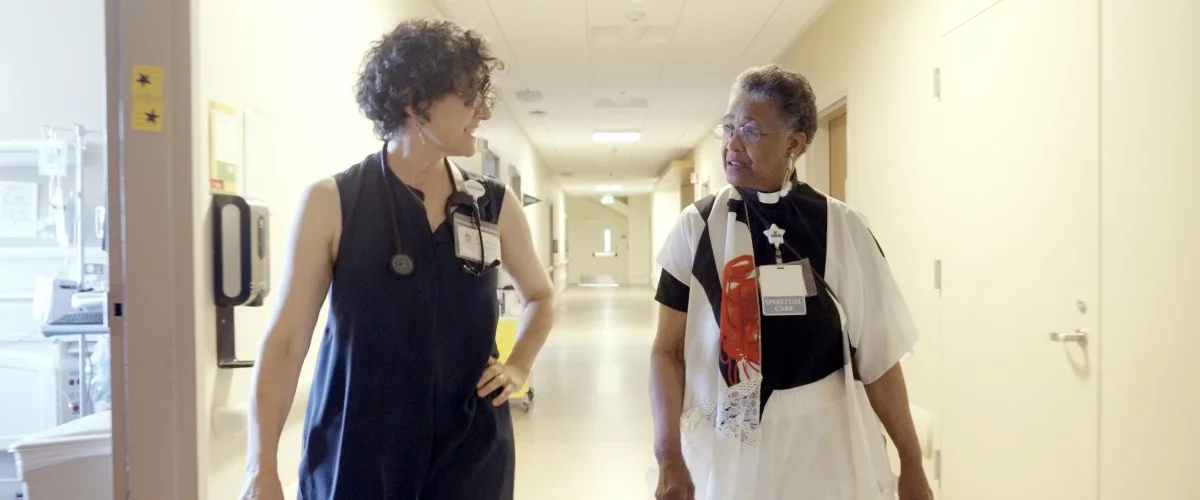
There’s an uplifting comfort in director Jessica Zitter’s documentary “The Chaplain & the Doctor,” in which we witness two people from disparate backgrounds set aside their worldview differences and come together for a common cause. Zitter is the titular doctor, and the film traces her relationship with Betty Clark, an 80-year-old African American chaplain, as they serve on the palliative care team at The Wilma Chan Highland Hospital Campus, the level-one trauma center in Oakland, California. The film is at its best when it centers on the lived-in chemistry between these women, who come to find that their vocations may be more similar than they thought.
It’s less successful when, despite its best intentions, it tries to comment as a whole on the solutions needed to fix our broken health care system. By centering so much of its narrative on its central dynamic and giving less screen time to the machinations, it occasionally feels as though it believes systemic issues can be solved through individual responsibility. Still, it remains an affecting portrait of camaraderie, grace, and compassion under crisis.
It brings to mind one of my favorite films of 2023, Luke Lorentzen’s “A Still Small Voice.” That film taught that if being proximate to suffering is to “teach us anything,” it’s that the most loving thing we can do is be a listening ear. Thankfully, with this film, we get two of said ears.
By far the most compelling aspect is its commitment to holistic care. Clark and Zitter care for patients suffering from all types of devastating ailments, from cancer, cardiovascular disorders and other conditions that render the patients unable to fully care for themselves. They are with patients for extended periods, which means they have the opportunity to truly be present for them in ways that people in other sectors cannot. It’s a joy to witness the ways they realize their work can fill in the gaps of each other’s work. Zitter speaks about how she entered the medical field with a desire to “hold someone’s hand,” but the nature of her work means she is often stuck caring solely for a patient’s physical needs, even though she also desires to care for their emotional and mental state.
Conversely, as a chaplain, Clark knows all too well that people from spiritual backgrounds may care only about the soul and not enough about physical ailments, and she wants to ensure that she doesn’t fall into that trap. The women realize that, as people who wrestle with challenges that affect both body and mind, they can provide better care by viewing each person as a whole.
Zitter makes space to rage against the system by centering her patients’ justified anger. Her camera is intimate but not intrusive. It makes space for someone like Naomi Thomas, a mother who had severe lupus and, in preparation for a biopsy, didn’t eat the day prior. After some confusing back-and-forth, during which Naomi waited for several hours, she learns that the Radiologist who was supposed to perform the operation is out of town until the following week. She expresses her righteous frustration. In many ways, such anger is a rebuttal against the ways we can normalize a broken healthcare system. It is people like Naomi who remind us that there’s a better way the healthcare system should be run, and that not being angry about such errors ultimately normalizes what shouldn’t be normalized.
Zitter would be the first to admit that she was ignorant of how African Americans have been targeted and discriminated against by our current medical system. Her journey as a doctor is intertwined in part by the ways she learns from Clark in witnessing how Clark treats their African American patients. As presented, the footage feels awkward and gratuitous, as if to insinuate that it is only through proximity to her patients’ suffering that she’s learned about the system’s inadequacies. It can make it feel as though the patients are just instruments in her own journey to enlightenment.
Furthermore, there’s a well-intentioned but feels imbalanced as well. In one well-articulated but imbalanced moment, Zitter mentions how she was in Israel for a wedding on October 7th. As she describes her trauma, the film seems to imply that she can better understand the discrimination faced by Black people because of the antisemitism she experienced. It’s another moment that tries to strive for pathos but comes off as gauche.
At one point in the film, Clark references a Maya Angelou poem, “The Mask,” and she shares that the poet knew that laughter can be a mask to hide the painful emotions we often feel within. In many ways, “The Chaplain & the Doctor” celebrates the times when we find people for whom we can both wear this mask and take it off. It can be complicated and nuanced in its empathy, as we witness Zitter and Clark crumble under the weight of their work while enduring the trauma of realizing they’re ultimately unable to save everyone.
There’s hope yet, though, if there are people like them laboring to care in multifaceted ways. Critically, there’s no “happy ending” to the film, and while it offers postscripts on some of the patients we’ve encountered along the way, it doesn’t present an easy solution. We leave the film with a sense that Zitter and Clark are in the throes of their work to this day, trying to care for one person at a time. It’s a gift to have been with them on this journey for the span of this documentary.