
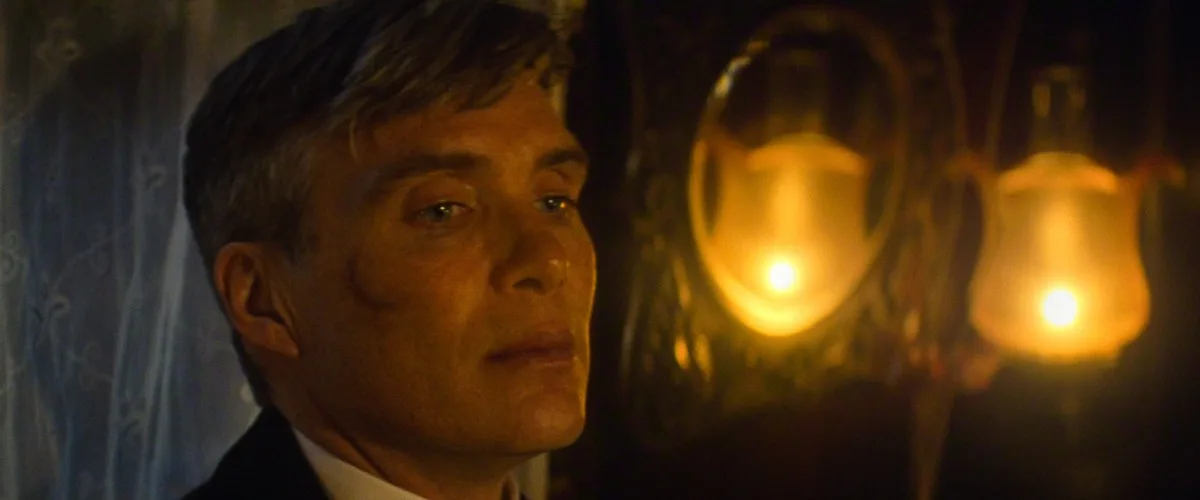
A prominent line in the trailers for “Peaky Blinders: The Immortal Man” is, “Who the [expletive] is Tommy Shelby?” The quip is played for laughs, but it can also be read as a broader mission statement for the film, which unfolds as yet another emotional reckoning for a character who has faced down his own darkness more times than most of us can count. Though the sixth and final season of the television series gave Cillian Murphy’s infamous British gangster a send-off that managed to feel both relatively complete and strangely hopeful, creator Steven Knight’s choice to bring the character to the big screen for a louder, more cinematic epilogue invites us all to wonder whether Tommy is the sort of man that’s capable of finding peace.
“The Immortal Man” offers an uneven and occasionally contradictory answer to that question, often reading as an expansion rather than a deepening of emotional beats fans have already seen play out onscreen. But even at its most self-indulgent, there’s something genuinely thrilling in watching Tommy Shelby suit back up again.
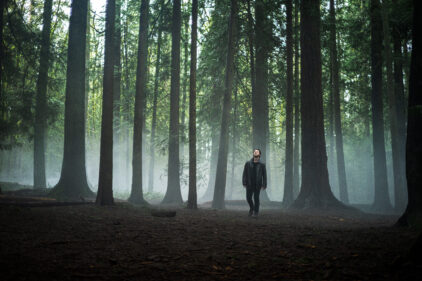
Set six years after the events of the Season 6 finale, “The Immortal Man” immediately dashes the hope of Tommy’s fresh start that episode implied. Unable to run far enough to escape his demons, he now lives in a crumbling sprawl of a country manor, quite literally surrounded by the ghosts of his past. With only his loyal sidekick, Johnny Doggs (Packy Lee), for company, Tommy is penning the memoir that gives this film its name and marinating in a lifetime’s worth of trauma and grief.
Tommy is ultimately tempted back into the world by a visit from his sister Ada (Sophie Rundle) and the news that his illegitimate son Duke (Barry Keoghan, ably taking over the role from Conrad Khan) is now running the Peaky Blinders, working out his (abundant) daddy issues by alienating both the local authorities and the people of Birmingham. Keoghan, who feels specifically conjured to play Tommy’s son, deftly balances vulnerability with a resentful determination to prove himself to the father who left him behind. Drawn into a Nazi scheme to spread counterfeit currency across the U.K., he’s a poster child for attention-seeking behavior, albeit one who is eventually forced to confront his own ideas of who he is and where he comes from in uncomfortable ways.
Part of “Peaky Blinders’” appeal has always been its loose relationship with its own morality. Tommy’s not a good person, and the series mined years’ worth of complicated emotional angst from his willingness to do bad things for what he sees as good reasons. “The Immortal Man,” not having a lot of time to really wrestle with questions of such scope, neatly circumvents this issue by putting Tommy and Duke up against literal Nazis in the midst of the Birmingham Blitz, thus erasing the need for anything resembling a complex exploration of right and wrong. In fact, by the time the film’s second half really kicks into high gear, it’s little more than a gangland heist drama, and while its escalating tension is entertaining, it’s also not especially deep.
To its credit, “The Immortal Man” has plenty of standout moments. A sequence that intercuts Tommy’s return to Birmingham with a confrontation between Duke and Ada as rain streams down around all three is honestly breathtaking. A gutwrenching confession in a morgue hallway filled with gurneys crackles with emotional weight. A dark tunnel becomes both a passageway and an evocative memory. Tommy’s reintroduction to the patrons of The Garrison pub is darkly comic in its casual violence. And every scene is soundtracked impeccably—say what you will about the narrative quality of“Peaky” over the years, but its needle drops have always been untouchable.
But while the film provides a firmer sense of closure than the “Peaky Blinders” series finale did four years ago, it offers its characters (and perhaps its audience, in the end) far less grace. “The Immortal Man” is not a particularly optimistic affair, and, like Tommy himself, it is haunted by memory, be it in the form of his brother Arthur’s grave, his aunt Polly’s photo, or near-recreations of familiar scenes from previous episodes. There’s a heavy-handed sense of finality here, a feeling that might have been gentled into something more subtle had this outing been a seventh season of the show rather than a feature film.
Similarly, “The Immortal Man” doesn’t have enough narrative runway to fully unpack the interesting questions it raises about legacy and memory—who tells our stories, how much of our past is forever destined to shape our future. Here, Tommy is both man and myth, hero and monster, a folklore-esque savior who has also done unknowable harm to those he claimed to care about most. But there’s something undeniably moving about watching him attempt to reckon, at last, with all that he has done and the man a lifetime of violence and loss has made him. But as we watch Duke skirt perilously near to repeating many of his father’s mistakes, it’s fair to wonder if this film isn’t just setting him up for a similar future of regrets. (Maybe we’ll find out in the forthcoming “Peaky” sequel series that’s said to catapult the family into the 1950s.)
But, at the end of the day, this is Cillian Murphy’s world, and we’re all just living in it. He’s played Tommy Shelby for 36 episodes over the course of the last 13 years and even won an Oscar in the interim between the original series’ conclusion and the release of this film. But, somehow, he’s still managing to find new depth and emotional layers in a character that, by all rights, should have become a caricature a long time ago. Murphy looks quite a bit older than the last time he put on Tommy’s iconic flat cap. This aging is physically reflected in his greying hair and slower gait, but most especially in his near palpable sense of exhaustion.
This is a Tommy who is tired, in a way that clearly goes down to his soul. Murphy, always a master at quietly projecting his character’s internal emotional torment, is at his best here when he is required to do almost nothing, conveying the weight of Tommy’s failures and crimes with little more than a subtle eye movement or shift in facial expression. It’s the sort of effortless work that makes it easy to see why this character has become so beloved by so many, almost from the first moment he rode a horse down a Birmingham street to the anachronistic sounds of Nick Cave. And if this flawed final outing is, indeed, the last we see of Tommy Shelby, it’s still a heck of a note for the man who plays him to ride out on.