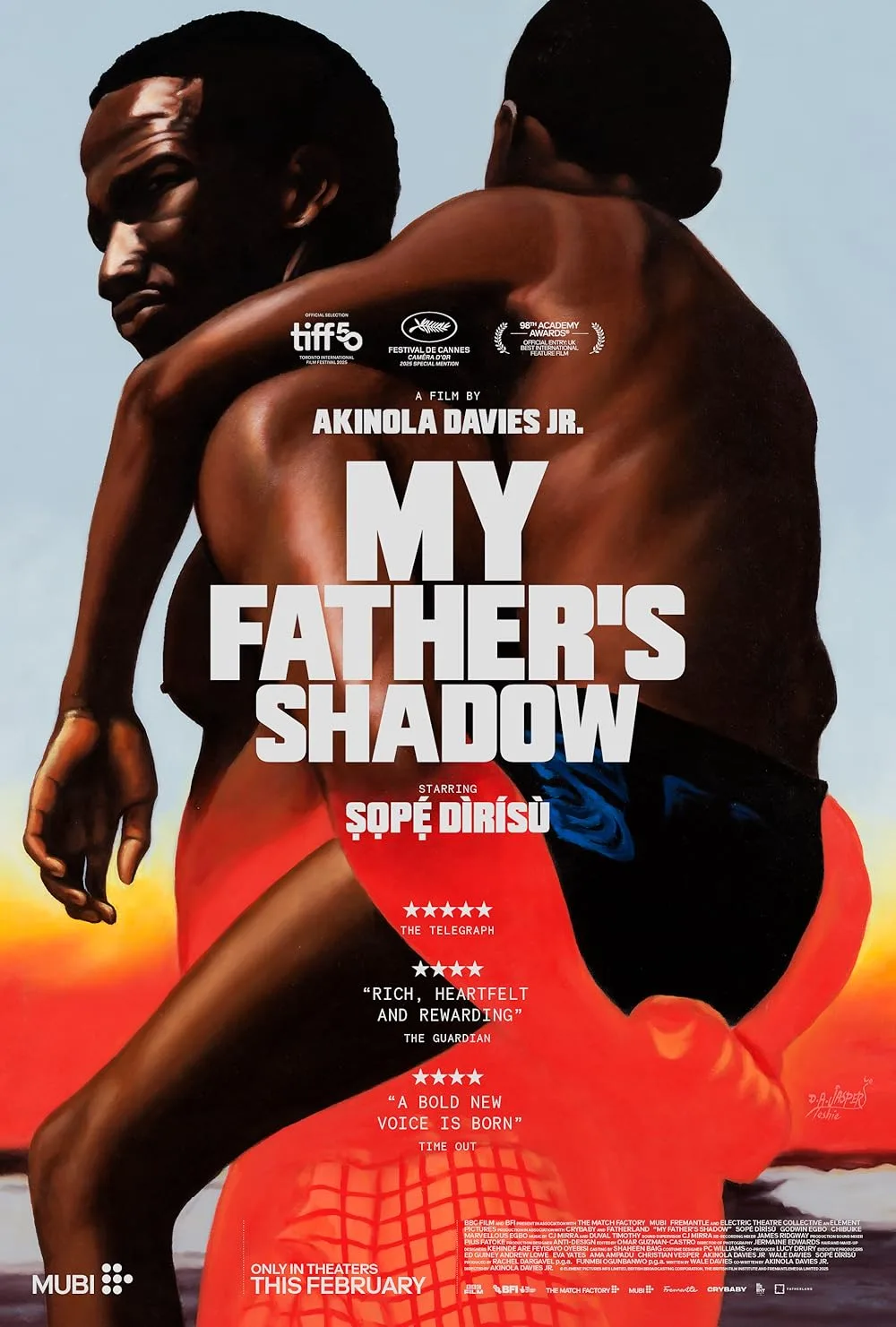

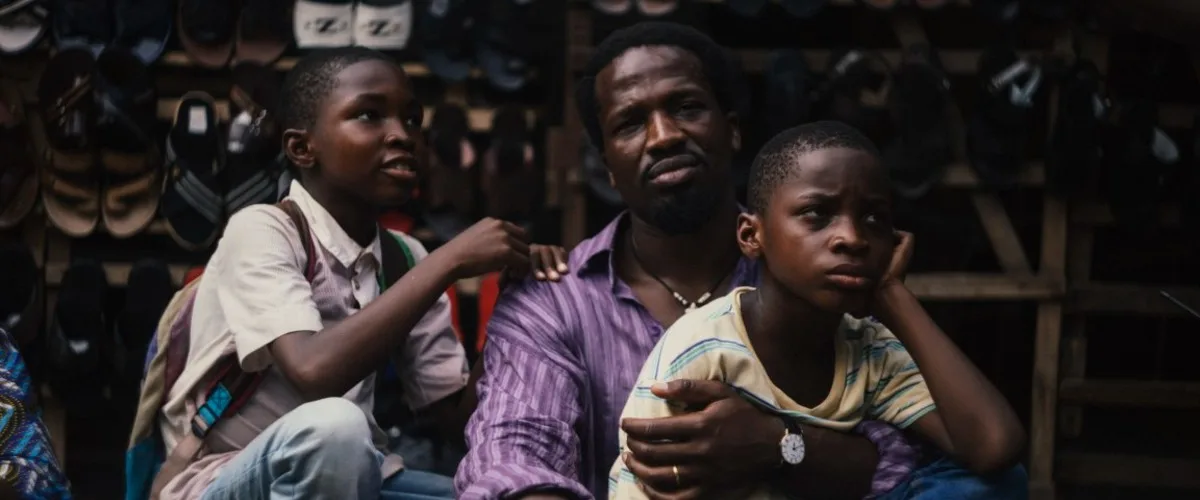
There is a magical bond shared between fathers and sons, and from brother to brother. It transcends boundaries and time. It pushes past planes of existence. It remains deep within the heart and is conjured by related blood, generational memory, and tough lessons learned along the way. This spirit is what stirs “My Father’s Shadow” and fills the emotional space between the viewer and the screen.
This is an enchanting film. At every moment, one feels spellbound by its earnest aims and its heartwarming excursions. We travel with these young brothers and their father from their modest village toward a bustling city. During their sojourn, we encounter the tensions pulled by a pivotal presidential election. Nevertheless, this isn’t really a political film. It’s about the grave rippling effects an authoritarian regime can have on a family living under it. And while I cannot mention the most direct correlation between this family and its country’s government, the intensity of its revelation makes a sharp impact on the senses and the soul.
This semi-autobiographical film begins at the worn Nigerian village home of Remi (Chibuike Marvellous Egbo) and Akin (Godwin Chimerie Egbo). The brothers are bored and alone; their mother has left for the day, and their father is nowhere to be found. Consequently, they make a kind of wish for their father, Fola (Sope Dirisu), to return. They find him exiting the shower. He provides very little explanation about where he’s been, only that he’s been working. Fola’s upright frame is resolute and initially unapproachable. Is this terse man whose stern expressions cut deep into his face a loving man? He is. Fola invites his young sons to take a trip to Lagos, where he must recover six months’ worth of backpay from his factory.
This reunion between a father and his sons allows further themes to erupt. To travel to Lagos, they take a danfo, and the camera catches sight of newspapers, which generally play a large role in orienting us to the politics of this 1993 version of Nigeria. One headline reports the military’s connection to a massacre at Bonny Camp, where four unnamed men were murdered. Later headlines further immerse us in the contentious election between MKO Abiola and Bashir Tofa. Fola, we soon learn, is an ardent MKO supporter who believes the Tofa regime’s crooked politics will bankrupt the country and his sons’ generation. Halfway to Lagos, however, their danfo runs out of fuel, leaving this father and his sons momentarily stranded. As the film progresses, we learn via protests surrounding service stations and high taxi rates that a petrol shortage is afflicting the city, allowing a palpable anger to simmer throughout “My Father’s Shadow.”
Director Akinola Davies Jr., cinematographer Jermaine Canute Bradley Edwards, and editor Omar Guzmán Castro, furthered by a script by Akinola and his brother Wale Davies, combine strengths to craft a lyrical day out that straddles the line between dreamlike and real. When Fola appears at his job and discovers that his supervisor won’t be in until the evening, he decides to take Remi and Akin sightseeing. Many of the places they traverse hold intimate significance for Fola, like the National Theater, where his wife loved attending plays, or an empty amusement park that served as a date spot.
There, Fola shares guidance and love with Remi and Akin. Consequently, Edwards’ frenetic camera steadies and Castro’s swift cutting slows, allowing us to luxuriate in a fatherly “Moonlight”-inspired trip to the beach and in an unearthed memory that tells us much about Fola’s protectiveness. This kind of visual language, backed by the photography’s warm lustre, arrives so eloquently that you can’t help but be transfixed by these mundane activities and shaken when the film’s peace is broken by surreal political scenes.
I rarely say ‘you should see this movie on the biggest screen possible.’ I believe great movies sustain themselves no matter their exhibition format. But “My Father’s Shadow,” if possible, should be seen in a theater. Not solely for the exceptional visual language but also because of its entrancing soundscape, which first takes shape in Duval Timothy and CJ Mira’s mercurial score. Their compositions seamlessly shift from the guttural bubbling of raspy melodies that seem to arise from mythical depths to light, harmonious notes that float in the air. How do you give voice to the indescribable perception of loss? To articulate such a thought appears to be useless in words; thankfully, we have this score to do it through sound. Similarly, the evocative swirl of danger—menacing soldiers conversing, political debates firing away, and urgent television and radio addresses—underpins the difficult uncertainty at the heart of this coming-of-age drama.
And while Davies can sometimes work too hard to telegraph that something isn’t quite right, such filmic determination is softened by the natural performances delivered by this small ensemble. Both Ebgo brothers play their parts close to the vest, maturely granting cracks into their performances that could be looked into from either direction. Dirisu does the same trick with equal complexity, offering a firm physical presence that diverges from the emotional toll that weighs on his visage. At every moment, you can feel every pound of spiritual weight that these actors bear.
“Everything is sacrifice,” says Fola. “You just have to pray you don’t sacrifice the wrong thing.” On first blush, whatever sacrifice was necessary to make “My Father’s Shadow” couldn’t have come at a cheap cost. But it certainly came with the highest reward.