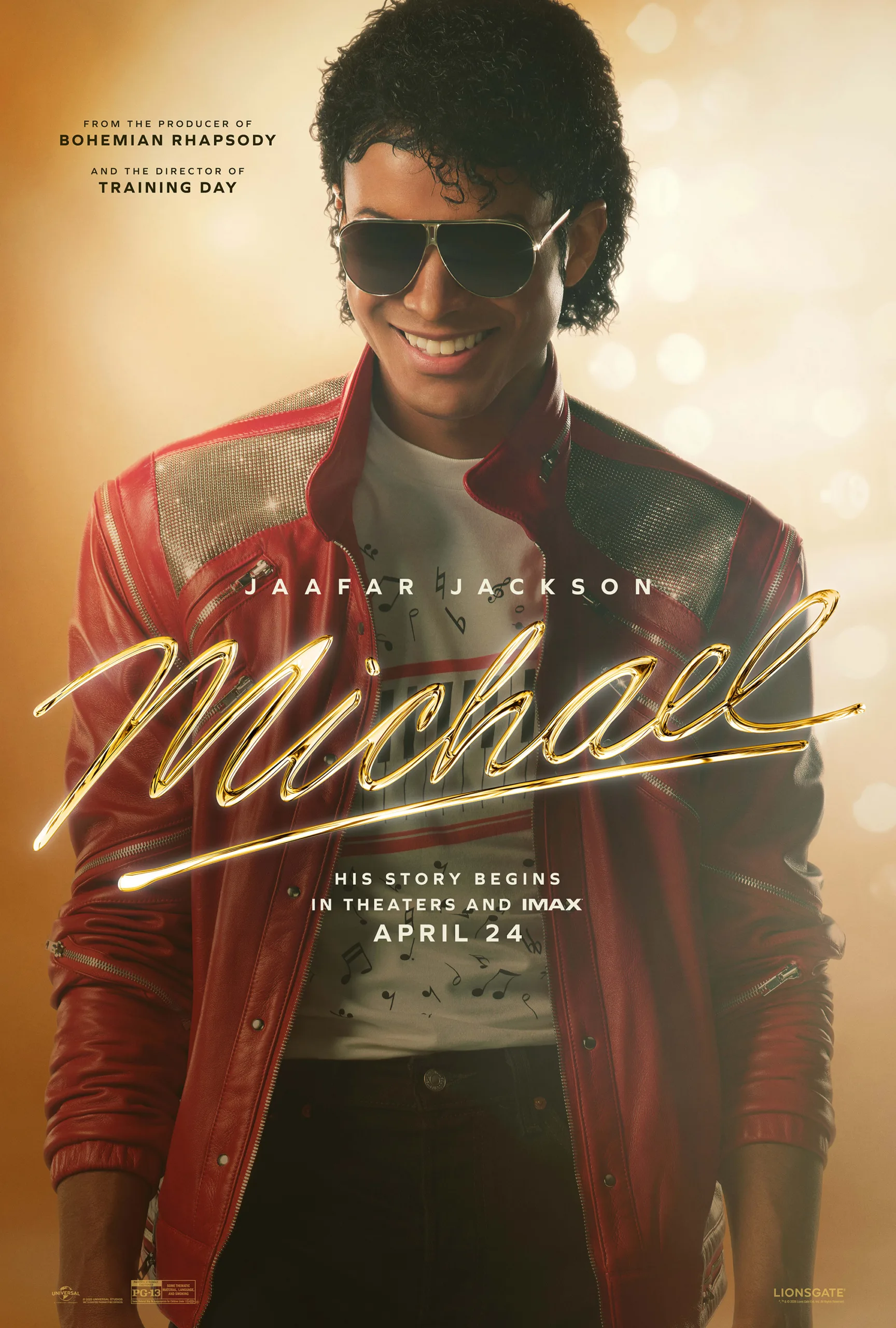

The moment the gaudy logo for Michael Jackson’s former company, Optimum Productions, pops up in the opening credits, the ruse is over. Antoine Fuqua might’ve had some cameras and microphones on hand to produce moving images and sound for this estate-approved King of Pop biopic. But make no mistake about it: “Michael” isn’t a movie. It’s a filmed playlist in search of a story.
“Michael,” the first half of the Cliff Notes of the singer’s life, features the Jackson siblings (Jackie, Jermaine, Marlon, La Toya, and the deceased) as executive producers. In every cloying moment, you can notice their fingerprints all over this plastic jukebox picture. “Michael” has already caused many to question what’s missing: Janet Jackson (who indeed doesn’t exist in this “universe”) and any reference to the singer’s legal troubles (though that bankrupted moral and narratively cowardly positioning by Fuqua certainly doesn’t help either). But the absence of those elements isn’t what breaks this insipid biopic. It’s the lack of any complex interest in Michael himself.
Built on a stringent chronological storytelling that makes choppy recreations inevitable, “Michael,” which spans from 1966 to 1988, possesses only one redeeming quality: the King of Pop’s music. Fuqua wastes little time deploying this precious asset, snapping viewers away from the film’s opening images of the black-clad singer awaiting a chanting audience back to Michael’s humble beginnings in Gary, Indiana. Michael (an adorable Juliano Krue Valdi portrays the young artist) and his older brothers are in their living room practicing harmonies under the watchful eye of their demanding father Joe (Colman Domingo). Contrary to his dogmatic dad’s orders to look him in the eye, the shy Michael cannot face his father. Michael’s supportive but timid mother, Katherine (Nia Long), never lifts a finger or raises her voice against her husband either, despite witnessing his abusive treatment of their youngest child. That tenuous family dynamic becomes Michael’s biggest hurdle to becoming a true artist in John Logan’s script.
This repetitive biopic is afraid to navigate the singer’s anxieties, traumas, and frustrations, and its flat characterizations prevent it from interrogating Michael as a creator or person. “Michael” leaps from one event to the next without reflection or pause, hastily attempting to summarize an accepted mythology of the singer’s unlikely rise to stardom in a surprisingly tight 127-minute runtime.
Fuqua seems to care little about quality control. Within the film’s first twenty minutes, we zip from 1966 (when the Jacksons first began touring) to Motown’s discovery of them in 1968 at a show at Chicago’s Regal Theater, and into their early recordings with the seminal label in 1969. Fuqua doesn’t stop to let viewers consider the fraught implications of Joe sending his young sons to work in an adult club, or how Michael was often singing about sexualized themes that were beyond his age.
The breakneck pace belies what must’ve been the director’s initial intent, which was probably sliced away in the edit. Clearly, he wants to draw connections between the singer’s permanent childlike state and the mature sights he witnessed far too soon. But Fuqua’s desires are sanded away to make enough room to play the singer’s earworm wonders.
True to its title, “Michael” doesn’t make much space for its other characters either. The singer’s brothers are glorified extras. We don’t learn which brother Michael was closest with, which he fought with the most, or who he laughed and cried with the most. And while one could argue the biopic is about the singer, not his brothers, isn’t your relationship with your siblings a reflection of who you are? “Michael” isn’t interested in those human details. It has nothing original to say about him or those around him that can’t be found elsewhere.
As a result of that, Domingo gives the worst, most caricatured performance of his career. He’s not playing a real person. The talented actor is relegated to portraying a boogeyman. These underwhelming characterizations undermine the potential emotional impact Michael’s arrested development should have. Michael getting Bubbles the chimp (who might be the best-drawn character apart from the singer), along with giraffes, a snake, and children’s toys, aren’t the quirky traits of genius. They’re a cry for help. But Fuqua often plays these scenes for laughs, as if we’re meant to guffaw at Michael’s absurdity rather than sit with his obvious pain.
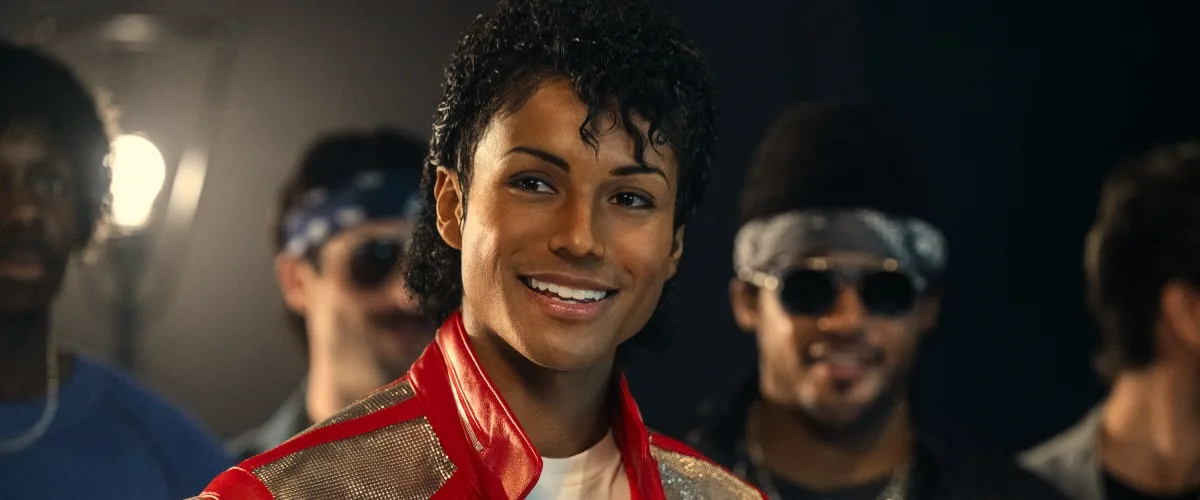
Jaafar Jackson, Jermaine’s son, offers a few momentary glimpses into his uncle’s soul. The singer’s decision to reduce the size of his nose to more acutely match Peter Pan, his favorite character, carries a mournful weight because of Jackson’s unexpected emotiveness. Jackson’s sturdy character work helps scenes around Barry Gordy (Larenz Tate) and Michael’s steadfast bodyguard, Bill Bray (KeiLyn Durrel Jones), hit their mark by showing how the singer often sought father figures in others. But there’s little else he can accomplish with the hagiographic material, which can’t help but make viewers aware that Michael was kind and charitable toward children. (Whether Fuqua is able to follow up with a sequel that gives these scenes greater context beyond mythmaking remains to be seen.)
Michael is only portrayed as a victim here. Which isn’t to say the singer didn’t endure truly horrific events—from his father’s abuse to the Pepsi incident, which is depicted in the film—rather, he possesses no flaws, personal opinions, or definable traits. He only exists to overcome Joe’s physical and emotional violence against him.
“Michael” is hollow. Even the musical sequences leave much to be desired, largely due to the incomprehensible camerawork. Fuqua takes the time to find intriguing compositions, like his focus on Michael’s nimble feet during his Motown 25 performance of “Billie Jean” or Michael working through the choreography of “Beat It,” only to opt for an inane pans behind the crowd. Such nauseating movement blunts whatever power the evocative photography might hold by committing the one sin the singer even chastises a cameraman about in one scene: You can’t remove the energy from the dance.
The King of Pop’s potent songs will certainly paper over some of these technical deficiencies. But they can’t obscure the fact that, unlike its subject, “Michael” isn’t artistically unique, immediately entertaining, or boundary pushing. It’s beyond safe and so unchallenging. You’re better off either queuing up the Jacksons miniseries or marathoning Michael’s incredible music videos than watching shoddy recreations of them.