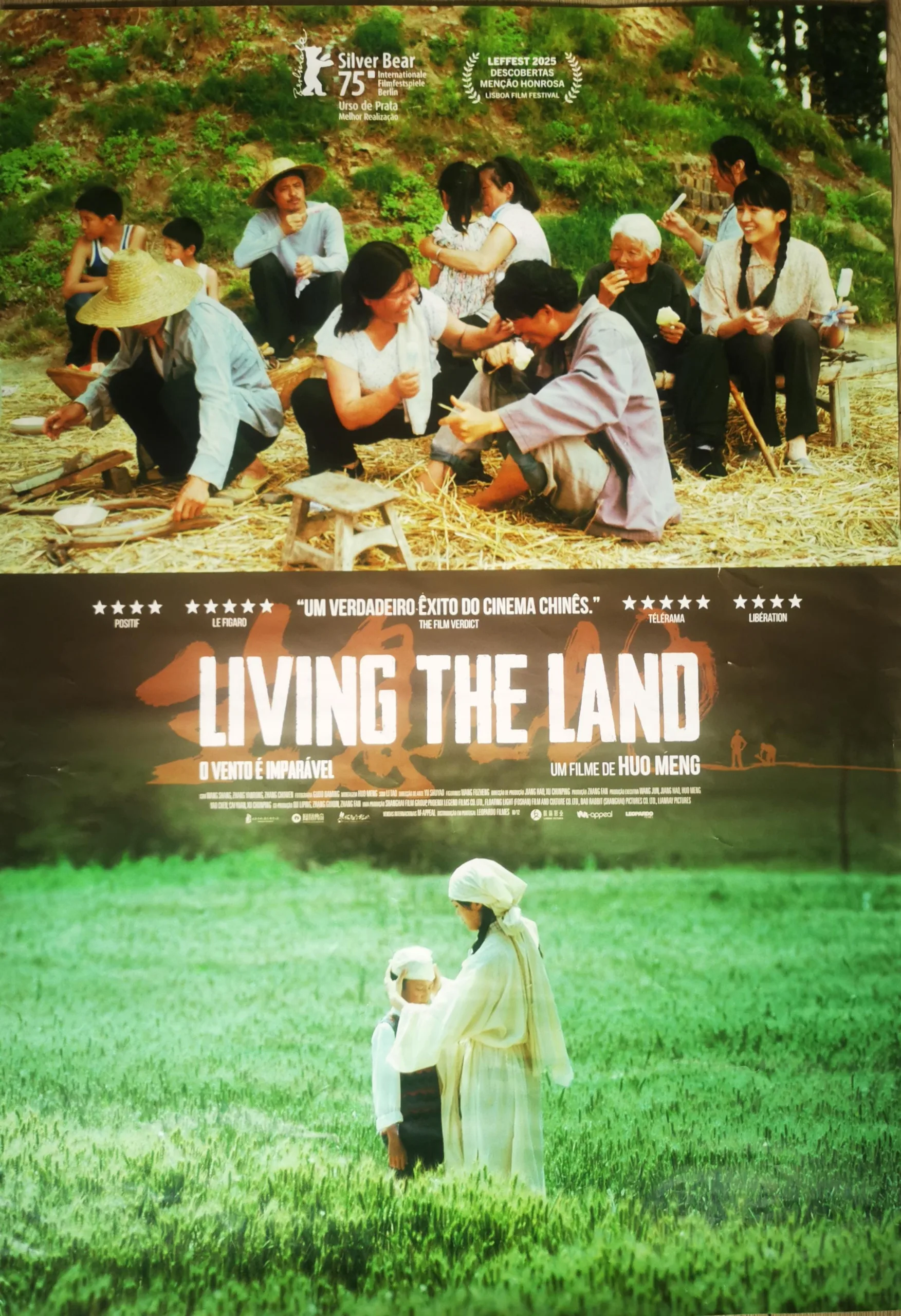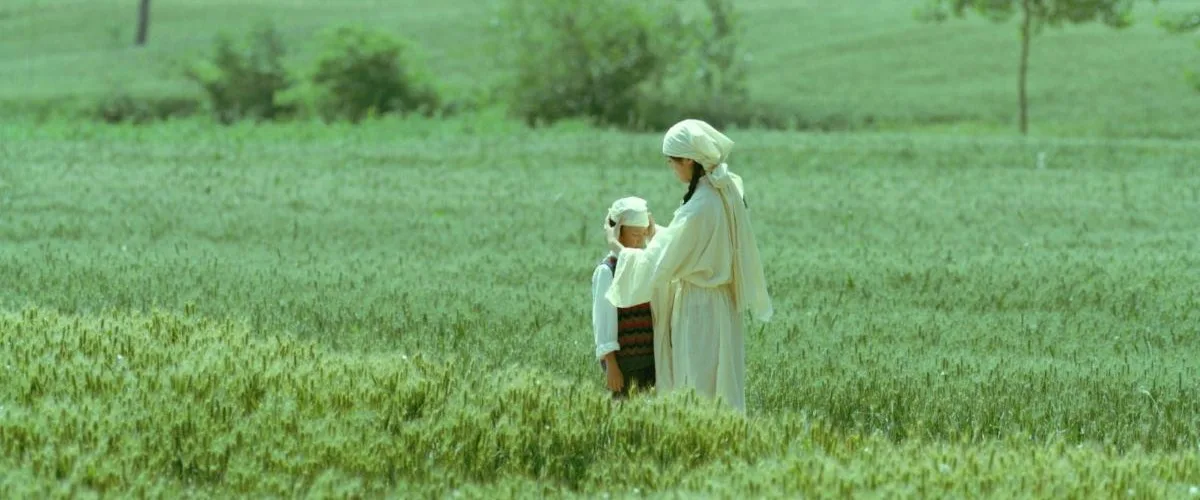
The year is 1991 in “Living the Land,” Huo Meng’s second feature, but the rhythms of life in the small village in Henan province are from a pre-modern era. The villagers work the land by hand, they plant and harvest wheat, and they make bricks. The work is back-breaking and constant. They live communally. 1991 or no, the villagers live the way their ancestors lived. There are no telephones, tractors, or technology. But change is coming.
The film takes place over the course of a year. 10-year-old Xu Chuang (Wang Shang) has been living with his mother’s parents in the village where she grew up. Chuang’s mother and father live far away, and they see their son a couple of times a year, if that. They left to seek out opportunities in the south, but later in the film, it’s revealed that Chuang is their third child. Due to China’s one-child policy, Chuang needs to be kept a secret.
Chuang feels a little displaced, but he is also a resilient child, fully absorbed in the village world. He is very close to his great-grandmother (Zhang Yanrong), a 93-year-old woman who has seen it all. Chuang is also close to his aunt Xiuying (Zhang Chuwen), barely out of childhood herself. Xiuying looks out for all the children. Chuang, in turn, looks out for his mentally disabled older cousin, Jihua (Zhou Haotian).
Rituals dominate the world here, the work, the seasons. There are funerals and weddings. In “Living the Land,” we get both. These are not just single scenes, but lengthy events, similar to the opening scene of “The Deer Hunter,” or, a closer-to-home example, Edward Yang’s wedding-themed “Yi Yi.” These gatherings are an all-hands-on-deck situation. There is music and cooking and decorating, firecrackers and song.
Huo and his cinematographer, Daming Guo, capture these events in long unbroken takes, the camera either following or preceding processions through the village or the wheat fields, the sound echoing across the space. There are hundreds of people in these sequences, and Huo takes his time, as he does with everything.
The whole film has an almost soothing pace, appropriate to this rural world, where they still use the lunar calendar. Every move of the camera is purposeful and poetic. The landscape is beautiful—whispering fields of grass, waving wheat, misty dawns … and even knowing how hard everyone has to work to keep the land fertile and productive does not erase its magnificence. Huo’s debut film, “Crossing the Border” (2018), was a road trip movie, showing a similar sensitivity to the natural world.
There are few scenes in which Chuang is not present. Because he is a child, there are things in the adult world he barely understands. Xiuying turns down a potential suitor, which causes her major problems later. Who can blame her for looking around and not wanting to get married? Xiuying’s troubles weigh on her, but all Chuang knows, from his perspective, is that he loves her. We can see so clearly what she is up against, what she is being forced to choose, but Chuang will only realize this when he’s an adult, looking back on it.
Huo finds different ways to suggest this disconnect in time. Voices float in the air, coming from off-screen or from the background, the adults discussing matters with world-shaking implications for Chuang and his village. More and more people are moving away to find work. One man talks about maybe running a factory with a friend. The economy is loosening up, encouraging investments. The village acquires a tractor. It will be a gamechanger. Someone gets a television, and the villagers cluster around it at night, watching gauzily filmed propaganda about beautiful “pure” migrant women. The actual migrant women, encrusted in dirt, watch, delighted. Oil prospectors arrive, wanting to drill. Technology butts up against tradition. Would that we could have both, but humanity has not quite managed it yet. Elegiac is an apt descriptor for “Living the Land”. Huo Meng ends the film with a dedication “to my childhood and the dear ones in my hometown.” The details feel like memories. On the radio is news from the war in Iraq (the first war).
The cast is made up mostly of non-actors, giving “Living the Land” a moving verisimilitude. The film depicts a very close-knit group, everyone talking at once, arguing, gossiping, and chatting about everyday things. These group scenes are a wonder of ensemble creation. There’s a moment where Chuang’s grandmother breaks down into sobs over a minor inconvenience, and her anguish and exhaustion are palpable. Young Xu Chuang is a watchful, open presence. Everything he does is believable.
The Cultural Revolution is no longer, but its echoes remain. There are bones of unburied people out in the fields. The people pay for things in grain, including “donations” and/or “tribute” to the local Party rep. A PA system blasts announcements to the village daily, including a command that all married women report to the doctor for an exam. Pregnancy monitoring is run by the state, an invasion of privacy that nobody questions. There is serious trouble if you don’t comply, if you “accidentally” get pregnant. The old ways and the new do not exactly mix. The tensions in “Living the Land” are experienced in a bittersweet key. We are looking at Atlantis. The film is deeply mournful, but also pierced with joy.
In Hemingway’s The Sun Also Rises, Mike Campbell is asked how he went bankrupt. Famously, he says, “Two ways. Gradually, then suddenly.” The change in “Living the Land” is gradual, then sudden. Overnight, a world and a time are gone.