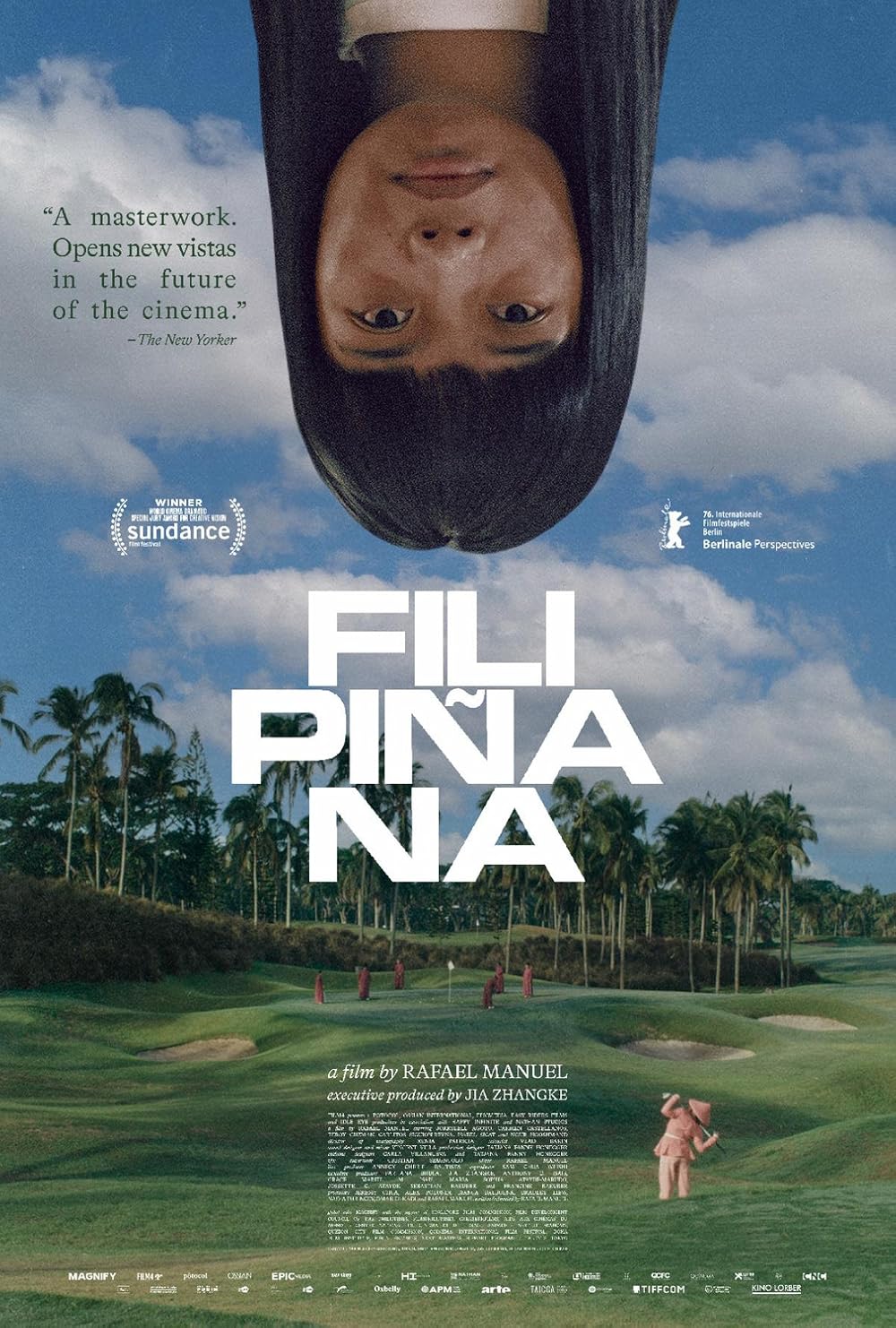
The manufactured tranquility of an elite golf course in Manila can’t conceal the festering inequality examined within the boxy frames of Rafael Manuel’s debut “Filipiñana.” In fact, it’s that false sense of ease that such a place procures that makes the filmmaker’s portrait of an infuriatingly disparate society so brilliantly biting.
Our guide through this misguiding place is 17-year-old Isabel (Jorrybell Agoto), one of many “tee girls” on site whose job is to position the golf balls for clients to practice their strike. Their pastel prim uniforms are part of the soothing color palette of subdued shades that don this playland of manicured lawns with a veneer of whimsy. That deceiving façade has prominent cracks, though. Violence, both tacit and physical, is just beneath the surface.
“One water container per family,” yells a government worker to a long queue of people surrounding a water truck on a busy street during the film’s opening sequence. That’s the sole instant where Manuel shows what’s beyond the country club’s domain. He cuts from that crowded urban scene to the sprinklers watering the grass in that enclave of amusement for the most privileged. There’s no scarcity of water on the golf course. Such woes are reserved for the poor. Like most spaces that cater to the rich, their number one goal is to shield their patrons from any inconvenience. Their escapism, of course, is built on exploitation.
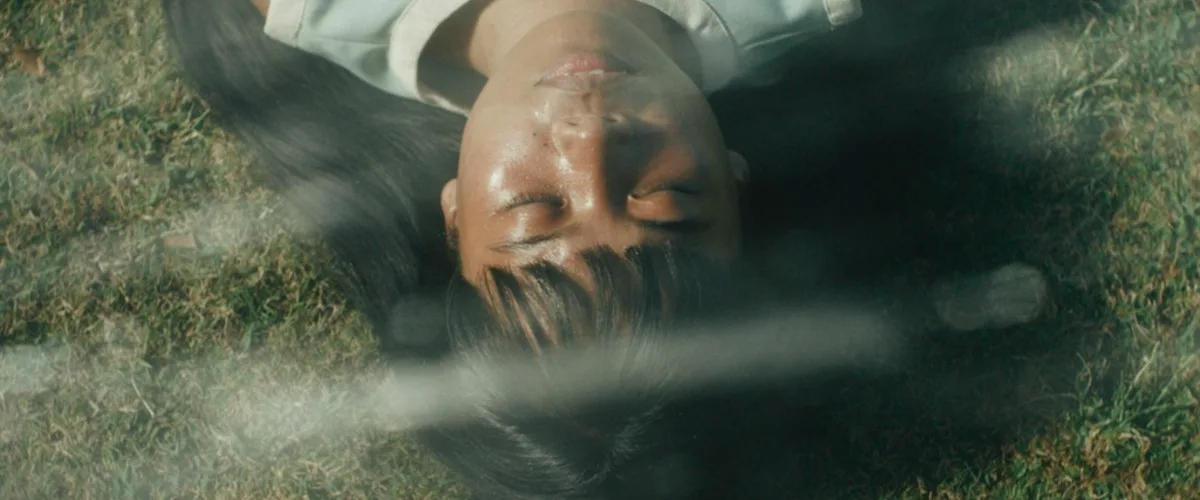
Each static composition that Manuel and cinematographer Xenia Patricia execute with a formalist eye reads both visually attractive and laden with meaning. They film Isabel with the camera between the legs of the men benefiting from her services. The image feels strangely uncomfortable, if not explicitly sexualized. It communicates a marked, often gendered hierarchy with an expectation that servitude must be performed with a smile.
When a batch of new guests arrives, the employees put on a show of music and dance to welcome them. Manuel veers into the fantastical absurdity, showing the cleaning staff and other employees in distinct areas across the facilities moving to the same beat, as if they were carrying out their responsibilities in choreographed fashion.
New to the job, Isabel is only one small cog in this well-oiled machine. Though Agoto delivers few lines, her eyes fill with curiosity as Isabel navigates the bizarre environment with strict rules. Only golfers and caddies (women dressed in pink hues hired to carry equipment and retrieve balls) are allowed on the course. “Filipiñana” at first offers its heroine a lifeline of hope in the form of a casual conversation with Dr. Palanca (Teroy Guzman), the club’s president, who happens to be from the lush Ilocos region, just like her. Seeking an ally in the higher circles of power, she ventures into discouraging discoveries.
Beyond chronicling Isabel’s disillusionment, the director prioritizes Clara (Carmen Castellanos), a Filipino American young woman not much older than the teen girls visiting her uncle, a higher-up at the club. He persistently tries to convince her to move to the Philippines and join the business. He argues that talented young Filipinos should stay in the country or return home to infuse new blood into the economy. Clara, who lives in New York, isn’t convinced. She seems to detect the hypocrisy that permeates here.
In one of Manuel’s sharpest bits of writing, Clara’s caddie asks if in the U.S. golfers also have female caddies. She is shocked to learn that her position doesn’t exist in the same way on American courses. It’s as if the woman can’t compute that class operates differently elsewhere, especially when it comes to physical labor.
That’s not to paint the West in a positive light, but to highlight that the subjugation is part of the appeal for affluent locals and foreigners. Discontent brews among the workers, but they can only share their true feelings while sharing a meal away from their bosses. Manuel balances the public-facing charm employees are expected to deliver with imagery and interactions that betray an underbelly of unspoken mistreatment.
‘If one of them dies, it will be replaced,” a worker says matter-of-factly early on about a tree suffering under the punishing sun. But the blunt statement about the easy disposal and substitution of any element decorating this artificial set conceived for the enjoyment of the wealthy also applies to the lower-class employees that keep it going. As “Filipiñana” reaches its unsettling conclusion, both Clara and Isabel understand which lives matter most, and which side of that asymmetrical scale, based on material resources, they stand.
In a year of several standout debuts, Manuel’s ranks among the most impressive. The microcosm he meticulously constructs makes for a rivetingly caustic indictment of his homeland.