
In the last year, it feels like Canadian media is finally getting the spotlight it has long deserved. From Crave originals like “Heated Rivalry” taking the television industry by storm to “Nirvanna the Band the Show the Movie” becoming a beloved staple of modern cinema, there’s been a growing dedication not only to these properties, but to getting them made. Canadian media has obviously always been around, but its reach, and therefore the money invested in creating it, has never been this grand. Finally, projects are being greenlit and funded, and with them comes the rebirth of a genre that Canadian directors and writers once reigned supreme over: horror.
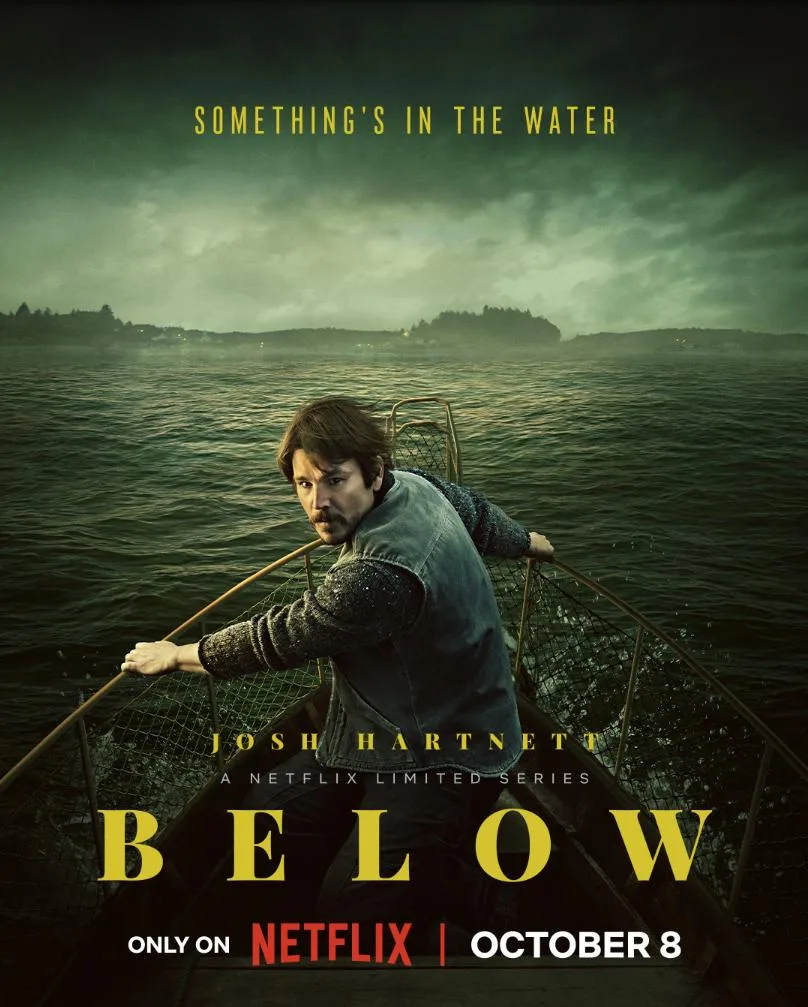
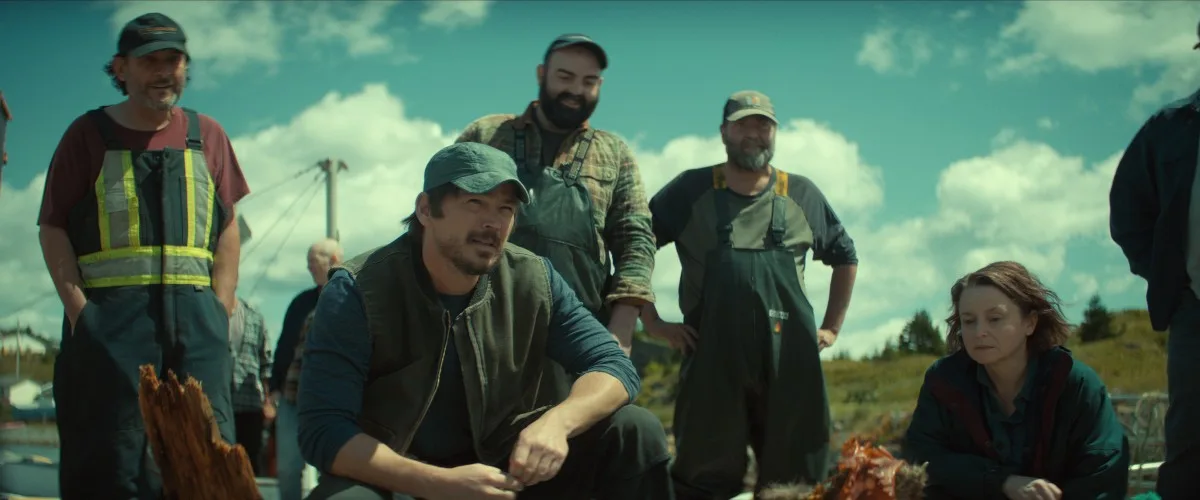
Created by Jesse McKeown, Netflix’s “Below” focuses on the fishing town of Snooks Arm, Newfoundland, as it welcomes former residents home during “Come Home Week,” a celebration where those who have moved away are invited back to reconnect with their community. Snooks Arm isn’t a normal village, though; it’s home to a community that was forced to leave their land and, decades later, is being asked to do it all over again.
The government promises a hefty payout if they do, and while most residents are swayed, the series’ protagonist, Calvin Penny (Josh Hartnett), won’t hear a word of it. To make matters worse, Calvin’s ice-fishing business stalls when a massive glacier containing contaminated ice washes into the sea bordering his home.
When he takes this so-called “bad ice” to scientist Fonda Howander (Mackenzie Davis), the two realize, with growing horror, that a creature resides in the water that may predate not only Snooks Arm, but the nation of Canada. This creature hasn’t just shown up; it has lain dormant in the waters for at least as long as Calvin has been alive. When his father drowned during the family’s initial relocation in the 1980s, as Calvin tried to save him, he was faced with the glowing eye of this very same monster. Memories of the creature have haunted him for decades, leading him to believe he, his sister Ruth (Willow Kean), his daughter Mary (Ruby Stokes), and his sons Wade (Charlie Heaton) and Jay (Rohan Campbell) have been cursed.
The interweaving of aquatic horror with family drama allows “Below” to excel, propelling the series into a stratosphere that is beyond that of a standard creature-feature. The show is unabashed in its willingness to show Canadians’ dedication to preserving our unique ways of life, making each character feel lived-in and integral to the story.
While the series doesn’t bombard viewers with jump scares like HBO’s “IT: Welcome to Derry,” it still imbues each sequence with a sense of dread. Gorgeously shot by cinematographer William Baldy, each image in the series is as lush as it is eerie, as if Baldy is trying to hypnotize viewers before ensnaring them within Snooks Arm’s welcoming demeanor.
With its stunning craft and fantastic performances from Hartnett and Heaton, it’s clear that the people behind this series set out to create something wholly original, and also have a blast while doing so. In one of the series’ later episodes, Calvin is trapped in a submarine with two out-of-town scientists trying to tag the sea-beast terrorizing the town, their bodies jolting under red neon lights. The shrunken spatial quality of this supposed submarine is charming, and looks quite unlike those from films like “Mission: Impossible – The Final Reckoning.” Yet the series benefits from its small scale, as this sequence and others like it become overly claustrophobic, forcing the viewer to see each act of terror through Calvin and his children’s eyes. This specific quaintness is endearing, and ultimately allows the series to stand out amongst television’s recent genre offerings.
Unlike most recent horror films and TV shows, the horror this series is steeped in doesn’t come from a masked killer or a protagonist rife with grief. Instead, it comes from environmental events not dissimilar to those slowly wreaking havoc on the world we live in. “Below” forces you to confront how rural communities have continued to be infiltrated by tech companies and billionaires who threaten their way of life, and how the tactics they use to move and buy out residents not only affect these people, but the creatures and ecology that have been present here for centuries longer. As pressing as it is entertaining, the six-episode series shapes up to be one of the year’s best and most poignant.
All episodes were screened for review. Streaming on Netflix.