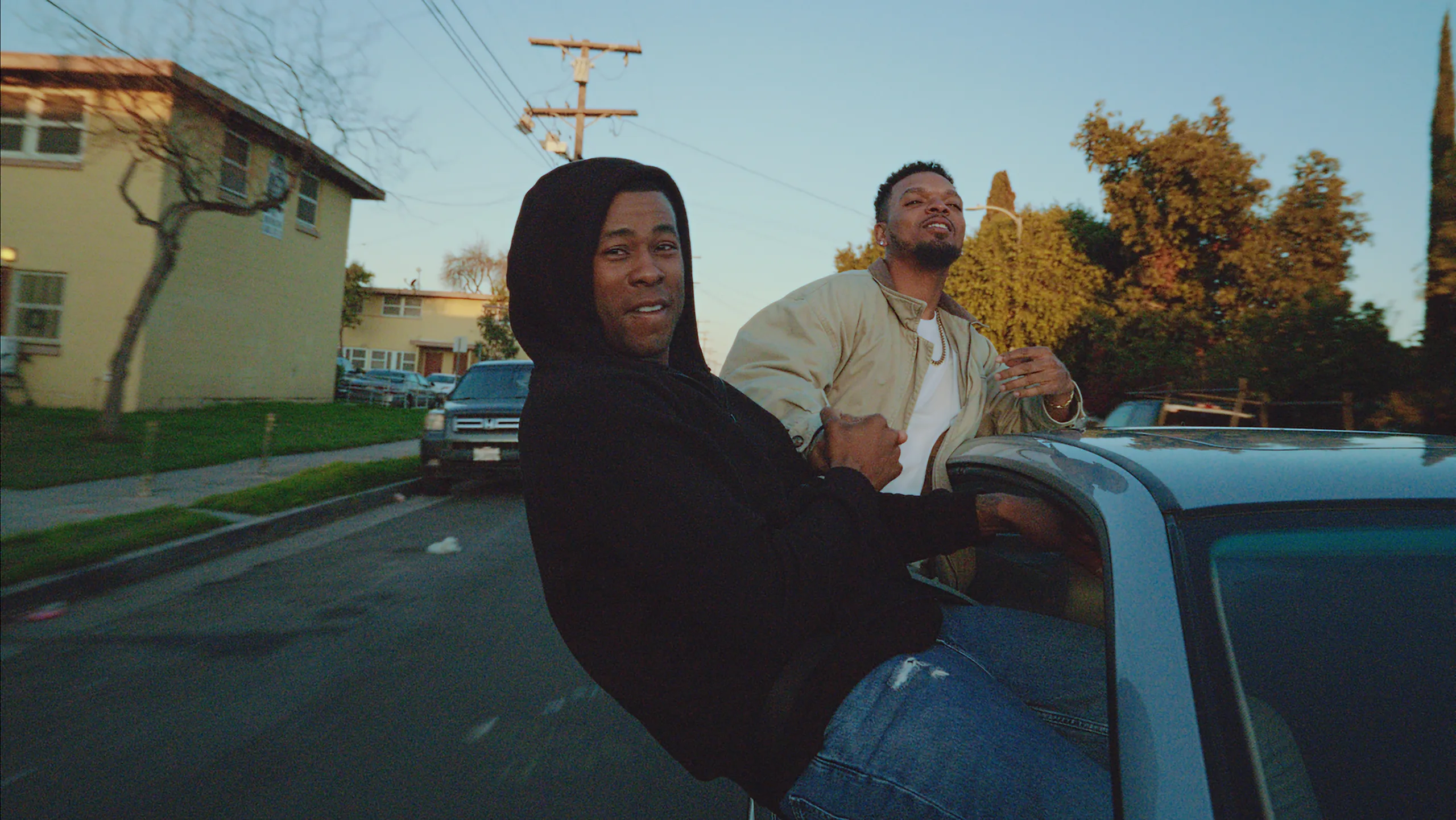
I say it every year, but NEXT is my favorite competition at Sundance. It’s a place where the boldest, most experimental voices often lurk, giving us a chance to imagine the possibilities of what could be promising careers. In this dispatch is a coming-of-age statement, an erotic thriller, and a queer rodeo documentary. Each feels fearless in their artistic approach and aesthetic sensibilities.
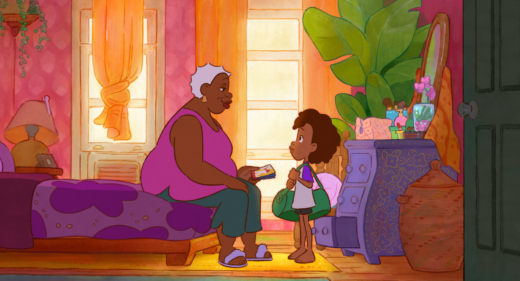
The most accomplished of the three is Walter Thompson-Hernández’s gorgeously composed South Los Angeles coming-of-age film “If I Go Will They Miss Me.” An adaptation of his short of the same name, the lyrical narrative is defined by a bracing sense of wonder and an evocatively delivered humanism that, at first, is an ode to Charles Burnett’s thoughtful social realist dramas.
During the film’s soaring opening montage, Lil Ant (Bodhi Dell), a perceptive teenager whose father Big Ant (J. Alphonse Nicholson) has recently been released from prison, tells us via voiceover about his father’s first brush with trouble. While Jon Baptiste croons a cover of “This Bitter Earth,” Lil Ant recalls that his dad was once a fun-loving kid who found problems when he threw a brick at a janitor from a rooftop. While Lil Ant imparts this tale, Thompson-Hernández and his co-editor Daysha Broadway nimbly intercut scenes of his father’s past frivolity with contemporaneous images of his father and mother, Lozita (Danielle Brooks), shouldering the weight of Big Ant’s absence. The latter sentiment is visually transposed onto Big Ant and Lozita as they engage in a stiff, slow dance that recalls Henry G. Sanders and Kaycee Moore’s burdensome swaying in Burnett’s “Killer of Sheep.”
As Thompson-Hernández’s film progresses, it delves deeper into Lil Ant and Big Ant’s shared anxieties about their father-son relationship. Lil Ant looks up to his dad, even brandishing a smaller version of his dad’s gold “A” necklace over his white t-shirt. Lil Ant’s sensitivity startles Big Ant, who worries that his artist son has placed him on too high a pedestal. Lil Ant, in fact, literally sees his father as a Greek god by drawing his dad as Poseidon and his horse as Pegasus (a nod to Burnett’s own depiction of Black people’s Western heritage in his short “The Horse” and to Thompson-Hernández’s past journalistic interest in Compton cowboys).
Big Ant, conversely, is haunted by visions of Black kids, such as his son, standing outside in unison with outstretched arms as though they’re flying. Escaping one’s surroundings via the air—Lil Ant wants to be a pilot when he grows up—recalls African-American folkloric art and stories, which conceive of Black people escaping enslavement by soaring away. Consequently, Thompson-Hernández includes copious scenes of Lil Ant staring at jets in the sky and playing with his own toy airplanes.
Thompson-Hernández combines these poetic elements with an innate sense of time and place, often capturing South Los Angeles and the many changes that have occurred in Watts over the decades, depicting a community that is both caring and precarious for young Black men. Big Ant, in fact, rejects Lil Ant’s devotion when the latter starts engaging in increasingly dangerous behavior. The father also begins to drift away from Lozita’s love. Their difficult marital trial finds potent life in Nicholson and Brooks’ organic chemistry, defined by Nicholson’s ability to project fragility in his physical frame and Brooks’ capacity to fold her easeful presence into his volatility.
Thompson-Hernández bolsters Nicholson, Brooks, Dell, and the film’s other delicate characters by crafting piercing portraits that give a visual voice to the inherent joys and unique rhythms of Black life. The film has several waves of these montages, hitting closer to the heart with each one. In that and in many ways, “If I Go Will They Miss Me” is both the kind of new, vibrant pursuit that has often defined Sundance and the announcement of an exciting, impactful voice in director Walter Thompson-Hernández.
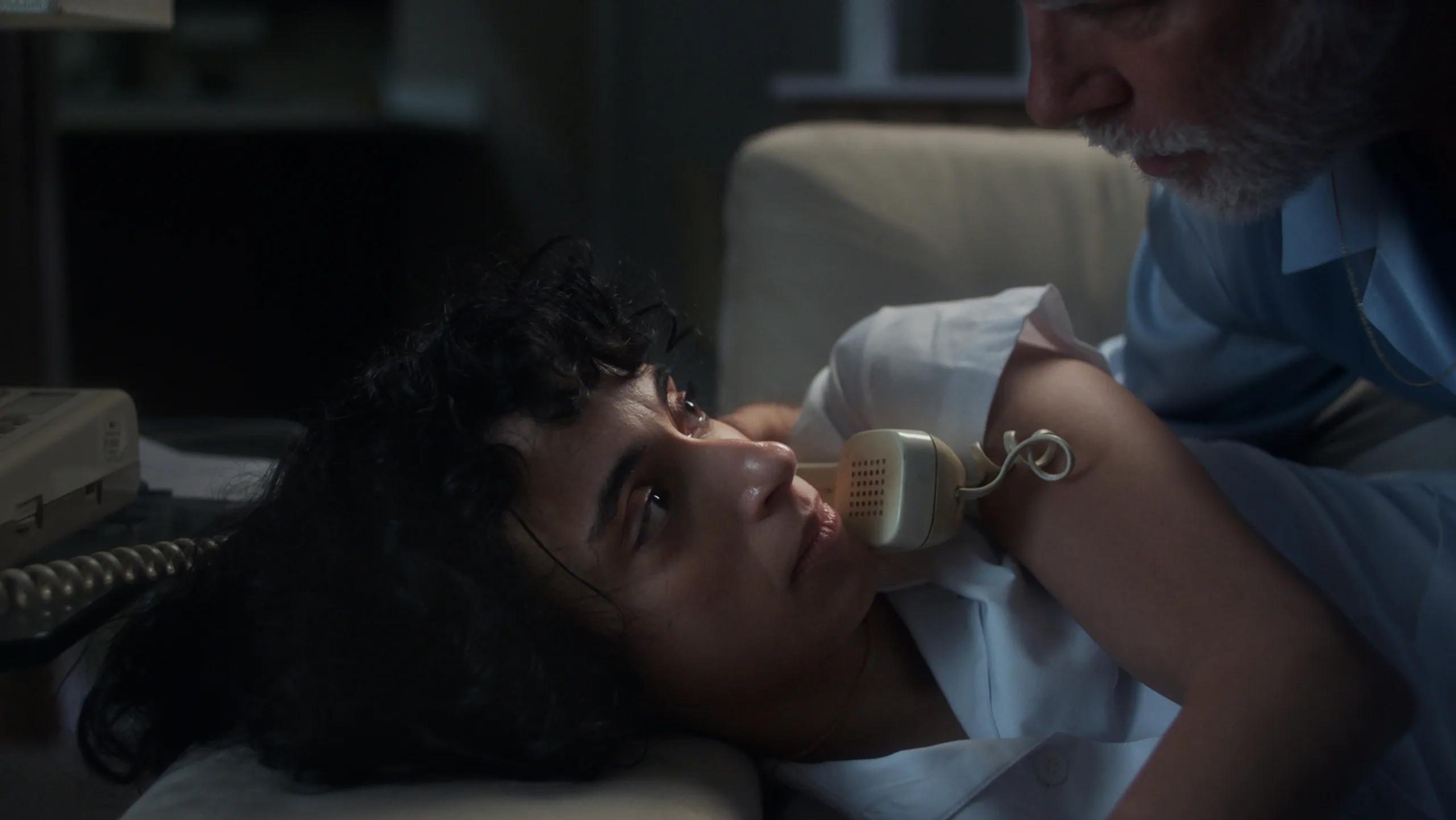
Georgia Bernstein’s erotic comedy “Night Nurse” doesn’t beat around the proverbial bush either. Heck, the film begins with a woman sexually role-playing as a granddaughter begging for help from her grandfather. The camera travels up, down, and across the spiral telephone cord that slenderly wraps itself around her body. This steamy prologue culminates in ecstasy.
Before long, we’re introduced to the recently hired Eleni (Cemre Paksoy), a nurse assigned to care for Douglas (Bruce McKenzie), a troublesome sex pest who supposedly has dementia. In reality, Douglas is a con artist. Rather than having cognitive decline, he cunningly coerces his nurses to call other helpless elderly residents in this gated retirement community to pose as their granddaughter. In this scenario, the granddaughter is usually in jail or being held hostage and needs their grandfather to send $10k. The confused old men always send the money, helping to furnish Douglas’ extravagant lifestyle.
As the opening teases, this con, of course, has a sexual component too. When Douglas “bends” Eleni to his will, he lustfully pins her against the fridge. Parksoy’s performance, particularly her wide eyes, at this moment, is incredible. Initially, you can’t discern whether she’s enjoying this assault or is frozen by fear. Nevertheless, as Douglas rises to Svengali-like heights, we come to find that Eleni doesn’t simply want to please her patient. She is obsessed with him.
At times, “Night Nurse” recalls both Steven Shainberg’s “Secretary” and Cronenberg’s “Crash.” The former arises from Eleni and Douglas’ complex relationship, in which her occupation blends with her submissiveness. For the latter, it’s the presentation of psychic fixation as a kind of sexual subculture. Nevertheless, the film somewhat loses its intrigue by rendering Eleni as a cipher. While people susceptible to cults are often empty vessels waiting to be filled by a dominant figure, Eleni is a tad too abstract. There are even points where she seemingly disappears. The unsteady focus on her is certainly indicative of Douglas’ wandering point of view, visually furthering the angst she feels when she’s ignored. Still, that intent doesn’t wholly work dramatically, to the point that when we arrive at the coy ending, its tenderness appears to be forced.
That lack of commitment doesn’t undo the eloquent framing and uneasy close-ups that give this film its haunting verve. Nor does it diminish Parksoy and McKenzie’s imposing performances and the film’s wonderfully awkward comedy. The ending is just too giving for a film that succeeds best when it cedes nothing.
Dreamlike and frank, Efraín Mojica and Rebecca Zweig’s “Jaripeo” is a clear-eyed survey of the queer culture that exists within Michoacán’s hypermasculine rodeos. From the outset, “Jaripeo” has a clear direction, literally. The opening scene features a white Toyota truck winding through the hills surrounding Michoacán, reaching a crest where a vast expanse of cornfields comes into view. Mojica is the driver, while Zweig occupies the back seat. From this spot, Mojica recalls their experiences visiting the rodeos where drunkenness, partying, flirtation, and queer desires take hold. Mojica and Zweig also speak to the many gay men who parse their lustful fixation on masculinity, either in themselves or in their flings and partners.
“Jaripeo” isn’t a long film. It runs at a controlled 70 minutes. Nevertheless, it accomplishes a great deal through its aesthetic tastes—which mix grounded vérité sequences with stylized Super 8 delights—and its ability to embed us in a community through graceful curiosity rather than any anthropological fascination.
Because Mojica hails from Penjamillo, the filmmakers locate substantial, oftentimes immersive images of rural rodeos. In one scene, the camera is in the bucking chute with the rider as they try to mount a bull, often capturing the balletic sensuality of the male form as they hope to remain locked to the muscular body beneath them. The onlookers are a mix of queer femme and masc men, and heterosexuals.
The rodeos here serve as liminal spaces where the separation between closeted discretion and open frivolity is as tight as the jeans on these many cowboys. In several of the one-on-one conversations between Mojica and these subjects, they discuss how often they’re approached by “straight” men who only want to hang out at night, preferably wasted—further establishing these daylight rodeo excursions as negotiated instances of presentation and acceptance.
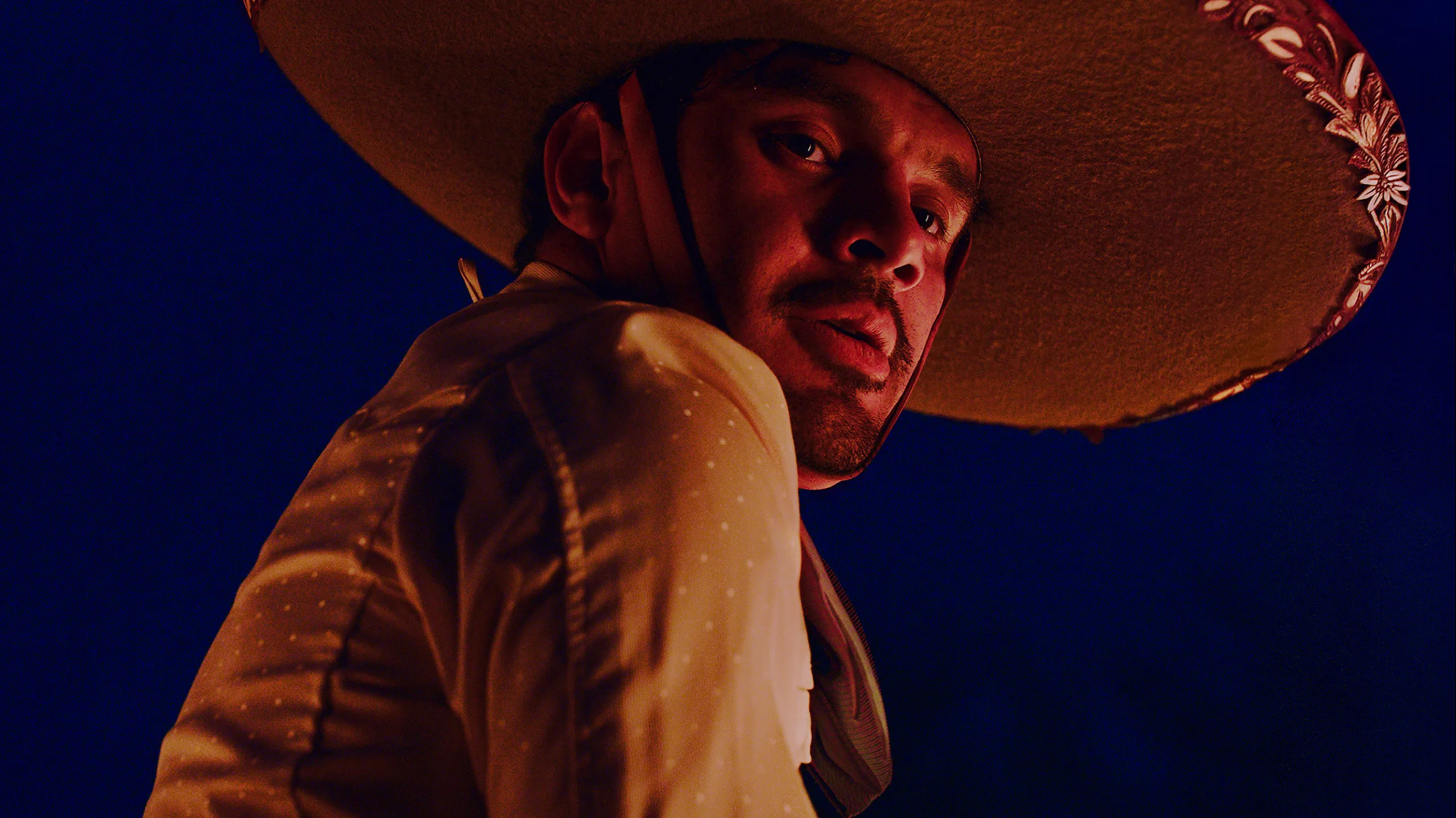
Mojica and Zweig also offer opportunities for their shared imagination to flourish in the film’s many fantastical stagings. In one instance, a man in a charro suit boldly occupies the frame. The camera elegantly whip pans around him as vivid hues of pinks and blues flash across his face. At some point, he is enveloped in stars before the camera coyly reveals that he’s in a dry desert on a mechanical bull. In another, more overtly erotic sequence, cowboys in a cornfield are heard moaning and groaning while red strobe light envelopes their bodies. The ability to balance the real and the fantastical, noting their shared presence in a small town that sometimes requires a person to modulate their personal presentation, is what makes “Jaripeo” a funny and slick celebration of rural queer life.