So far this Sundance, the US Dramatic Competition program has been broad and unpredictable, varied in subject matter and flamboyancy. Each of these directors is taking their own unique swing with deeply personal material that doesn’t neatly fit into any single box, making a downtrodden romance, a lively dance film, and a harrowing coming-of-age film compete in a single competition. In these three selections, you can see just how varied this section is this year.
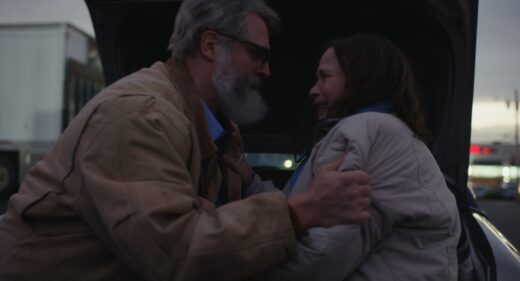
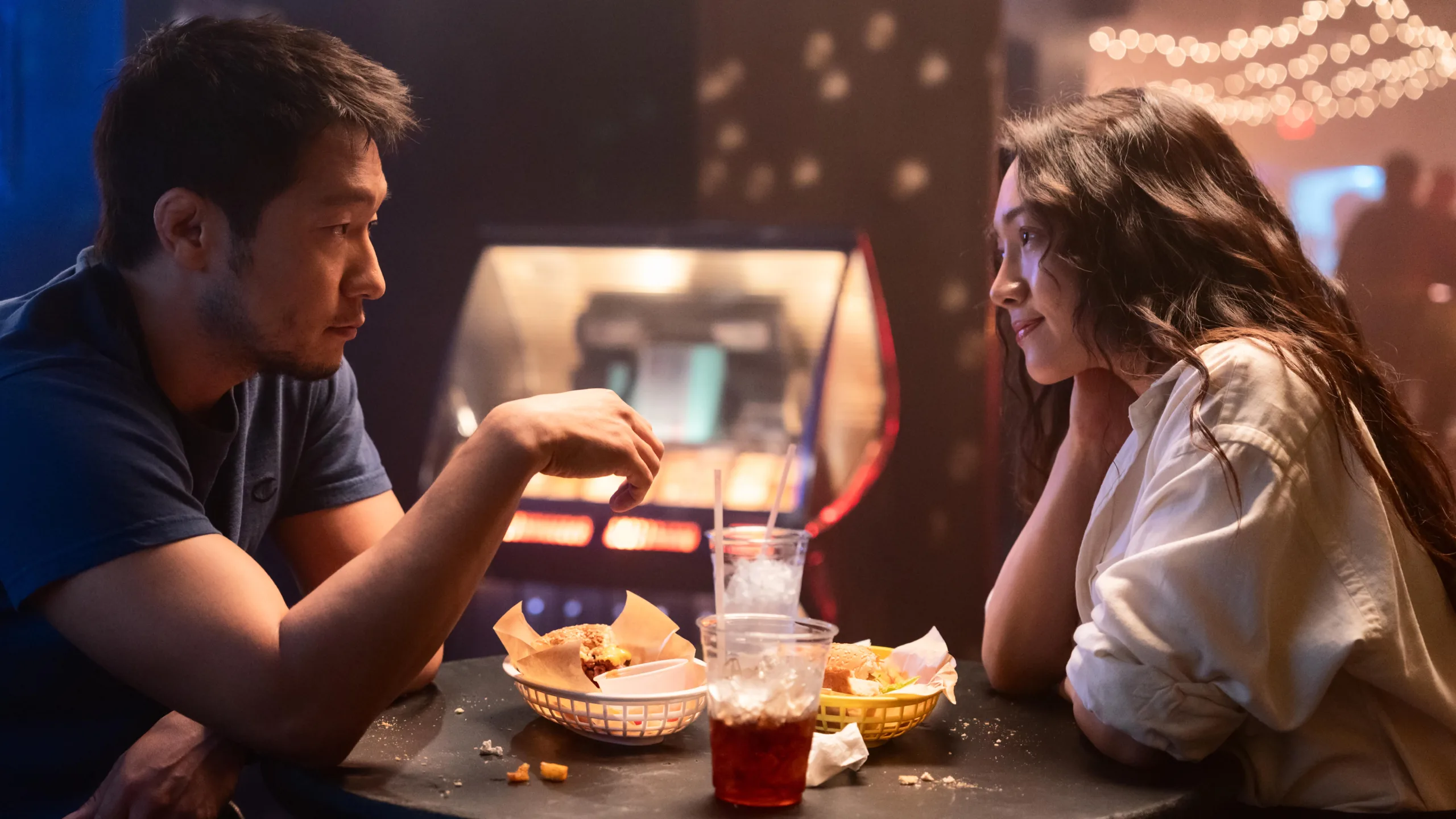
A confidently crafted gem, writer/director Stephanie Ahn’s “Bedford Park” is an increasingly rare kind of film. This is a delicate picture about grounded, relatable, middle- and working-class people talking about relatable problems and finding realistic romance. Unhurried yet forward-thinking, Ahn’s trusting script presents Audrey (Moon Choi), a Korean-American physical therapist who routinely searches an app looking for rough sex. She suspends her pursuit when she receives a call from her mother (Won Mi Kyung), who says she’s been in a car accident and needs her care. While Audrey’s mother hopes to convince the man from the crash, Eli (Son Sukku), to pay for the damages, the hardened, crass Eli refuses.
Boldly, Eli and Audrey’s harsh meet-cute occurs when Audrey has a miscarriage outside of Eli’s New Jersey apartment (though Audrey can get pregnant, she has a less-than-5% chance of ever carrying a baby to term). Eli therefore softens against Audrey, and Audrey offers to drive Eli to his mall security job and community college while his car is in the shop. As they increasingly spend time together, they begin to fall for one another.
On top of that romance, Ahn adds heavy subplots, including Audrey’s alcoholic father, her mother’s desire to save the family’s honor by marrying off Audrey, the weight of assimilation, Eli’s foster background, his estrangement from his young daughter, and a conflict with a half-brother who increasingly wants him to come to Miami for a nefarious job. While “Bedford Park” is intrigued by these themes, it’s not about them. This isn’t a vehicle solely made to pursue socially conscious dialogue. These themes are simply the realities of Audrey and Eli’s lives. As are the settings they inhabit, which Ahn immerses us in with a depth of field that takes in the different economic statuses of their divergent neighborhoods.
Imperatively, Ahn never loses sight of their romance. She even makes overt references to “Rocky,” which are furthered by Sukku’s muscular postures (he stands in the doorways the same way Stallone does). The director guides both Sukku and Choi to incredible, emotionally specific performances. When the terse Eli reveals his emotions, he uses his large frame to hide his brokenness. Conversely, Audrey becomes physically vulnerable, allowing her guarded exterior to fall. Along with the lead performances are several single-scene appearances, like Cindy Hogan as Eli’s mom, that shows how well cast this film is.
And while the ending does give way to a couple of cliches, like an overly neat past connection that Audrey and Eli share, these are moving choices that align with the film’s pleasing tenor, making “Bedford Park” an uncompromising coup.
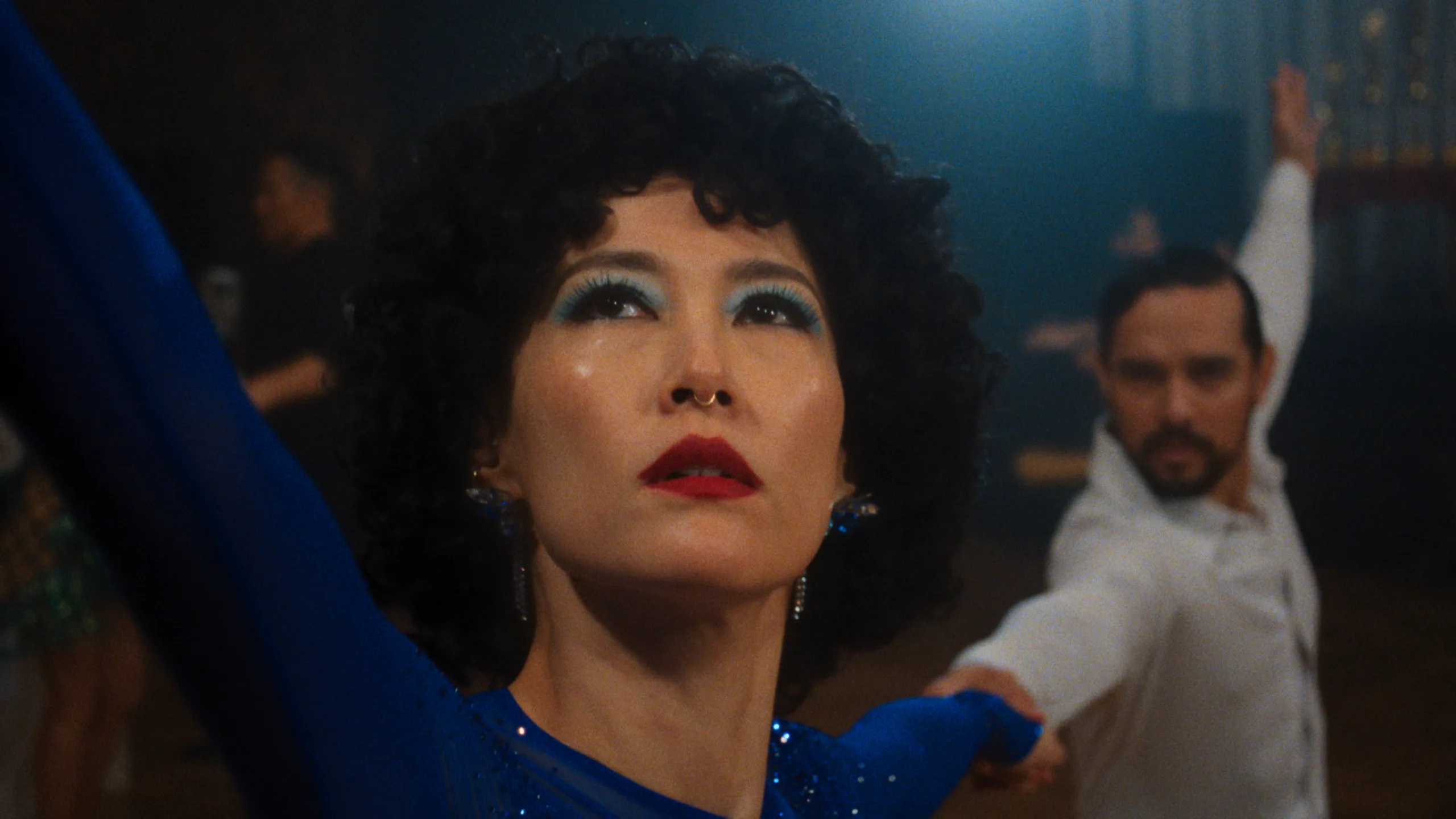
Considering Josef Kubota Wladyka’s previous film, “Catch the Fair One,” was a gritty Indigenous thriller that launched Kali Reis’ now-thriving acting career, his decision to mount a dance film is a curious choice. “Ha-Chan, Shake Your Booty!,” which is dedicated to the director’s mother, who was also a dancer, is a conscious passion project whose quirkiness and tenacity allow one to look past its many bizarre creative choices.
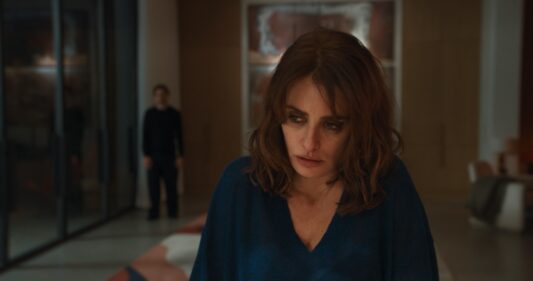
As teased, the film’s protagonist, Haru (Rinko Kikuchi), is a dancer who teams with her husband, Luis (Alejandro Edda), in ballroom competitions. Their carefully calibrated life—he cooks and dotes on her while she picks records to play from their vast vinyl collection—is disrupted when Luis suddenly dies of a heart attack. Though Haru wants him cremated, Luis’ father opts to take his body back to Mexico, causing Haru to fear that Luis will struggle to move on into the afterlife. When Haru returns to dancing nine months after Luis’ death, she learns of the arrival of the new, smoking hot dance instructor Fedir (Alberto Guerra), who happens to be in an open marriage.
Split into six chapters, whose eccentric, colorful title cards are read in English with a deep, serious voice and in Japanese with a high-pitched, cartoonish tenor, we watch as Haru attempts to get into a sexual groove with Fedir. Similar to her relationship with Luis, Haru uses dance as a love language with Fedir. Haru and Fedir’s simmering desires inspire fantastical set pieces, like a street fight between Fedir and some rude men that turns into an elaborate dance that expresses Fedir’s hunkish aura. In these extravagant sequences, Wladyka tries to balance the attack of dance with its balletic quality, and, as he leans on the latter, he often loses the former, causing some of the choreography to lack snap. Similarly, the insistence on using chapter titles causes a film about movement to needlessly stop, thereby losing its emotional momentum.
Still, “Shake Your Booty” remains as funny as its title entails. A re-staging of “Dirty Dancing” and the appearance of a ghost in a giant raven costume act as inventive visual gags. Meanwhile, YOU, as Haru’s cousin, and Yoh Yoshida, as her sister, imbue the film with heartwarming sentimentality amid its many manic situations. Most importantly, Kikuchi is phenomenal here as a dancer and an actress. Even as the film veers off the rails, through her charged intensity and winking humor, she keeps us invested in a damaged character who’s often difficult to root for. So, while “Ha-Chan, Shake Your Booty” is certainly flawed, with its swirling palette, costumes, and unwavering performances, it’s also undeniably memorable.
For much of Liz Sargent’s “Take Me Home,” a modest, immersive story about marginalization and grief, one is captivated by its quiet approach.
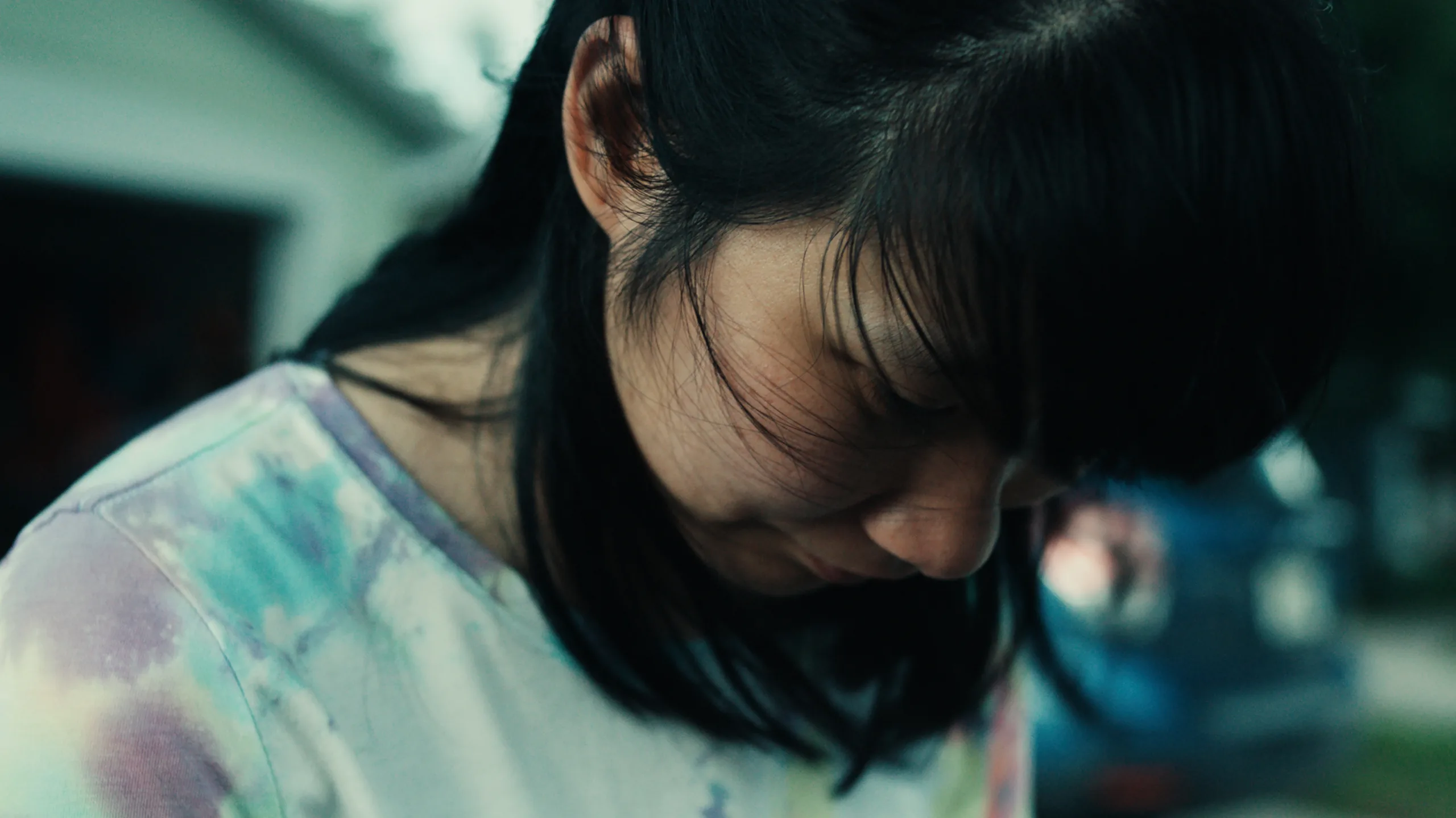
At the outset, for instance, when Anna, a 38-year-old Korean adoptee with a cognitive disability, is taking a shower with her mother, it’s not wholly clear who is taking care of whom. Both of Anna’s parents are elderly and exhibit signs of limited mobility and memory. Between the trio is a cycle of co-dependency that’s eloquently depicted by Sargent through sunny drives across the Orlando, Florida, area and tempestuous outbursts whenever Anna cannot locate her water bottle. Their unassuming lives are, however, interrupted by a brutal heatwave—causing tragedy to befall the family and inspiring Anna’s Brooklyn-based sister Emily (Ali Ahn) to return home.
A deeply personal story for Sargent—Anna is played by the director’s sister Anna Sargent—this film is an expansion of her same-titled 2023 Sundance short. That briefer iteration concerned the relationship between Anna and Emily (played by Jeena Yi), an origin you can feel here. The strongest portion of “Take Me Home” involves Anna and Emily’s loving yet tenuous relationship, which reveals the pressures faced by the assisted and the caregiver. Emily and her father Bob (a quietly affecting Victor Slezak) are struggling to navigate an underfunded healthcare system, further divulging how systematic inequality for those with cognitive disabilities can quickly drive a seemingly middle-class family toward the margins. Both Sargent and Ahn share a touching rapport as sisters, illuminating the cracks, faults, and bonds that ultimately unify them.
Sargent and her DP Farhad Ahmed Dehlvi have an unhurried, unadorned approach, capturing these obstacles and hurts without pretense or melodrama. That approach, unfortunately, shatters in a final dreamlike twist that recalls the end of “The Florida Project.” For some reason, the pair abandon their lived-in social realist tone for a maudlin aesthetic that becomes saccharine and misplaced, even introducing characters for an emotional effect that feels rushed and somewhat unearned. While one can understand Sargent’s impulse, imagining an ideal world where those living with disabilities are humanized and supported, it’s too drastic a stylistic shift. That questionable alteration makes one wish “Take Me Home” never left the tender mood, clear-eyed perspective, and distinct methodology that could’ve made it special.