Who Killed the Electric Car?

Where did these cars go?

“To preserve our children’s future, we have to waste every resource we’ve got.”

No, that was not Dick Cheney. That was Stephen Colbert, endorsing General Motors’ $1.99 gasoline promotion: Buy one of their guzzlers and they’ll reimburse you for fuel costs at the end of one year so that you wind up paying no more than a buck ninety-nine a gallon. (If you remember to send in your receipts with that mail-in rebate form, that is!) Colbert heartily endorses the deal, using flawless logic: The only way we’re going to get more efficient fuel technology is to use up all the oil we can, as fast as we can.

Oddly, this is much the same logic behind the death of GM’s electric car, the EV1, in the mid-1990s. According to the new documentary (and technological murder-mystery) “Who Killed the Electric Car?,” there was simply too much easy money remaining to be made from old technology and the remaining trillion gallons of crude oil beneath the Earth’s crust. So, anti-free-market forces (oil companies, petro-politicians, automakers) killed off an existing, and quite successful, fuel cell vehicle that was already available in California and Arizona. Emissions: None. Speed: Up to 184 mph. Operating cost: The equivalent of buying gasoline at 60 cents a gallon.

December 14, 2012

Why Soderbergh is retiring soon

The LA Times’ 24 Frames blog quotes Matt Damon on Steven Soderbergh’s plan to retire from directing after three more films:

“He wants to paint and he says he’s still young enough to have another career,” Damon said. “He’s kind of exhausted with everything that interested him in terms of form. He’s not interested in telling stories. Cinema interested him in terms of form and that’s it. He says, ‘If I see another over-the-shoulder shot, I’m going to blow my brains out.’ “¹ […]

“After I worked with Clint [Eastwood] I went back and said, ‘Look, Clint is having a blast and he’s going to be 80 years old.’ And Steven says back, ‘Yeah, but he’s a storyteller and I’m not,'” Damon recounted. “If you’re an actor or a writer or someone working in film, it’s such a waste. For me, I’m going to spend the next 40 years trying to become a great director and I will never reach what he’s reached. And he’s walking away from it.”

– – – –

¹ I know the feeling.

December 14, 2012

District 9: Alive in Joburg

This six-minute 2005 short, “Alive in Joburg,” by South African director Neill Blomkamp, forms the basis for his “District 9.” Unlike the feature, it is set in 1990 under the apartheid government, during which time (in actual history) thousands of black South Africans were relocated from an area of Cape Town known as District 6 to make it an “all whites area.” (The same was done in Sophiatown, Johannesburg, setting of the feature film.)

December 14, 2012

Bordwell’s Basterds

In his two-part round-up of summer movies, David Bordwell finds himself not only impressed with Quentin Tatantino’s latest film (after finding “Death Proof” “merely proof of the director’s creative death”), but with the quality, quantity and intensity of the online analysis of it:

It’s a measure of the changes wrought by the Internets that “Inglourious Basterds” has in about a month amassed a daunting volume of serious commentary. Without benefit of DVD (let’s be charitable and assume no BitTorrenting), dozens of online writers have dug deep into this movie. As if to demonstrate the virtues of crowdsourcing, this flurry of critical discussion has shown that most professional movie reviewers have tired ideas, know little about film history, and are constrained by the physical format and looming deadlines of print publication. At this point, I’m very glad I’m not writing a book on Tarantino; the sort of secondary sources that normally take years to accrete have piled up in a few weeks, and the pile can only grow bigger, faster.

(He also offers well-deserved praise for the “knowledgeable readers” here at Scanners!)

December 14, 2012

Opening Shots: The Dark Knight

The corporate logos are deep blue and black: Warner Bros., Legendary Pictures, DC Comics. Then, out of a silent explosion of blue flames and black smoke, the familiar Batman shadow appears. Cut to bright afternoon daylight. The camera glides with surreal smoothness above a recognizably real American cityscape, over the rooftop of a large, squat building toward a cluster of shiny glass skyscrapers. This is not the forbidding, neo-Gothic Gotham City we expect to encounter at the beginning of a Batman movie, a densely stylized urban forest of inky comic-book noir. It’s almost like Phoenix at the start of Alfred Hitchcock’s “Psycho”: Anywhere, USA.

And that may well be the idea: The camera closes in on a colossal mirror, a wall of tinted windows in the side of a building. What are we looking for? How much closer can we get before something has to happen? (Where’s the helicopter? You’ll catch a glimpse of it at the far left, just at the moment your eye is distracted by an exploding window near center frame.) For a fraction of a second we may wonder about the fate of the people inside the room, and the pedestrians on the street below who are about to be showered with bits of glass. But before that can quite register we’re on the other side of the blown out window with a pair of clown-masked gunmen. This is part of some diabolical plan… which turns out to be a bank robbery in progress. (See other notes on this shot, and the rest of this sequence, here.)

Turns out, the building we’ve just passed over is the most important element in the shot; the glass wall is just a means to an end. Smoke and mirrors…

December 14, 2012

The dogs are loose! (Part 2)

My MSN Movies gallery feature article about Great Movie Underdogs (i.e., dogs whose proper names are not in the titles), is live. And, after the jump, the answers to last week’s movie dog quiz — and a couple of delicious bonus treats.

Regarding great movie doggerel doggies:

My dog Edith does not much like dog movies. At least I don’t think she does. Whenever a canine appears on our 55-inch HDTV screen, or any of the surround speakers, she lunges, barking, growling, whining and emitting other noises that sound like a wounded vacuum or a gargling siren.

If Edith were a bit less excitable and territorial, if she were better able to maintain a critical distance, she would appreciate how many fine screen performances have been given by members of her species, if not of her particular mixed-breed-of-color. […]

December 14, 2012

A letter about essential things from Albert Einstein

I like this Einstein fellow’s intellectual attitude (see the final paragraph, below). While firmly disagreeing with someone’s philosophical stance, he nevertheless insists that they may have much to say to each other “if we talked about concrete things.” (Hey, what do I always say? Any valid exchange of ideas must be rooted in specific, mutually recognizable observations and solid reasoning, no matter what your opinions. Einstein said so, and he was no dummy!)

This letter, dated January 3, 1954, was written to Erik Gutkind, author of the book “Choose Life: The Biblical Call to Revolt,” which had been recommended to Einstein by a mutual friend, Luitzen Egbertus Jan Brouwer. (Full document at Letters of Note.)

Still, without Brouwer’s suggestion I would never have gotten myself to engage intensively with your book because it is written in a language inaccessible to me. The word God is for me nothing more than the expression and product of human weakness, the Bible a collection of honorable, but still purely primitive, legends which are nevertheless pretty childish. No interpretation no matter how subtle can (for me) change this….

December 14, 2012

Jonathan Rosenbaum on the life of a critic

This week film critic Jonathan Rosenbaum, 65, retires from a 20-year stint at the Chicago Reader. In this interview, posted at The Reader’s site, Rosenbaum looks back at his career (writing, editing, blogging) and ruminates on what he’d like to do next, which includes the freedom to not have to see movies he has no interest in seeing. People who are not film critics have no idea how precious that freedom can be. (Rosenbaum also has a few choice words for out-of-control commenters on The Reader’s blog that make me grateful for the readers and commenters we have here.) You can see Part II here, in which he expounds on film as politics and vice-versa, Barak Obama, “Charlie Bartlett” and “There Will Be Blood,” which he sees as “simpleminded” and less-than-“challenging.”

JR’s authoritative, confrontational (sometimes even doctrinaire) style has sometimes provoked me to take issue with him, but I’m always interested in what he has to say — and will continue to be. May his “retirement” (not from writing, from The Reader) be an eminently productive one!

December 14, 2012

The new-er-est “Blade Runner”

View image This shot has always been there.

Steven Boone over at The House Next Door has seen the latest — er, “Final” — cut of what may now, 25 years after its debut, be “Ridley Scott’s” “Blade Runner,” in the new version premiering at the New York Film Festival. Above all, Boone was wowed by the digital presentation:

“The Final Cut” is remastered from original 35mm elements and transferred to High Definition digital video at 4K (4096 horizontal pixel) resolution. Projected in HD at 24 frames a second for this year’s New York Film Festival, this “Blade Runner” has no visible grain, dirt or scratches, stuttering frames, reel-change “cigarette burns” or soft-focus moments when the film gets loose in the projector gate. Funny how I thought I’d miss all those things, their “organic” qualities, but this restoration gives us a pristine image without sacrificing warmth. The picture even fooled our editor, who at first thought he was looking at a 35mm projection. This “Blade Runner” removes every barrier to getting lost in Scott’s fire-and-rain Los Angeles short of presenting it as interactive theater.I saw the original version first-run in 70 mm at Seattle’s Cinerama Theater in 1982, and grain was evident, probably for a couple reasons: 1) many of the visual effects involved multiple, non-digital exposures; and 2) the film wasn’t actually shot in 70 mm, but was blown up from 35 mm.

According to an extensive, multi-sourced Wikipedia article on the film, the 1990 version advertised as a “Director’s Cut” and shown at the Nuart in LA and the Castro in San Francisco was actually a 70 mm workprint. (In the days before digital, effects were often done in 70 mm, even for 35 mm releases, for better optical quality.) Scott approved the 1992 Director’s Cut, but wasn’t entirely satisfied with it. Wikipedia offers comparisons of the various versions, citing the primary changes as:

* The removal of Deckard’s explanatory voice-over

* The re-insertion of a dream sequence of a unicorn running through a forest

* The removal of the studio-imposed “happy ending,” including some associated visuals which had originally run under the film’s end-credits.It was apparent from the beginning that the voiceover was a big problem — and Harrison Ford (who didn’t get on with Scott, much less the studio execs who were calling him in to read narration) has said he did it badly and begrudgingly, hoping they wouldn’t even be able to use it. (It’s that cringe-worthy at times.) Scott, however, says he wasn’t taken off the picture, and that he completed the original release version after it tested badly with audiences.

But the movie was a theatrical flop anyway, producing rentals of only $14.8 million at roughly the same time “E.T.” was on its way to zooming past $300 million. According to a definitive piece by Kenneth Turan in the Los Angeles Times Magazine (September 13, 1992), the film may have died then and there. But the new home video market extended its commercial termination date:

“Blade Runner’s” availability on video kept it alive in the eyes of the always loyal science-fiction crowd, and gradually, over time, the film’s visual qualities and the uncanniness with which it had seemed to see the future began to outweigh its narrative flaws. Scott says he saw the interest rise, “And I thought, ‘My God, we must have misfired somewhere; a lot of people like this movie.’ ” And not just in this country. In Japan, where the film had always been successful, “I was treated like a king,” art director [Snyder reports. “The fans would be too in awe to even look at you.” The film’s look began to show up in art direction and design: Terry Gilliam’s “Brazil” and the stage design for the Rolling Stones’ Steel Wheels tour were influenced by “Blade Runner.” And when laser discs appeared on the market, “Blade Runner” was one of the films that everyone just had to get. It became Voyager’s top-selling disc immediately upon its release in 1989, never losing the No. 1 spot.

(Are spoiler alerts now becoming unfashionable because we should just assume everybody’s seen the movie or knows the ending? I don’t care. This is one.)

In Sunday’s New York Times (“A Cult Classic Restored, Again”), Scott says of Ford’s character, Deckard: “Yes, he’s a replicant. He was always a replicant.”

December 14, 2012

NYFF? Fuggedaboutit!

What is the NYFF crowd going to make of “The Host”?

NYFF! Huh! (Good gawd, y’all.) What is it good for?

I laughed when I read Caryn James’ tired and trivial “All the King’s Men” piece in the New York Times the other day — especially this little nugget of unsupported parochial spin:

Oscar-ready films that have opened in September, like “Mystic River��? and “Good Night, and Good Luck,��? have come out of the prestigious New York Film Festival. “All the King’s Men��? went to the nonexclusive Toronto film festival, and the word there was that the movie was mediocre at best.What are those two statements intended to mean? That films stand a better chance at winning Oscars if they are launched in the “prestigious” New York Film Festival (which shows about 30 features, including revivals — the vast majority of which have already played Cannes in May, and Telluride and/or Toronto in September) rather than the “nonexclusive” Toronto International Film Festival (which shows ten times as many films)?

As David Poland points out (“Why We Don’t Link To Caryn James Much”), that notion is “as wrong as wrong can be.” He cites the obvious counter examples of Oscar faves shown at Toronto but not NY: “Crash,” “Brokeback Mountain,” “Capote,” “Sideways,” “Ray,” “Finding Neverland”… and mentions that Clint Eastwood’s “Flags of Our Fathers” also isn’t being shown at NYFF. (For that matter, neither is Martin Scorsese’s “The Departed,” although both films open in October.)

But who even cares whether a film festival screens a movie that’s later nominated for an Oscar? That’s not what film festivals are about. So, is James suggesting that the more “exclusive” a festival is, the better it is? In that case, surely the Floating Film Festival (which shows twenty-something films and is programmed mostly by film critics, including Roger Ebert, Richard and Mary Corliss and me), and which is held aboard a cruise ship for only 200 or so festivalgoers, is the more “exclusive” fest. (Bruce Kirkland of the Toronto Sun has called it “the world’s most exclusive.”) Still, Roger Ebert says the two best film festivals in the world — in terms of influence and quality — are Cannes and Toronto.

Or maybe James is suggesting that “mediocre at best” pictures are helped by exposure at “prestigious” film festivals, but not at “nonexclusive” ones? (Didn’t seem to help “The Da Vinci Code” or “Southland Tales” get better reviews out of Cannes…) Does she think people would think the movie was better if it was in NYFF rather than TIFF? Does she also have a bridge for sale?

But the question I really want to ask is: To whom does the New York Film Festival matter and in what ways? The general public can’t get tickets, which are almost exclusively reserved for donors to the Film Society of Lincoln Center. NYFF is social payback — time to give the old rich folks a little cinematic baksheesh for their generous financial support.

December 14, 2012

The tail of the banana-eating jungle monkey

The whole Henry Louis Gates Jr. arrest fiasco instantly reminded me of the best line in Martin Scorsese’s “The Departed” (2006), spoken by Billy Costigan (Leonardo DiCaprio) to a fellow police trainee: “Look at it this way, you’re a black guy in Boston. You don’t need any help from me to be completely f**ked.” But it proved to be more complicated than that.

The 911 caller who saw two men trying to get into Gates’ house wasn’t making the racial assumptions many assumed had been. The transcript of the call reveals that she couldn’t identify their races even when prodded for information by the operator (she thought one of them “looked kind of Hispanic, but I’m not really sure”), and was only calling on behalf of an elderly woman who was walking by and thought she saw something suspicious.

December 14, 2012

Opening Shots: Pan’s Labyrinth

So many movies have opening shots that are like overtures, condensed miniatures of the whole film. In Guillermo Del Toro’s “Pan’s Labyrinth” you might even say it contains the entire movie in one shot. Not only does it begin with the ending, but the movement of the shot (together with the next one) takes us from underground (the land of the subconscious, the imagination) up into the light of day — or, looked at another way, from political and psychological repression into the liberation of the open air. This presages the momentum of the entire movie.

“Pan’s Labyrinth” is so locked into the emotional and fantasy world of its protagonist, Ofelia (Ivana Baquero), that the camera itself lies on its side next to her and is then plunges vertiginously into her pupil, entering her head, where the movie takes place. This initial dazzling sweep (actually a composite shot, but executed in once continuous motion) sucks us into the movie so quickly that we barely register what we’ve seen until the end, when we remember these prophetic first few seconds from the start of the movie.

“Pan’s Labyrinth” is riddled with pupils and irises, holes and portals that lead to new worlds. In this first shot, we appear to rise out of the ground (although it’s a right-to-left movement, reversing time), into Ofelia’s eye into a fantasy realm of her own creation, and then moves back to the right (setting the story into forward motion), following a running figure (Ofelia herself) up a circular stairway and through another doorway, into another chamber, with another stairway. The next shot follows her up the stairs, leading through a reverse of the opening pupil-shot: an eye-hole flooded with white light. And, with that, the movie-proper begins…

Roger Ebert has published a Great Movies review of “Pan’s Labyrinth. My own review, originally in the Chicago Sun-Times, is at RogerEbert.com, too, in the Editor’s Notes section.

December 14, 2012

A gamer’s view of Inception:Too much tutorial, not enough play

Quite a few reviews of “Inception” noted that its multi-leveled dreamscapes resembled those of video games, with each new level getting the players deeper into the gameworld and closer to mastering the key task, which is ostensibly to implant an idea in someone’s brain. Now, usually when a critic compares a movie to a video game it’s meant to be a slight, but in “Inception” the similarities are so apparent that it would have been irresponsible to ignore them.

Ty Burr (in a generally appreciative column, for those of you to whom that kind of thing matters most), wrote in the Boston Globe:

Crucially, “Inception” never establishes — or even wants to establish — a waking reality that would make the death of Cobb’s wife hurt the way it’s supposed to. Ironically, I connected more emotionally with Marion Cotillard’s Mal, a dream abandoned by her dreamer and filled with the rage of Medea. Her name carries an echo of mal-ware, which makes me wonder if Nolan might be a better writer of code than of human beings. Certainly “Inception” unfolds at times like genius software, revealing new apps and ideas with each push of the movie’s buttons and ours.

December 14, 2012

There Will Be Blood: Sculpting in time

View image Hands up.

I do believe the best single piece of film criticism that I’ve read in 2008 (and I’ve thought so ever since I read it two months ago) is David Bordwell’s “Hands (and faces) across the table” — which, parentheses aside, also happens to be the title of a delightful 1935 comedy directed by Mitchell Leisen (“Easy Living,” “Midnight,” “Remember the Night”) starring Carole Lombard, Fred MacMurray and Ralph Bellamy. (Manohla Dargis’s review of Gus Van Sant’s “Paranoid Park” deserves mention, too. And Glenn Kenney became my hero this year when he posted “‘Pierrot le Fou: An Annotated Bibliography,” Parts 1 & 2.)

But Bordwell’s article centers on a scene from Paul Thomas Anderson’s “There Will Be Blood” (just released on DVD) and the director’s orchestration of screen space, which involves creating rhythm and texture by moving the actors, not just the camera. (This, too, is mise-en-scène.) Writes DB:

In books and blogs, I’ve expressed the wish that today’s American filmmakers would widen their range of creative choices. From the 1910s to the 1960s (and sometimes beyond), US filmmakers cultivated a range of expressive options—not only cutting and camera movement but other possibilities too. Studio directors were particularly adept at ensemble staging, shifting the actors around the set as the scene develops.

You can still find this technique in movies from Europe and Asia, as I try to show in “Figures Traced in Light” and elsewhere on this site. But it’s rare to find an American ready to keep the camera still and steady and to let the actors sculpt the action in continuous time, saving the cuts to underscore a pivot or heightening of the drama. Now nearly every American filmmaker is inclined to frame close, cut fast, and track that camera endlessly. I’ve called this stylistic paradigm intensified continuity….

December 14, 2012

Tinker Tailor Critic Eye: A great movie inspires some excellent writing

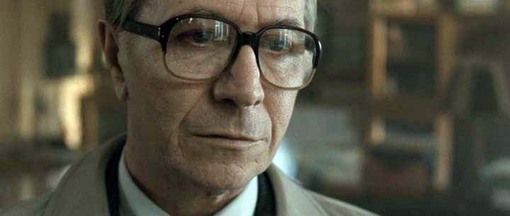
I was floored by Tomas Alfredson’s “Tinker Tailor Soldier Spy” the first time I saw it, though (as is usually the case for me, even with movies that don’t negotiate complex plots in slyly evasive/elliptical styles), I couldn’t have told you exactly what happened. That didn’t concern me at all, however, because like its central character George Smiley (Gary Oldman), the movie is so meticulously observant that I never felt I was missing out on anything important, even when I wasn’t sure exactly what was going on. It kept me in the emotional moment, and I knew I could figure out the details later on.

The stories behind the relationships at the Circus (nickname for Britain’s covert intelligence agency) were tangled — and yet clearly delineated — enough to deliver a cumulative emotional payoff. And the more I lived with the vivid memory of the movie (it has stayed with me, unshakably), and the more times I’ve seen it (thrice, so far), the more my appreciation of it has grown. It has slowly climbed up my list of 2011 favorites, and by the second time I saw it, I was absolutely sure it had eclipsed any other English-language movie I’d seen during the year.

(For gaffe squadders who enjoy those fits of righteous indignation that only award nominations can truly provide, let me suggest that the most egregious oversight in this year’s Oscar batch is the lack of acknowledgment for “Tinker Tailor” in the categories of best picture, supporting actor (anyone), supporting actress (Kathy Burke), cinematography, art direction, editing, costume design, and so on down the line. Screenplay, actor and music — all well-deserved, though.)

First-rate movies often inspire first-rate criticism, and it’s been thrilling to read some of the year’s best writing inspired by one of its best movies. Here’s a sample of some of the finest stuff I’ve read (all of it after I saw, and wrote a little about, the movie — so beware of spoilers), with links to the full pieces, which I strongly recommend you follow.

December 14, 2012

The Seitz-geist

View image The House Next Door.

Now that Matt Zoller Seitz has announced that he’s moving on, back to Dallas from Brooklyn and into full-time filmmaking, I thought I’d take a quick glance over the shoulder at some of the writing he’s done at his home, The House Next Door, since he opened the place January 1, 2006. Of course, he’s done a lot of other writing — for The Dallas Observer, The Newark Star-Ledger (the Sopranos’ hometown paper), the New York Press and the New York Times among other outlets — but he became a habit with me through the House.

Matt has been a generous proprietor (sometimes perhaps too generous, but that’s hardly a grievous fault). Today the House Next Door masthead lists more than 40 contributors — novices and vets alike — including the invaluable editor-cum-landlord Keith Uhlich.

At the same time that I’m excited for Matt (who, by the way, I’ve never met face-to-face), I’m not going to pretend I’m not bummed. This is how I deal with the grief part: Let’s celebrate MSZ for all he’s done in (and for) the blogosphere. Consider this a very short clip reel. As the lights go down on one phase of Matt’s career, and the curtain opens on another, sit back and immerse yourself…

Oh, and sorry about that headline, guys. (That’s as in Zoller-, not polter-.)

Open House (first House Next Door post, January 1, 2006):

My grandfather, a self-educated German-American farmer from Olathe, Kansas, believed that no journey, however seemingly circuitous or self-destructive, was ever truly unnecessary, or even avoidable. Sometimes we just have to continue along a particular path for inexplicable, personal reasons, disregarding warnings of friends and family and perhaps our own internal voices, until we arrive at our destination, whatever it may be. This type of journey, my grandfather said, was the equivalent of “driving around the block backward to get to the house next door.”

December 14, 2012

What if they didn’t spend millions to advertise “Norbit”?

“Norbit”: Un filme de Brian Robbins.

Brian Robbins has been making himself and others quite rich recently as the director of the Eddie Murphy comedy “Norbit” and the co-producer of last weekend’s top-grossing movie, “Wild Hogs.” But guess what? He’s distraught that his motion pictures were not accorded a more positive critical reception. (He’s almost as upset that more music critics aren’t fans of “American Idol,” but can’t bring himself to talk about that just yet.) As he complained in The Hollywood Reporter:

“How does a movie score in the 90s with an audience and get a 9% positive rating on Rotten Tomatoes?” Robbins said, referring to “Norbit’s” onslaught of negative reviews as summarized on the review compilation site, rottentomatoes.com. “How do you figure that? Is the audience that stupid? Is America’s taste that bad? I don’t think so.”

While the jury may still be out on America’s intelligence, Robbins has given up making movies for critics.

“If you read reviews on a consistent basis on all films, you realize that the majority of films just get murdered,” Robbins said. “The only films that get good reviews are the ones that nobody sees. I just don’t think you can make movies for critics.”

Oh, Brian, Brian, Brian. You are so right… and yet, so wrong.

Let me ask you: Did you make “Norbit” and “Wild Hogs” to please critics? Did you expect those movies to get good reviews? Do you think moviegoers read the negative reviews and then just decided to buy their tickets anyway? If that’s the case, then what are you complaining about? You want glory and money? How often does that happen in Hollywood?

So, consider this: Did you ever entertain the possibility that perhaps “Norbit” and “Wild Hogs” were neither designed for, nor marketed to, people who pay all that much attention to movie critics? Why in the world would you think that general audiences and movie critics should agree? (See ancient analogy about McDonald’s and food critics.)

Correct me if I’m wrong, but I don’t believe “Norbit” (the movie that some speculate may have cost Eddie Murphy his “Dreamgirls” Oscar because it was released during the Academy voting period) was screened for critics. I don’t remember about “Wild Hogs” because, well, that was so long ago. Seems like they may have screened it on a Thursday night for an opening the next day. But, really, why did you bother? Do you think most critics would go see your movies if they didn’t get paid to? Do you realize that critics probably make up 0.0001 percent of the moviegoing population — or less?

So, if you don’t pre-screen the movie, then what more are you gonna do? Keep critics from buying movie tickets like everyone else (because their editors want reviews, even of trash)? Make all moviegoers agree to keep non-positive opinions to themselves — you know, in case they have blogs or friends or something and might spread negative word of mouth? Ask more rhetorical questions?

I like this: “If you read reviews on a consistent basis on all films, you realize that the majority of films just get murdered.”

YES!!! It may be just a coincidence, but most movies are also crap! Even if they’re relatively enjoyable at the time, they’re forgettable and disposable, like yesterday’s lunch. Imagine if you had to spend more time writing about movies than you actually do seeing them. Because most reviews take longer than 90 minutes to write, which is probably why many critics prefer writing about films that give them something to write about. Something that may be worth thinking about after you pay for your parking.

And then there’s this: “The only films that get good reviews are the ones that nobody sees. I just don’t think you can make movies for critics.”

You are so right about that! Nobody sees “The Departed” (RT: 93%) or “Casino Royale” (94%) or “Little Miss Sunshine” (92%) or “Borat” (90%) or “The Devil Wears Prada” (76%) or “Cars” (76%) or “Harry Potter and the Goblet of Fire” (89%), to name some of the top-grossing and/or most profitable movies of 2006. (“Pirates of the Caribbean: Dead Man’s Chest” rated a 53%.) So, you should just stop right now trying to make movies like “Norbit” and “Wild Hogs” for critics. Don’t waste your time on us ungrateful scribes who fail to sufficiently appreciate the joy you are attempting to introduce into our humdrum workaday lives! Here’s the deal: You take the multi-million dollar ad campaigns and let the wretched critics scribble about those tiny little movies that can’t afford those kind of expenses — you know, “the ones that nobody sees” because aren’t advertised in every conceivable medium for weeks before they are released. Deal? Deal!

December 14, 2012

Terrence Malick, the man who wasn’t there

If you followed the gossip from the recent Cannes Film Circus, you will have heard that there were two incidents of scandalous behavior by directors who had films in competition. One of them involved Lars von Trier, who felt so alienated during the press carnival for his film “Melancholia” that he tried to inject some provocative humor into the proceedings and wound up making Nazi jokes that didn’t go over at all well. As he later told Dennis Lim in the New York Times: “I got carried away. I feel this obligation, which is completely stupid and very unprofessional, to kind of entertain the crowd a little bit.”

Von Trier’s actions got him declared “persona non grata” by the authoritarian Board of Directors, while the other filmmaker, Terrence Malick, got the Palme d’Or by behaving even more shockingly (if some of the press reports were to be believed): He didn’t walk the red carpet or attend press conflagrations for his movie, “The Tree of Life”! Strange as it may seem, some people — even movie directors — don’t crave the attention. Brad Pitt, the extremely famous movie star who did a fine job fielding mostly inane and redundant questions from the keyboard paparazzi after the press screening, noted, as did others, that Malick prefers not to be hailed as a demigod in a festival atmosphere. Imagine that.

December 14, 2012

The “Best” Non-English-Language Films (Round 1)

View image Wim Wenders’ “Kings of the Road” (or literal English translation: “In the Course of Time”). You may recognize the poster image from outside the theater in which “Duck Soup” is playing in Woody Allen’s “Hannah and Her Sisters.” This movie can also save your life.

An ad hoc bunch of 51 online movie enthusiasts (online movie critics, bloggers, et al.), organized by Edward Copeland, the eponymous proprietor of “Edward Copeland on Film,” recently composed our unordered lists of up to 25 most significant (or enduring or even favorite) “foreign-language” talkies.

Eduardo (as he might be known in, say, Mexico or Spain or Uruguay or Nicaragua or Puerto Rico) took on the gargantuan task of tabulating the ballots and coming up with the initial list of 122 nominees. As he explains:

I set a few guidelines for eligibility: 1) No film more recent than 2002 was eligible; 2) They had to be feature length; 3) They had to have been made either mostly or entirely in a language other than English; 4) Documentaries and silent films were ineligible, though I made do lists for those in the future if this goes well. In all, 434 films received votes, not counting those that had to be disqualified for not meeting the criteria.In order to make the final ballot, films had to receive at least three “votes.” I’m happy that most of my initial choices made the finals. And there were five I’ve never seen, so I have these to look forward to: Elem Klimov’s “Come and See,” Sergio Corbucci’s “The Great Silence” (a spaghetti western), Wong Kar-Wai’s “In the Mood For Love,” Bela Tarr’s 7.5-hour “Satantango,” and Hayao Miyazaki’s anime “Spirited Away.” (And I’ve never made it all the way through “Amelie” or “Chungking Express.”)

This exercise also reminded me of a bunch of movies I need to re-watch, because it’s been too long (at least 20 years) and I don’t remember them very well, including: Jacques Rivette’s “Celine and Julie Go Boating” (always hard to see, but available on Region 2 DVD, at least), Carl Theodor Dreyer’s “Days of Wrath,” Lucino Visconti’s “The Leopard,” Kenji Mizoguchi’s “The Story of the Late Crysanthemums” (and, for that matter, “The Life of Oharu,” which deserved to be on the list and which I have on import DVD), and Edward Yang’s “Yi Yi” (which I’ve been meaning to revisit since his untimely death).

Best of all, the list serves as a reminder that the vast majority of these films, available on DVD, are easier to see now than they have ever been since they were made! Most are just as easy to borrow from NetFlix as “Wild Hogs.”

For my Own Personal List, and some observations about the preliminary results, click to continue…

Meanwhile, if any of the participants — or any readers — would like to publish their own lists, please feel free to do so in comments! I’ll show you mine if…

December 14, 2012
subscribe icon

The best movie reviews, in your inbox