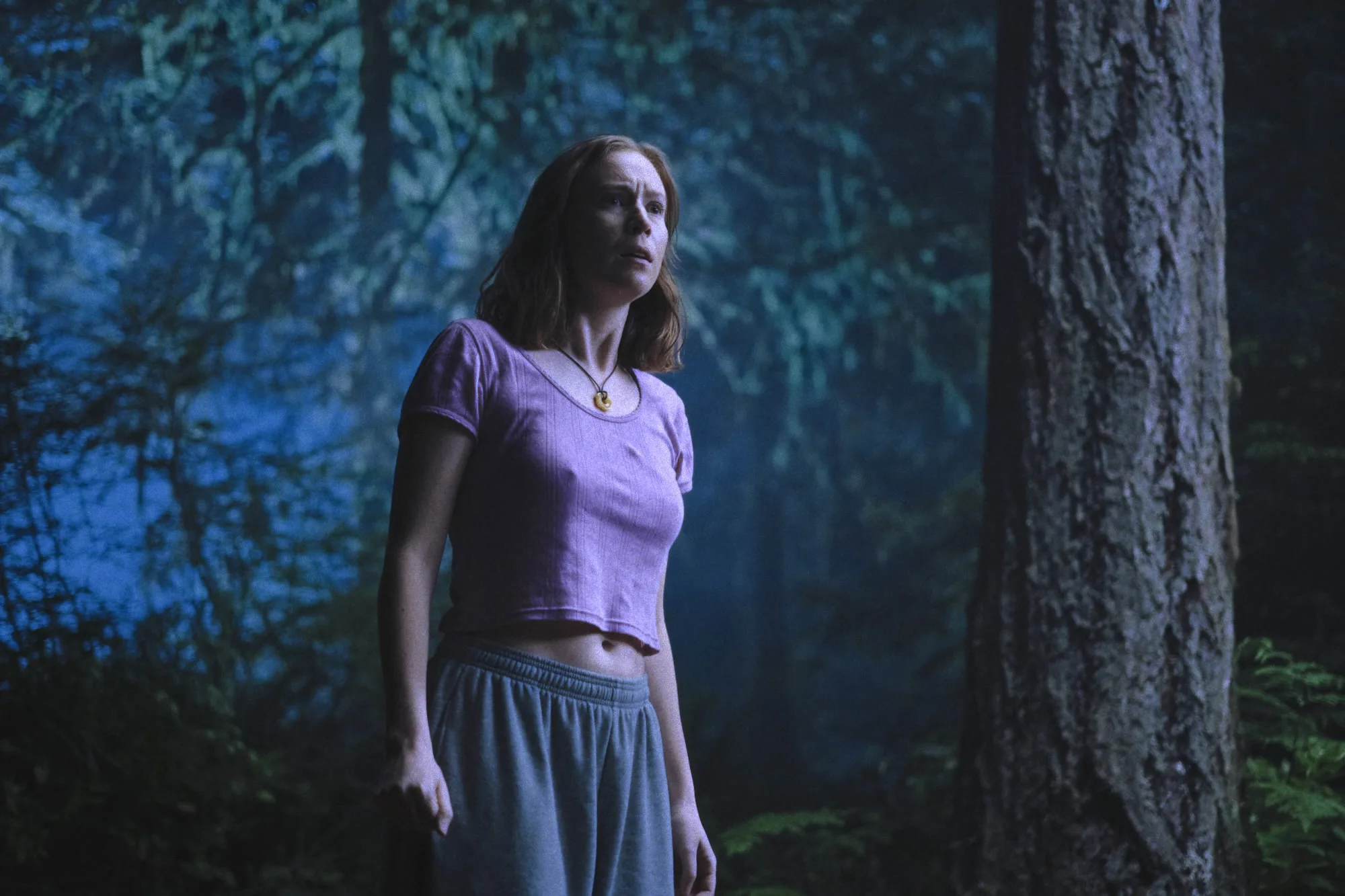
In Jane Schoenbrun’s “Teenage Sex and Death at Camp Miasma,” horror, cinema, and desire are intertwined. Though similar in some respects to their previous films, “We’re All Going to the World’s Fair” and “I Saw the TV Glow,” in how it explores the complex relationships we develop to the media we consume and the impact this can have on our respective identities, it’s also something more unexpected and expansive for them as a filmmaker. Namely, it’s a horror film of blood geysers and romance where the looming presence of a “little death” is the most important thing.
Set in the Pacific Northwest, the film stars Hannah Einbinder (“Hacks”) as a filmmaker who is tasked with remaking a classic slasher film for a new generation and working with the original film’s star (played by “X-Files” icon Gillian Anderson) who has made her home at the camp where it was shot. As the two begin to connect and grow closer, with plenty of sparks flying, much more than just a horror remake emerges. The film is humorous in how it explores this, but it also doesn’t skimp on the horror, bringing plenty of blood that had otherwise been missing from Schoenbrun’s previous works. It was one of the buzziest films premiering at Cannes and now will release in theaters starting August 7.
Before the release, Schoenbrun and Einbinder spoke with RogerEbert.com about their love for the Pacific Northwest, the joys of making movies you’re passionate about, finding a great collaborative partner in the other, taking a leap with someone you trust by your side, blood geysers, and more.
This interview has been edited for clarity and length.
I’m speaking to you from the Pacific Northwest and, while I know the film didn’t actually shoot here, Jane, I wanted to start with you on that. What was it that appealed to you about setting it in the Pacific Northwest?
Schoenbrun: Listen, I love the Pacific Northwest.
Einbinder: Yeeees!
Schoenbrun: I’ve got, like, Pacific Northwest lore bleeding out of my ears.
Einbinder: Out the wazoo.
Schoenbrun: Oh my god, Olympia? “Twin Peaks?”
Einbinder: Shout out. Hoh Rain Forest, heard of it?
Schoenbrun: Seattle, grunge. We were in Portland literally yesterday. I love the Pacific Northwest. Where I live in upstate New York, it’s like we’re cosplaying the Pacific Northwest. But I’m gonna be brutally honest with you.
Einbinder: I’m scared.
Schoenbrun: I wrote … I’m gay.
Einbinder: [Laughs]
Schoenbrun: I wrote the film as being the sleepaway camp that I went to as a kid, which was in Western Massachusetts. There and the Catskill region of New York is probably 90% Jewish sleepaway camps. It’s a very specific culture. It’s very unique. I really wanted to film there, but it was cheaper to film in Canada. So we went to Vancouver, which was awesome. I ultimately am very, very happy we shot in Vancouver. But it was like, “Okay, we’re shooting in Vancouver. We’re shooting in the summertime. You’re gonna see a lot of trees. You’re gonna see the landscape of the Pacific Northwest. We can’t fake this for New York.” I had this great joke about how she was going to visit Billy in Buffalo, Buffalo Bill, and then the agent was gonna be like, “Oh, that’s very writerly.”
Einbinder: Yes, I remember that.
Schoenbrun: But that didn’t make it in. So this was a coincidence that I made my first Pacific Northwest movie, but I’m happy I did, and I hope to make many more.
The film, I mean this as a compliment, is both loopy and liberatory to watch.
Schoenbrun: Yeah, thank you.
Did it feel that way, loopy and liberatory, to make it for you both?
Einbinder: I wasn’t feeling totally loopy. Maybe we were feeling loopy when we were off the clock, when it was goof o’clock, which, you know, happened a ton. But I think we were really playful, yet (I don’t wanna use the word serious) I think we were passionate about the subject matter and embracing the themes head-on.
Schoenbrun: It’s an incredibly ambitious film with the amount of coordinated, sustained focus and labor interdepartmentally. The magic trick of pulling it off in the time we had with the money we had was one of the more challenging things ever. For me, I do think it was liberatory and freeing. More than any other film, on this set I felt not stress, but joy and playfulness. That was a testament not just to how hard everyone was working, but also the deep trust I felt with all of my collaborators, both in front of and behind the camera. I really felt like myself in a way that I think is reflected in the movie. I felt liberated by it for sure.
Hannah, this was your first leading role in a feature film, which you obviously can’t always control how that shakes out, but did you feel that trust as well taking that leap?
Einbinder: Oh my god, absolutely. I mean, Jane and I just vibed from our first conversations. Then when we started to work together, and started to have more deep conversations about what the film was attempting to explore, it just became clear that I was gonna be in a safe environment to explore these pretty heavy and emotional things. It was intimidating, moving from TV to film, even though I think that “Hacks” is a particularly filmic TV show. Like the approach to making it feels like filmmaking. But I do think that shooting on film and having a 25-day shoot and having to tell a story in full in this … I’m describing a movie, totally. It just felt like there was a lot of pressure that I put on myself, but the second that we started to actually do it, it just fell into place, and I felt comfortable.
Jane, so much of this movie is about feeling comfortable within one’s own body, which I really resonated with, but I was curious about, when you were first talking with Hannah, what was it that was on your mind?
Schoenbrun: When I’m meeting an actor that I could potentially work with, I think so much of it is just getting to know a human being and trying to sense what their process is gonna be. I’ve worked with a lot of different actors who want different things, and I’ve learned how to have relationships and collaborations. There’s always going to be an emotional and psychological element to building trust, understanding what somebody needs, and how to build a shared language to get them in tune with the thing you’re trying to make. If I could choose, every collaboration would feel like my collaboration with Hannah, which is working with somebody who is down to be emotionally engaged.
I want to make movies. When I’m making a movie, I don’t wanna feel like, “Oh, this is our day job and we all kinda hate it, but we’re gonna get through it.” I want it to feel like we are doing something that’s important to all of us, and we are exploring vulnerable things together. This is like play and exploration in a space that’s different from reality. And that’s rare, you know, to find somebody who really has the appetite for that and the desire for that and who wants to push together into scary places. It’s not always that you find collaborators who want that. I just knew immediately that that’s the kind of work I would get to do with Hannah, and it was such a treat.
Einbinder: Thanks, Jane.
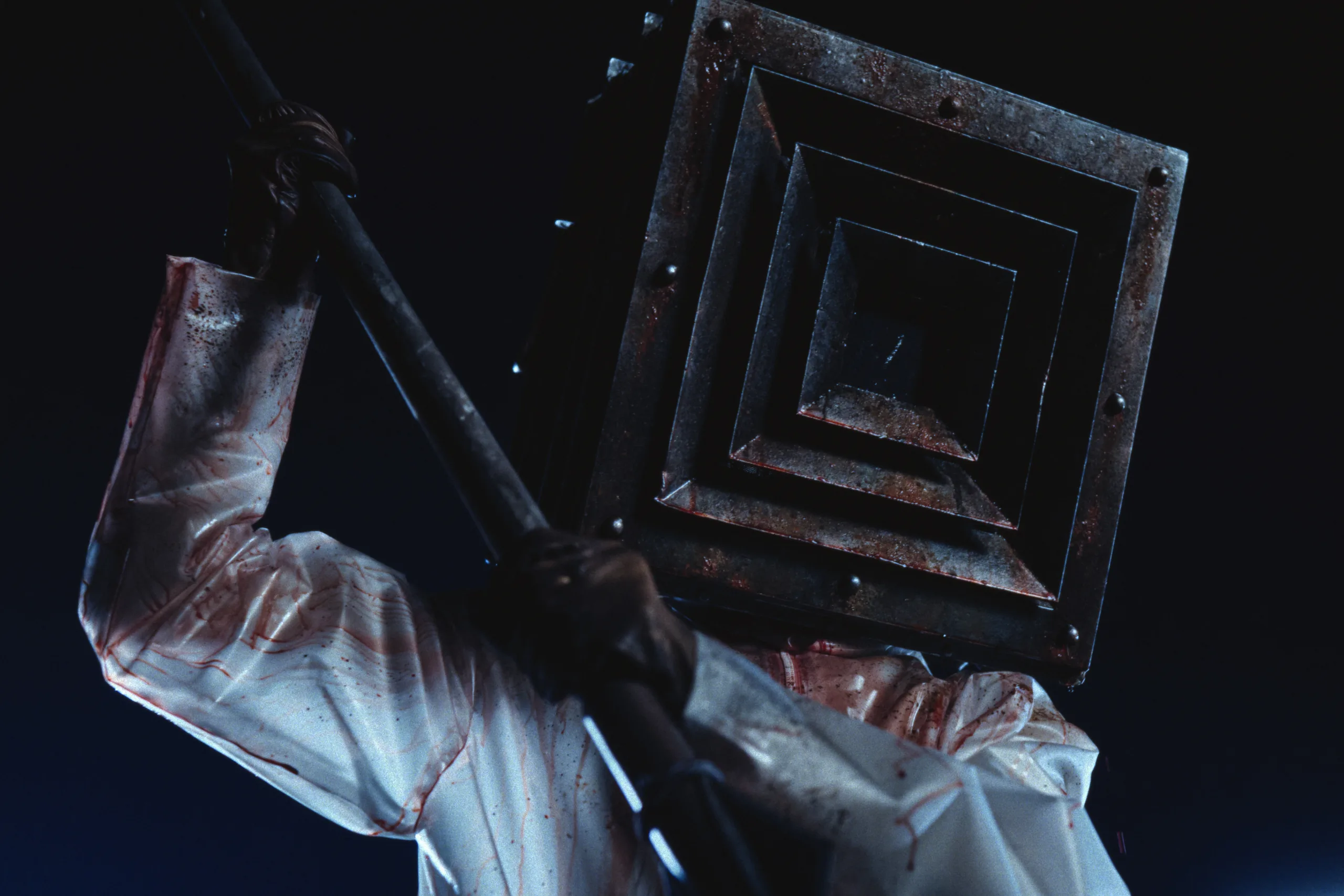
The image I think of when I think of this film is the blood geyser. It’s this big explosion of violence, but then also an excitement of seeing it. How did you achieve that, Jane, and how did you conceive of that specific visual?
Einbinder: [whispering in a French accent] The geyser.
Schoenbrun: What’d you say?
Einbinder: [louder, again in a French accent] The geyser.
Schoenbrun: [laughs] Hannah’s doing her French accent.
Einbinder: [once more, in a French accent] The geyser.
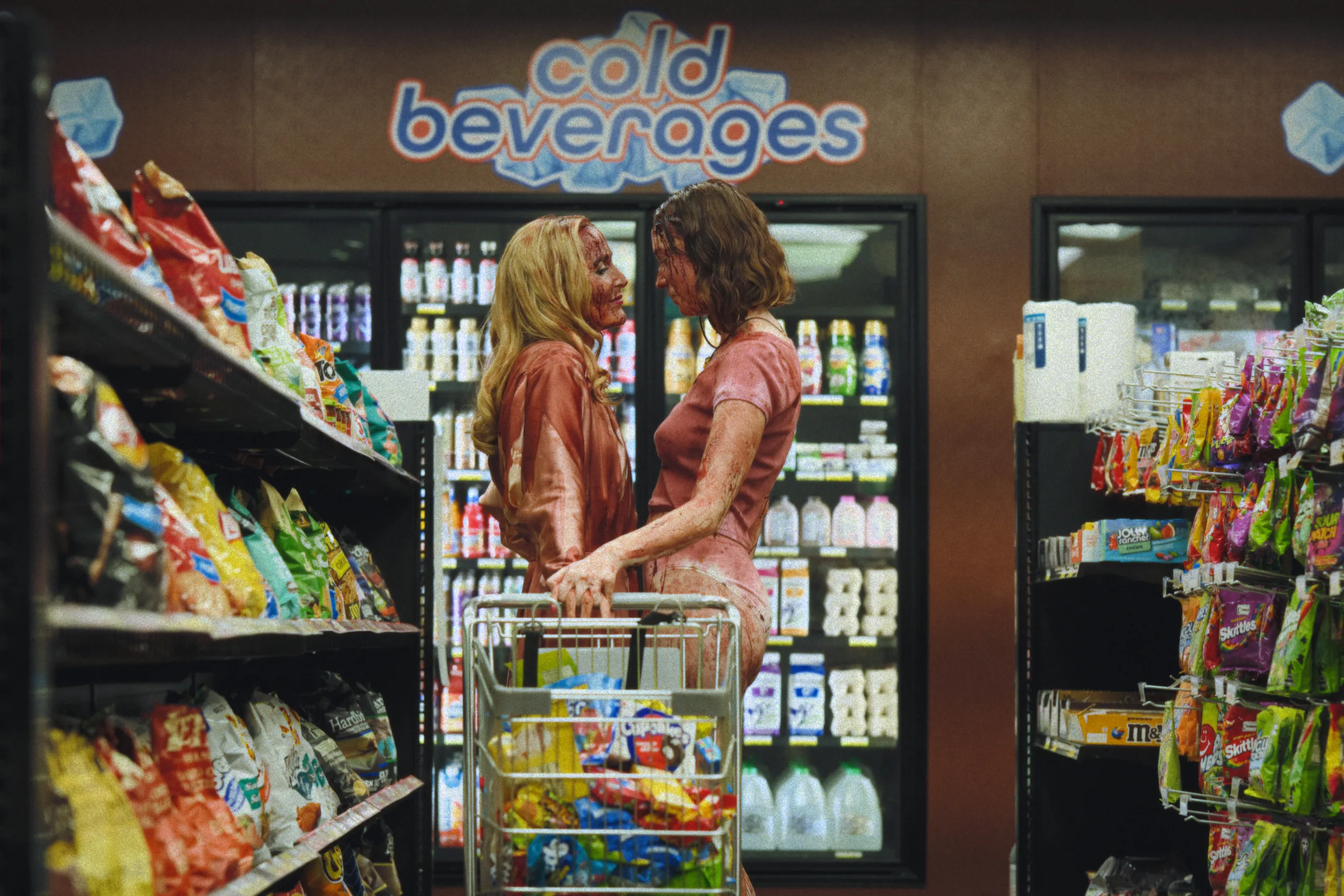
Schoenbrun: They love the geyser in French. No, the geyser was there from the beginning. It was a foundational idea for this film. My first two films sometimes get called horror movies, but there’s not blood in either of them. They’re very buttoned-up movies in their way. I wanted this line in the sand from the very beginning of like, “This movie is gonna be different, and this movie is letting its hair down, and it’s gonna be excessive and playful and profane and mischievous in a way that you might not expect.” So that image of just like the excess of that blood and also the fact that in no way could that really be what that person’s blood would do, it’s completely fantastic and absurd right off the bat. Yeah, it’s a line in the sand, basically.
We had a lot of fun doing it practically. It’s supplemented with some awesome VFX. In the lookbook I sent the team as reference images for that scene, I was pulling archival photos of, like, striking oil. That’s how I wanted it to feel. It’s like that moment in “There Will Be Blood” at the beginning when it’s like, “Oh!” And you just see it explode. It’s libidinal.
“Teenage Sex and Death at Camp Miasma” opens in U.S. theaters August 7, via MUBI.