In a storied career that spans six decades, the incomparable Alfre Woodard has been a formidable onscreen presence, delivering finely etched performances across a variety of film and television projects.
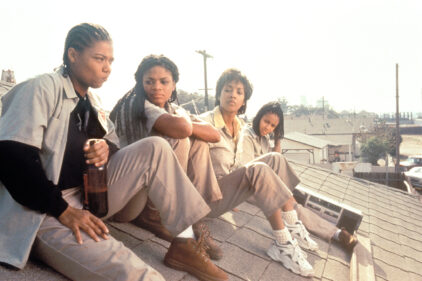
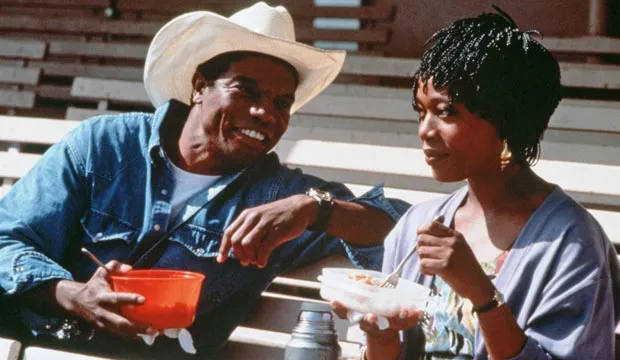
Whether the Oscar nominee (for 1983’s “Cross Creek”) and four-time Emmy winner is playing a legal secretary in 1990s-era Los Angeles who is being romanced by a smitten tow truck driver (Danny Glover, doing career-best work) that she meets on a blind date in writer-director Lawrence Kasdan’s “Grand Canyon”; or a nurse in the Jim Crow-era South who quietly devotes her life to care for hundreds of Black men unknowingly being used as human guinea pigs by their own government in the powerful, fact-based HBO television movie “Miss Evers’ Boys,” directed by Joseph Sargent; or a burnt-out, emotionally-drained prison warden at a crossroads in writer-director Chinonye Chukwu’s sophomore feature “Clemency,” Woodard always plays the reality of her characters and the situations they are in.
So, it’s rather fitting that she has described herself as a pragmatic actor.
Thirty-four years ago, she delivered one of her most indelibly pragmatic performances in writer-director John Sayles’ “Passion Fish,” an underappreciated gem that deserves far more attention than it has received in the decades since its December 1992 theatrical release.
Sayles has written and directed some of the finest American independent films of the past 40+ years, including “Return of the Secaucus Seven,” “Lianna,” “The Brother From Another Planet,” “Matewan,” “Eight Men Out,” “City of Hope,” “Lone Star,” “Limbo,” and “Sunshine State,” among others. His filmography is an embarrassment of cinematic riches. That said, for my money, “Passion Fish” is his best film.
Inspired by Sayles’ love of the 1966 Ingmar Bergman classic “Persona,” as well as his time working as a medical orderly, “Passion Fish” casts Woodard as Chantelle, the last in a long line of live-in, private care nurses, sent by an agency to assist May-Alice Culhane (Mary McDonnell, also in top form), a popular soap opera actress in New York City recently paralyzed from the waist down following a freak car accident en route to get her legs waxed.
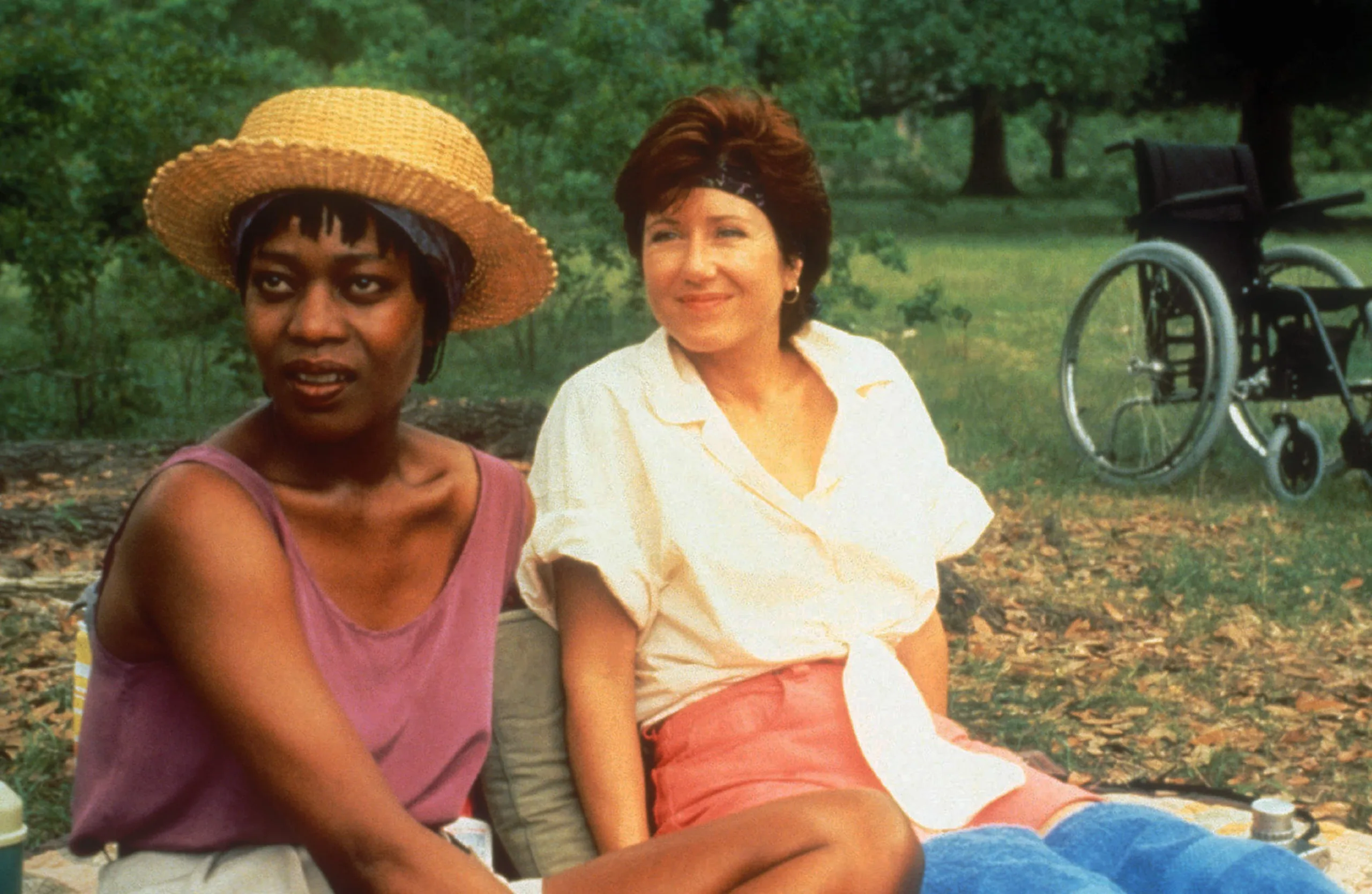
At the top of the film, May-Alice is wallowing in pity and regret, barely keeping her head above water at a rehabilitation facility she’s a patient at following the accident. Day in and day out, we see glimpses of her lashing out against the doctors and therapists who are trying to be of help. Suffice it to say, the facility is just not a good fit for her.
So she hastily retreats to her long-vacant childhood home in rural Louisiana to seemingly finish her recovery, yet instead, her pity party continues as she quickly goes through (or rather, repeatedly butts heads with) a series of nurses that prove incompatible in one way or another. That is, until Chantelle enters the picture. At first, Chantelle doesn’t rock the boat too much, as she finds her own footing in a new, foreign place. Then, seeing the lack of progress being made, coaxes a still-reluctant May-Alice to start doing the necessary work to regain her independence. Naturally, that’s when a more pronounced conflict arises between them.
As the film progresses, important personal details about each woman are revealed. I’m not going to spoil any of them here, but it speaks to Sayles’ talents as a writer just how much mileage he manages to get out of each reveal. In Chantelle’s case, there’s one particularly powerful reveal that highlights why she was the right person to help May-Alice.
The underlying power dynamic in “Passion Fish” is like a third character throughout. The socio-economic differences between Chantelle and May-Alice are touched upon in the film.
Chantelle is an able-bodied Black woman working for a disabled Caucasian woman in the deep South. The Jim Crow era may long be over, yet the stench still lingers. Chantelle, a Chicago native, needs this nursing job for reasons that aren’t made immediately clear. So, regardless of how tricky it is navigating May-Alice’s initial combativeness, Chantelle has no other choice but to roll with the punches and hope for the best.
May-Alice used her acting talent to escape her rural, working-class Louisiana environment, and it took her all the way to daytime TV soap opera stardom in New York. As the old saying goes, “If you can make it there (i.e., New York), you can make it anywhere.” Approximately 7%- 10% of professional actors manage to make a living from their chosen craft. Not an easy feat. May-Alice has clearly lost sight of that in her post-morbidity funk. She’s mourning the loss of her mobility. Plus, her acting career is in limbo. But she’s keenly aware that she’s got the financial advantage, and isn’t above flexing that power. Chantelle is painfully aware of that fact, too, so the stakes are especially high for her.
In his four-star review of the film, Roger Ebert said, “There are elements here of a vaguely similar relationship in ‘Driving Miss Daisy,’ but Sayles has his own film, direct and original, and in the struggle of wills between these two characters he creates two of the most interesting human portraits of the year.”
Part of the genius of Sayles’ film is how the middle-aged malaise of these two disparate women is so believably written and played. Life, the way they once knew it, is over; their present-day realities seem stagnant and damn-near insurmountable. Yet they slowly but surely develop a bond much stronger than one might expect as they get to know each other, which yields some surprising results.
Sayles remains the only director with the good sense to pair Woodard onscreen opposite Angela Bassett, who was still a rising star at the time.
Bassett had already worked with Sayles previously on “City of Hope,” and had made a big impression in writer-director John Singleton’s feature directorial debut “Boyz ‘N The Hood,” both from 1991. She was a year away from playing Dr. Betty Shabazz, the widow of slain civil rights leader Malcolm X, in writer-director Spike Lee’s big screen biopic, “Malcolm X,” and two years away from her star-making performance as Tina Turner in 1993’s “What’s Love Got to do With It,” directed by Brian Gibson.
Bassett makes a brief appearance in the film as a former soap co-star of May-Alice’s, paying her a visit while in the area on a publicity tour for the show with two other former co-stars (Sheila Kelly & Nancy Mette). Woodard and Bassett share a wonderful, too-brief scene together where they bond over their Chicago roots.
McDonnell has been a frequent co-star of Woodard’s. They’ve been in three other films (“Grand Canyon,” “Blue Chips,” and “Mumford”) together, as well as a television show (Netflix’s “The Boroughs”).
“Passion Fish” is the one project they’ve done that’s afforded them the opportunity to work directly opposite each other. Woodard and McDonnell’s performances are so intertwined in the film that it’s a fascinating fusion of talent, craft, and material.
That said, it still boggles the mind to wonder how Woodard’s revelatory work was overlooked by the Motion Picture Academy in the best supporting actress category. Admittedly, 1992 was a pretty stacked year for supporting actresses with the likes of Judy Davis (“Husbands and Wives”), Joan Plowright (“Enchanted April”), Vanessa Redgrave (“Howards End”), and Miranda Richardson (“Damage”) all securing nominations, with Marisa Tomei winning the Oscar for her breakout, movie-stealing turn in “My Cousin Vinny,” still one of the few performances in a comedy to do so.
McDonnell did receive a richly deserved Oscar nomination for best actress, though. The film received a total of two Oscar nominations, overall, including best original screenplay for Sayles.
Woodard has always been an expressive actor. She’s capable of speaking volumes with just a look or a shrug. In “Passion Fish,” her quiet observations are every bit as telling as her vocalized ones. She delivers such a rich, lived-in, top-tier performance that you want to spend more time with Chantelle after the film concludes. If that’s not the mark of artistic excellence, then what is?