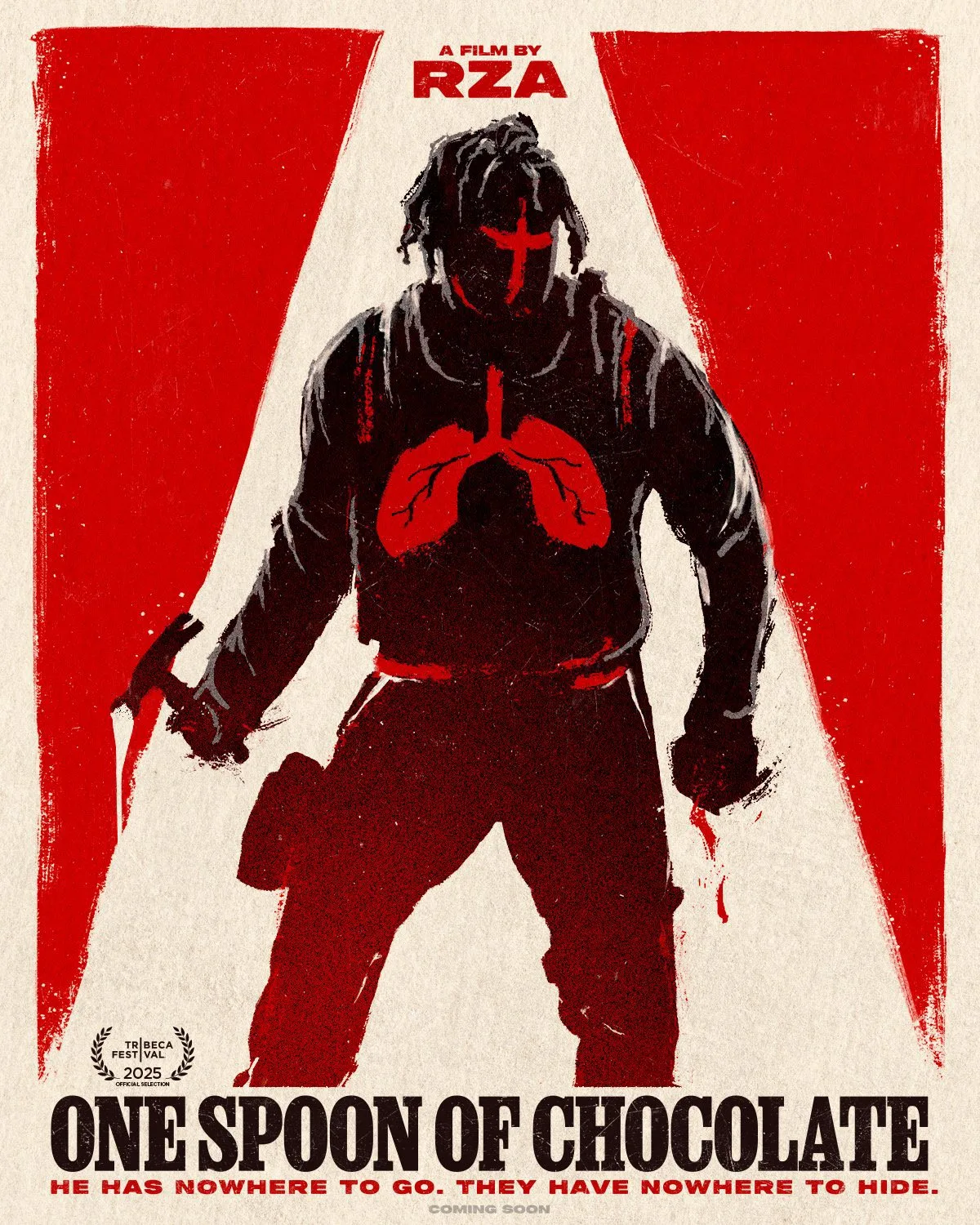


Rapper-turned-filmmaker RZA, aka Robert Fitzgerald Diggs, throws down a gauntlet at the end of “One Spoon of Chocolate,” a neo-blaxploitation actioner that pits a black military vet against a small town of white supremacists. Diggs (“Cut Throat City,” “The Man with the Iron Fists”) wrote and directed an unusually affecting revenge thriller that understandably diagnoses the plot against righteous man-of-action Randy “Unique” Joneson (Shameik Moore) as a racist conspiracy. At the very end of Unique’s story, which we’re told is based on real events (some experienced by Diggs firsthand and some by people he knows), Moore’s character boasts that a familiar exploitation script has been flipped. Almost, but not quite.
Diggs’s moving genre vehicle only really takes shape about three-quarters of the way through its 112-minute runtime. Much of that time is devoted to setting up the caricature-proportioned faces of Unique’s woes, like the Foghorn Leghorn martinet Sheriff McLeoud (Michael Harney) and the venal bail bondsman Brutus (Morgan Brown). Then again, Diggs seems to want viewers to simmer in the same resentments that kept him thinking about this project for 13 years, until he finally committed to scripting what he’s described as “100 pages of a 200-page story.” I wish we could see that longer version of this scenario, if only to enjoy the fullest expression of this partly ambitious, but mostly staid programmer.
“One Spoon of Chocolate” begins with a genre movie-friendly gloss on a saddeningly credible reality: Lonnie (Isaiah R. Hill), a young man wearing a bright-red varsity jacket, gets brutalized, abducted, and then murdered simply because he’s black and also passing by the imaginary town of Karensville, Ohio. Lonnie’s organs are also harvested by a mustache-twirling surgeon (Daniel Thomas May). That’s Dr. Murphy, as we’re told later on, and he’s got a wife and son of his own, too. We’ll also learn that Murphy’s in league with the Sheriff as well as Brutus and a roving pack of baseball-bat-wielding racists led by mook-y albino hooligan Jessie (James Lee Thomas) and his preening boss Jimmy (Harry Goodwins).
Until then, Unique slowly connects the dots that unite his slur-happy antagonists. Naturally, their hateful fears of a black neighbor run counter to Unique’s motivating need to find a home of his home, with some help from his amiable cousin Ramsee (RJ Cyler). The deed to Ramsee and Unique’s home will later become important once Ramsee is inevitably targeted by Jessie’s gang and their many enablers. Somehow, those dramatic stakes never seem high enough.
Diggs’s sensitivity and investment in his characters distinguish “One Spoon of Chocolate” from scads of other Tarantino clones. It’s especially touching to see Ramsee and Unique bounce in their car seats as they drive to a pickup basketball game since they’re singing along to ODB’s “Brooklyn Zoo,” an anthemic cut from an album that was mostly produced in Diggs’s basement studio. There are a couple of other stirring song cues, like a training montage scored with Biggie’s “You’re Nobody (Til Somebody Kills You).” But for the most part, the score, like a lot of Unique’s formulaic narrative and unpolished dialogue, never really coheres.
Thankfully, some climactic fight scenes, featuring strong action choreography and a clear overall presentation, give “One Spoon of Chocolate” the great emotional release it needs after so much dramatic buildup. Goodwins only comes alive during this part of the movie, since until then, he mostly struts around and curses out anyone within earshot. Moore also comes on strong as a self-styled avenging angel, though he’s also charismatic enough in preceding scenes to give his underdeveloped character an essential suggestion of depth. Moore makes you believe that Unique reveals part of himself when he wipes the blood staining on one racist gang member’s wall mural of the American flag. Too bad the rest of the movie doesn’t make more of Unique’s patriotism.
Diggs still taps a rich symbolic vein by devoting more screentime than most to the bruised and bloodied human faces of Karensville’s black victims. That means a lot more coming from Diggs than Tarantino, who serves as an executive producer. Sadly, reality intrudes on Diggs’s movie world only when he lets his black cast members fill in the gaps between their slangy, schticky dialogue.
There are flashes of a more suggestive movie throughout “One Spoon of Chocolate,” like when Unique’s concerned love interest, Darla (Paris Jackson), asks him to let her know when he gets home safe, a standard line that has unusual resonance since Darla’s white and Unique isn’t. Otherwise, Diggs’s movie only hints at the devastating omnipresence of systemic racism. You’ll want to root for Unique anyway, and while your patience will eventually be rewarded, the last line suggests that Diggs’s latest could have been stronger and probably a lot darker, too.