By sheer coincidence, the nostalgic but effective Hong Kong anti-corruption thriller “Cold War 1994” arrives in American theaters following a nationwide revival of “Hong Kong Cinema Classics” directed by current icons of late 1980s and early 1990s HK cinema, including Ringo Lam, Tsui Hark, and John Woo. Here in New York City, Film at Lincoln Center also recently concluded a retrospective for star Tony Leung Chiu-wai, aka Little Tony. “Cold War 1994” is also an endearing throwback, recalling the more recent yesteryear of mid-2000s Hong Kong cinema, after the release of the “Infernal Affairs” trilogy, a rare sign of life for a film industry that has been repeatedly pronounced dead for a few decades now.
“Cold War 1994” not only looks back to pre-handover anxieties, but also lovingly reproduces the defining aesthetics of Hong Kong cinema’s last gasp of post-handover creativity. Not just a callback to somewhat simpler times, it also reflects the extant HK film industry’s desire for a hard reset, back to when they hadn’t been (almost) completely subsumed by Chinese interests and audiences.
This entry also soft reboots the otherwise underwhelming “Cold War” movies, which feature an impressive ensemble of Hong Kong stars, including Chow Yun-Fat, Aaron Kwok, and Tony Leung Ka-Fai, aka Big Tony. There are a few minor references to those two earlier movies, from 2012 and 2017, respectively, but you can follow the story without much knowledge of those preceding duds.
Basically, a crack team of letter-of-the-law enforcers, led by Special Counselor Oswald Kan (Chow) and police commissioner Sean Lau (Kwok), expands an ongoing investigation into a then-contemporary (2017) criminal conspiracy theory by revisiting a formerly suppressed 1994 case. Terrance Lau replaces Big Tony as former police commissioner M.B. Lee, whom everybody used to suspect of corruption, but somehow is only corrupt for the sake of, uh, upholding the law.
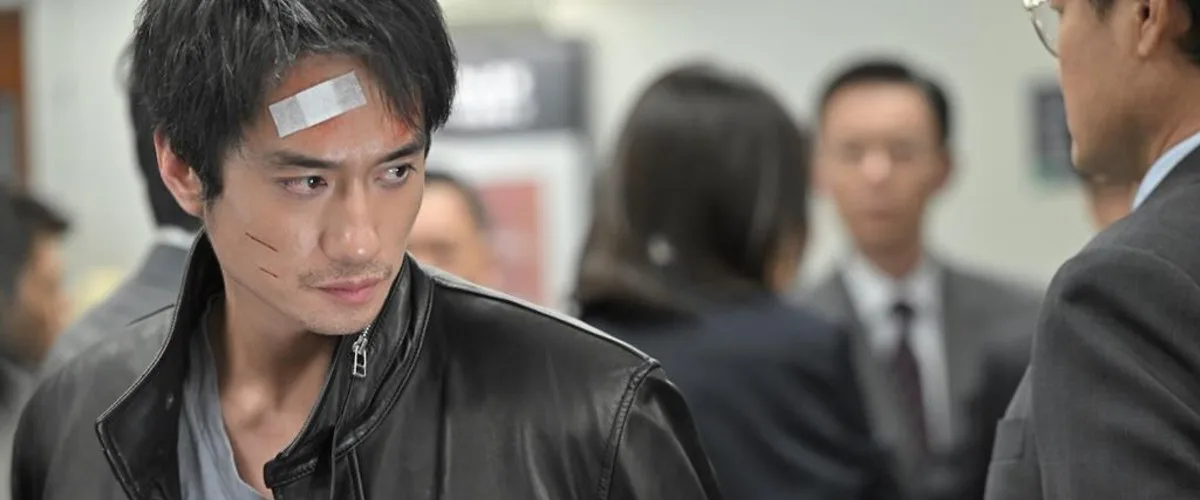
This prequel re-orients the franchise’s sudsy juxtaposition of a dynastic crime family feud and political maneuvering surrounding the HK police. Here, Lee gets crucial help and then must investigate fellow lawman Peter Choi (Daniel Wu), who’s threatened and then propositioned by Sir William Keswyk Poon (Tse Kwan-ho), the egomaniacal patriarch of an influential HK crime family. Poon and his scheming son Simon (Wu Kang-ren) only get involved because Lee and Choi are both investigating the kidnapping of K.F. Wong (Carlos Chan), Sir William’s brother-in-law. Lee’s appropriately convoluted search for answers leads him to a shaky alliance with crime boss Jodie Yuen (Louise Wong), whose gang is connected with Wong’s kidnapping.
Some fights and chases stand out, even if they aren’t more technically polished or viscerally thrilling than other flashes of life in recent Hong Kong pop cinema, including “Detectives Vs. Sleuths” and “Twilight of the Warriors: Walled In.” Moreover, “Cold War 1994”’s action highlights bring to mind Hong Kong programmers from the mid-2000s, since they also use lots of quick cuts, brownish-orange camera filters, and generally blown-up visual compositions with blown-out lighting to seem overexposed.
That sort of stylistic fidelity also makes you pay closer attention to the movie’s yearning references to everything that, according to the filmmakers, evokes pre-handover Hong Kong, including exteriors set at Kai Tak Airport (closed in 1998) as well as area-specific interior design, like the blue wall tiles and black staircase guardrail arabesques in Jodie Yuen’s hideout. These warm period details notably clash with the last two “Cold War” movies, since they’re set in sterile high-rise buildings whose floor-to-ceiling windows and minimal furniture give them a chilly conference-room aesthetic.
It also helps to think about the mid-2000s, when a maybe surprising number of Hong Kong movies looked like “Cold War 1994,” since that backward turn helps to clarify the real source of the “Cold War” movies’ anxieties. At one point, Sir William donates his private collection of wall-scroll calligraphy, which features the indelible slogan “Exalted by Imperial Rule” and draws inspiration from traditional Chinese texts, including works by Confucius. China is otherwise never mentioned. It’s still telling that this is the scene where Sir William tells his son that he wants to whitewash their family’s notorious history.
Overall, this is not only a more focused and less bathetic procedural, but also the most revealing entry in this series. It suggests that the filmmakers aren’t only nostalgic for pre-handover autonomy, but for a more recent moment in time when Hong Kong’s champions seemed capable of taking care of themselves. By maintaining a clearer focus on the past, “Cold War 1994” winningly clarifies the filmmakers’ concerns with their industry’s defining stagnation and uncertain future.