By 1995, Black cinema had once again taken a foothold in mainstream culture. Young Black directors like John Singleton, Spike Lee, The Hughes Brothers, Ernest R. Dickerson, Doug McHenry, Reginald Hudlin, Keenen Ivory Wayans, Rusty Cundieff and Matty Rich had all made successful films with Black casts, telling a variety of Black stories across multiple genres. There were the gritty coming of age films like “Juice,” “Menace II Society” and “Boyz N The Hood”; comedies like “Boomerang,” “A Low Down Dirty Shame” and “Fear of a Black Hat”; horror films (“Tales From the Hood”), (“Tales from the Crypt Presents: Demon Knight”) and even romance (“Jason’s Lyric”).
At that point, auteur director Spike Lee was already in a class of his own, with a larger filmography than any of his peers, telling stories across different genres, sometimes even set in different decades. That year, Lee released the crime drama “Clockers,” based on the novel of the same name by Richard Price, to some critical acclaim. A few months earlier, music video director F. Gary Gray made the jump to feature filmmaking, adapting Ice Cube and DJ Pooh’s screenplay “Friday” for the big screen, which led to a surprise box-office success.
But despite this exciting time for Black film, few narratives centered on the lives and experiences of Black women. By that point, Steven Spielberg’s “The Color Purple” was a decade-old curiosity marred in controversy, despite its massive critical acclaim. The film, based on the Alice Walker novel of the same name, was one of the first mainstream American films to focus entirely on the lives of Black women. The first known feature film directed by a Black woman was Kathleen Collins’s “Losing Ground” (1982), but it was never given a theatrical release.
In the years since, Black female directors like Julie Dash (“Daughters of the Dust”) and Leslie Harris (“Just Another Girl on the I.R.T.”) saw modest success for their work, their films were overshadowed critically and financially by the work of their male peers. Director Ayoka Chenzira self-funded her debut feature, “Alma’s Rainbow,” in 1994, but the film never reached theaters. This would become a recognizable pattern in the male-driven Black cinematic landscape—films by Black men got their time in the sun fairly quickly, while Black women’s work barely registered outside film festivals, awaiting reassessment in the years to come by thoughtful critics and academics.
It makes sense, then, that when the ’90s finally got a successful film about Black women, it was made by a man—Forest Whitaker, in his directorial debut. The film was an adaptation of Terry McMillan’s novel of the same name, following four friends through a year of love and heartbreak in scenic Phoenix, Arizona. “Waiting to Exhale” went on to become the most successful film starring Black actresses since “The Color Purple,” with the added bonus of a Black creative team that included music by Babyface and the star power of four established Black actresses, including superstar Whitney Houston and Academy Award nominee Angela Bassett. Rounding out the cast are character actress and theater legend, Loretta Devine, and Lela Rochon.
The film also boasts an array of Black male suitors, including legendary actor Gregory Hines, Dennis Haysbert, Wesley Snipes, Wendell Pierce, Mykelti Williamson, and Leon. Though it’s never led to any sequels, reboots, or television series, Whitaker’s film continues to be the standard for female friendship on the big screen, calcified by its enduring presence on television throughout the late ’90s and ’00s.
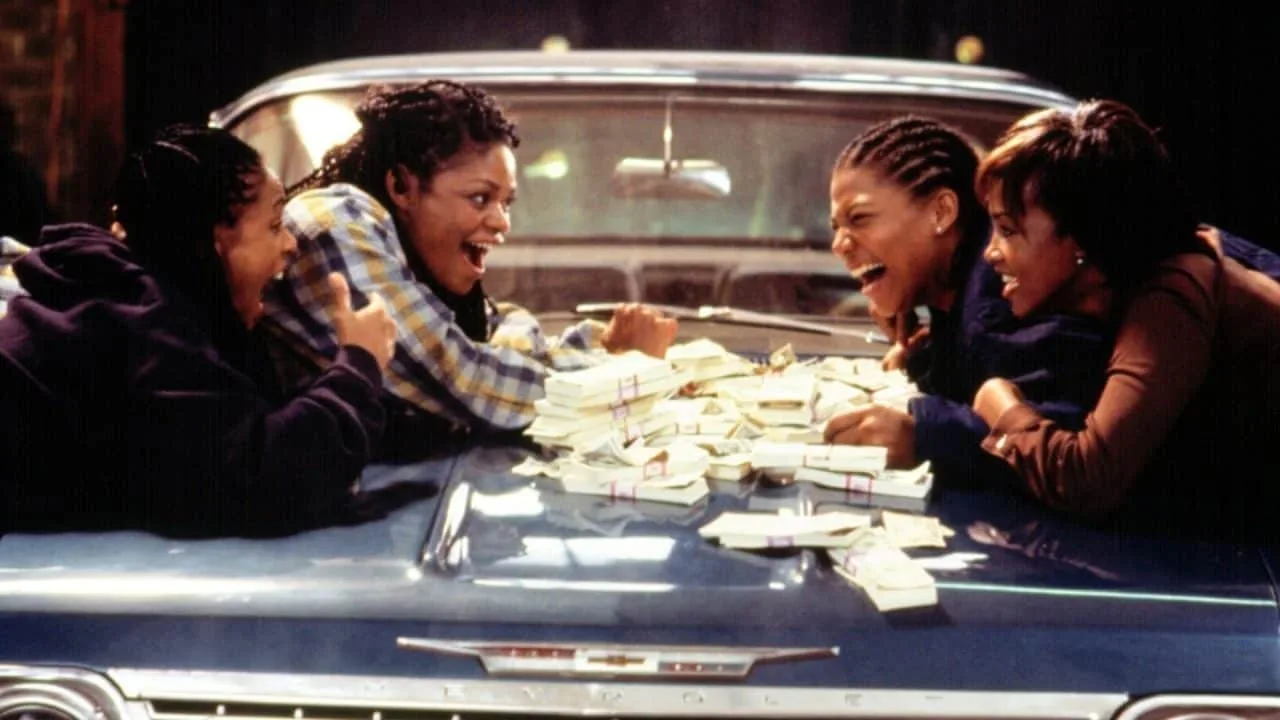
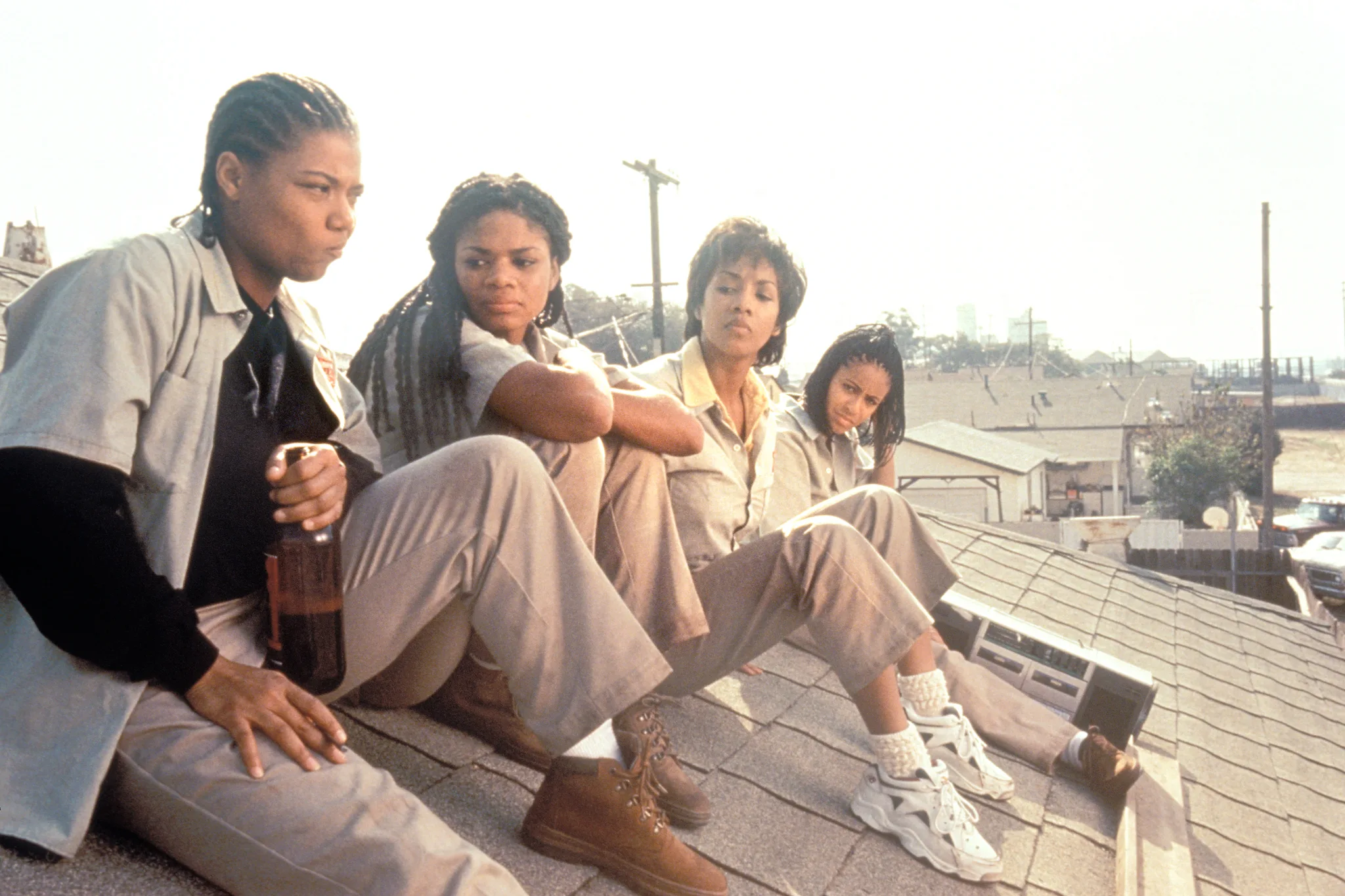
In 1996, not long after the box-office success of “Waiting to Exhale,” directors Spike Lee and F. Gary Gray both released films that also centered Black women, telling fresh stories that highlighted their marginalized place in society. Lee was no stranger to films with female protagonists, having made the sex-forward dark romantic comedy “She’s Gotta Have It” and the family dramedy “Crooklyn” in 1994. Meanwhile, Gray was still pretty green and hungry to establish himself as a gritty, big-budget action director with a buzzy cast and hip-hop-heavy soundtracks. Lee’s “Girl 6” explored the sexualization of Black women in mainstream cinema and entertainment, focusing on the struggle of one Black actress who just wants to find good work without having to take her clothes off. In contrast, Gray’s “Set It Off” used a pulpy heist vehicle to highlight the way Black women are underestimated and marginalized by everyone around them.
The women in both films are fighting to be taken seriously and treated with respect—not just from white people, but Black men as well. Surprisingly, Gray is more successful in that regard, with nearly every man in “Set It Off’ pointedly failing the vulnerable women at the center. As they are pushed to more desperate action, they become bolder and more devoted to each other. The escalation feels motivated by the unhappy truths that create a gulf of misunderstanding between Black men and women. “Girl 6” is more sexually explicit, but its gender critique is much tamer in comparison. Star Theresa Randle is an island of a woman, with no female friends outside of work. Lee, playing Randle’s cousin, and actor Isaiah Washington are the only people who seem to know her. Washington plays her bizarre ex-husband, who curiously shoplifts items around New York City.
When “Set It Off” premiered in the fall of 1996, actress Jada Pinkett was the only bona fide movie star in the main cast. After breaking out on “A Different World,” Pinkett starred in “Menace II Society,” “The Inkwell,” “Jason’s Lyric,” “A Low Down Dirty Shame,” and “Tales from the Crypt Presents: Demon Knight.” And just that June, her star continued to rise when she played a love interest for Eddie Murphy in the family comedy “The Nutty Professor.”
Roland Emmerich’s blockbuster “Independence Day” set the box office on fire only a month later, introducing TV actress Vivica A. Fox to audiences everywhere. Actress and rapper Queen Latifah also made the jump from television after years on “Living Single.” Rounding out the cast, Kimberly Elise is the only true newcomer, with “Set It Off” being both her film debut and the first substantial acting role she’d ever had at that point. John C. McGinley and Ella Joyce (“Roc”) play the film’s interracial cop duo, pursuing the women with single-minded determination. Joyce’s performance adds an interesting wrinkle to the story, playing a Black woman cop who seems to have no empathy for the struggling women in her community. McGinley’s performance is fascinating as well, as he seems to be one of the few men in the film who understands what drove the foursome to crime.
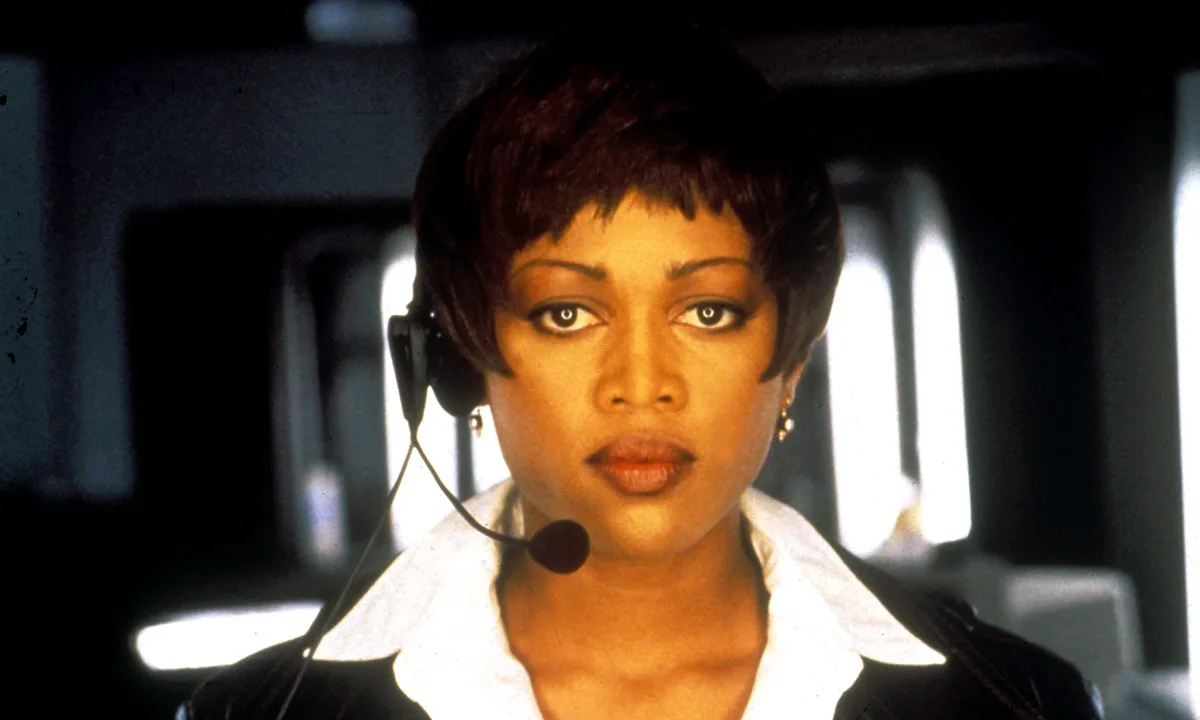
“Set It Off” was a box office success, further proving that there was a market for Black women-centric stories, regardless of genre. Audiences came to see a film about four very different Black women who navigate their love lives and support one another. Why wouldn’t they come to see four working-class Black women who start robbing banks to get out of their poor Southern California neighborhood? A studio executive could describe “Set It Off” as “‘Waiting to Exhale’ meets ‘Thelma & Louise’” and they wouldn’t be too far off.
When Frankie (Fox) loses her job as a bank teller after a robbery, she comes to her best friends with a scheme: They all wear wigs and sunglasses, rob banks and make enough money to get them all out of town. Cleo (Latifah) takes to the work immediately, happy to impress her sexy girlfriend Ursula (Samantha Maclachlan) and live the gangsta lifestyle. Meanwhile, the timid Tisean (Elise) is only interested in providing for her child as a single mother. In the midst of all the madness, Stony lives out a romantic fantasy with a young, handsome banker (Blair Underwood), making a name for himself amongst the city’s white monied elite. Throughout the film, Stony questions whether she could ever belong in such a world, even if she put her criminal activities behind her for good.
“Girl 6” plays like both a spiritual sequel to “She’s Gotta Have It” and Spike Lee’s female answer to Robert Townsend’s “Hollywood Shuffle”, pairing Hollywood satire with an exploration of the sexual politics of being a Black actress. The film even uses Nola Darling’s opening monologue in the audition scenes. Lee cast underrated actress Theresa Randle at the center, along with the legendary Jenifer Lewis, Debi Mazar, Naomi Campbell, Gretchen Mol, and Debra Wilson (“Mad TV”).
Randle plays a talented actress objectified by the male-dominated Hollywood machine. Unable to get any roles, she takes a job at a phone sex line to make money and practice her craft as an actress. This struggle seemed to mirror Randle’s real-life hurdles in the industry—even after “Girl 6,” the gifted actress was relegated to supporting and love-interest roles in films like “Space Jam” and the “Bad Boys” franchise. This reality adds a tragic layer to the narrative, proving its point without moving the needle.
The actress flourishes in the office, maintaining a nice roster of callers—all mostly white men who have no idea she’s a Black woman. Running alongside Randle’s narrative is a news story about a little girl who fell down an elevator shaft. At times, Lee will cut to the image of the empty shaft, plunging down into an endless abyss, illustrating the actress’s descent into the seedy world of phone sex. The screenplay for “Girl 6” was written by Black playwright Suzan-Lori Parks, marking her first foray into cinema. Neither Parks’s writing nor Lee’s direction softens the film’s judgmental tone, and it doesn’t help that we never truly seem to get to know Girl 6. Randle remains unnamed until the film’s end, when Washington calls her ‘Judy.’
Overall, “Girl 6” feels like experimental theater in the shape of a film, keeping us at an emotional distance as the story becomes more abstract. The film features original music by Prince—which adds to the film’s unique charm—and an impressive slate of actor cameos, including Madonna, Quentin Tarantino, Ron Silver, Halle Berry, Mekhi Phifer, and Lee regular John Turturro. But unlike “Set It Off,” “Girl 6” was not a critical or financial success–thankfully, Lee released another more successful film that year (“Get On the Bus”).
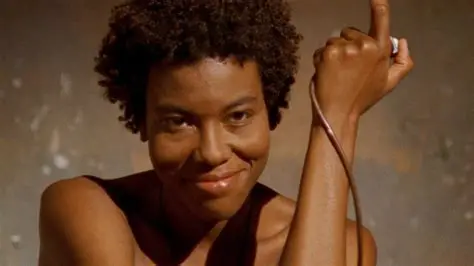
But there was another film made in 1996 that explored the struggles of being a Black actress in an exploitative world. Director Bridgett M. Davis wrote and directed her debut feature, “Naked Acts,” with no studio or distributor, and was forced to distribute the film on her own. The story follows Cicely (Jake-Ann Jones), an actress living in the shadow of her mother, Lydia Love (Patricia DeArcy), a Blaxploitation icon. While Lydia was becoming a star, Cicely was being preyed on by her mother’s smarmy boyfriend. Now Cecily is all grown up, with a new svelte body and something to prove. But when she finds out her new film role includes a nude scene, Cicely does everything she can to avoid it.
As she slowly comes to terms with her body and gains her confidence, Cicely confronts the way Black women are both marginalized and sexualized on and offscreen. Scenes of arguments between Cecily, the other actresses, the producer, and the director give the film a realistic feel. “Naked Acts” is a film about women, by women, and for that reason, it feels like the rawest snapshot of the mental, physical, and emotional hurdles Black actresses face when they perform. Weighed down by stigma and expectation, Cecily ultimately just wants to make peace with her body and cope with the trauma of her childhood. Despite the heft of her journey, “Naked Acts” retains a light touch. Its ending feels truly peaceful.