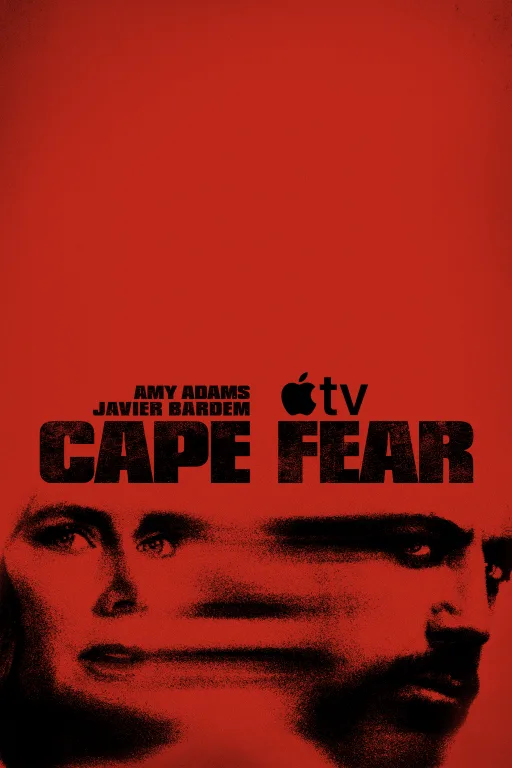
We’ve had three adaptations of John D. MacDonald’s 1957 novel The Executioners—two films and now an Apple TV series, all titled “Cape Fear.” You’d be hard-pressed to find a more impressive trio than the actors who have played the terrifying villain Max Cady in Robert Mitchum (1962), Robert De Niro (1991), and now Javier Bardem. All three performances are memorable, with Mitchum masterfully underplaying pure evil, De Niro going for Biblical madness, and Bardem serving up a combo platter of sexually charged charisma and tightly coiled Intermittent Explosive Disorder.
As for the series as a whole: It’s a lurid, explicitly violent, well-acted, and preposterously plotted fever dream that had me rolling my eyes at certain twists and turns, even as I found myself eager to gobble up the next episode. This is like the first two films on NOS: Everything is heightened, exaggerated, extended, pushed to the limits. It makes for occasionally brain-numbing, cringe-inducing, but undeniably entertaining trash TV. The core story of a nuclear family threatened by a relentless outsider fixated on revenge is intact, but there’s a steady injection of current-day weapons of psychological warfare, from tech-driven gaslighting to AI deception to social media catfishing to viral video shaming. “Cape Fear” 3.0 is a reminder that even if you literally lock the doors and upgrade the alarm system, your phones and your laptops are still open portals for all manner of invasive threats.
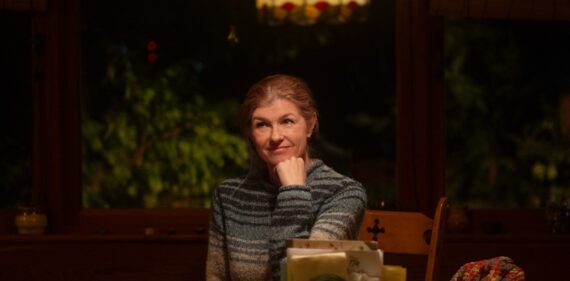
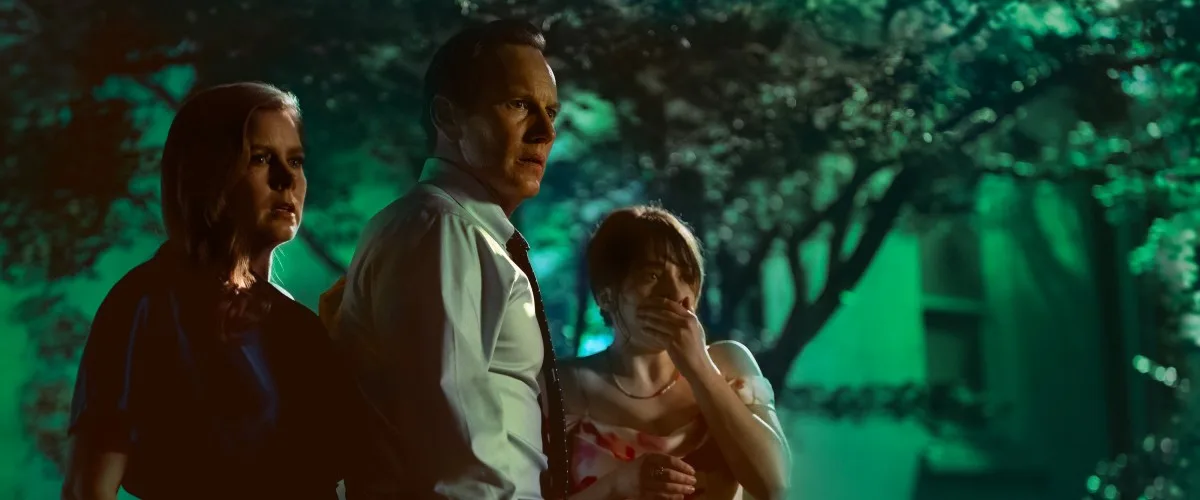
The casting for “Cape Fear” is impeccable, led by Amy Adams and Patrick Wilson as Anna and Tom Bowden, two attorneys who live in a gorgeous home in Savannah, GA, with their teenage children, the seemingly well-adjusted but increasingly resentful Natalie (Lily Collias), and the seriously troubled Zack, played by Joe Anders with disturbingly effective intensity. (While shot primarily in the Atlanta area, the crew filmed exteriors in Savannah, making excellent use of the eerily beautiful Spanish-moss-draped trees.) Anna works for an organization that seeks to commute the sentences of wrongly convicted prisoners, while Tom is a former prosecutor who is now a defense attorney at a high-priced firm. As angry son Zack puts it to his father: “You used to put poor people in jail, and now you just help rich people stay out.”
Anna has been sober for a decade and a half, while Tom micro-doses acid, I kid you not, and is considering an affair with a colleague. Add to that the slamming doors and raised voices dynamic with their two children, and the Bowden family is already fraying apart. The wheels really start flying off in multiple directions when one Max Cady (Bardem) is released from prison after his former mistress dies by suicide, leaving behind seemingly irrefutable evidence that it was she and not Cady who murdered Cady’s wife and unborn child. Once Cady is out, he is celebrated by the media and becomes “the most famous exoneree in America,” as Anna’s partner, Noa (CCH Pounder), describes him, and he makes it his mission to invade the Bowdens’ lives.
Turns out Anna was Cady’s defense attorney, and Tom was the prosecutor–and they got together shortly after the trial. Little wonder Cady blames them for his wrongful conviction. He becomes a constant presence in the Bowden family’s lives, dropping in so often that he’s like a tattooed, psychotic version of Kramer from “Seinfeld.”
It’s borderline ridiculous, but intriguing. In the 1962 film, Max Cady infiltrated a stable family unit. In the 1991 update, there was toxicity and instability in the marriage between Nick Nolte’s Sam and Jessica Lange’s Leigh. This time around, Cady is manipulating and threatening a nuclear family that is already a dumpster fire of deceit, betrayal, and recklessness. You half-expect him to size up the situation and realize he can just leave them to their own devices and they’ll implode.
Of course, that’s not what happens. “Cape Fear” is pocked with violent outbursts and brutal confrontations. The visuals are bold and effective, e.g., flashbacks in black-and-white, and brief, jarring snippets rendered with color-inverted negatives, and the dominant presence of the color teal, from walls and lighting to rippling water to seemingly half the characters in the series wearing various shades of a hue that plays cool and not particularly comforting. There are also multiple callbacks to the 1991 film, and a tip of the cap to a particularly poignant scene in Hitchcock’s psychological thriller “Shadow of a Doubt.” Against logic, a local movie house even displays posters from actual pre-code thrillers such as “The Lawyer’s Secret” (subtle!), “The Crime of the Century” (ha!) and “Guilty as Hell” (all right, we get it!).
Adams and Wilson deliver admirably sincere performances as deeply flawed and perhaps even corrupt characters who are rarely empathetic. Bardem wisely refrains from echoing even a whisper of his masterful work as the chillingly shark-like psychopath Anton Chigurh in “No Country For Old Men,” portraying Max Cady as a live wire of conflicting emotions, all of them on full display at all times. He’s a charismatic, ferociously intimidating wild card who favors flair such as a yellow suit, novelty sunglasses, and a Panama hat. He’s kinda funny, but laugh at him at your own peril.
Even when “Cape Fear” goes for the gratuitous grossout shock or delivers a howler of a twist, it never commits the felonious crime of being dull.
Eight of 10 episodes were screened for critics. Premieres June 5 on Apple TV.