
“The Samurai and the Prisoner” has been seen by some as a deviation from the norm in the career of Kiyoshi Kurosawa, but this is a truly limited way to look at a filmmaker’s legacy. Yes, Kurosawa may be best known for horror with landmark J-Horror films like “Cure” and “Pulse,” and recent excellence like “Cloud” and “Chime,” but he’s made non-genre films before. And what elevates those works is not just Kurosawa’s ability to scare people but his confidence behind the camera, a skill that remains evident no matter the type of film that he’s making.
It also ignores that this masterful drama is about some pretty existentially horrifying things, including divine punishment, beheadings, multiple murders, and the belief that an honorable death in this life leads to salvation in the next. It’s the stuff of horror the same way the witches in Macbeth informed the genre to come.
Adapting Honobu Yonezawa’s award-winning 2021 novel, Kurosawa has made one of his best films, a work that feels a bit like Agatha Christie, a bit like Shakespeare, and even a bit like Samurai Columbo. It’s a dense chamber piece with big ideas and riveting performances, but it’s nothing without the genre-boundless acumen of its creator.
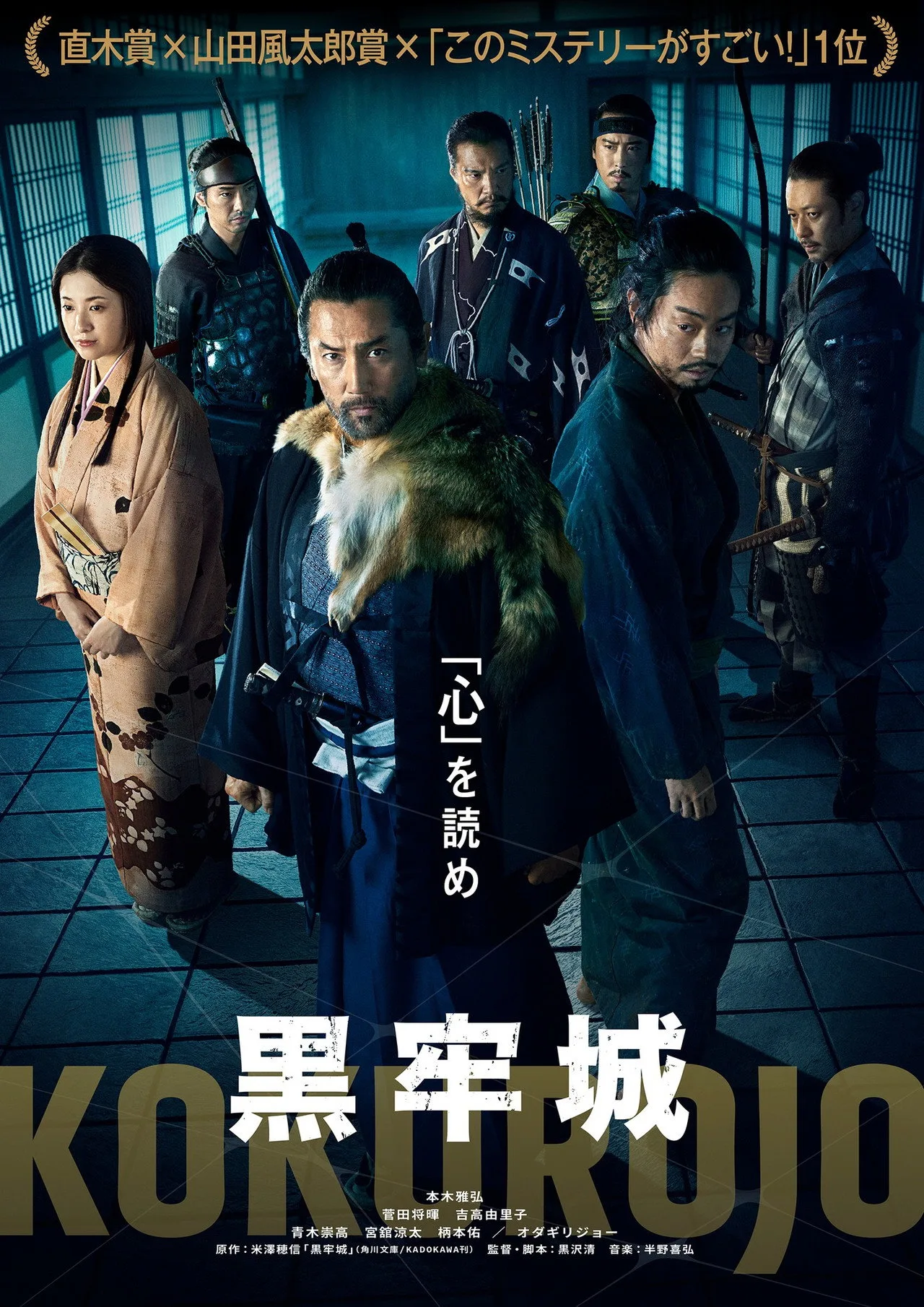
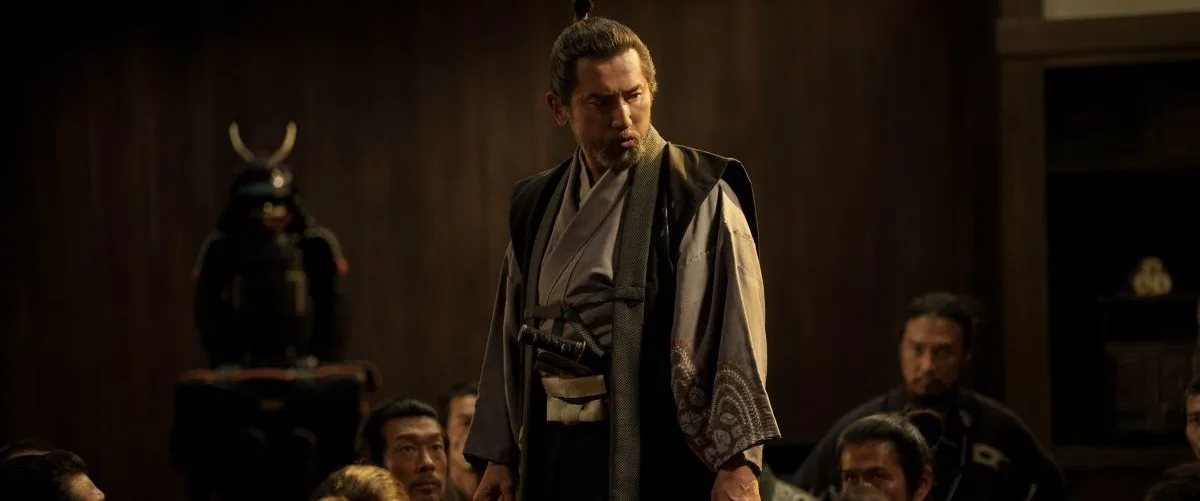
Yonezawa’s 16th-century set novel opens with this line: “Toss him in the dungeon; do not let anyone see him and do not kill him. Keep him alive until I say otherwise.” The “him” in this equation is the prisoner of the title: Kanbei Kuroda (Masaki Suda), a war strategist from a rival clan to the region’s leader, Lord Murashige Araki (Masahiro Motoki). Kanbei has come to Murashige to warn him that his days are numbered. Pre-film text informs us that a ruthless warlord named Oda lurks in the dark, a threat to take down everyone and everything at Arioka Castle.
When Kanbei basically tells Murashige that his days are numbered, he presumes that it will be the last action he takes given how well leaders take that kind of news; he asks only that his head be sent back to his clan so that they know he wasn’t a traitor, thereby sparing his son’s life. When Murashige doesn’t kill him, it’s a shock to the entire Samurai ethos.
Even more unexpectedly, Kanbei becomes a sort of mystery-solving counsel to Lord Murashige when murders start happening at Arioka. First, a child prisoner is shot with a disappearing arrow. It’s clearly a fatal wound sent by a bow, but where could the arrow be? Murashige interviews people who were around the captive’s cell and takes what he finds to the dungeon, where extended conversations unfold between the title characters about not just these unusual cases, but what they mean in the big picture regarding the fate of Arioka Castle and its residents. It’s the first of four mini-whodunits within the film, the first three cascading thematically into the final revelations.
To say that “The Samurai and the Prisoner” is talky would be an understatement. And it’s talky for 147 minutes. Kurosawa does not pause to keep viewers caught up on character names much less the roles these people play in Murashige’s empire. It’s a very difficult film to track, better enjoyed once you let that wash away and experience Kurosawa’s choices beat by beat instead. Within that, you’ll find sheer filmmaking mastery. Kurosawa and D.P. Yasuyuki Sasaki simply know how to use a camera in these confined settings, never flashy but always impactful in their subtle movements and angles that amplify the shifting dynamic between the Samurai and the Prisoner. It’s also a quietly edited film that allows Motoki and Suda to play out lengthy scenes like actors on a stage.
There’s an effective battle sequence and a few brutal deaths, but “The Samurai and the Prisoner” is the most dialogue-heavy film of Kurosawa’s career, which necessitates an ensemble up to that challenge. Kurosawa directs his entire cast to believable, present performances, but it’s the tête-à-tête between the two leads that gives the film’s engine most of its gasoline. The lead from “Cloud,” Suda is sly and playful, understanding that Kanbei is probably the smartest person in every room he enters, but he has the physical restriction of being chained in a dungeon. Why is he helping Murashige? Is it just because he has no other choice? He keeps us guessing.
As good as Suda is in his scenes, it’s Masahiro Motoki that anchors the film with a truly powerful piece of acting. By being so essential to the narrative that he’s in nearly every scene of the film, his confusion, anger, and suspicion become our own, even as we’re not sure if he’s a doomed leader or a progressive one who has saved a man that he knows can do him good despite generations of samurai culture insisting he be beheaded. Motoki understands that this is a leader on the verge of collapse, and that men in those situations behave differently, almost surprising themselves. Is Murashige smart enough to strategize his way out of a seemingly impossible situation?
It’s a tougher ask for an actor than it looks to make that question viable. We need to believe that this is not a failed footnote in the history books, but someone who is putting puzzle pieces together without knowing what the completed picture looks like. The game being played between Murashige and Kanbei gets so compelling that it allows one to reconsider the title: After all, Murashige is a prisoner in his own castle, unable to leave for fear Oda’s men will take his life.
At the Cannes premiere last night, the luminaries of Japanese cinema at the fest with their own works came out for Kiyoshi Kurosawa, including Ryusuke Hamaguchi (“Drive My Car”) and Hirokazu Kore-eda (“Shoplifters”). They know that he is one of their nation’s best, a precise craftsman who can make a 45-minute nightmare like “Chime” and then turn around and deliver a Samurai epic that’s not only 100 minutes longer but has more in common with Macbeth than what fans may be expecting. In a sense, this is Kiyoshi Kurosawa’s “Throne of Blood,” one of the other Kurosawa’s unequivocal masterpieces, and it earns that comparison in every way.
This review was filed from the Cannes Film Festival on May 20th. It opens on July 31st.