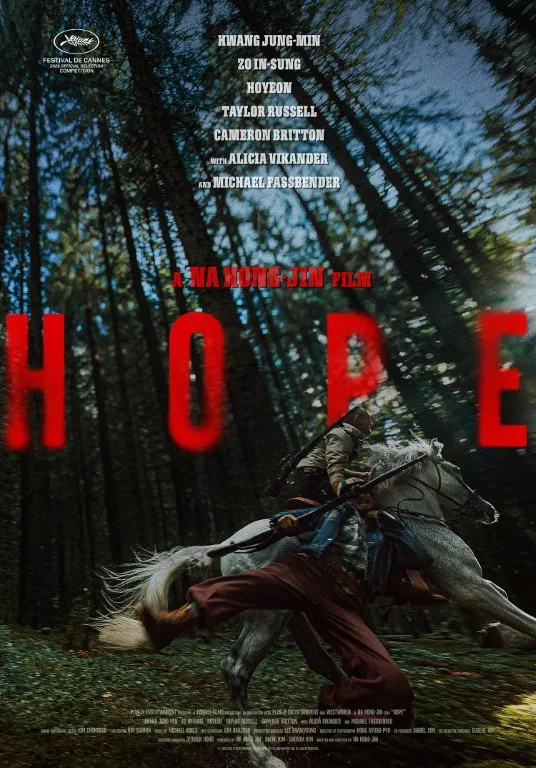
It takes almost an hour into Na Hong-jin’s destabilizing yet raucously entertaining actioner, “Hope,” to see the creature causing mayhem in a small rural South Korean mining town. Before then, an arresting tornado of carnage fills the frame. The police chief Bum-seok (Hwang Jung-min) receives a call from his hunter cousin Sung-ki (Zo In-sung) about a mutilated bull lying lifeless in the center of the road. Consumed by flies and marked with deep bloody scars, it’s not altogether clear what might’ve murdered the bovine. When the chief heads back into town to investigate, he finds decapitated bodies strewn down narrow streets and buildings with holes burrowed in them. What feels like an entire movie passes before we get the answer to this mystery. But that hour of intrigue is a true cinematic feat, whose acuity is so high that it can easily trick one into misreading who is friend and who is foe.
Na’s reputation should make anyone question their assumptions about “Hope.” “The Wailing” purposely bucked against conventional structuring to rework horror tropes into something far more unpredictable. This film’s wit moves with a similar spontaneity, keeping you on your guard for Na to swerve even when you think he might be flying far too straight. This bloody, motoring adventure relishes the unease it places on the audience, lulling one into a classic heroic Western before morphing into a surprising creature feature whose recollections of “Predator” and “Prometheus” further reckon with the morality viewers bring into sci-fi flicks.
If it sounds like I’m avoiding describing what “Hope” is actually about or who it features, for that matter, then that’s exactly what’s happening. If you’re going to see this ingenious Neon-distributed genre picture, then you’re probably best left knowing as little as possible. So, for the purposes of this review, I’ll try not to get too deep into the particulars of the world Na has crafted.
I’ll start with the obvious: The first hour of “Hope” rips.
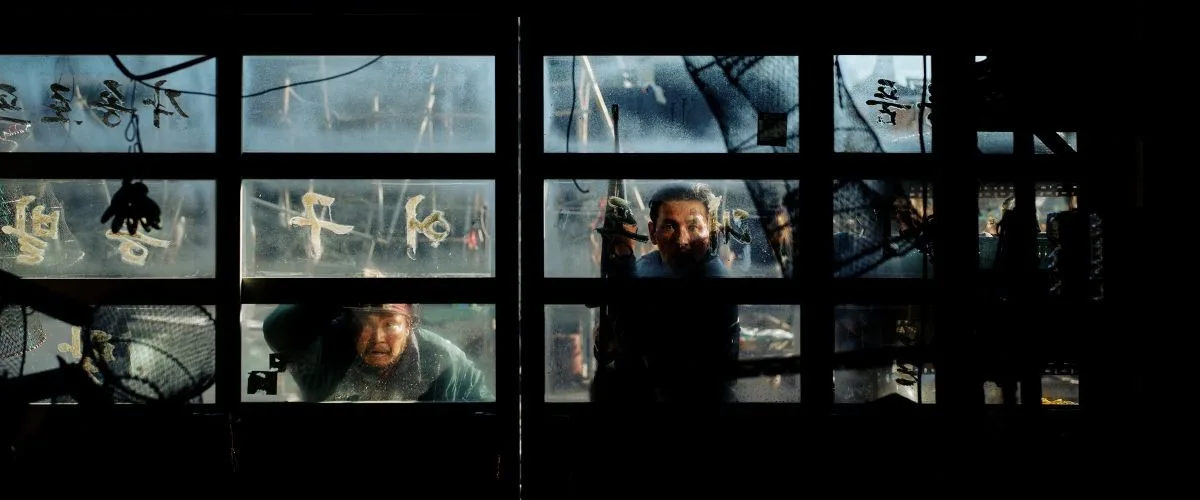
It’s bifurcated into two storylines. One involves Bum-seok tracking the monster through his town as it wreaks havoc; the second involves Bum-seok’s cousin and his hunter friends venturing into the woods to search for answers. While the latter half of the film more closely aligns with the b-plot, the a-plot almost exclusively belongs to Bum-seok and the film’s animated soundscape. Bum-seok is always several steps behind the monster; he can hear the gunfire, the explosions, and the screams that result from its carnage. But he can’t quite catch up. Consequently, the tracking shots—some of these are so smooth it’s difficult to figure out how Na and his cinematographer Hong Kyung-pyo pulled them off—keep us lockstep with Bum-seok, which enlivens one to just how far behind he is. When he does catch sight of the monster, the revelation, and everything that comes afterward, sharpens a startling edge to a winking film.
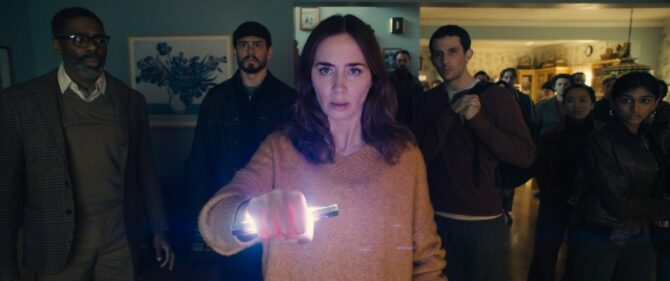
Despite the widespread destruction depicted on screen, the ensemble is quite small. Sung-ae (Hoyeon), a fellow cop and somehow trained for field hospitals, provides plenty of thrills as the level-headed deputy to Beom-seok. A greedy trapper provides some clues about the monster, as does an elderly forager. Another cop, who might be the mayor’s nephew, briefly pops up as well. And that’s about it. All these characters combine for buffoonish laughs purely due to their incompetence, making them an intriguing synergy between the cartoonish characters that often come in Korean action movies (we even have a dopey sidekick dog that laughably really only appears at the climax), with the expectations of Western heroism that involves gun crazy gunmen defending one’s land and family against seemingly insurmountable invaders. The twist of who these creatures are further complicates one’s initial desires for bloodshed and revenge.
Which makes everything that comes after the first hour of “Hope” a fascinating stress test for the viewer. Though there are plenty of chases—some that stretch on for far too long—and the film does shift to other characters, the last two-thirds of the film seemingly lose all momentum. Why? The first hour is so entertaining and fast-paced that when numerous action sequences yield no new information, they can feel repetitive. Moreover, there’s another critical change Na makes between the two primary sections of the film: he shoots his actors without any regard for them.
Every character here is seemingly underwritten. We barely find out anything about any of them. While we could say it’s a glitch, I believe it’s a feature. None of the humans here are particularly likable. Consequently, while Na shoots Beom-seok with hero shots in the first hour, especially when he shows up to investigate in aviator sunglasses, by the second half, those shots disappear. The camera, now distant, sees Beom-seok as an overwhelmed fool—a man who can’t get past his own fears to shed some empathy for a creature he can sense is in trouble.
Likewise, Sung-ki becomes a butt of a joke before long, too. The further the film continues, the more these characters appear tragically human: they’re greedy, myopic, and unforgivingly violent. For those reasons, we find out frustratingly little about the “monsters.” In fact, if Na wanted to undermine the Western hero, he does just that here. By the end, his lens, through the negative space of a desolate, apocalyptic road, captures them as minuscule beings set against the magnitude of what’s happening around them.
The smartest component of “Hope” is how underused Taylor Russell, Alicia Vikander, and Michael Fassbender appear to be. They all portray creatures whose onscreen look appears to be CGI paint that’s still drying (I suspect in wider release, when this film isn’t rushing to compete at Cannes, that those kinks will be ironed out) and whose lines are few and far between. Their stories are withheld until the final ten minutes, which seems more like a set-up for a sequel than an intuitive way to end a film.
Is Na purposely engineering one or making fun of other sci-fi flicks that perform similar economic calculations? Does he love this genre or resent it? At every turn, he twists its conventions without ever giving the viewer a moment to catch up on the joke. It’s bold, provocative, and assured filmmaking that oscillates between moments of breathtaking cinematic prowess and satirical characterizations, whose coy rendering turns a mirror toward those who unconsciously lap up hollow action heroes when the far more intriguing story exists in plain sight.
This review was filed from the world premiere at the Cannes Film Festival on May 18, 2026. It opens on September 9.