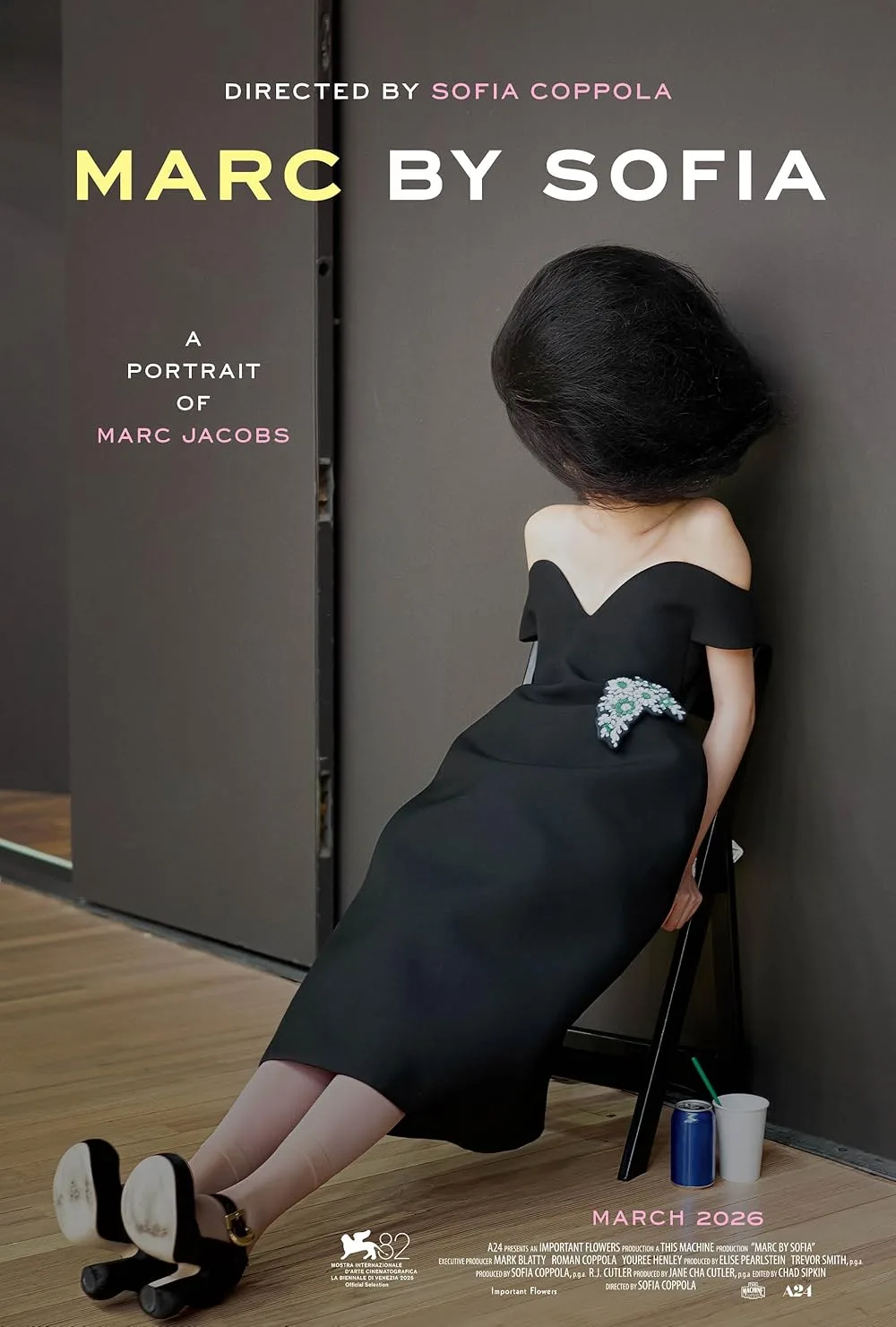


This affectionate documentary about fashion designer Marc Jacobs, by director and his longtime close friend Sofia Coppola, is more collage than biography. It is framed as what journalists call a tick-tock, with chapter headings letting us know how many weeks until Jacob’s big fashion show, and we do finally hear a little bit about the difficulties of his early years. But it’s more about the glimpses, the inspiration, and the vision than a straightforward narrative about his creative process or the innumerable decisions and obstacles that go into creating what he calls a seven-minute show with all the imaginative energy of a Broadway production. The movie assumes that we know or do not care about knowing the difference between couture and ready-to-wear, the importance of Fashion Week, and that we’re on Meryl Streep’s side of the famous cerulean lecture in “The Devil Wears Prada.” Or that, as with a fashion show, we’re happy to just enjoy the pageantry of it all.
The film is punctuated with flurries of montage, a series of archival images, some directly connected to Jacobs, some to set the scene or the mood, or set up something coming later. They flicker by quickly, glimpses of iconic women we will learn fueled Jacobs’ imagination, like Liza Minnelli and Elizabeth Taylor, a few seconds of Jacobs and Coppola snuggling on a bed, images of New York in the ’70s and ’80s when Jacobs was growing up. “All roads lead to Liz (Taylor),” he smiles, as he tells how a jeweled brocade jacket she wore gave him an idea for one he designed, then put aside, and then brought back years later.
In the film’s present, we are 12 weeks from his 2024 show for Fashion Week, and he is looking at fabrics, running his fingers over swatches with silver nail polish, very precise about what he is looking for. While the designs shown for Fashion Week are one-offs that may appear too extreme to be worn even by wealthy women or celebrities on red carpets, they are almost always prototypes for versions that will eventually be mass-produced (ready-to-wear) or sold retail in more limited numbers as a “designer” item. New York’s Fashion Weeks, held in the late winter and early fall, are not just about the clothes; they are about flash, flair, and insouciance. He talks about shocking the fashion world by deconstructing the Louis Vuitton signature monogram.
We also have the pleasure of hearing Jacobs respond to questions from a close friend and confidante of decades. He basks in her appreciation and is clearly utterly at ease in what might otherwise be a daunting situation, being filmed as he is asked about his life, including difficulties and inspirations. He describes himself as “pretty uncomfortable socially” and talks about how intimidated he was to meet people he admired. She knows what stories to ask about, and he knows she will portray him honestly, but from a place of understanding and appreciation. His discussion of his grandmother and her set weekly schedule for shopping at New York’s most high-fashion stores is charming. Later in the film, when we learn that he moved in with her as a middle-schooler to escape a harsh stepfather, we better understand why his time with her was so formative.
It is fascinating to see how an image or idea triggers an idea that is fully his own, from iconic divas to “the wonder of everyday things.” There are also a lot of fun and funny moments, as when he is putting together what will be a series of poufy cotton-candy-like wigs for the models: “We were just, like, stacking wigs on top of wigs, you know, like you do.” He hilariously tells us he designed the courtroom attire for both Winona Ryder and Lil Kim. “Come to me; I’ll dress you for your trial.”
This is not a movie that takes us step by step or explains what is happening. But it is illuminating to see the thousands of choices that are made for a seven-minute show featuring maybe a few dozen outfits. Every detail, and I mean every, matters as though it determines the fate of the universe, from whether the lower eyelashes have enough clumps in the mascara to the minuscule, almost invisible differences (cue the cerulean speech again) between two shades of pale ecru hose. We see that what he does transcends fashion, becoming a style with a pervasive cultural imprint. Luminaries from music (Kim Gordon, Pharrell Williams) and film (Coppola herself) tell us about his influence, and he points to performers like Bob Fosse and Barbra Streisand and artists Marcel Duchamp and Cindy Sherman, as well as classic designers like Yves Saint Laurent, as touchstones.
This film is a good companion piece for more straightforward fashion documentaries about Diana Vreeland, Alexander McQueen, Bob Mackie, Vogue, Iris Apfel, and Galliano. We might not come away understanding Jacobs or his world better, but we can still enjoy spending time with him. As Jacobs says about his show, “Some of the clothes are problematic, but as a seven-minute piece of theater, it was amazing.”