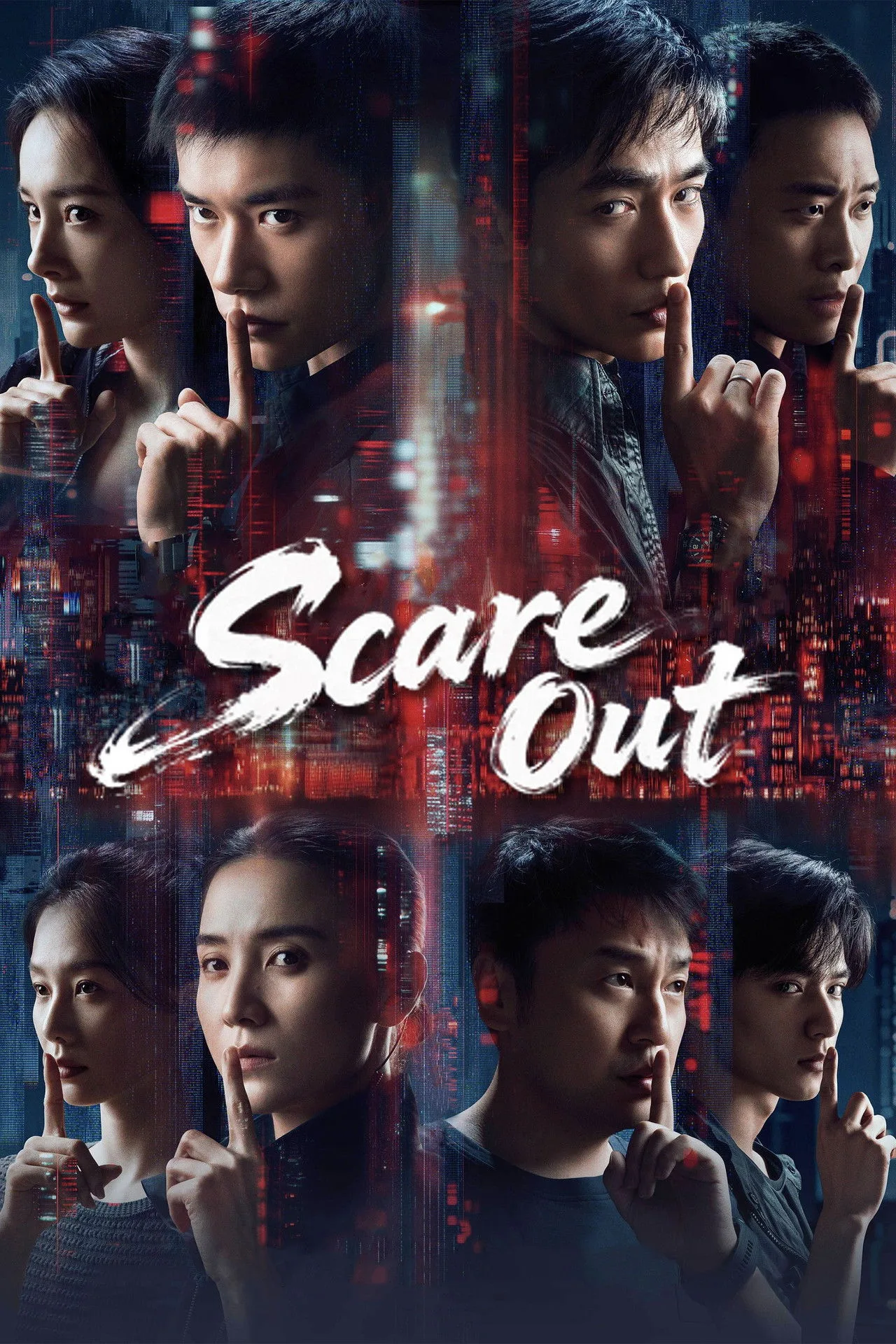

You’d have to squint extra-hard to see the lyricism, let alone the personality, of acclaimed director Zhang Yimou in such an impersonal vehicle as “Scare Out,” a frantic Chinese techno-spy thriller that follows a pair of conflicted National Security agents as they hunt for a double agent. Zhang (“Hero”) may not be the arthouse fixture that he used to be here in the West, but he continues to crank out a mix of intriguing pot-boilers and popular human dramas about conflicted state operatives in China.
Written off by many half-interested Western pundits for his nationalistic productions, Zhang’s movies still tellingly reflect his fascination with flawed antiheroes who reluctantly find themselves stuck in the web of politics. “Scare Out,” a major contender for this year’s Lunar New Year top grosser, continues this trend. Unfortunately, its surveillance-state drama doesn’t really give Zhang many opportunities to explore his tortured protagonists’ inner conflicts.
After a busy but inconclusive opening chase scene, “Scare Out” drops a lot of information in viewers’ laps and in a very short amount of time. A group of National Security agents has tracked down a shifty American named Nathan (Nathaniel Boyd) as he arranges to pick up a mysterious liquid from Chinese courier Li Nan (Jiayin Lei).
Both Nathan and Li manage to get away, but only after government agent Chen Yi (Boyang Lin) accidentally drives a drone into one of their targets, and also one of their agents gets shot through with crossbow arrows. More unhinged thrills sadly do not follow until much later in the movie, by which time “Scare Out”’s dramatic focus has shifted to an internal investigation for a mole working against the country’s interests.
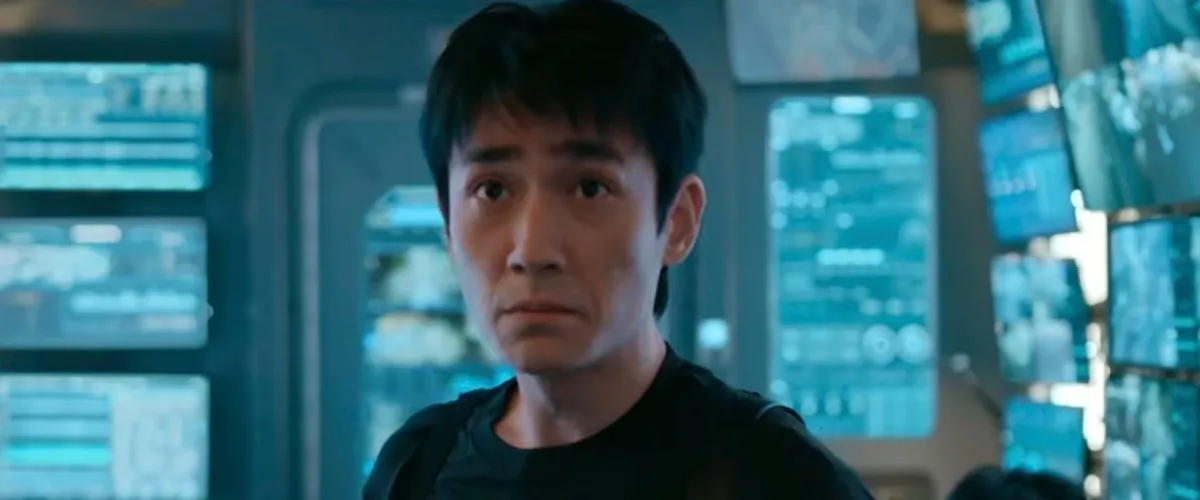
In an info-dump-heavy interrogation scene, newly deputized Director Zhao Hong (Jia Song) reveals that there are two main suspects: team leader Huang Kai (Yilong Zhu) and loyal co-leader Yan Di (Jackson Yee). They answer pointed questions in a jittery montage of blown-out images that were apparently spliced together with a rusty paper-cutter blade. Then one of the two suspects goes to a luxury hotel, where they meet their contact from the other side, the wily Bai Fan (Mi Yang). Subsequent plot twists focus on how characters have been manipulated by each other instead of why or how it happened. That skimpy procedural plot is mostly frustrating given how visually monotonous and unappealing much of “Scare Out” tends to be.
Dizzying side-to-side camera pans and jagged, deliberately mismatched images leave viewers feeling inundated with contextualizing information. Watching the characters round corners, climb stairs, and creep around each other at such a fast clip also leaves one exhausted since more frenzied energy is supplied by cross-cutting than whatever’s actually on-screen. Though maybe it’s better this way, given the movie’s wealth of drone footage, mostly of highway roundabouts and multi-lane boulevards in Shenzhen.
We follow Zhao’s team as they track various humanoid-shaped smudges on their surveillance cameras, looking down and also chasing after each other like a disorienting reboot of Where’s Waldo? The strain on one’s eyes also likely wouldn’t be so bad if the characters that we follow were either better developed or contrasted with their modern surroundings.
Admittedly, everything that’s mildly annoying about “Scare Out” is a stylistic choice. The overactive and irregular pacing makes it hard to care, hustling you from one setup to the next. The plot’s formulaic spy intrigue is sturdy enough, at least, though it also might have been more compelling if the movie were more like its action-packed opening and concluding sequences. “Scare Out” still concludes with one of a handful of awkward ballads, featuring didactic lyrics that spell out the movie’s themes of personal turmoil and self-sacrifice. The final song is a spirit-sapping doozy.
There are, however, flashes of personality to be found throughout, especially in a handful of scenes involving Huang’s unhappy wife Xiaoyu (Shishi Liu). Yan isn’t as well-developed, since his dialogue is rarely as memorable as the sheer amount of legwork that he performs while tracking Huang.
The pressure that Huang and Yan find themselves under has more character than they do as individuals, which stands to reason, given this type of espionage drama. It’s just unfortunate that most of “Scare Out” looks like a hyper-edited collage of low-res images that the filmmakers keep crash-zooming in on like a bored child with a large tablet.
The worst thing about “Scare Out” isn’t that it’s boring and ultimately trite, but that there’s so little of Zhang’s usual sensuousness in it. Zhang’s worked in this chilly and sometimes bitter emotional register before, though, and with finer results (“Full River Red,” “Cliff Walkers,” and “Shadow” all come to mind). “Scare Out” alienates and confronts viewers and then reassures us that all that formulaic pressure was actually for a greater purpose. This time, I disagree.