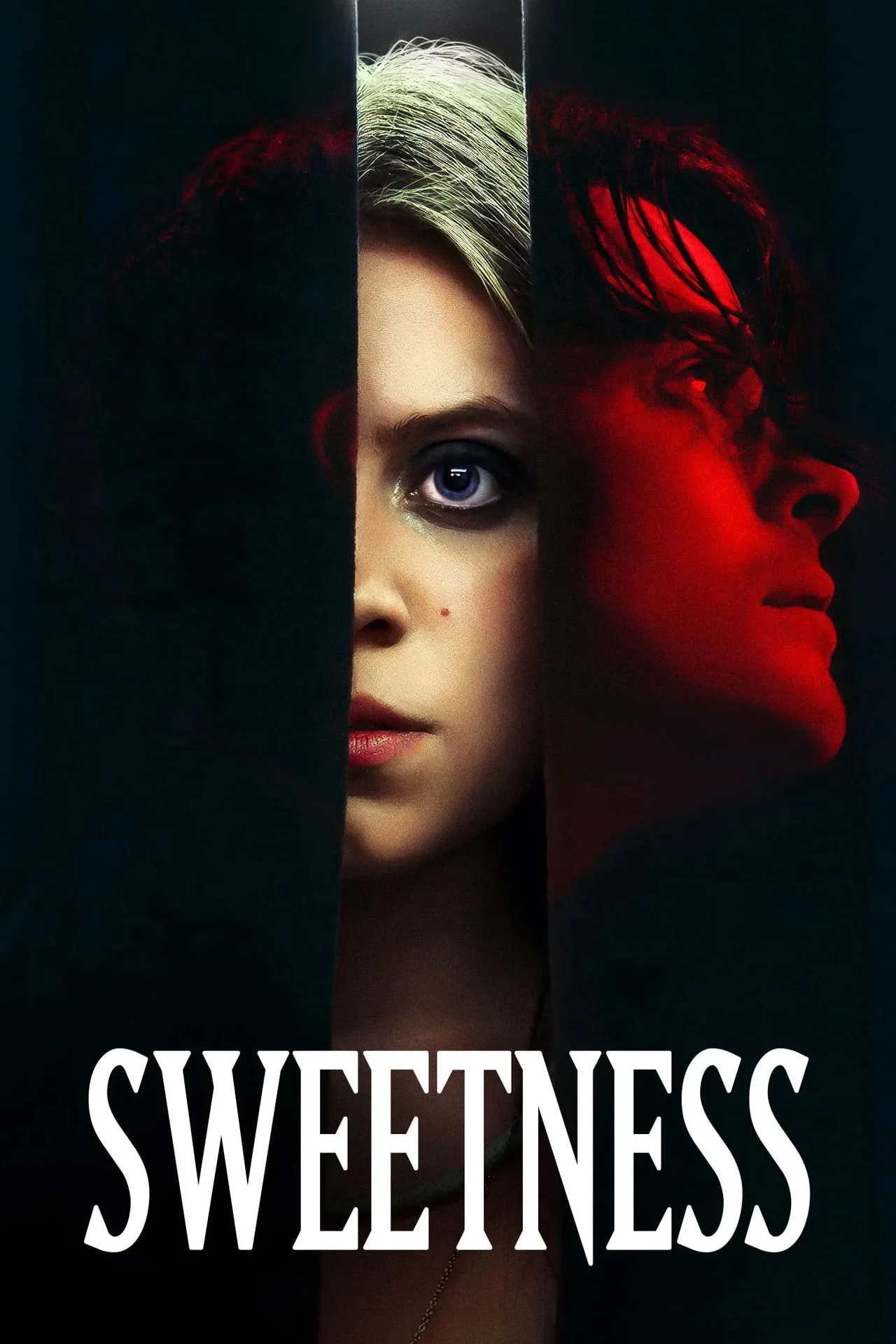


Fueled by the passions of fandom and still-developing teen feelings, Rylee (Kate Hallet) is a diehard fan of a band named Floor Plan and their Harry Styles-esque frontman, Payton (Herman Tømmeraas). Like many performers before him, Payton struggles with addiction, even after he’s publicly sworn he’s recovered. His tortured past only seems to endear him more to fans like Rylee, who swore her loyalty to the singer after the shared loss of their mothers. After she and a friend catch one of Payton’s shows, he accidentally hits Rylee with his car and offers her a ride home. Rylee gets to meet her hero, but once she discovers his sobriety story was just a cover-up, she takes it upon herself to kidnap him until he cleans up his act.
Written and directed by Emma Higgins, “Sweetness” is a stan culture horror story in the vein of Rob Reiner’s “Misery.” Like Annie Wilkes, Rylee is an unassuming villain, and her deeds land with a shock. Higgins transforms the hallmarks of a teenage girl’s bedroom into a dungeon, and her petulant attitude is now a form of deflection, keeping others away from knowing the truth about her holding a pop star hostage until he sobers up and writes new songs.
With an extensive background in music videos and shorts, Higgins knows what she needs to create an ambiance, including the energy of a concert full of adoring, screaming fans and the intensity of a late-night confrontation lit by the warm glows of pinkish lights. Higgins and cinematographer Mat Barkley create Rylee’s world as a dark realm within suburban normalcy, hinting at movies like “Blue Velvet” that peel back the veneer of suburban calm to reveal something violent and unpleasant beneath.
Higgins creates a complex character in Rylee, someone who’s so confused and hurt yet so easily lashes out with violence, kind of like the goth girl version of “Carrie.” At first, she just seems like an obsessed teen, one who’s carefully wallpapered the space above her bed with a decoupage of Payton’s photos from various magazines and ads. She resents her father (Justin Chatwin)—especially his well-meaning girlfriend—and still grieves the loss of her mother. But the instinct to heal the parasocial crush she adores unlocks a psychotic side to her with gruesome consequences. Hallet plays the part of the bullied teen well, but doesn’t quite step up to play the controlling Annie who’s taking over another person’s life to save the art that is their world. It’s as if she fell into this kidnapping, lacking a kind of maniacal determination until she’s forcing her friend Sidney (Aya Furukawa) to go along with her half-baked plan.
In addition to the film’s skewering of fan culture, Higgins also explores Rylee’s awkward puberty through the way many teens are learning about things like flirting these days: through video tutorials. In one of the film’s most poignant moments, Rylee ditches the oversized sweaters and skirts for a seductive dress and repeats the lines she learned in a tutorial at the start of the film to appeal to Payton. It’s one of the sadder moments of “Sweetness,” but also one of the more painfully authentic, as she’s trying so desperately to be loved back by a stranger who doesn’t know her.
While “Sweetness” doesn’t quite resolve all of its ideas by the end, it’s tense and shocking enough to keep the adrenaline up. That Rylee is such an unexpected conduit for violence is just part of the film’s wicked sense of humor. But Higgins is clever enough to explore some real-life fears in the part of out-of-control fans and the horrors of growing up as a teen girl. Hallet is more than game to take on these challenges, and has the perfect menacing stare as she’s finally come around to embrace her newly discovered dark side. The coming-of-age story in “Sweetness” is less sugar than spice and very little nice.