The Midnight program at Sundance has produced some modern horror classics, including “The Babadook” and “Hereditary.” It feels like nothing from this year’s crop will reach those heights, although Neon paid a lot for the buzzed “Leviticus,” and “undertone” should find fans when it drops from A24 in March. The trio of Midnight offerings in this dispatch are wildly different, and it says something about the unique nature of this program that the best of the group isn’t a horror film at all, unless you find the fact you’re getting old horrifying. I sometimes do.
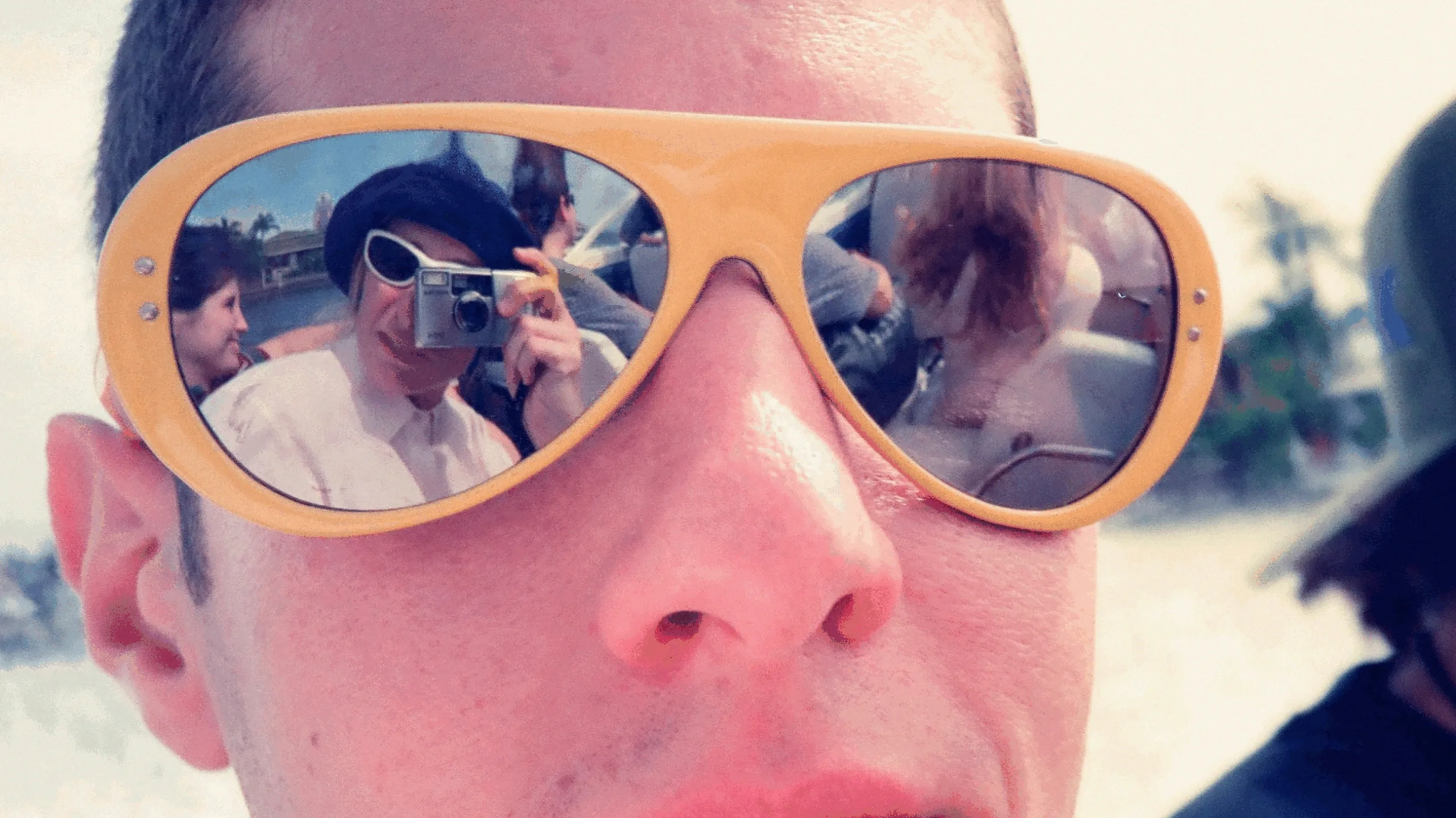
I’m old enough to vividly remember the music scene captured by Tamra Davis in her simple-yet-effective “The Best Summer,” a collection of home movies shot by the “Billy Madison” director on an Australian tour in 1995. When Davis was leaving her home during the wildfires last year, she found the tapes in her collection and assembled them into this concert/backstage time capsule. It’s an interesting experiment in that if it were released in exactly this form in the mid-‘90s, it wouldn’t have the same power. It would just be a concert film with some excellent performers. Three decades later, it’s a time machine, a reminder of not just how much Sonic Youth, Pavement, The Beastie Boys, Beck, The Foo Fighters, and more could be onstage but how they carried a creative energy with them everywhere they went, whether it was rocking out in front of an audience or just answering questions in the green room. There’s an artistic passion that courses through Davis’ film that makes it more than just a window into the past. It’s also a reminder of how good we had it in the mid’-90s.
Davis was on tour with this assembly of geniuses in part because she had recently married Mike D. of The Beastie Boys, but she was also a part of this music scene, having directed the 1990 video of “Kool Thing” for Sonic Youth, along with other classics like “Wild Thing,” “Bust a Move,” “and “Closer to Fine.” It’s clear just from the way Davis interacts with interview subjects like Stephen Malkmus, Dave Grohl, Kim Deal, and many more that she’s not an outsider—these people are comfortable around her in a way that gives “The Best Summer” a great hang-out vibe.
It’s a relatively simple production, intercutting interview segments and casual conversation with banger performances; although don’t come looking for the greatest hits of any of these people as Davis doesn’t prioritize turning this into a snapshot of why these people were famous as much as she wants to dip us in and out of a time in history. It’s an effective reminder of when tours like this felt less corporate and more driven by artistic expression.
In the more traditional horror vein that the Midnights program at Sundance usually prioritizes, Natalie Erika James returns with the deeply frustrating “Saccharine,” a movie with some strong visuals and interesting ideas but too little idea how to tie them together before it explodes in a final act filled with mixed messages that could be read as downright fatphobic. A film that uses issues with body dysmorphia and diet crazes as a launchpad lands with such a thud that it only leaves a bad taste in your mouth.
Midori Francis plays Hana, a young woman who splits her time between working out and dissecting cadavers in medical school. At the gym, she’s drawn to a fitness instructor named Alayna (Madeleine Madden), who encourages Hana to join a program to get in better shape. One night out with her friend Josie (Danielle Macdonald), Hana runs into an old friend who looks incredible. She tells her it’s because of a very expensive diet pill, but she gives Hana a few to try. The results are instant.
Hana is so overwhelmed that she decides to analyze the contents of another pill to see what’s giving her such magical results, and if she can replicate it. She discovers a high calcium dosage, which leads her to the realization that the pills are made up of human ashes. It turns out Hana has some access to body parts.
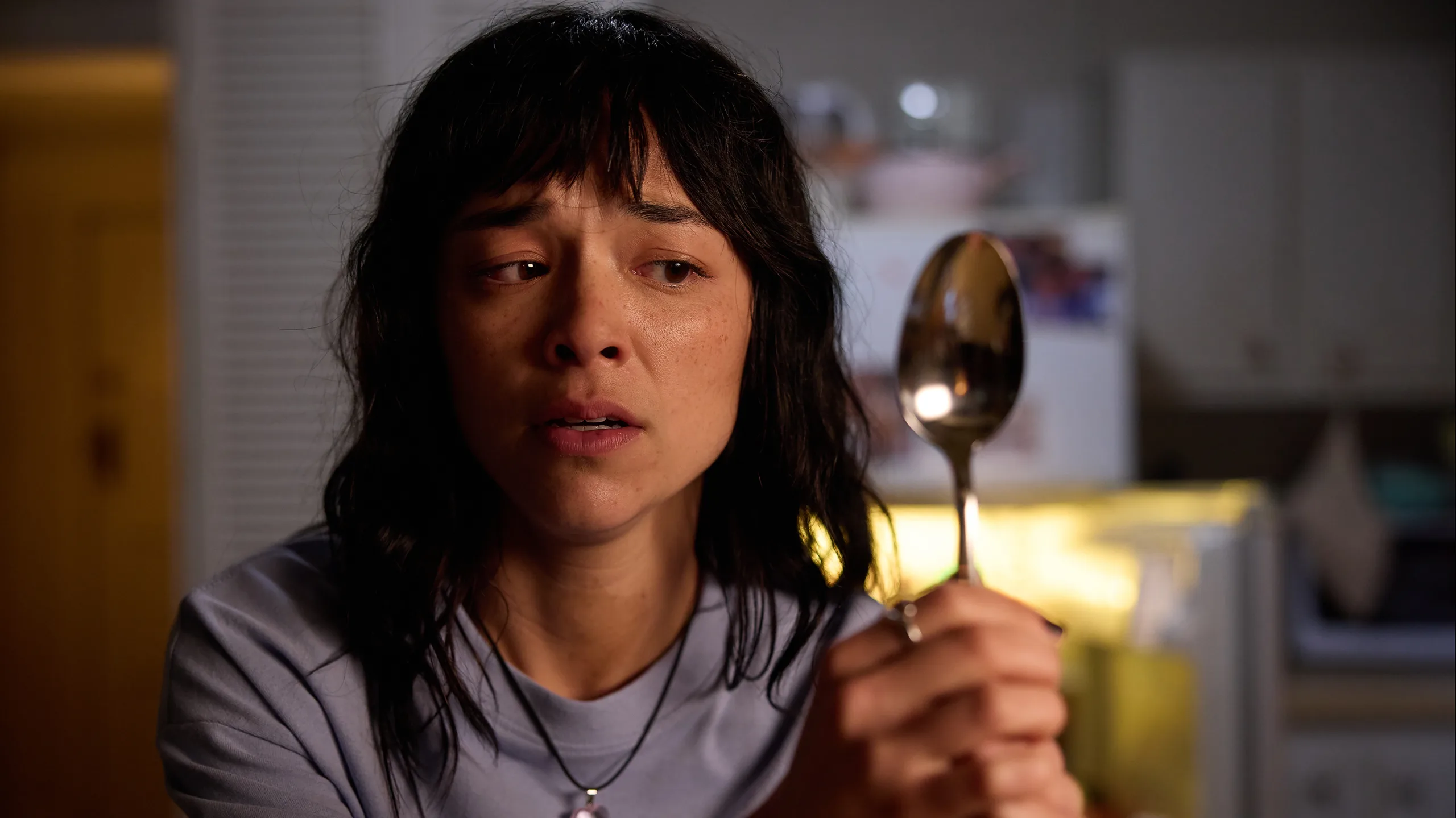
James starts with such an intriguing premise that it’s all the more disheartening to see how much “Saccharine” loses its way. As Hana loses weight, she becomes basically haunted by the woman she nicknames “Bertha,” the dead body she’s defiled for her own journey, but she can only see the ghost in concave reflections like spoons or coffee pots. Echoes of “It Follows” seem intentional, but nothing that Hana does feels natural or true. She’s almost more curious than frightened, which is an interesting choice for a horror movie, but one that keeps the film from becoming genuinely scary.
And then it totally comes apart when the idea that everything that’s happening to Hana could be in her head disappears and things become way too literal. The body dysmorphia themes crumble when “Saccharine” becomes a story of a young woman haunted by an overweight, naked ghost. Francis does her best to hold the film together, but it spirals further away from what works, until ending in a sequence designed purely for a shocking final image instead of anything thematic or character-driven. It’s empty calories.
Frustrating in a similar way but with even less to hold onto is Vera Miao’s “Rock Springs,” a film that takes the true story of the 1885 Wyoming massacre of Chinese miners by townspeople upset that they had taken jobs from them and grafts it onto a tale of a mother and her daughter grieving an unexpected loss. The two halves of this film never cohere into a satisfying whole as Miao can’t figure out how to make us interested in this traumatized family that’s never developed into something that feels three-dimensional. We know almost nothing about them outside of their loss, their recent move, and that mom’s a musician. That’s it. Let the jump scares begin.
Poor Kelly Marie Tran is stranded with a non-character named Emily, who has moved to Rock Springs with her mother-in-law (Fiona Fu) and daughter Gracie (Aria Kim). Shortly after they arrive, Gracie starts hearing something in the woods, and the two attend a local market where the kid finds a creepy doll, and … that’s about it. We learn that Emily can’t understand when her mother-in-law speaks Chinese, and that everyone is wallowing in grief, but to say they’re underdeveloped would be an understatement.
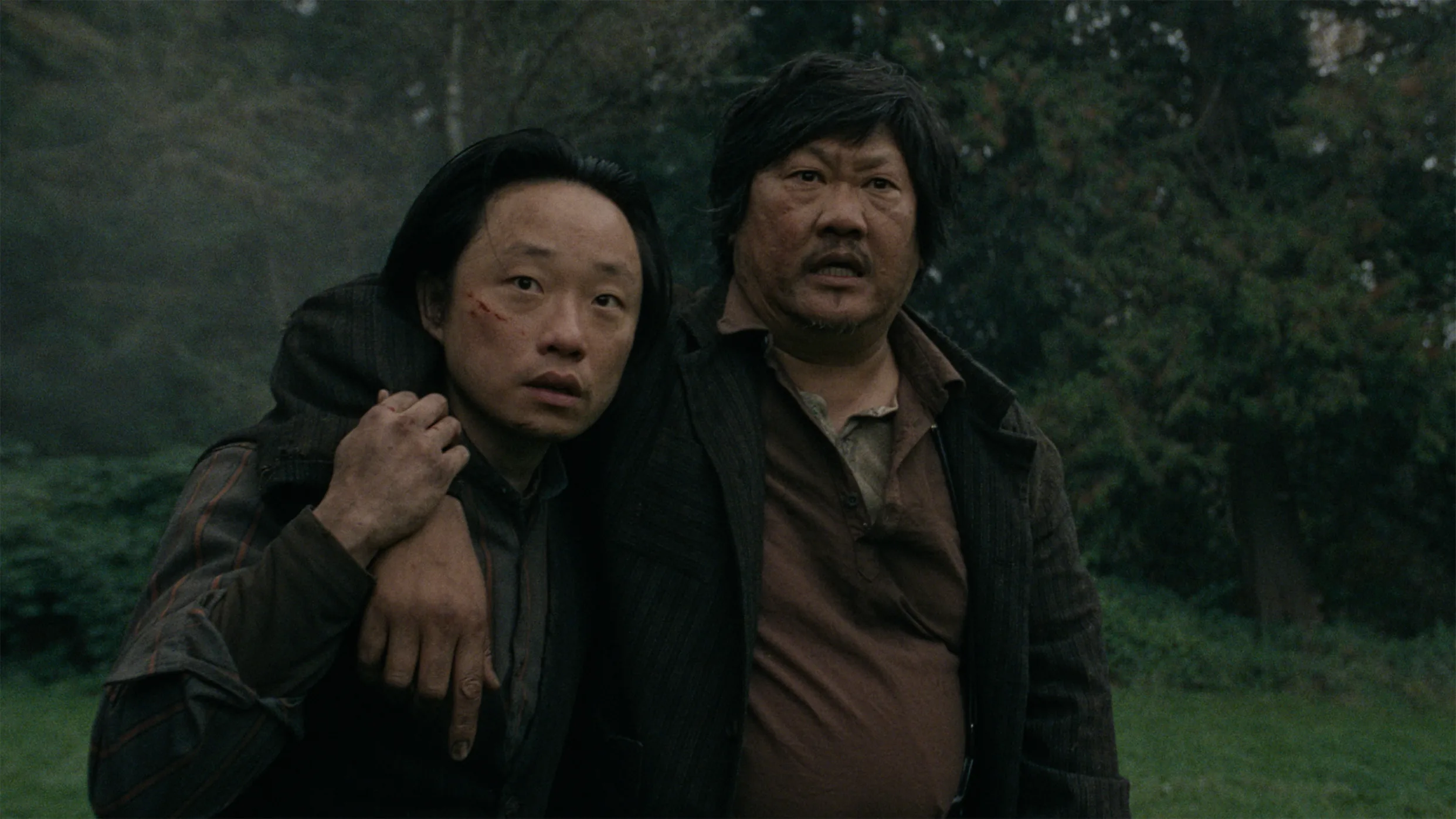
Part of the problem is that just as we’re getting to know Gracie and Emily, Miao jumps back to 1885, where we meet a few of the Chinese miners, including ones played by Benedict Wong and Jimmy O. Yang, moments before they’re brutally slaughtered in slow-motion. The massacre sequence verges on exploitation given how much Miao and her team linger on its horrors for little more than shock value. Ultimately, brutalized Chinese bodies in the woods form a “hungry ghost” that haunts Gracie 140 years later.
“Rock Springs” has some inspired imagery, mostly in the creature/ghost that haunts the woods, but it’s all so remarkably shallow. It feels like Miao could have made an effective film about this tragic, undertaught chapter of American history, especially given the battles over immigration in the 2020s, but she diminishes the lesson she’s trying to teach by pushing it into this tale of a grieving wife and mother. Everyone involved, including viewers at Sundance, deserved better.