While the Premiere section at Sundance is often where star-studded narrative features take center stage, it also features major names and works from the documentary world. Each film here, spanning subjects like wrongful imprisonment, our dying environment, and a singer in search of a creative comeback, attempts to reconcile with loss by asking if it’s possible to regain what may already be long gone.
In 1983, three teenage boys—Alfred Chestnut, Andrew Stewart, and Ransom Watkins—were accused of murdering Harlem Middle School ninth grader DeWitt Duckett over a blue satin Georgetown jacket. The crime rocked Baltimore, particularly its Black residents. Though there was scant physical evidence against the three teens, eyewitness accounts, including from two of DeWitt’s friends (Ron Bishop and Edward Capers) led to their conviction for murder. Director Dawn Porter teams with author and executive producer Ta-Nehisi Coates, who recalls in anguishing detail experiencing the impact of the killing and trial on his Baltimore community, to interrogate the many systemic forces that wrongly incarcerated a trio of teens for nearly four decades.
“When a Witness Recants,” a harrowing investigative piece from HBO Documentary Films, moves with the sure-footedness of the truth stepping out into the light. When Coates walks into the frame to sit down, he narratively cracks open a door to the era via his sincere recollections of growing up in a Baltimore that, like any area, had its joyful pleasures and its dark edges. His observation of the event’s reverberations is bolstered by other witnesses, like Bishop and Capers, who, through present-day conversations and interviews with the state’s recent inquiry into the case, retell that day.
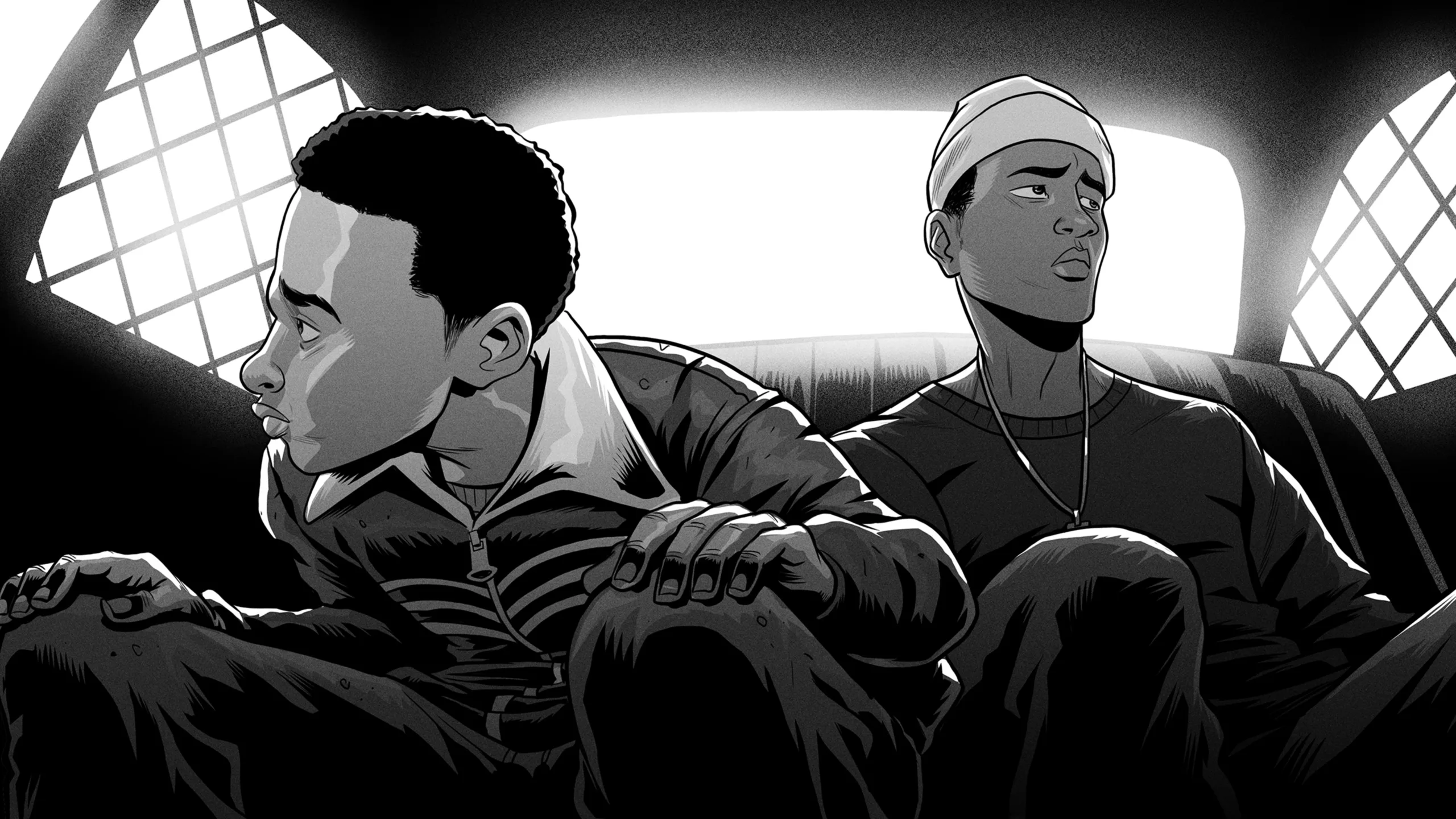
Neither Bishop nor Capers initially implicated Chestnut, Stewart, and Watkins. They actually pointed the finger at a lone gunman. But Detective Donald Kincaid—he only appears in the film via the aforementioned taped state inquiry—zeroed in on the trio of teens. He claimed to have found a witness, Yvette Thomas, and used her testimony to lean on Bishop and Capers. Porter employs Bishop and Capers’ courtroom transcripts and gray-scale animation to further underline the inconsistencies in their stories, revealing startling inaccuracies at every turn.
Imperatively, Porter also relies on Chestnut, Stewart, and Watkins. Through their acute recollections and audio recordings, they not only give their side of the story but also report on their psychological wounds. They were teens incarcerated in an adult prison, losing an entire lifetime (a combined 108 to be exact). All three men share those hurts in frank detail. And while Porter does wonderful work providing them space, it nearly feels like she leaves Bishop’s mental health issues hanging, especially during his sit-down conversation with the trio.
The latter critique, admittedly, may be an unfair impulse on my part, if only because the crowd I watched it with appeared to wholly turn on Bishop during the film. One can intuit his struggles without being loudly told about them, but one can also leave the film wanting more on that front.
Nevertheless, as I watched, a horrible thought reoccurred to me. Lately, I’ve been watching movies about the Civil Rights movement, and while viewing them, I fell into an internet hole researching the many prejudiced cops and prosecutors who condemned Black life during that era. I found that none of them were ever punished. In fact, later in life, they were often praised for their careers.
A similar crime happens here. What mechanisms are available for restitution when authoritarian whims rob a Black person of the immeasurable price of personhood? A brutal struggle to restore the voice that’s been taken, “When a Witness Recants” asks that question to devastating results amid an administration committing those exact wrongs to citizens and immigrants alike.
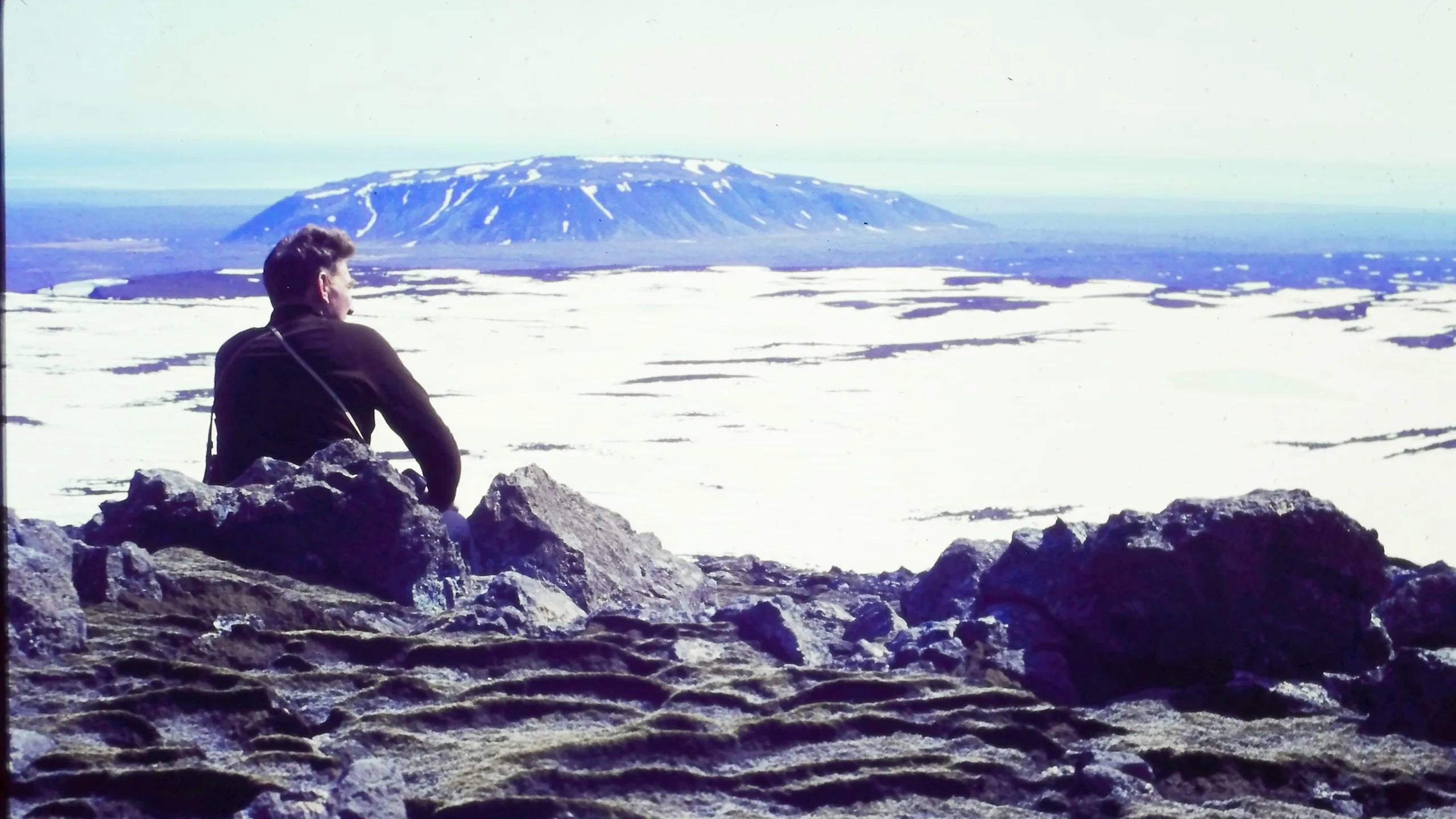
“I want you to know glaciers as my grandparents did. As I do,” explains Icelandic writer Andri Snær Magnason. He and the floating ice fortresses that have given his country its name are the subjects of Sara Dosa’s poetic eco-elegy “Time and Water,” a work that hopes to capture finite time, generational memory, family moments, and disappearing landscapes in a recorded capsule before they slip away.
The primary entry point for Dosa and Magnason is the latter’s grandparents, who can recall, sometimes with unexpected clarity, their relationship with Iceland’s glaciers. His grandfather Hildur and Anri, for instance, spent their youth scientifically exploring these captivating wonders. Photos of their adventures provide a semblance of the scale and beauty they witnessed. Magnason’s other grandparents, on the other hand, were explorers in a different sense: They soaked up the kind of life—marriage, children, and fond embraces—Magnason hopes his children may live. To Magnason, his grandparents and their ephemera are a vibrant archive that, through his own filming, allows one to witness what has been lost environmentally.
That vanishing, of course, occurs despite Magnason’s best efforts. He may capture Arni’s memories, but that doesn’t stop Alzheimer’s from snatching his expeditionist grandfather’s most precious moments. Likewise, he cannot stop the ice from melting; he’s unable to halt the erasure committed by power-hungry governments. And, as he begins to write a tribute to Ok glacier, which has recently disappeared, he can barely sum up the words to describe what is now missing.
Recording these sights is his one bit of control, for his children and their children’s sake. Through his awestruck lens, we marvel at these creaking, slow-moving blue marbles, whose seemingly frozen tactility masks the volatility lurking beneath their wind-swept stasis, a collective memory packed in ice. Moreover, keen match cuts, which conjoin similar photos taken decades apart, startle us not because of their similarities but because of their stark differences. The ice, for instance, is now blackened ground and cracked rock. The country’s once crowded bird cliffs are now empty. Both can only exist now through the manipulation of time through the film’s time-ending editing and the eulogy that Magnason spends much of the film crafting for a recently deceased glacier.
Like Dosa’s previous film, “Fire of Love,” which bound the unchanging affection shared by two volcanologists with the geological events they so adored, “Time and Water” helps us understand the environment through the energetic devotion of the people who inhabit it. In that sense, as we wind toward an albeit neat ending, hearing the reverence in Magnason’s voice, which recalls what can’t be brought back, is heartbreaking. “Time and Water,” therefore, stands as a stirring record of human hopes and regrets.
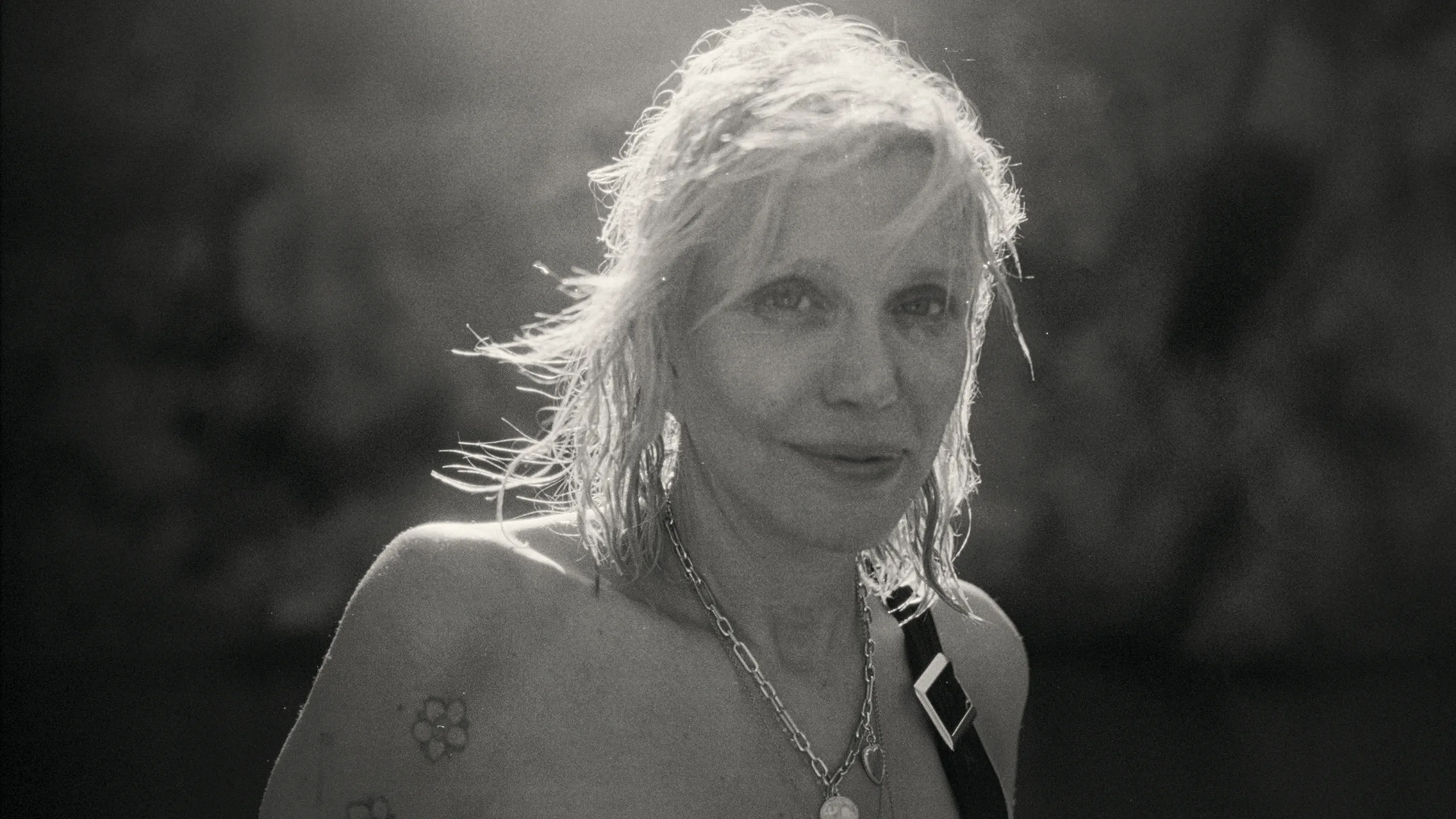
It’s been 16 years since Courtney Love last released music under the Hole moniker and over two decades since her lone solo effort. In their conventional music documentary, “Antiheroine,” James Hall and Edward Lovelace catch up with Love. Sober for over two years, Love is currently living in London and writing new music that she hopes will prove to herself and others that she remains a vibrant artist.
With this film, Hall and Lovelace take the approach you expect, jumping back and forth between reconstructing Love’s career and noting her current music-making progress. Through archival footage and Love’s diaries and memories, they show the unfair treatment Love faced simply for being a loud, confident woman willing to give female angst a voice. By notating instances of sexism directed at Love, particularly by fans and journalists around the death of Nirvana frontman and husband Kurt Cobain, the filmmakers show an unfortunately common ordeal shared by many troubled and vocal women artists following Love, like Britney Spears, Lindsay Lohan, and more.
That charting of the rise and fall of Love—from her difficult childhood, to her time with Hole, to her promising film career—does skip over some details. Her solo album, for instance, isn’t discussed much. Also, Frances Bean Cobain doesn’t appear. So while her former bandmates, bassist Melissa Auf der Maur and guitarist Eric Erlandson, do show up alongside Michael Stipe to provide some context to the artist, without Love’s daughter, we feel as though an important corner of Love’s life is missing.
One wishes that Hall and Lovelace had given far more attention to the current version of this influential artist. Some of the film’s best scenes, in fact, occur when we’re simply watching Love in the process of writing and recording new music, like the song “Liz Taylor Blue,” which sounds amazing. There’s a version of this film where we’re more embedded with Love during her creative process, thereby gaining greater insight into her by witnessing how she approaches her craft. Other revealing musical moments include her cover of “Violet” at a karaoke bar and her live performance with Billie Joe Armstrong.
There are insecurities in these instances that are real and grounded, which contrasts well with the mostly unfiltered singer-songwriter. Because as the impetus behind the film understands, it’s great hearing and learning from today’s Love—a candid personality re-entering an over-tightened world lacking in spontaneity and honesty.