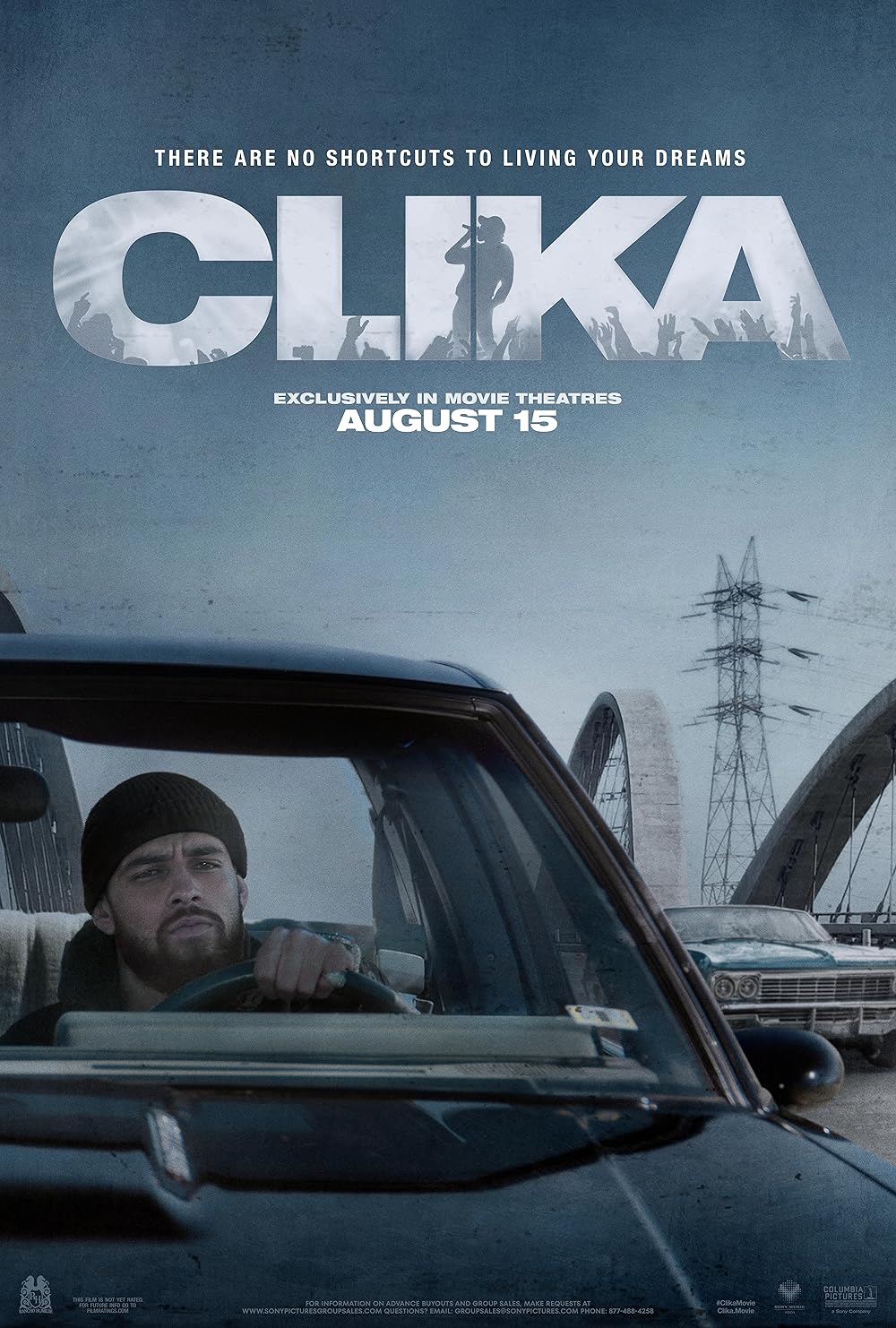

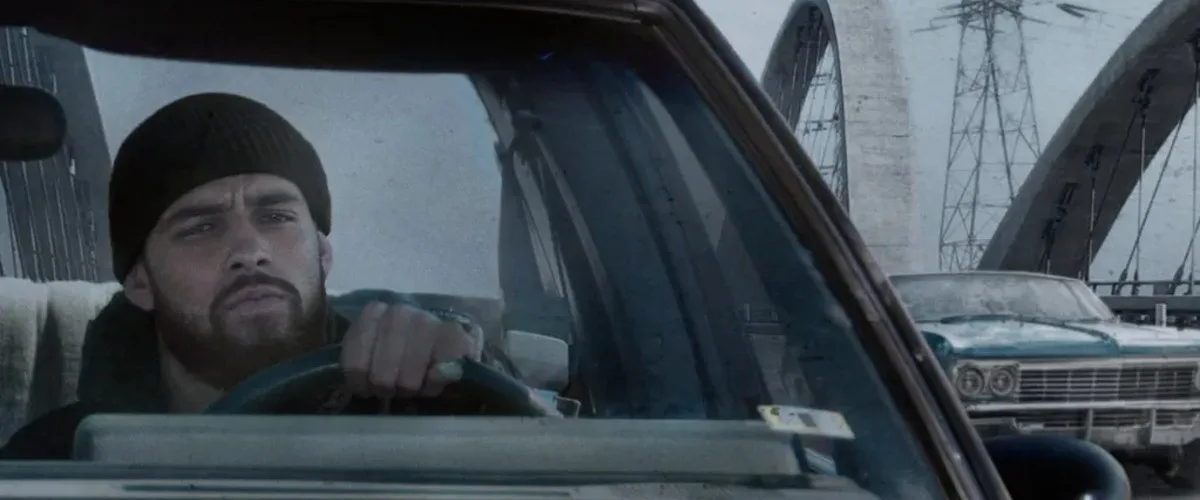
Many musical biopics are essentially rags-to-riches stories, a parable about how hard work and talent with the right lucky break can make the big time. Michael Greene’s “Clika” follows in the tried and true footsteps of this still-growing genre but falls far short of becoming a headliner. The movie is a fictitious tale of an artist named Chito (JayDee, the frontman of Herencia de Patrones) who carries around a notebook of song ideas that he adds to in between picking peaches in his hometown of Yuba City, California, and making music with friends. When his family’s home is foreclosed on by the bank, Chito steps up his efforts to make it in the music business and branches out to work with his uncle, trafficking drugs, making the kind of money he never knew possible.
Like Chito, the real JayDee scraped together a living picking peaches while pushing the boundaries of his corridos with a rap-influenced flow and a macho swagger to match, channeling old school música mexicana with a new style. The songs themselves are among the film’s few highlights, as they keep the energy pulsing when JayDee cannot hold the frame. Despite the emotional connection to Greene’s story, producers Sean McBride and Jimmy Humilde, and JayDee’s performance, it’s stiffer than the shelves in my home. His onscreen presence is a charisma void, draining the life out of every scene he ends with a cast-off “whatever” like a 15-year-old who’s been grounded for the fifth time this week. I hope you like nothing, because that’s what JayDee is serving here.
Greene and McBride, who previously collaborated on the COVID-era documentary “Vaccinate Watts,” are still a pretty green team when it comes to filmmaking. Some of the dialogue is atrocious, some sequences are laughable, and the film is poorly directed. The women in the film are either church-going scolds who don’t approve of Chito’s drug dealing, or they’re background eye candy, girls dancing at a club or in a video, almost completely silent except to cheer on Chito and squeal over his viral video—which, like Chito’s drug runs, look like the easiest thing he’ll do all day.
For a movie that should be about high stakes, all-or-nothing risks, there was almost no heat until the last quarter of the movie, but hey, at least we got to watch a Latina farmworker seductively pouring water over her head to satiate the thirsty boys watching her. Chito’s love interest is a mere wisp of a character, an aspiring veterinarian who Chito spoils with fancy earrings and a good time, but who prefers to get Chito to church and disappears whenever she’s not an accessory to his story. His mother is similar to the stock character of a tough Latina mom who won’t take dirty drug money even if it means losing the house.
However, I do give credit to some other members of the supporting cast who try to inject some life (any life) on screen. Eric Roberts outshines his younger counterparts as a kooky kingpin whose wry smile masks a ruthless business acumen. But if Eric Roberts can steal the movie so easily from its star in a bit part that barely adds up to 5 minutes, you know things are not going well.
Unlike previous iterations of music stars struggling to make it to the spotlight, “Clika” lacks the electricity and the excitement of watching a performer bring the house down. “Purple Rain” and “8 Mile” follow their respective idols through arcs loosely inspired by their real-life counterparts, and a classic like “Selena” charts her lifelong journey from singing in restaurants to selling out the Astrodome. This could have landed somewhere in between, but this almost feels like a direct-to-video effort, and worse, it feels like a missed opportunity to celebrate the music and an artist from a community that’s openly being targeted, harassed, and worse.
It’s disappointing because it felt like we could have had something here. When Chito finally takes the stage, not just posing in a closet-turned-recording studio, there is energy and intensity to JayDee’s performance that does not exist anywhere else in the movie. It’s as if that was where he felt the most comfortable, not in front of a camera and crew, but onstage, moving his audience from behind the mic. If only he could have shared a bit more of that persona with the camera, “Clika” might have had a chance.