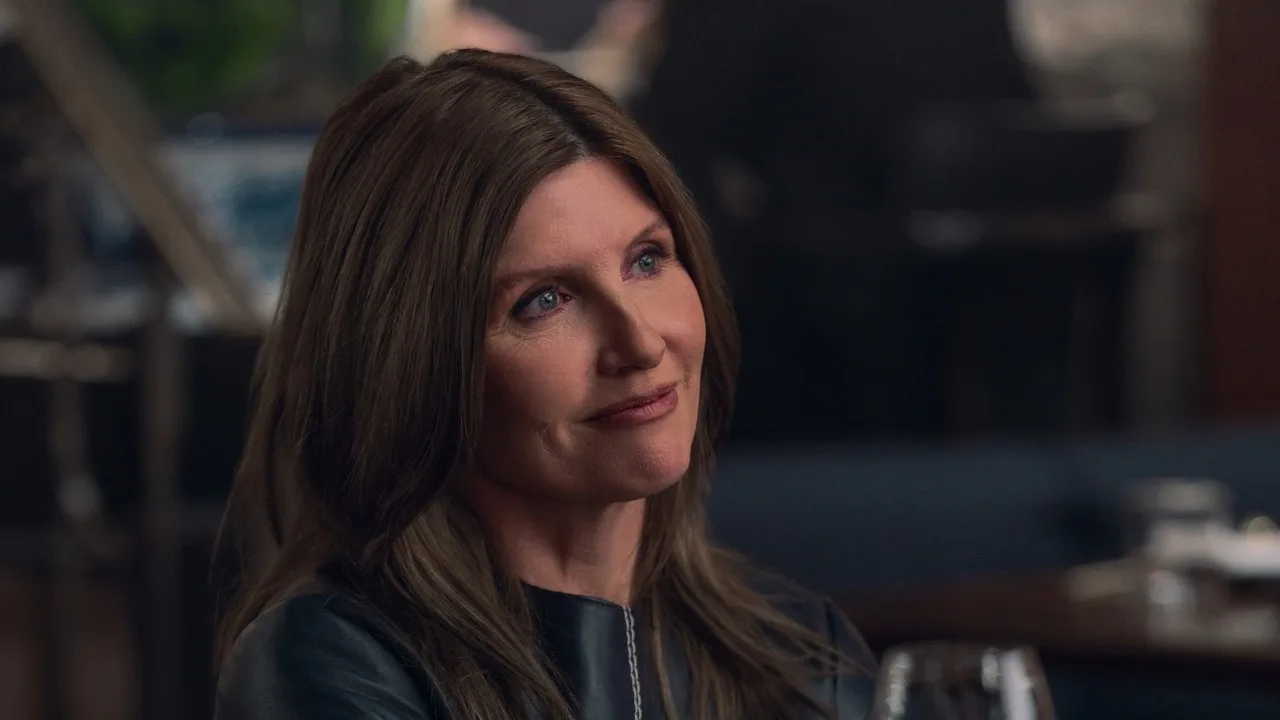
The first episode of Sharon Horgan’s “Youth” opens with a montage of significant women thriving in middle age—Maya Angelou, Ruth Bader Ginsburg, Kathleen Hanna of Bikini Kill—accompanied by a voiceover about the importance of the menopausal and post-menopausal years. “No decade moves faster than 50 to 60,” the narration says. “You have to make every second of your time count.”
Cut to Alex, a woman in her fifties who’s currently spending every second of her one wild and precious life scrolling through frivolous clips on social media. She only stops when she suddenly receives a text from her teenage son, causing her to drop her phone smack on her forehead.
As a woman in her fifties, it is tempting to say that I feel seen by this sequence. But that is an inadequate way to describe what it’s like to watch Horgan, the creator of “Youth” and the actress who plays Alex, spend valuable moments of her remaining vital years getting hypnotized by videos of birds with funny haircuts and women with disastrous plastic surgery. It’s more accurate to say that I’m on the verge of calling the police on Sharon Horgan because clearly she has been illegally spying on me for the past two years (at least) and is now broadcasting the details of my existence on HBO and HBO Max.
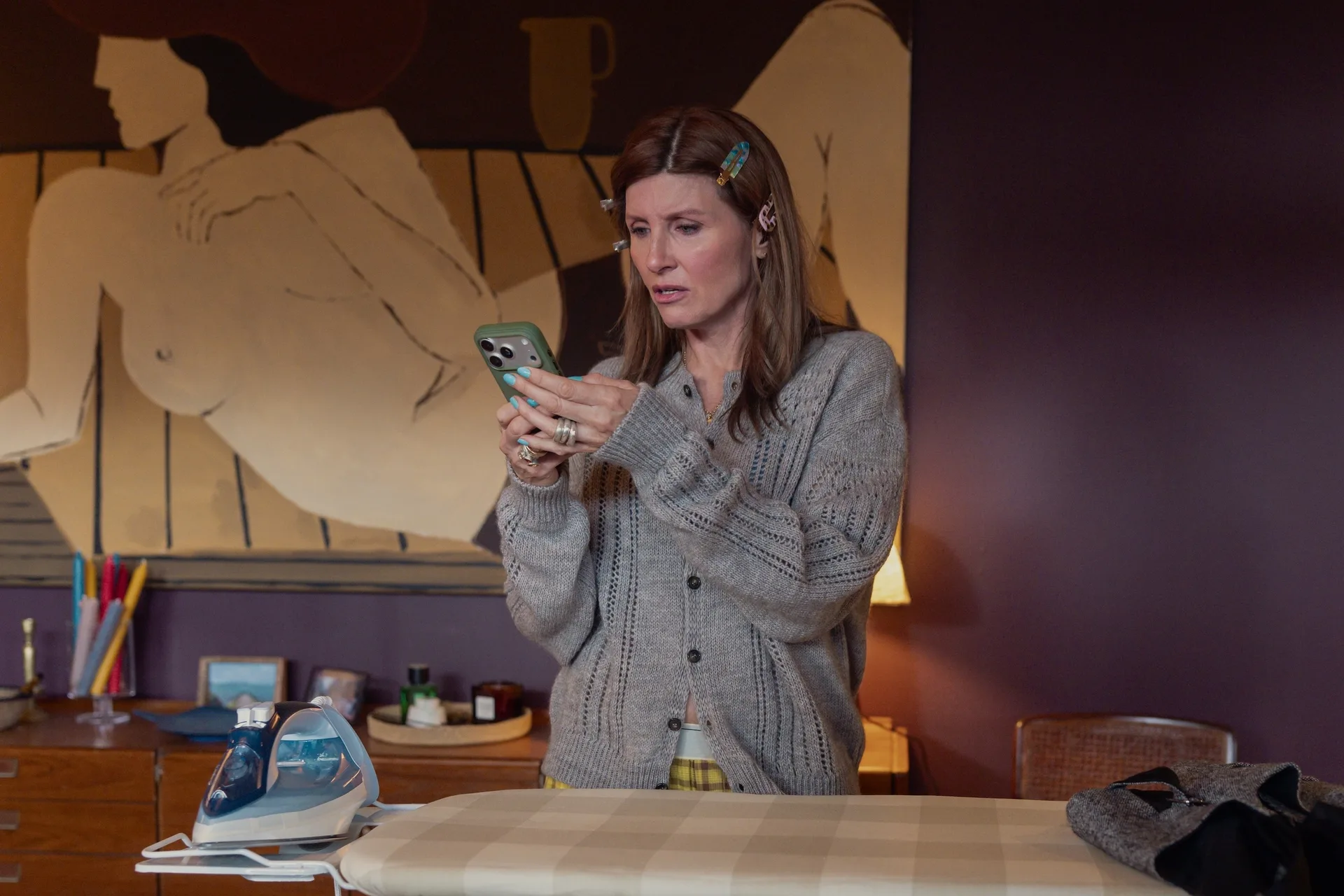
Alex faces the pressures that weigh down so many Gen Xers who must tend to children, aging parents, and the demands of their careers while trying to figure out when, exactly, they’re supposed to find sparks of joy before the proverbial game clock expires, and it’s time to check into assisted living. Even when things are going well, Alex doesn’t entirely trust herself to recognize it. “I’ve never had it all before,” she remarks at one point. “It’s usually more like having some, or having none.”
As the season begins, Alex, a book agent living in London, is specifically grappling with her son Ruari (Aran Murphy, a physical replicant of his father, Cillian Murphy), who has impulsively decided to drop out of university and move back home; her raging narcissist of an ex-husband (Owen McDonnell), who announces that he’s moving to Canada for an acting gig, along with his much younger partner; and a job where she always feels a couple of steps behind and desperate to earn praise from her boss and closest friend Sam (Sharlene Whyte). She also tries to go on dates, including one with an eager-to-please gentleman who insists that she let him pleasure her for as long as it takes until she climaxes. “I don’t know you well enough to be selfish in bed,” Alex blurts out.
It’s a great line, written, like all of “Youth,” by Horgan, who again proves that she is an incisive, nuanced and darkly hilarious observer of human behavior, especially when that behavior is exhibited by frazzled women on the verge of nervous breakdowns. She has done this before in series such as “Catastrophe” and “Bad Sisters.” But “Youth” should cement her status as TV’s premier chronicler of the upper-middle-class, middle-aged female experience.
Other series have obviously focused on characters like Alex and their concerns about aging, sex, parenting and pursuing their ambitions, but few have done it with such intelligence and verve. Horgan holds up a mirror to the experience of 21st-century mature womanhood, then whips out a microscope so we can see the most discomfiting parts up close. “Youth” is the kind of show that “And Just Like That…” wanted to be, but didn’t have the courage or audacity to become. You could also, perhaps, say the same thing about “Divorce,” the underrated HBO series that starred Sarah Jessica Parker and initially felt like a follow-up to “Sex & the City” before the official one came along. “Divorce,” by the way, was created by … Sharon Horgan.

While “Youth” sometimes uses hyperbole for comedy, its details ring so true that it can be both pleasurable and painful to watch. The dynamic between Alex and Ruari veers between loving and completely distant; often, he doesn’t take out his earbuds long enough to hear what his mother just said to him, which, if you have a college-aged child, is so relatable it leaves bruises in its wake. One of Alex’s former boyfriends, Patrick (Rupert Friend at his most charming), also becomes a central character; his chemistry with Horgan is charged and absolutely lovely. Their relationship reminds us that even grown adults can still relate to each other like the middle school kids they still secretly are, talking past each other instead of communicating more directly.
Patrick: “I don’t want to be an added stress in your life. You have a lot of things to concentrate on.” Alex: “So you think I’m being a bad parent.” Patrick: “How did you hear that with what I just said?” (Note: I totally understand how she heard that.)
While the general milieu of “Youth” may be familiar, some moments feel a little groundbreaking. In the third episode, Alex suddenly gets her period after not having menstruated for a full year, which convinced her that her cycle had definitively ended. (Menopause: it’s always full of surprises!) The series actually shows Alex discovering that she’s bleeding again, which may be a small detail but comes across as revelatory in a cultural landscape where menopause talk still unfolds mostly in whispers.
Concerned, Alex messages an online menopause forum. After explaining that she is having heavy bleeding after no periods for a year, she types: “Is that normal/a worry/cancer?”
Which captures exactly what it’s like to be a woman of a certain age in an era where we have access to so much digital information, yet still can’t always find the answers we seek. We want to know if everything is normal/a worry/cancer, and we also want to make sure every second of our time counts.
Seven of season one’s eight episodes were screened in advance for critics.