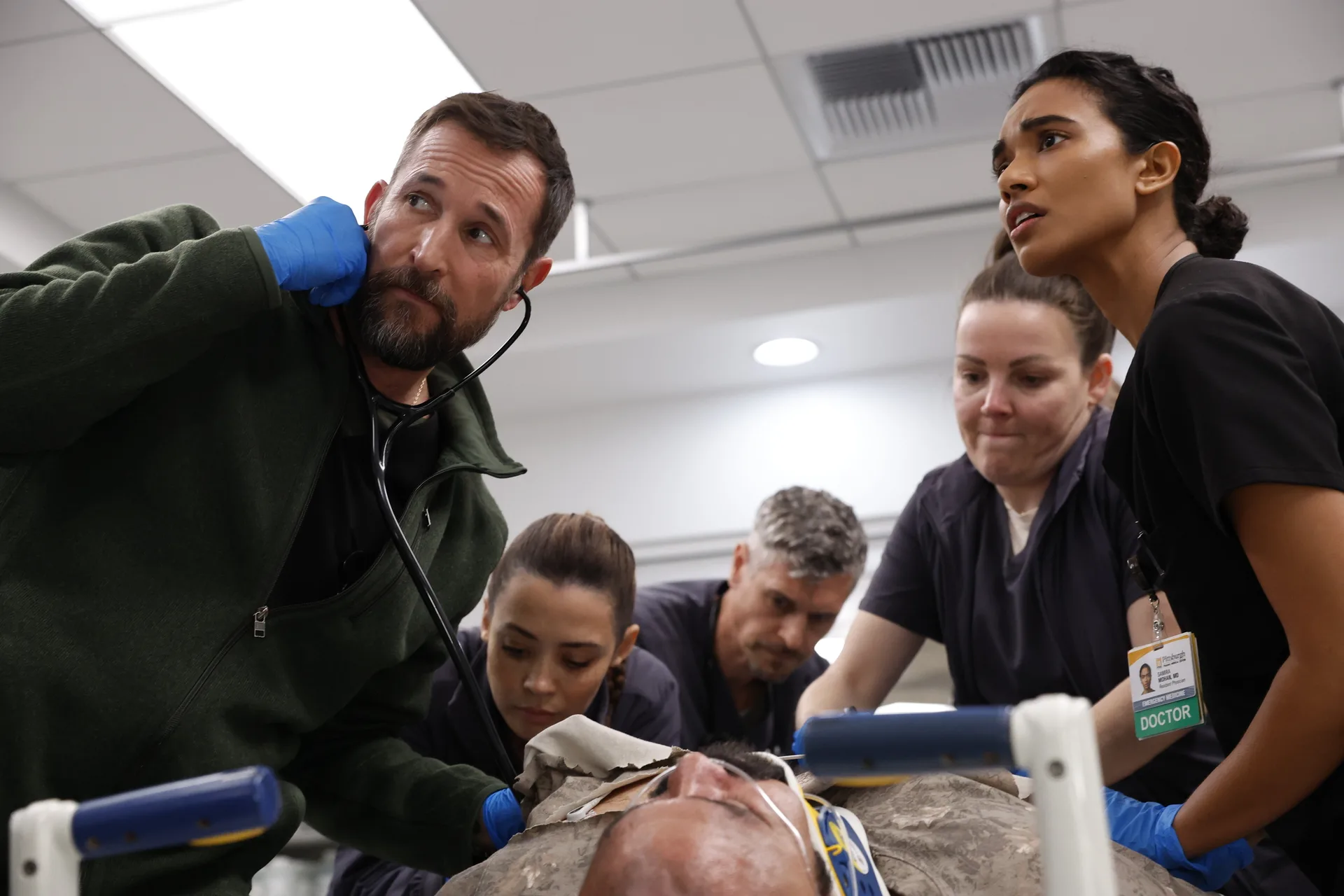
The team behind HBO’s “The Pitt” probably knew they had something special, but even they had to be shocked by the remarkable success of one of the best shows of 2025. It turns out that not only is there still life in the medical drama, but that treating the profession seriously, rather than just using it for melodramatic network TV, is a route to the hearts and minds of viewers.
With career-best, award-winning work from Noah Wyle, the first season of “The Pitt” came along at just the right time in January 2025, using memories of COVID, the nightmare reality of mass shootings, concerns over national healthcare, and a brilliant structure to connect with viewers. As Wyle led a remarkable young ensemble through 15 brutal hours at a Pittsburgh hospital, the show grew in buzz with every episode, winning Emmys months later for Best Drama, Actor, and Supporting Actress. And the really good news is that “The Pitt” hasn’t faltered at all to start its second intense season.
The second year of “The Pitt” unfolds on a day that’s surely more intense than most for major hospitals: The 4th of July. Dr. Robby (Wyle) arrives at the Pittsburgh Trauma Medical Center for his last shift before an extended sabbatical, something none of his colleagues thinks the workaholic is capable of doing. One of the master strokes of the second season of “The Pitt” is that creator R. Scott Gemmill and company don’t simply do “Robby Trauma 2.0.” Wyle’s performance in season one was one of the most moving in the history of television, a vision of a brave man with barely repressed trauma boiling over on one of the most stressful days of his life. Trauma plays a role in season two—even some related to events from last season, including the mass shooting—but it’s not as defining as season one, especially not for Wyle’s arc. They couldn’t do that every year.
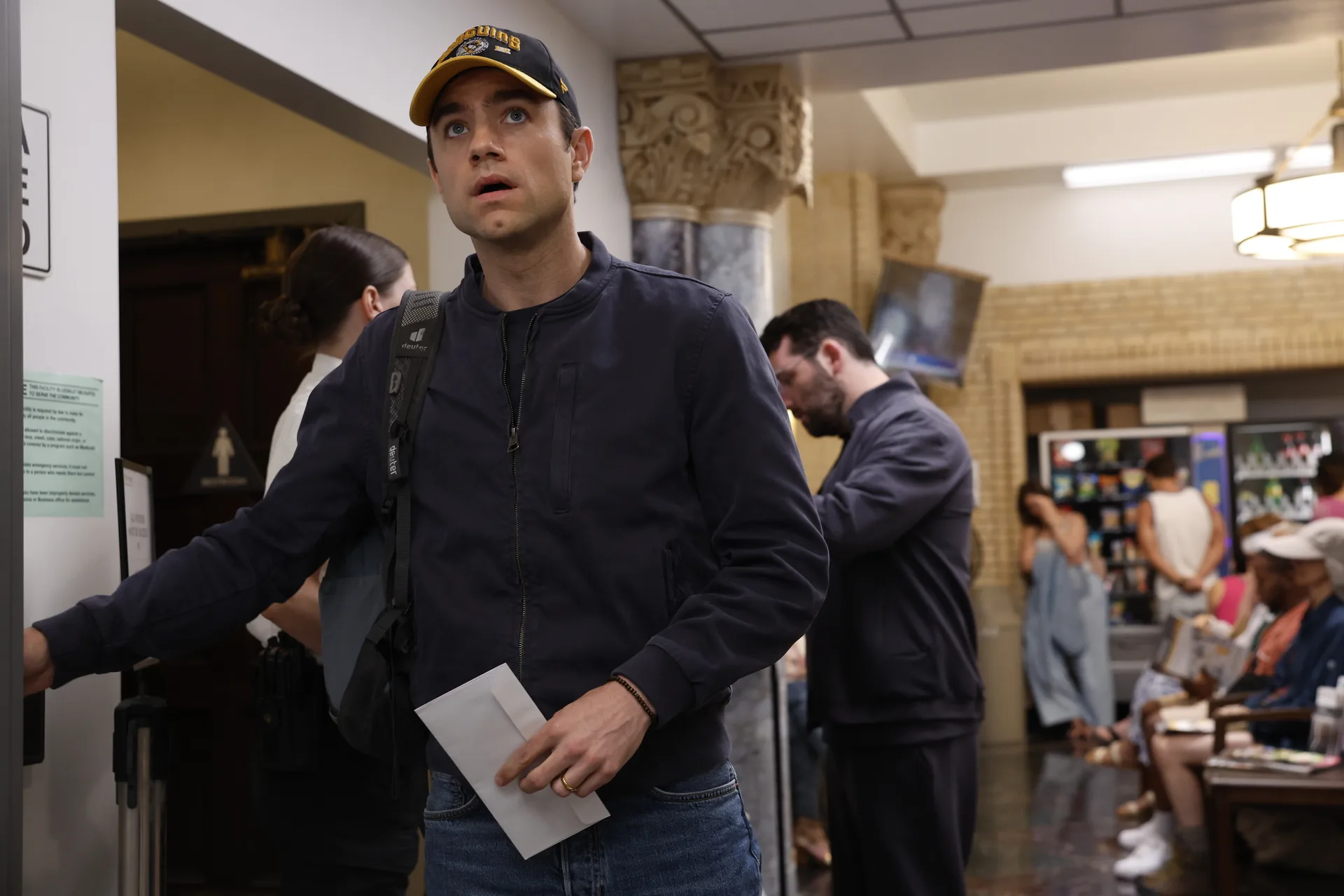
A subplot that threads from the first season into this one is what Dr. Robby discovered about Dr. Langdon (Patrick Ball), who is returning this holiday for the first time since being kicked out by Robby for his drug use. He’s gone to rehab for ten months, made amends, and most people seem to be willing to welcome him back, but Dr. Robby is the kind of guy who feels pretty absolute about the betrayal of stealing medication from a patient. Whether Langdon can prove his worth to Dr. Robby again is one of the main arcs of season two.
As for the rest of the incredible ensemble, most have returned, some even carrying ghosts of cases from season one as they work new ones. Dr. Evans (Katherine LaNasa) remains the guiding force for much of The Pitt, and LaNasa’s strident confidence is an essential element. She grounds so much of “The Pitt” as the woman who’s seen it all but hasn’t allowed the years of trauma to diminish her humanity.
Almost everyone returns—Tracy Ifeachor’s Dr. Collins is the only major exception—and the writers have deftly moved these young people along the maturity and experience track one would expect in real life. They know that fans have started to care about these doctors and students, which allows them to jump right into cases or make references (to Dr. King’s sister, for example, or to Dr. Javadi’s mother) without over-explaining. It’s remarkable how much “The Pitt” already feels like a show that’s been on for years. And the one true new major character this season, Dr. Baran Al-Hashimi, is brought to life with a performance that stands among the year’s best from the fantastic Sepideh Moafi.
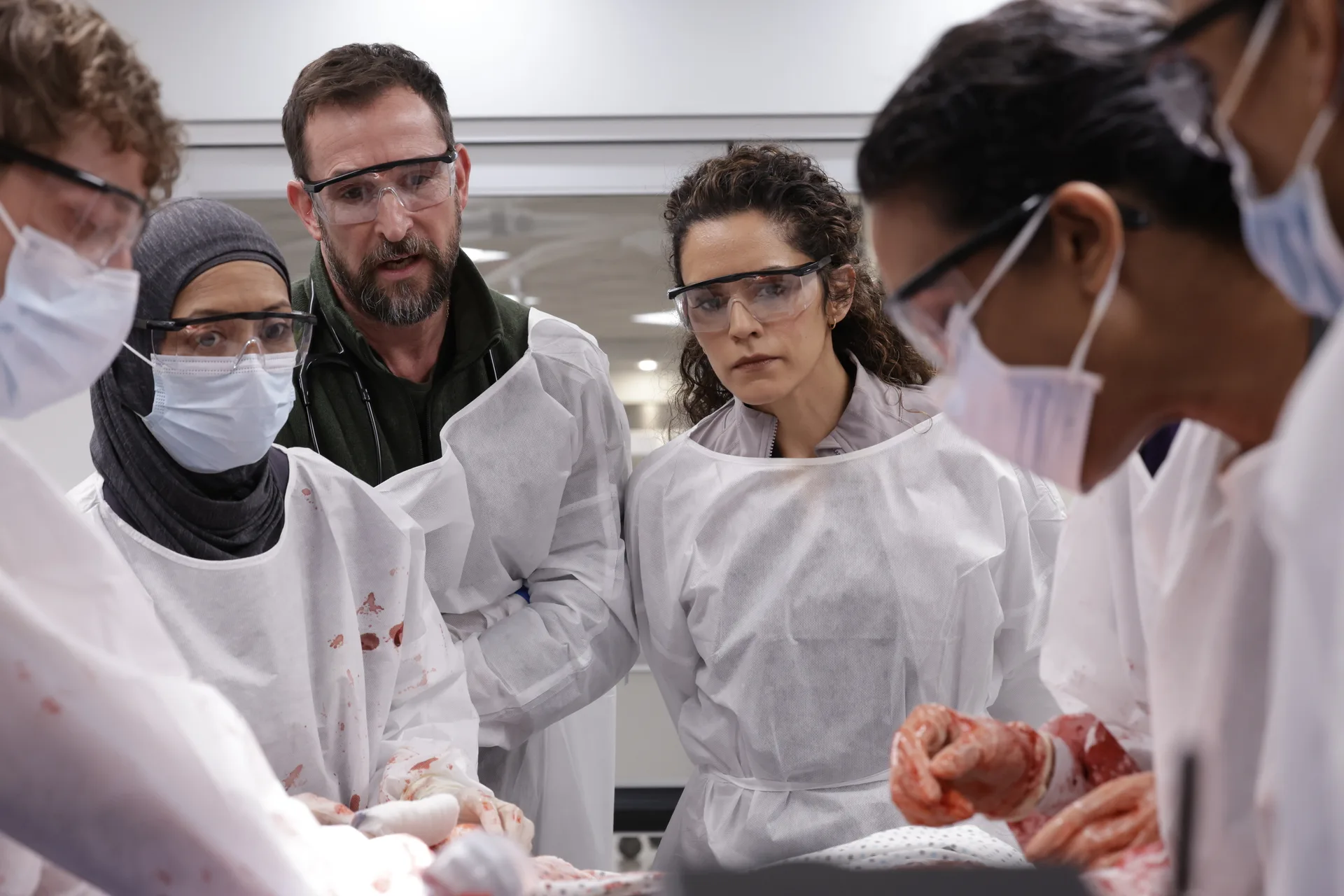
It’s so essential that the writing and performances are so good that we believe Dr. Mohan (Supriya Ganesh), Dr. McKay (Fiona Dourif), Dr. Santos (Isa Briones), and Dr. Whitaker (Gerran Howell) existed between the two days of the two seasons of this show. It might sound silly but it’s key to the show’s success as it makes everything that happens more movingly believable rather than manipulative when we feel like the doctors exist outside the patients we see them diagnose. They’re not merely cogs in the machine of the plot.
As for those patients, once again the writing balances “big,” multi-episode cases with tighter ones that might be resolved within an hour. In the former category, there are some heartbreakers, several hinging on people who experience something that happens to a lot of us at one point or another: going to a doctor for something that seems relatively minor and ends up anything but, whether it’s a man who discovers he has a tumor or a woman who battles a leg infection.
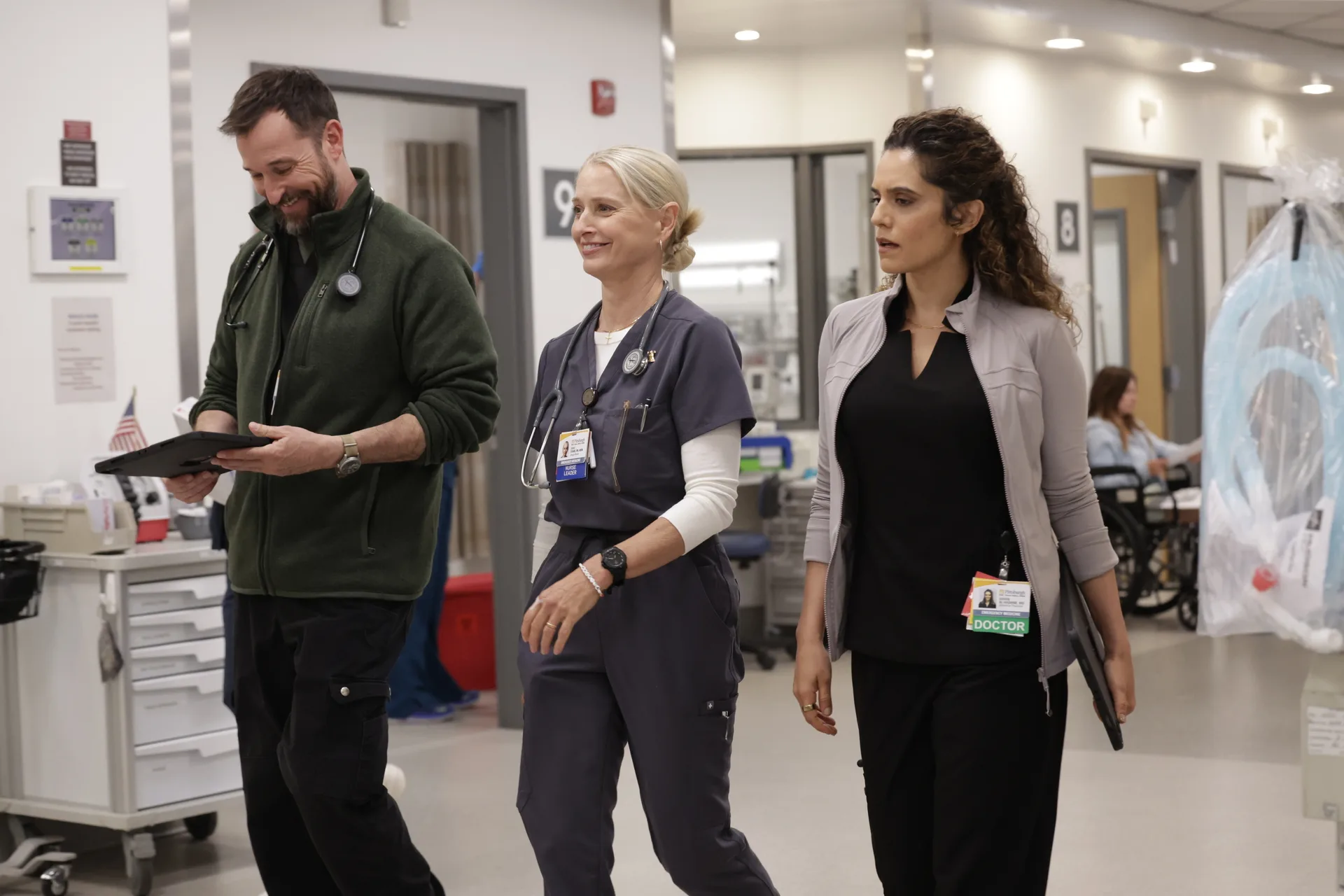
The writing on “The Pitt” has been praised for its medical detail, but it’s the human detail that this non-doctor finds so remarkable. There are such marvelous little beats in every episode, usually centered on the emotional waves that come with urgent emotions like fear, hope, and tragedy. There’s a moment when ex-spouses are reunited over a potential brain tumor, and the ex-husband says to a woman he’s probably said nothing nice to in years, “You deserve to be happy.” It’s one of many beautiful little beats that understand how hospitals can reshape emotion, remove personal shields, and produce unpredictable reactions.
“The Pitt” also understands how terrifying it can be in an ER for both doctors and patients. From when a slight ache or pain turns into something potentially deadly to when a patient doesn’t respond as they should and alarms go off, it’s a job defined by overcoming fear and acting quickly when others would hesitate. The writing does eventually get to at least two “big” moments on this Independence Day, things that define more than one episode, like last year’s shooting; I can’t say how well those are handled because only 9 of 15 episodes were sent to critics. Having seen 24 episodes to date, I trust the writers to close out this season. And I hope many more.
Nine episodes screened for review. Premieres on HBO Max on January 8th, 2026.