“It has recently come to my attention that I may never again have power over another human being.“
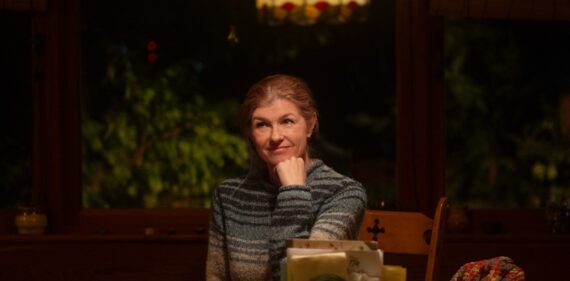
Netflix’s “Vladimir” jumps right in, breaking the fourth wall as Rachel Weisz’s Protagonist (she is unnamed throughout the series) speaks directly to us about her loss of power. According to her, she no longer holds her students’ adoration, her daughter doesn’t worship her anymore, and men fail to “rise” for her. As the Protagonist sees it, these are the symptoms of aging into an older woman. However, she may have a cure: dissociating from her reality by fantasizing about a colleague with appalling devotion. Of course, she is blameless. Her husband (John Slattery) is facing a disciplinary hearing for sleeping with his students (big emphasis on the plurality). Seriously, who could blame her?
Adapted by Julia May Jonas from her bestselling novel of the same name, this is the opening barrage of “Vladimir,” and you can’t help but lean in, as though you’re getting the juiciest gossip. Throughout eight sitcom-length episodes, we’re immersed in the interior life of the Protagonist in a way only a dear friend could be. She is honest with us about everything, and everything is messy. She spirals when she meets a younger adjunct professor, Vladimir (Leo Woodall), a famed novelist who arrives at her liberal arts college to teach. But while the series carries his name, it’s not about him. It’s about her need to be seen, to feel and be felt, and to reclaim her ideal forms of power.
“If I can’t have power, can I at least be free from other people‘s drama?“
In a bizarre series of entanglements, the Protagonist (Weisz), her husband (Slattery), her daughter (Ellen Robertson), her future daughter-in-law (Tattiawna Jones), the object of her desire (Woodall), and his wife (Jessica Henwick) become trainwrecks in each other’s lives. Their morally gray morass and emotional counterintelligence—forgive me, that should be three words: emotional counterintelligence—coincides with the shenanigans running amok at their college. By that I mean, various members of the faculty attempt to discipline both the Protagonist and her pervy husband, for separate infractions. The problem is, those faculty members have equivalent egos, more juiced up than an ’80s bodybuilder. Each of them will say they’re working to safeguard the students, but it’s power plays and popularity that matter to them. While watching “Vladimir,” I coined the term functionally demented because what in the ‘fragile underachievers’ craving kudos’ is wrong with these people?
That isn’t an accident. As the show went on, I began to wonder if we truly meet any of the other characters or if the Protagonist is a delusional narrator. A bit of both, I’d say. After reading about the original novel, it seems Jonas has turned her lens in a different direction. Where the book is described as a gleefully maddening look at gender dynamics on a college campus, the show focuses on a woman at the edge of either a full-blown breakdown or resurrection through fire. Both precipitated by her need for relevance, after she stops rationalizing her husband’s behavior, but refuses to examine her own, and attempts to replace disappointment with desire.
“Ours is essentially a tragic age, so we refuse to take it tragically.”
“Vladimir” plays out in the same lecture halls as “After the Hunt,” but surprisingly, this comedically satirical take holds together better. Perhaps because it embraces the madness: it’s complicated, convoluted, and the characters are strangely puerile. Although that’s incendiary, it’s not inaccurate for a very specific kind of academic circle. These are such mocking yet sensitive self-centered people. Oh, Academia, you’re so droll.
“Vladimir” executes the premise of a “woman on the brink” with style, and it’s humorous in its discomfort. I just find it hard to care. The maneuvers of these—mostly—unsympathetic people leave you in the curious position of no perspective to stand behind. You’re not on anyone’s side; you’re slightly against or annoyed by most of them. In this tangled web of desire, unethical behavior, and ineffectual blackmail, none of the characters makes you feel anything other than perplexed. Maybe that’s the point. Or maybe I should read the book.
What truly engages throughout “Vladimir” is the contrast between what is unlawful, what is unethical, and what is unsavory. In comparing those things, the show underlines that none of them are good, and anyone who lingers in the gray areas cannot be good, with nary a philosophy professor in sight.
Another particularly incisive point is the differences in perspectives between the generations. The tenured professors and the mores of their era, versus the more emotionally evolved perspective of the undergrads. The understanding of what is ethical sometimes runs in parallel and other times diverges wildly. It took a deft hand to portray those ideological differences without mocking either generation.
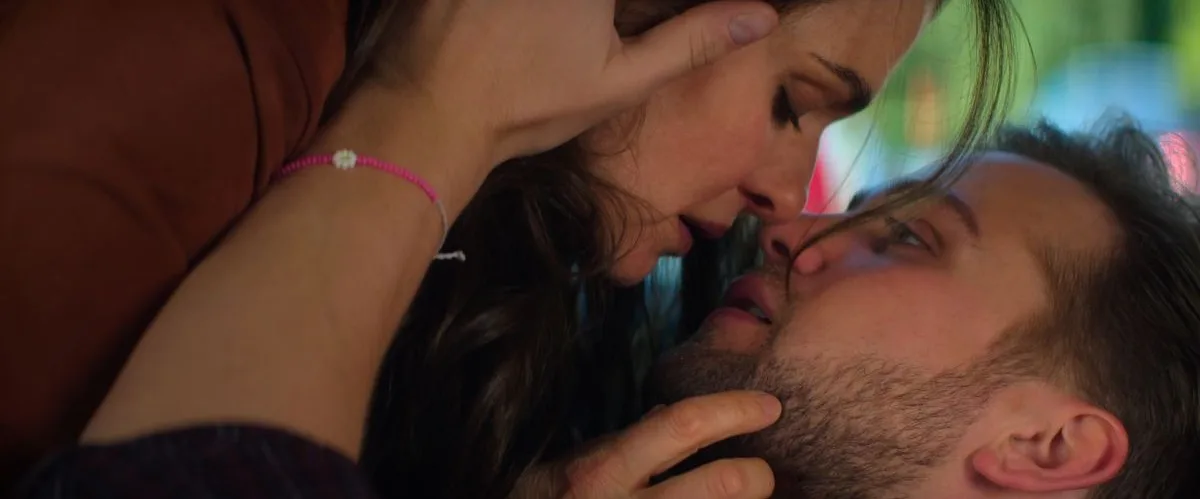
Still, the story is driven by the Protagonist’s obsessions. She has repeated spicy fantasies about Vladimir making advances in taboo places. Yet rather than the heat of sensual allure, we feel the burn of embarrassment. It’s a secondhand kind of unease that, wherever the story is headed, it can’t be good. Yet, somehow, good is exactly where it ends. The zany, farcical, HOT MESS of the first seven episodes culminates in a satisfying eighth—that’s cheeky and ultimately about reclaiming power. Not everyone will make it past the first seven, though. If you do, a wink and an arched brow will be waiting for you.
Whole series screened for review. Now on Netflix.