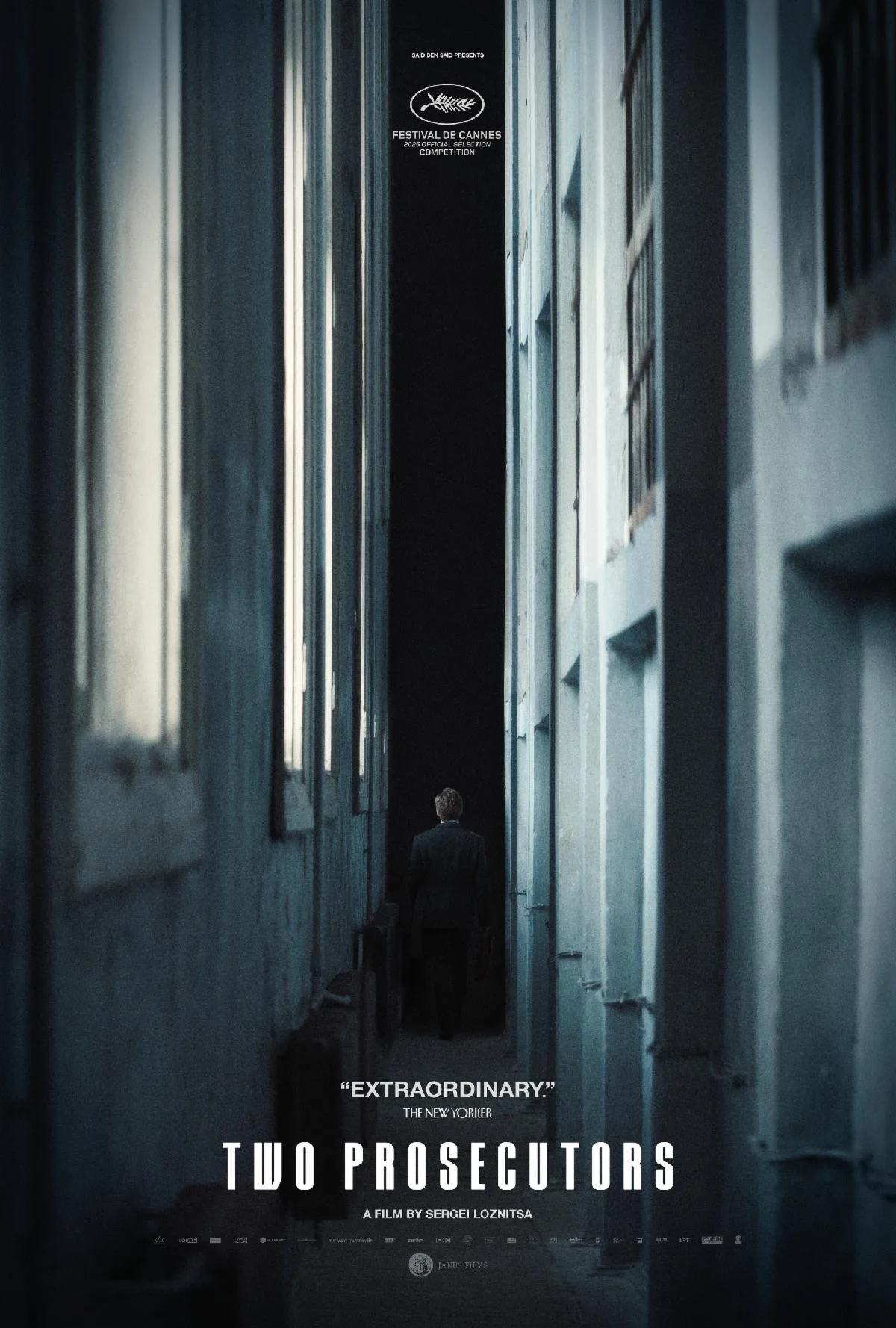
The Soviet reign of terror initiated and overseen by Lenin, then escalated and overseen by Stalin, is a world-historical trauma still being felt today. Vladimir Putin’s ignominious rule in Russia can be considered an aspect of aftershock. Hence, the Ukrainian director Serge Loznitsa could not make this chronicle of the Stalin era in his home country, or in Russia for that matter; the movie was produced in Riga, Latvia, and financed with Dutch, Latvian, German, Luthiuanian and Romanian money. While Loznitsa’s films, particularly his documentaries, often have a terrifying epic sweep, “Two Prosecutors,” as its title implies, is an altogether more intimate undertaking. And no less terrifying for all that.
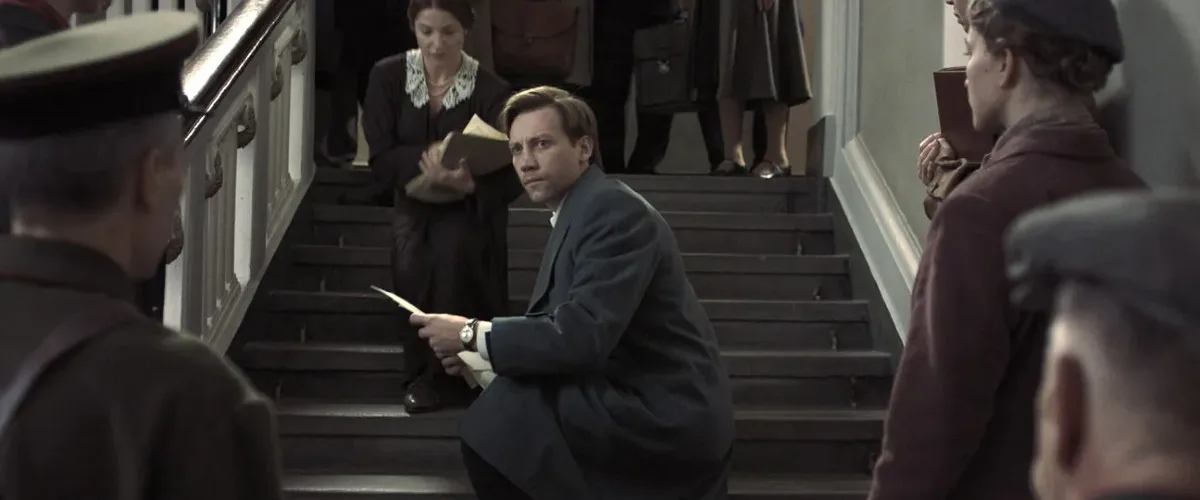
Aleksandr Kuznetsov plays Kornyev, a fresh-faced, idealistic prosecutor just out of law school, who travels to a prison 250 miles out of Moscow after receiving, through semi-illicit means, a letter from a prisoner chronicling abuse at the hands of the NKVD—Stalin’s secret police, which would be succeeded by the KGB.
The movie begins with the sight of a prison work gang. The view is relatively expensive compared to what comes after. An alternate title for this nightmarish vision could be “One Office After Another.” (The picture’s scenario derives from a long-unpublished story by the Soviet physicist and dissident Gyorgy Demidov, who served 14 years in the Kolyma gulag.) After his cursory investigation, Kornyev proceeds from a very naïve and tragically mistaken assumption: this abuse is purely a local anomaly, a blot on the noble vision of Comrade Stalin for a glorious Soviet present and future. How can it be anything but?
After saying “I’ll wait” countless times, after realizing that one guard calls him “comrade,” intending the worst insults, Kornyev learns. But not fast enough. The second prosecutor of the film, an older and seemingly entirely implacable man whose wire-rimmed spectacles ultimately are almost as expressive as his face, is played by a splendidly ironical Anatoly Beliy. His calm exterior is one of the components that help “Two Prosecutors” reach its unavoidable conclusion with the precision of a Swiss watch. Another is Loznitsa’s patient cutting style, which carries a strong “you can’t stop what’s coming” message.
One is finally reminded of Kafka’s parable “Before The Law,” embedded in his bleak novel “The Trial.” At the end of that story, the doorkeeper, who has seemingly been denying an ordinary man entrance to an edifice called “the law,” tells him, “No one else could gain admittance here, because this entrance was meant solely for you. I’m going to go and shut it now.” By the same token, it won’t do to simply apprehend “Two Prosecutors” as an existential story. It’s an unapologetically political one as well, and its resonances should—I’d say need to—ring some bells here in the ostensible land of the free.