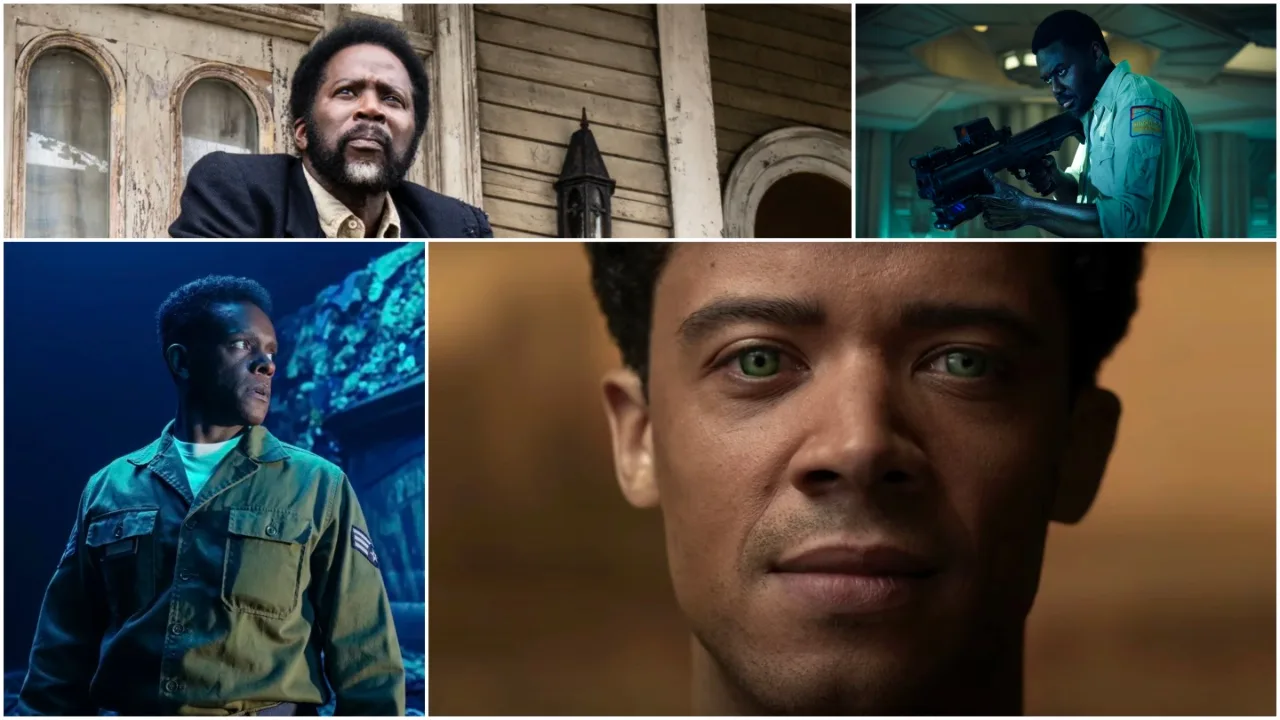
In the 2020s, horror television has become a genre led and shaped by Black men. While the genre was overwhelmingly white in the 2000s and 2010s, with shows like “Supernatural” and “The Walking Dead” dominating the cultural sphere, the 2020s have given Black actors the space to lead this ever-expanding genre into a new era. Modern horror television is finally allowing its Black male leads to explore the harsh realities of being Black in these respective universes, while allowing the actors who inhabit them to command the screen as inherently flawed heroes, vigilantes, and villains.
AMC’s “Interview with the Vampire” debuted in 2022, introducing viewers to a new take on Anne Rice’s bloodsucker: Louis De Pointe Du Lac (Jacob Anderson) was transformed from a white slave owner into a multifaceted Black brothel owner. Creator Rolin Jones transformed the character into a richer version of the stagnant protagonist, with Louis now commanding the screen and forcing the reformation of this new narrative, rather than having it simply move around him. Tethered to humanity not simply because of his aversion to consuming human blood, Louis’ position as a Black man in 1910s New Orleans conflicts with his newfound life as a powerful creature of the night.
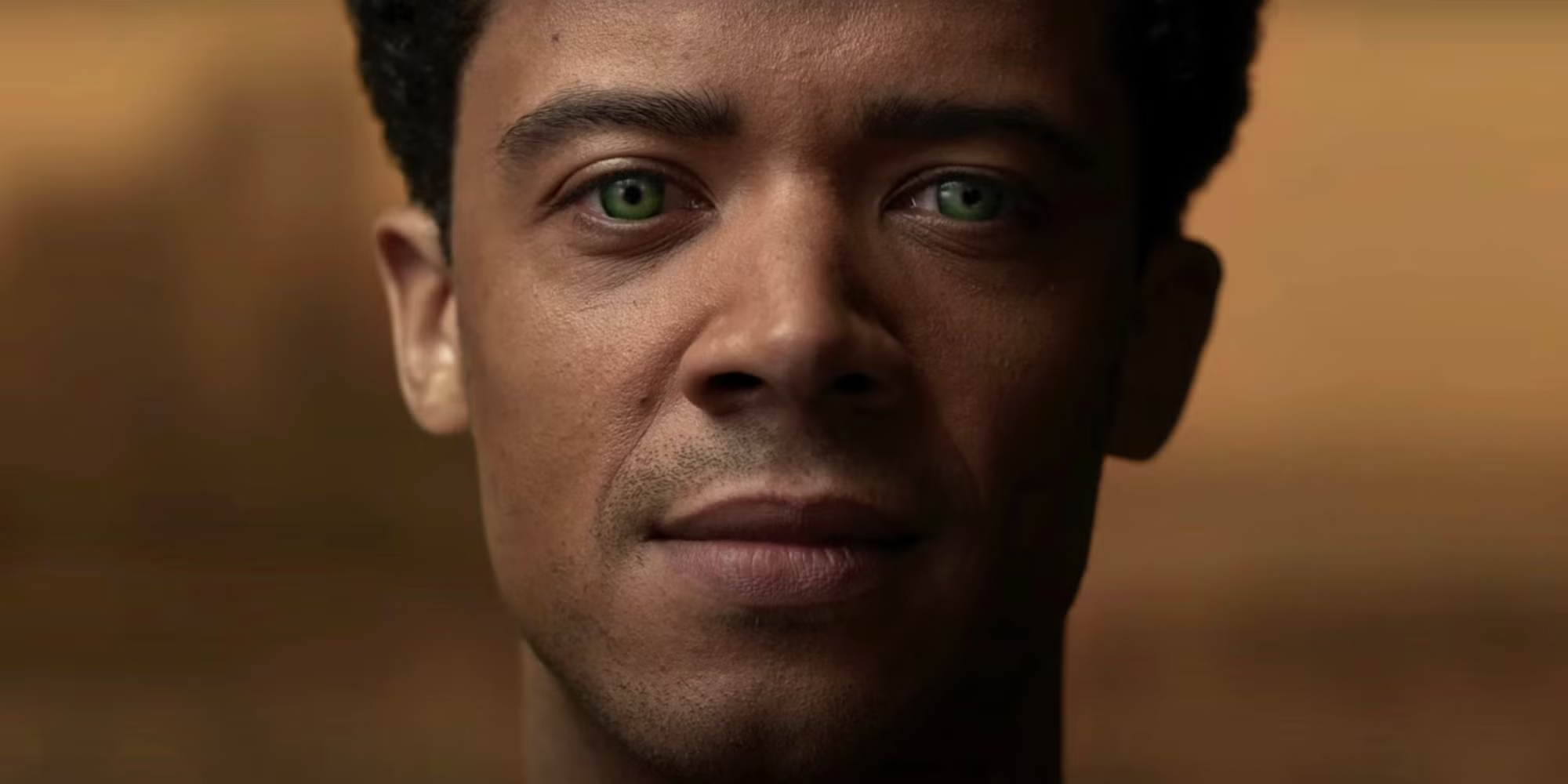
Recently revamped as “The Vampire Lestat,” now taking place in the present day, the series continues to force Louis to confront the realities of his existence, and Anderson delivers a career-defining performance as a broken man haunted by his past, present, and future. Since the show’s inception, Louis’ race has forged an intrinsic bond between him and his Black pseudo-daughter, Claudia (Bailey Bass, Delainey Hayles), whose murder in season two propels him on a journey of reconciliation and revenge in the present day. Like all vampires in the series, Louis’ monstrosity is never shied away from; instead, it flourishes beneath his veins as an inherent aspect of who he is. The adaptation continues to make Louis’ Blackness an integral part of not only who he was as a human but as a vampire unable to escape his past and the shackles the world still desires to entrap him in decades after his turning.
Like “The Vampire Lestat,” instead of trivializing the racism rooted in the foundations of its source material, HBO’s “It: Welcome to Derry” is the first adaptation of Stephen King’s famed novel to directly explore how the Black characters in Derry, Maine, would survive its supernatural and historical horrors. The racism that the Black characters face may be a lot to stomach, but with this brashness, creators Andy and Barbara Muschietti force their viewers to confront the realities of living in a town haunted by a creature who uses the fear and hatred of its inhabitants to wreak havoc. This doesn’t mean the show’s Black characters are perfect; instead, they are flawed products of their circumstances.
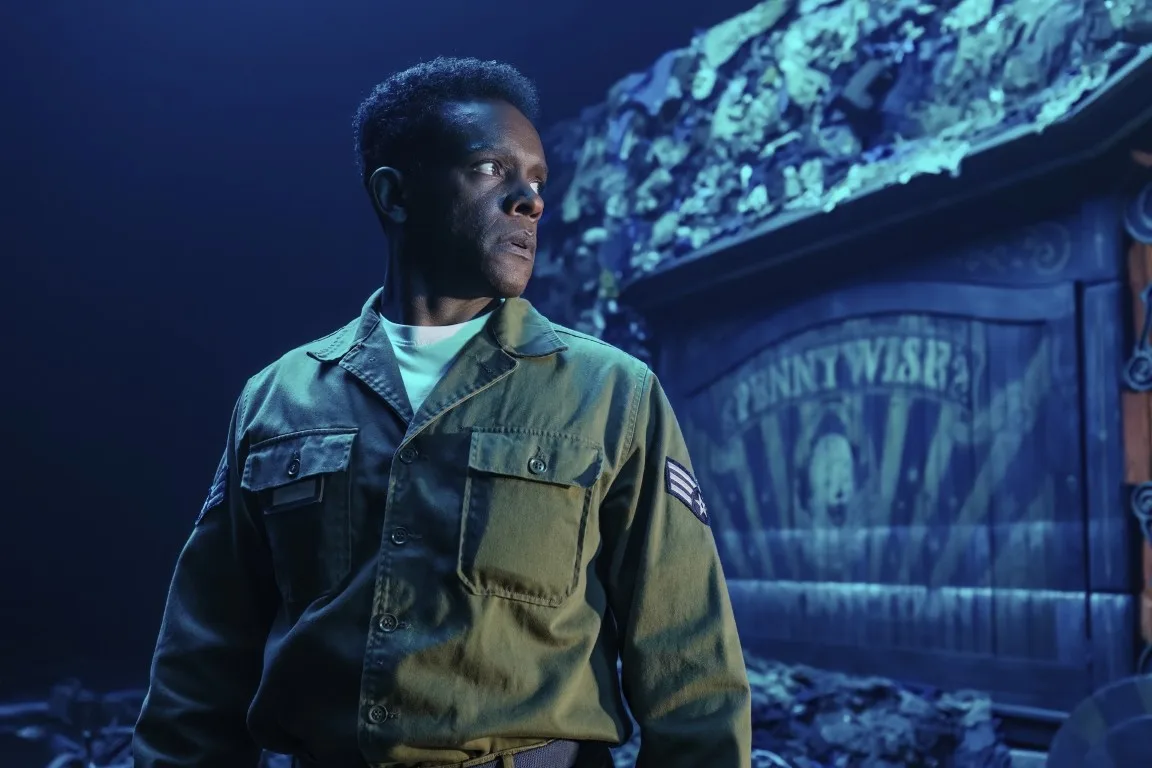
Both Leroy Hanlon (Jovan Adepo) and Dick Halloran (Chris Chalk) are imperfect men, and the writing never shies away from their imperfections. As a father and husband, Leroy neglects his family’s concerns for his military job. When he finally abandons his post, it’s not for the greater good, but because the people he loves have been directly impacted by Pennywise’s (Bill Skarsgård) reign of terror. Also a military man, Halloran uses the gift of the Shining to torture Derry’s civilians for information. Like Leroy, he becomes involved in destroying Pennywise only after the entity’s presence threatens to destroy everything around him. The series never absolves either man of their sins, allowing both of them to become multifaceted portrayals of Blackness whose position during the civil rights movement is ever-changing.
“Interview with the Vampire” and “It: Welcome to Derry” boldly heighten their horror by acknowledging that racial tension was a constant, unavoidable aspect of American life in the time periods in which they’re set. While both shows are fantastic vehicles for exploring Blackness in America through genre storytelling, there are other offerings that prove that horror television is as multifaceted as the Black characters who now reign supreme in the genre. Sometimes, it is enough to simply have Black characters exist in horror media without their race shaping their presence, and that’s what FX’s “Alien: Earth” and MGM’s “From” have been doing since their respective debuts.

While the former is chock-full of scene-stealing characters, there is nobody like Kumi Morrow (Babu Ceesay). Originally the security officer on the USCSS Maginot, Morrow is tasked with recovering the Xenomorph cargo that escaped from the ship when it crashed into New Siam, and spends the rest of the series proving himself to be one of the most fascinating anti-villains put to television. As he lurks through dimly lit hallways and manipulates childlike hybrids, Ceesay’s prowess chips away at Morrow’s seemingly impenetrable edges, slowly unearthing a fragile and complicated man whose best interests are always his own.
Instead of his self-interest being degraded by the show’s narrative, creator Noah Hawley allows Morrow to bask in his selfishness, often admitted in the middle of interrogations, where it becomes clear that he’s one step ahead of his opponents and the audience. As one of the few Black characters in the series, Morrow’s Blackness is neither addressed nor relevant to his position in this world. Yet, his Blackness is inherently important to the television landscape he and the series exist in, where Black characters are seldom given the space to be as captivating and as complicated as he is.
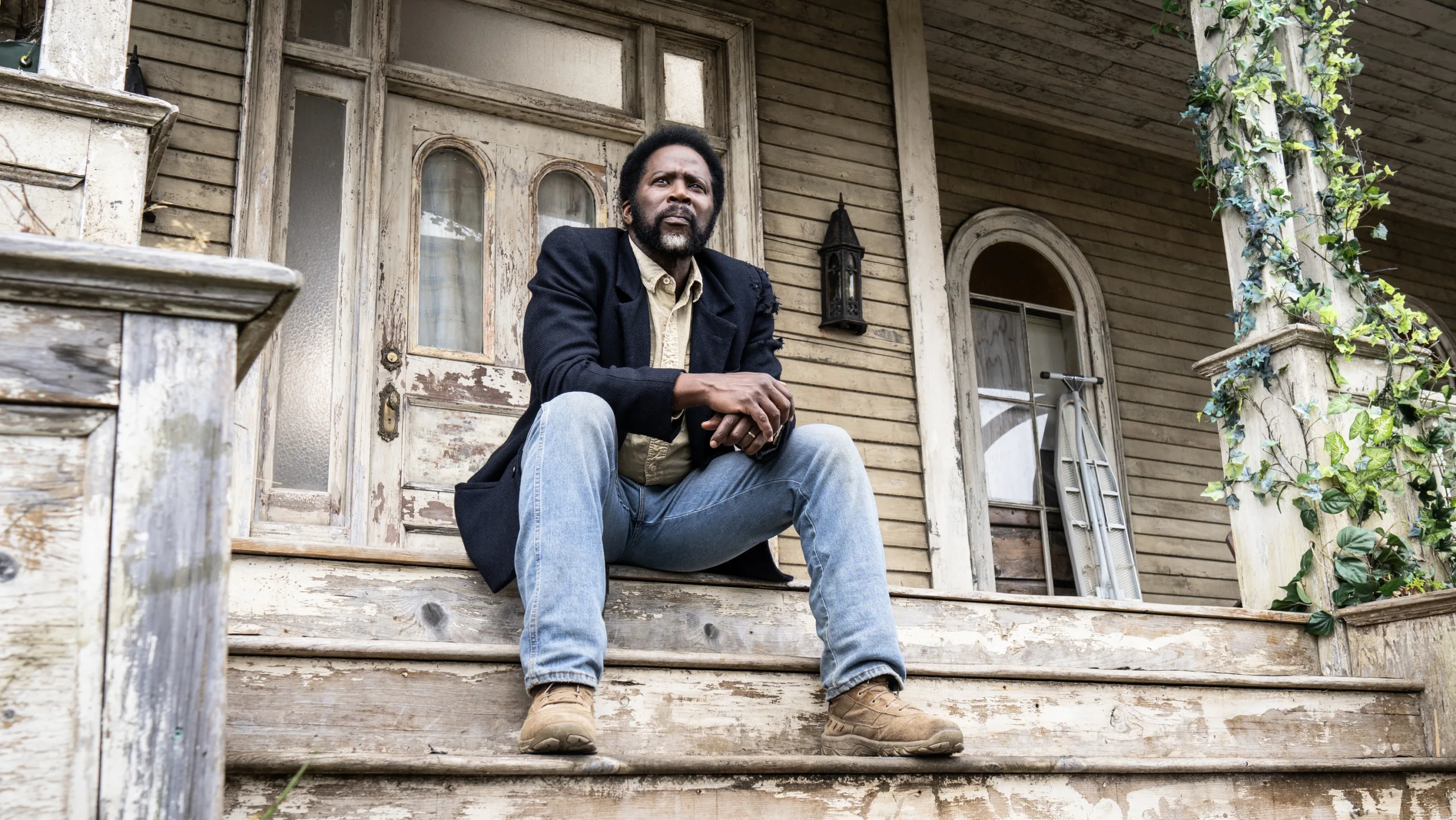
Unlike Morrow, Boyd (Harold Perrineau), the protagonist of MGM+’s “From,” is initially positioned as the series’ heroic figure. The de facto mayor of a mysterious town that traps everyone who enters, Boyd was also a military man. The series uses his previous occupation to show how Boyd’s time in the military influences his choices, which, as the series unfolds, quickly spiral from being seen as morally correct to being questioned by everyone around him. As the series has become more complex, so has its protagonist.
As tragedies mount in his life, Boyd’s motivations begin to sway from being about the greater good. The narrative never seeks to absolve him of his fallibility, forcing him to sit with the consequences of his own actions and become a shattered version of the man he once was. Boyd’s decisions, no matter how ludicrous they are, shape the series’ narrative rather than simply having the plot take place around him.
Each of these series has offered the actors who helm them their most versatile work to date, flourishing in a media landscape that often chews Black characters up before spitting them out. As these Black protagonists become more common within the genre, so does the longevity of their legacy, not only within the sphere of their respective shows, but off-screen as well. With the 2020s, television has become a medium where Black actors take center stage, transforming the foundations of a genre that, in the past, had seen them not only as disposable but nearly obsolete.