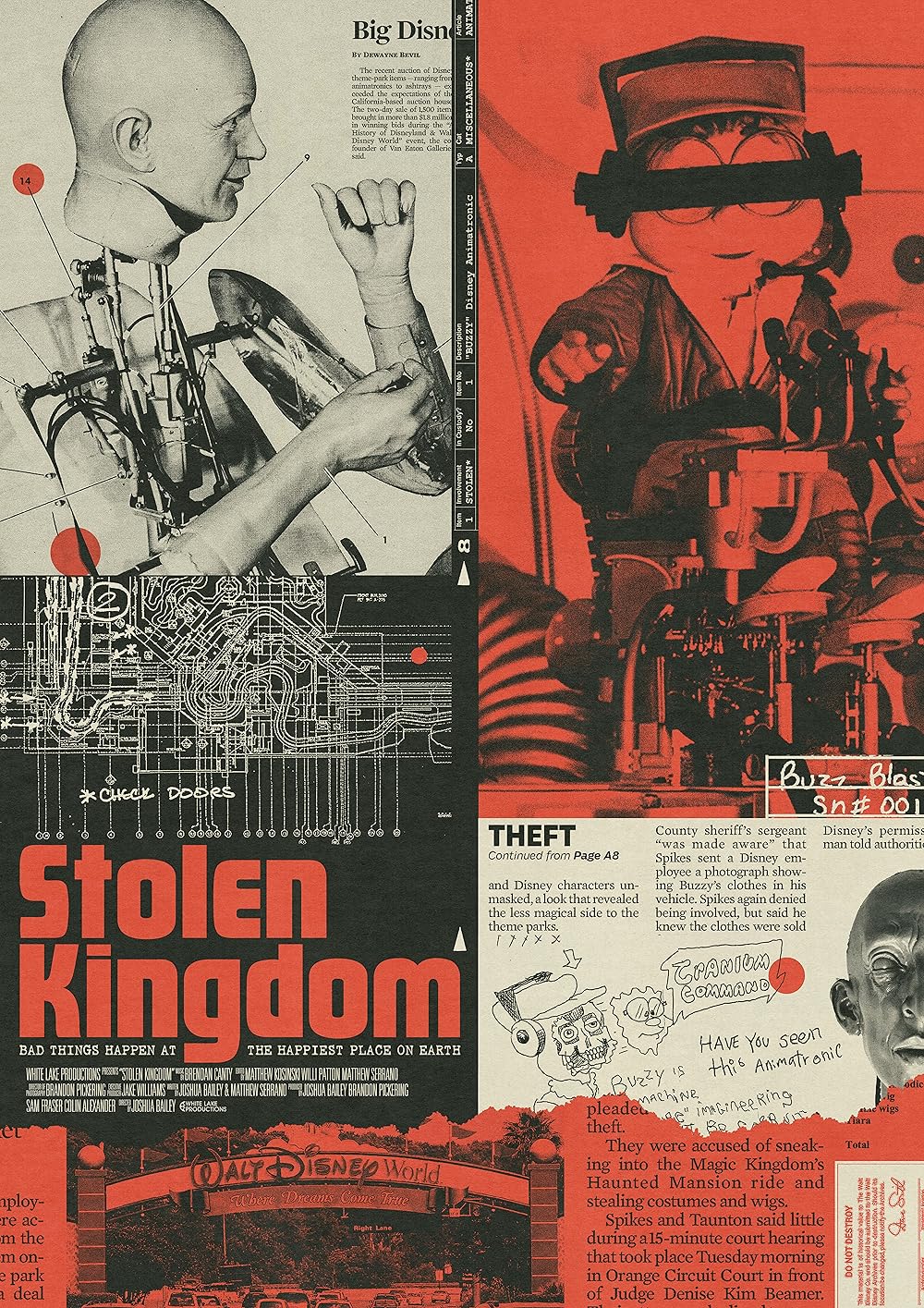

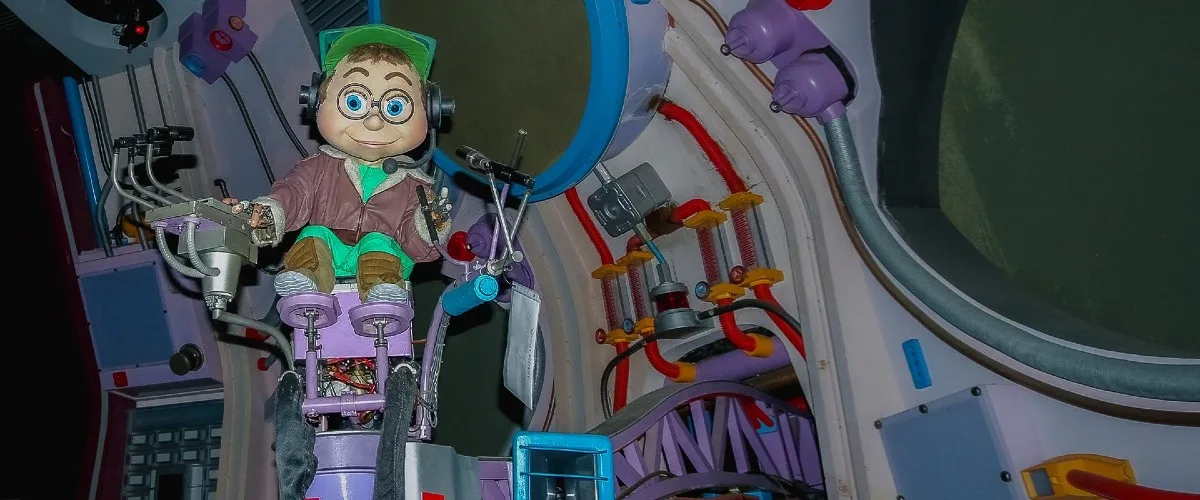
It’s astonishing to imagine the cultural chokehold The Walt Disney Company has had on pop culture for the better part of a century. For some, that cultural ubiquity is a nightmare, especially as merger after merger threatens to leave no corner of culture where the House of Mouse doesn’t hold some semblance of power. For others, though, Disney’s omnipresence serves as a kind of comfort—see the Disney adults who grew up on Disney Renaissance movies in the ’80s and ’90s, or generations of families who bring their kids and grandkids to the Magic Kingdom annually. The company, its properties, and its branding have seared themselves into the psyches of so many people that entire niches have been built around capturing a piece of that childhood nostalgia. That’s the backbone of first-time filmmaker Joshua Bailey‘s brisk, but buzzy documentary “Stolen Kingdom,” a spotter’s guide to how urban exploration, YouTube, and the stunted judgments of Disney adults can all collide to create an entire subculture.
Ostensibly, the doc is largely centered on a mystery—the mysterious theft of one of Epcot Center’s most prized animatronics, the Cranium Command character “Buzzy,” in 2018. But that central crime is merely the most lurid thread in a broader tapestry of the urban exploration subculture, specifically those who delight in sneaking into Orlando’s Walt Disney World. There, a cavalcade of Disney adults, weirdos, and “pixie dusters” (more on them later) circumvent lax security to peek into the backstage of active attractions, excavate abandoned ones, and—to come back to Buzzy—take some of the Magic Kingdom for themselves. They might want it just as a fan, or a collector, wanting to preserve some childhood memories in ways no one can replicate. Others, however, might just want to sell some rare stuff.
Bailey’s fast-paced approach whirls us in somewhat scattershot fashion from subject to subject, moving from the Buzzy mystery to a broad primer on the early days of urban exploration, to the subculture’s fascination with Disney in all its proprietary imagineering. You see, when Disney decides to discontinue a ride or an attraction, it’s often too expensive to haul away; so some rides just sit there and rot. It’s these places that some of our subjects are most attracted to, as we see archival home-video footage of urban explorers wandering around darkened, decayed sections of the park with dead-eyed animatronics lit by DV camera lights. (It’s all very “Five Nights at Freddy’s.”) Plus, in the budding years of YouTube, the urban exploration space exploded as these foragers suddenly became content creators, publishing their footage to what would become, for some, an audience of millions of followers.
There are a lot of figures to highlight in this space, from Matt Sonswa to Dave “Hoot Gibson” Ensign to the most popular of all, AdamtheWoo (whose absence looms large over the community, even as he passed months after this film started hitting festivals). Each of them has their own story, but watching them back to back, it’s hard not to notice the similarities in appearance and countenance between most of them: pudgy, white, bearded, often middle-aged. It’s a hobby for a very particular set, let’s just say.
Some of them have healthier attitudes about their past and present than others: Ensign, for instance, looks back on his time with fondness (especially reflecting on his late best friend Ed “Chief” Barlow, whose ashes he clandestinely scattered in the Magic Kingdom, smuggled in a plastic soda cup) and recognized that his pull to sneak into Disney died when his friend did. But subsequent generations of urban explorers, buoyed by those early pioneers, took less scrupulous attitudes: Take Patrick Spikes, the twentysomething menace whose exploits take up much of the doc’s last act, and who is probably a little too candid about his tendency to steal stuff from Disney to sell on the black market. He’s an annoying motormouth who only fesses up when he’s caught, but his pathetic, self-serving instincts make for compelling viewing—especially when his bluster about his arrest for suspicion of stealing the aforementioned Buzzy is contrasted with his interrogation room footage. There, he pouts, struggles with cops to try to snatch his phone back, and even tries to fake an asthma attack so he can be taken to the hospital. (He ends up getting probation instead of jail time, which merely highlights just how unfair the justice system in this country can be.)
Figures like Spikes, as well as one particularly brazen Florida Man who blusters his way into the abandoned Discovery Island, only to film his own attempts to escape the police as he’s caught, feel endemic to the subculture of urban explorers. Sure, there are the innocent explorers, the “pixie dusters” as they’re called, who idolize Disney and just want to see more, more, more of the Greatest Place on Earth, but who don’t want to step on proverbial butterflies. But the practice seems to bring out a particularly noxious brand of white dude who doesn’t really care what kind of trouble he gets in, as long as he can chase a thrill or make a little money off it. It’s these moments that are most luridly fascinating in “Stolen Kingdom.”
Where the doc falls short, ironically, is in its runtime: 75 minutes feels like a treat for those hoping to avoid bloat in their motion pictures, but Bailey’s pinballing approach from subject to subject makes it hard to find purchase on any one subject. It feels like we’re skipping across the pond of urban exploration, and don’t get much time to dig deeper into these intriguing figures or the practice itself. Little connection is drawn to Disney itself, oddly enough, to say nothing of the irony of how litigious it is against people who simply want to experience the same nostalgia it spends billions cultivating in its own brand. It feels like there are broader sociocultural forces at play here—the power of IP, the omnipresence of a single company holding sway over millions of people’s imaginations, the way capitalism drives people to break the law to pillage their childhoods for money—that could have coalesced these amusing anecdotes into something more cohesive.
That said, “Stolen Kingdom” still sits comfortably alongside other very capable docs about the kind of vaguely criminal youth countercultures that spun off in the 21st century, intended to stick it to the man: “Secret Mall Apartment” and the upcoming “Santacon.” And its anthropological look at the history of Disney World attractions evokes the kind of thing you’d see in other great YouTube channels like Defunctland. Whether you’re looking for deeper dives into the dark side of Disney adults, or want to see what happens when classic Florida guys leap headlong into the Greatest Place on Earth, this is a great way to start.