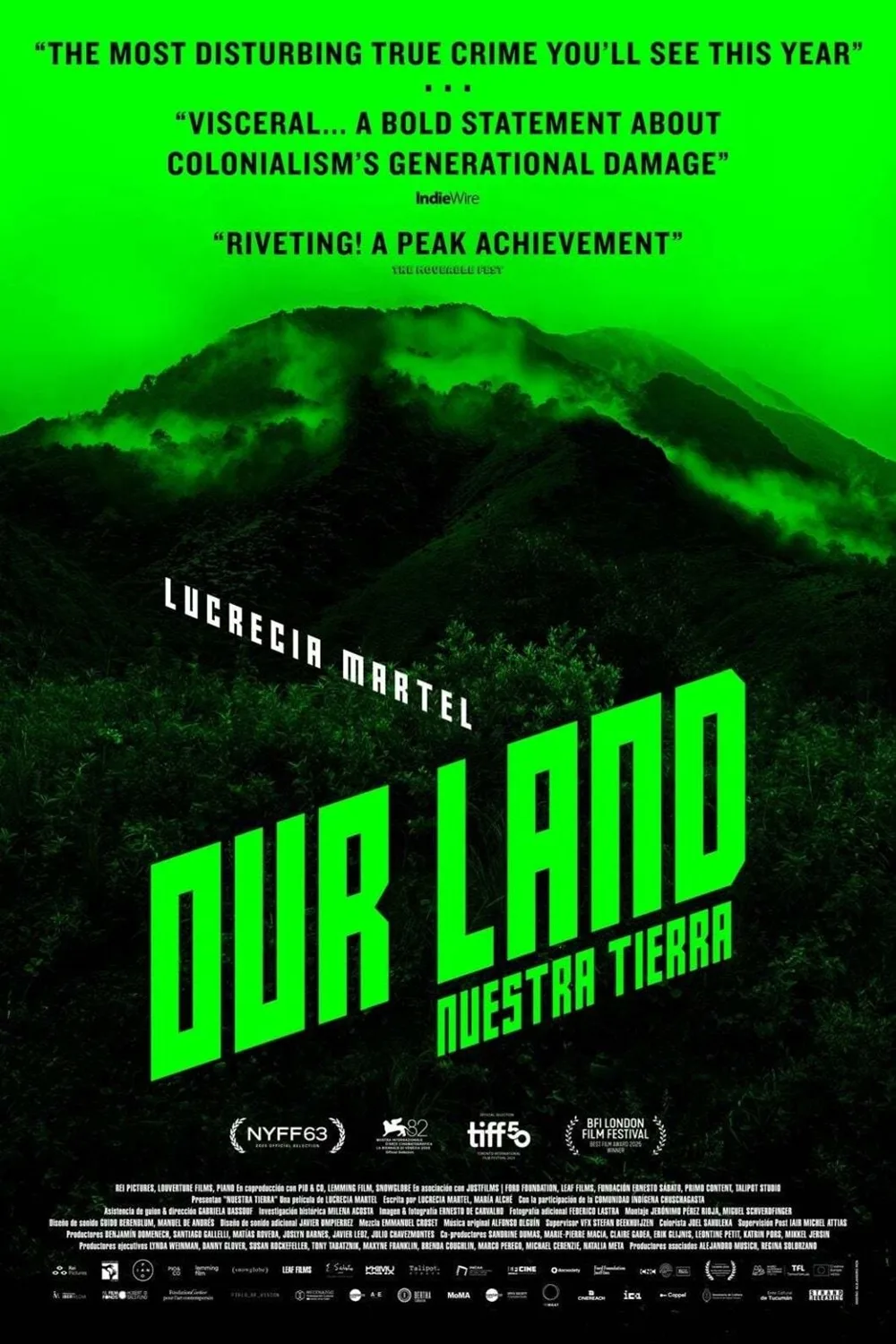
The works of Lucrecia Martel have long felt like a single, all-encompassing political project to explore the social and colonial politics of her home nation, Argentina. Her Salta trilogy (“La cienaga,” “The Holy Girl,” “The Headless Woman”) tied the sexual and social freedoms of bourgeois Argentine women to the nation’s broader history of colonialism; 2018’s “Zama” probes the long-standing history of indigenous oppression through scintillating historical drama. Martel’s style is ornate and richly layered, graceful in its blending of dreamlike visuals with nuanced soundscapes; her works can feel as gossamer as air, even as they probe the deepest and most personal of subjects. With her first foray into documentary, Martel continues those concerns into a loping, but urgent work about Argentina’s checkered colonial history.
“Nuestra Tierra” concerns itself chiefly with one specific incident—the 2009 murder of indigenous activist Javier Chocobar by a trio of oil entrepreneurs who laid claim to the land of the Chuschagasta, a community of indigenous peoples whose land rights and status have long been disputed by colonial Argentines. But the film’s opening shot is that of the Earth from space, slowly transitioning to lower and lower shots through the atmosphere, until we finally zoom in on the haunting spot where Chocobar was gunned down during an altercation with wealthy landowner Darío Luis Amín. This is one story, Martel seems to say, but it’s also all our stories: This one incident exists in a more harrowing, cosmic context of settler colonialism and its unending thirst for conquest, one community at a time. As Martel shows us, this isn’t just about who killed Chocobar and why. It’s about the bullet being one of many wounds inflicted upon indigenous peoples over 500 years of Argentinian history.
Structured mostly around the 2018 murder trial over Chocobar’s killing, “Nuestra Tierra” uses the true-crime bona fides of the trial to forensically investigate the social and historical factors that led to this slaying. Long before Amin put a bullet in Chocobar, the stage was set for this encounter through centuries of disenfranchisement, land-grabbing, and settler colonialism; Martel explores these erasures in everything from archival accounts of Chuschagastan citizens, to a biography of the late Chocobar himself, to the frustrating vagaries of the trial. Such a multi-pronged approach makes the doc feel comprehensive and multidisciplinary, even as the minute-to-minute flow occasionally suffers.
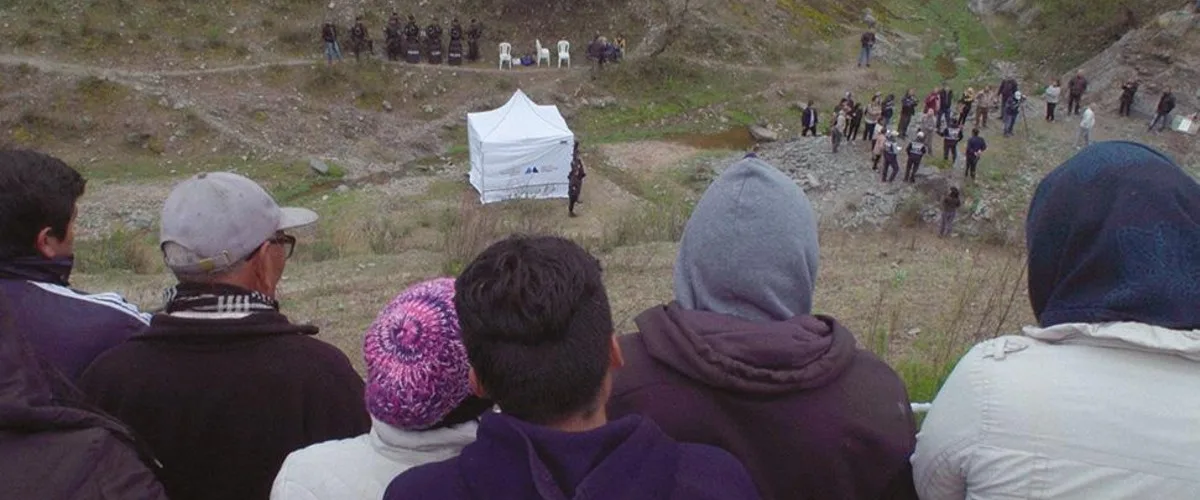
Martel’s strongest work is in the film’s opening hour, which focuses more on the incident itself and the subsequent trial. We see, through grainy home video footage, the slaying itself, made even more haunting through the relative obscurity of the pixelated, shaky camerawork from a mobile phone camera. We also see the defendants and witnesses gathered around the site of the murder, trying to recreate the scene of the crime (dutifully navigating the memorial that has been erected in Chocobar’s memory), while other Chuschas look on with haunted interest.
During the trial itself, we bear witness to the aggravating defenses of Amín and the pair of enforcers who came with him, who argue that they were “trained by Argentinian agents” to respond with force when provoked. They spin stories about Chuschas stealing weapons, reaching for guns, or arguably shooting Chocobar himself. They argue that the very presence of Martel’s cameras makes the trial a “circus,” a claim the judge vociferously pushes back against.
Even so, Martel seems to take the hint herself, backing off a bit for a more sedate second hour that focuses more on examining the history of Chuscha erasure, whether through paperwork or the reeducation of indigenous peoples in Spanish language and history (we hear accounts of Chuschas who learned about Christopher Columbus before the history of their own people). These testimonials are gripping, though their impact grows a bit more redundant with each long, sustained drone shot of the mountains and hills of Chuschagasta land that hovers over it. Sepia-toned archival photos also accompany these accounts, aided by Ken Burns-ian sound design of shoveled dirt and indigenous music, which evoke lives of vivid culture cut short by exploitation.
Structural quibbles aside, “Nuestra Tierra” is a powerful work of reclamation and advocacy for native peoples who have long been disenfranchised and dehumanized by systemic forces in colonial Argentina. Who owns the land we walk on? The ones who have lived and loved and toiled and danced on it for centuries, or whoever draws up official-looking papers? Can colonizers erase millennia of history with enough discipline and reeducation? “Paper doesn’t question the pen,” argues one Chuscha; indeed, Martel argues, it’s more important than ever to cement the stories of those whose voices have historically been silenced. It’s been her mission since the beginning of her career, and this documentary is one of her most potent weapons in accomplishing it.