A disorienting cycle of violence and regret distinguishes “Another World,” an animated Hong Kong fantasy about reincarnation and letting go. The movie also fits right in with a burgeoning trend in national trauma literature.
In a recent New York Review of Books article, the cultural historian and author Louisa Lim surveys recent books (both fiction and non-fiction) that reflect Hong Kongers’ fears of cultural erasure following the country’s 2019 anti-extradition-law protests and Beijing’s crushing 2020 security laws. These disturbing, introspective narratives concern the empty spaces created by the combined influences of censorship, mysterious “disappearances,” and a systemically enforced shift in language/identity from Chinese/Mandarin to Hong Kong’s native Cantonese.
Lim singles out exemplary books such as Ysabelle Cheung’s surreal short-story collection “Patchwork Dolls” and Lau Yee-wa’s unsettling horror novel “Tongueless” to highlight new forms of expression amid modern Hong Kong’s identity crisis. She also compares these recent books to the Chinese “scar literature” of the mid-1970s and early 1980s.
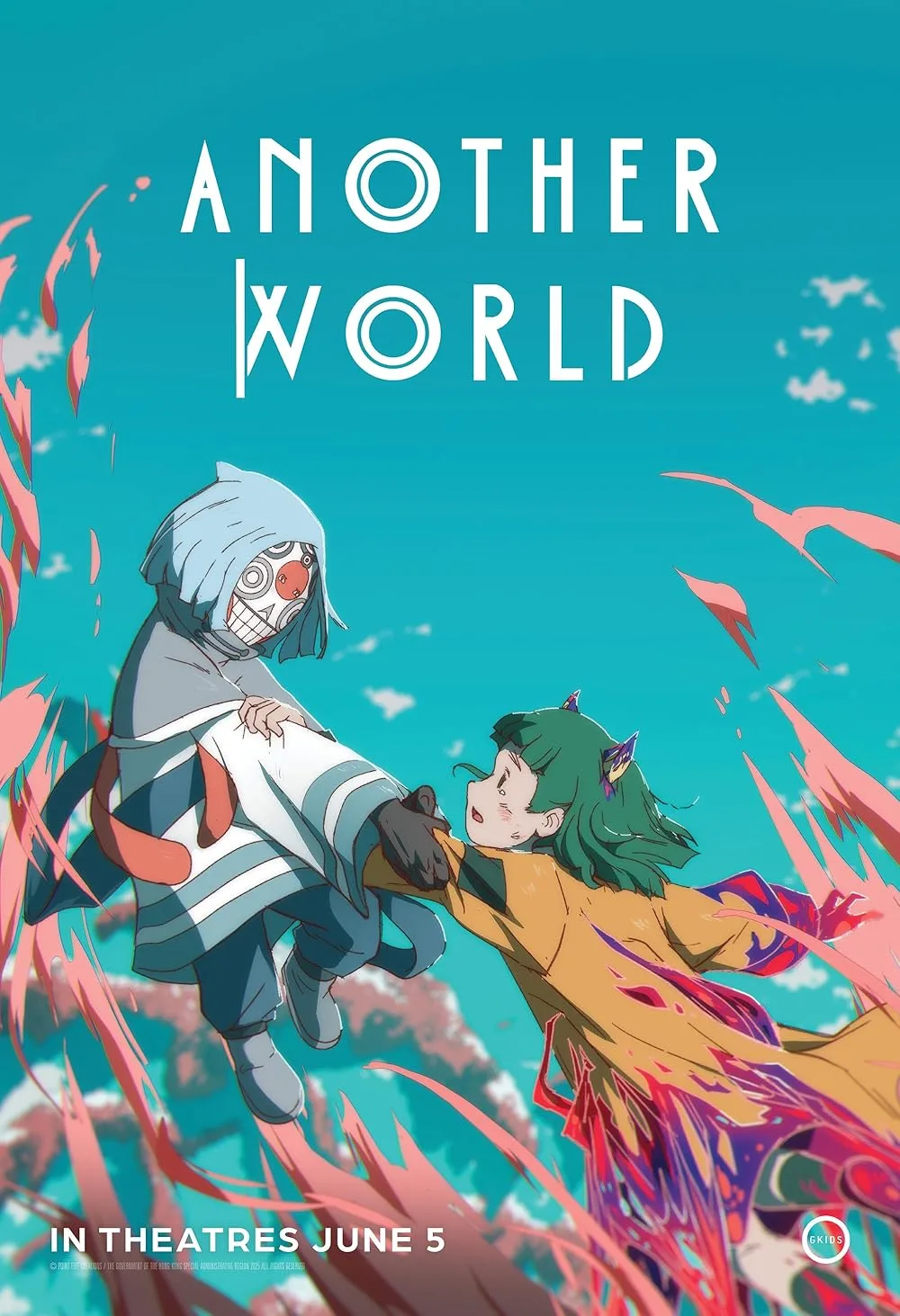
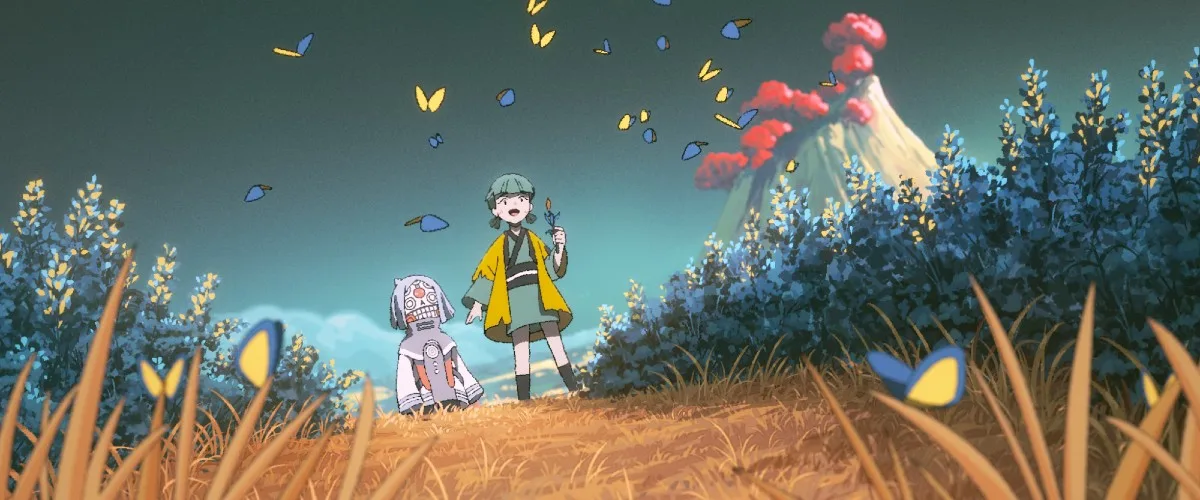
“Another World” resembles other neo-scar literature in that it processes similar fears of displacement and amnesia through disjointed, grotesque memory-play narratives. Adapted from Japanese author Naka Saijo’s source novel and broken up into vignette-like episodes, “Another World” mostly follows the child-like spirit guide Gudo (Chung Suet-ying) as he prepares lost souls for reincarnation, particularly the distraught orphan Yuri (Choi Hiu-tung). Gudo mostly lives and operates in the title setting, an enchanted purgatory where dispassionate Soul Keepers encourage the recently deceased to relinquish their human lives’ emotional attachments, lest they develop “seeds of evil” that can transform them into monstrous Wraths.
Gudo sees goodness in Yuri, who refuses to move on until she’s reunited with her dead brother Kenji. Gudo also dotes on a number of other lost human souls, which can sometimes be confusing, given how suddenly his attention shifts among a handful of other protagonists, such as Princess Goran (Yeung Nga-man), who struggles to process the death of her beloved parents, the rulers of the embattled Flower City.
Toggling between different subplots and timelines can be jarring, even as the movie’s focus on reincarnation should hopefully make it easier for viewers to guess how Yuri and Goran’s stories are related. Gudo’s frustrated attempts to understand Yuri also give the movie its strongest emotional tether, as he mostly tries to understand her and her defining inability to move on from a life (or lives?) defined by unjust losses and irreconcilable grief.
More than just confusing, Gudo’s patchy story often appears dispiritingly bleak since his undead charges are haunted by a variety of earthly torments, including self-mutilation, death from childbirth, and a mysterious suicide, too. This makes the human world seem like an indiscriminate meat-grinder. The only way to survive with your soul intact is to let go.
In this half-ethereal, half-earthy context, “Another World” seems more like a conciliatory apology than a sorrowful political allegory. To be fair, Gudo’s fanciful attempts at keeping up with Yuri find thrilling expression in the movie’s dynamic animation style, whose vivid combination of hand-drawn linework and computer-illustrated graphics almost single-handedly justifies the movie’s existence. Still, it can sometimes be hard to know what to make of Gudo’s ostensibly laudatory focus on post-human enlightenment, which is presented as a catch-all balm to a very general sort of mortal pain. Is transcending grief necessarily a good thing if, in the process, you lose your own personal history? “Another World” doesn’t really offer satisfying answers since it’s more focused on Gudo’s elusive quest to let go of Yuri.
Thankfully, “Another World” doesn’t need to offer trenchant political commentary to plumb the depth of feelings that have come to define Hong Kong’s new scar literature. It’s true that the film shares key themes and narrative devices with the work Lim keenly highlights. You could even imagine that she’s talking about Gudo and Yuri’s uneasy path to enlightenment when she quotes Lau, who argues that suicide is an inevitable end for one of her protagonists: “You need to destroy yourself in order to adapt to the environment.”
“Another World” still identifies a substantial and ultimately rather moving tension between Gudo’s saint-like conviction and Yuri’s scar-making experiences. Instead of a simple-minded and maddeningly straightforward plot about finding happiness in the next life (and beyond), the makers of “Another World” challenge viewers to find solace in knowing that much of our worldly sorrows are beyond our control. We commit ourselves to helping our loved ones regardless, knowing that while we want to be better than our emotional attachments, those feelings also motivate us to improve our otherwise torturous circumstances.
That bittersweet sentiment isn’t only valuable as a statement on an embattled colony’s struggle for autonomy. It’s a universal theme that finds a stirring and often disarming expression in the movie’s conflicting dramatic impulses and unusual animating style. “Another World” may not check off all of your boxes, but it largely succeeds on its own terms.