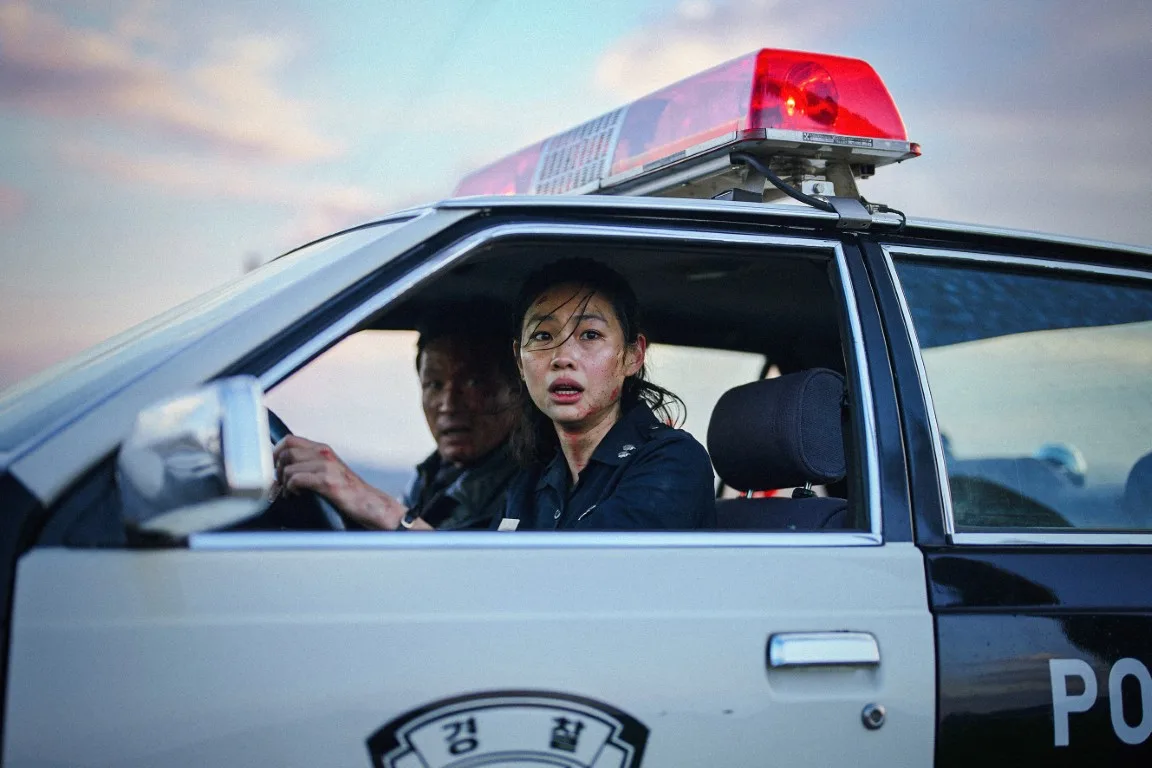
“Hope,” from director Na Hong-jin, is weirder and wilder than any simple plot description could ever hope to convey. So the best thing to share is that it’s thrilling to see such an unvarnished vision executed with the highest level of technical prowess and sincere love.
The Korean cinema that has often broken through has more often than not been its seedy revenge tales, but with the pronouncement of “Hope,” filling the contours of its frame with gregarious and uniquely Korean archetypes and stuffed with the most exciting camera angles you’ll see in a blockbuster, it feels like an invitation to taste the riches of the country’s most unhinged visions.
It is methodical and controlled in the unveiling of its central mystery, so gleeful when it lets its feet [sic] flag fly, you can’t help being swept–more like dragged–along with it. Thankfully, Na has a murderer’s row of performers, who are on his boisterous wavelength. Hwang Jung-min plays Bum-seok, a village police chief, who drives to Hope Harbor once reports come in about a strange creature that murders livestock and people alike. He’s joined by his second cousin, Ko Sung-ki (Zo In-sung), and rookie deputy, Im Sung-ae (Hoyeon), who find that the threat they face may not be of this world.
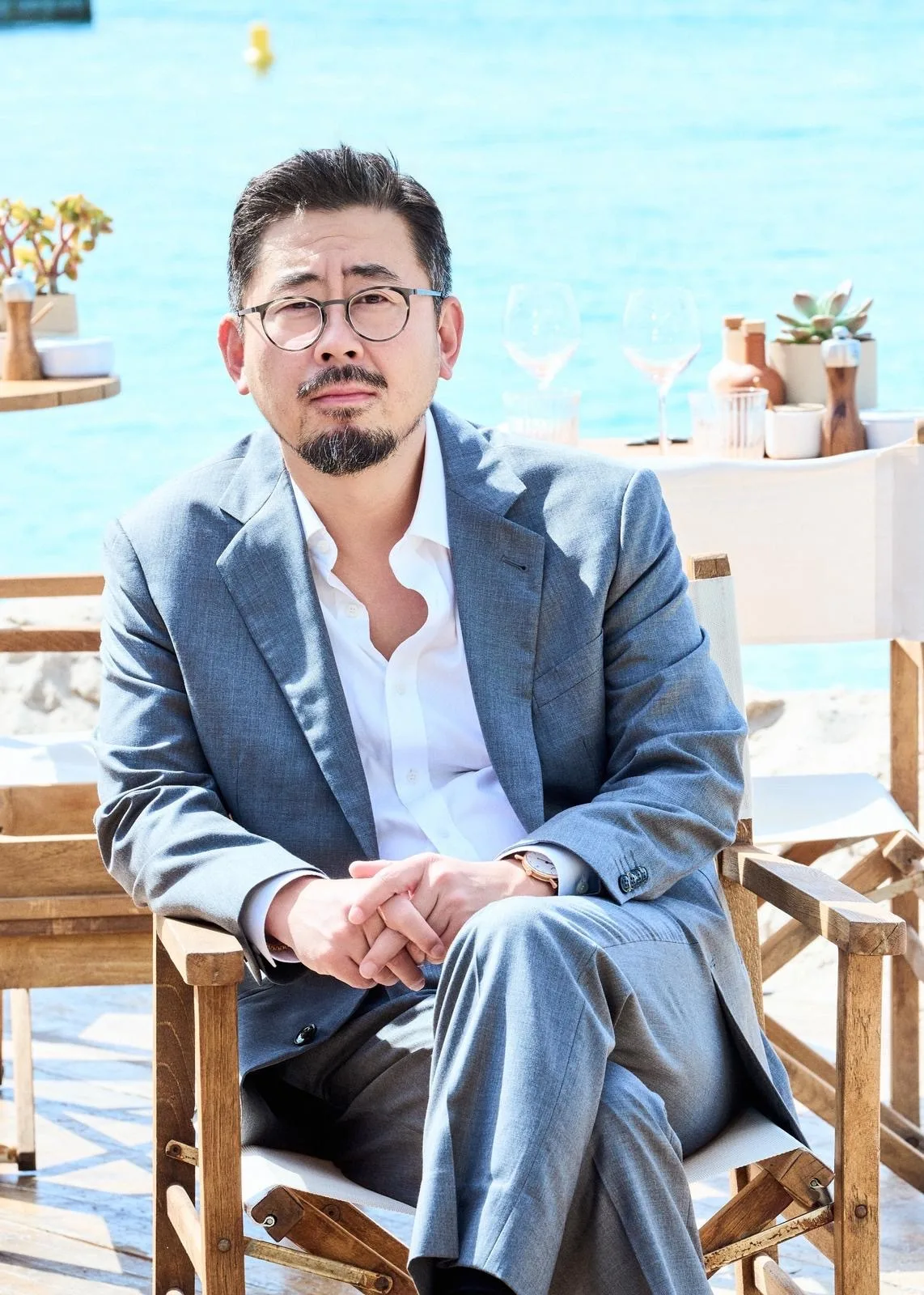
For Na, while he delivers spectacle befitting the IMAX screens “Hope” will play on, he also wants people to consider who the real victims and perpetrators are in the film, and how, depending on whose perspective we’re seeing, that can disrupt our enjoyment. “I hope [the film] also makes you question the catharsis of the on-screen violence,” he shared.
For Hoyeon, playing Sung-ae was as gratifying as it was challenging; she enjoyed how the stunt work pushed her body to the limits while also giving her the chance to address contemporary intergenerational dynamics in Korea. “The reality is that in Korea, in many of the rural towns and smaller villages, there are very few, if any, young people who choose to stay there. What does it mean for someone like Sung-ae to stay?” she said.
As “Hope” arrives in theaters this week, director Na and Hoyeon, whose words were eloquently translated by Jiwon Lee and Haley Jung, respectively, spoke with RogerEbert.com over Zoom; this piece combines their interviews into one fluid conversation. They discussed the enduring influence of Paul Verhoeven’s “RoboCop,” the lineage of female Korean action heroes wielding big guns, and how the film speaks to the duo’s past work across projects like “The Yellow Sea” and “Squid Game.”
This conversation has been edited and condensed for clarity. It contains mild spoilers.
Director Na, “The Wailing” opens with a Bible verse from the Gospel of Luke, while “Hope” ends with a modified verse from Hebrews: “Faith is the evidence of things not seen.” What excites you as a filmmaker about exploring questions of belief and faith through the language of cinema?
Na Hong-jin: I’m a believer in that religion, so I’ve long found my work in cinema as an extension of that belief. With“The Wailing,” the idea of the film started with that Luke passage. I thought the passage–where the resurrected Jesus appears to the disciples on the Emmaus road–was a striking cinematic moment. The disciples had to ask: was this figure they were seeing Jesus, or was he something else?
“The Wailing” came from me trying to expand on that moment, that rattling of faith. Conversely, for “Hope,” after making the film, I tried to reflect on the true meaning of the title, how the movie should feel, how the conclusion should feel for the audience, and what the message should really be. After considering that, I thought it best to include a direct mention of Hebrews. I can’t help but keep coming back to these Biblical passages to bookend my films.
That is why, after considering that, I tried to include the passage from Hebrews, as you mentioned, because I thought it was most adequate for that particular purpose of the film.
I’m intrigued by how your films show normal people grappling with these questions of faith. It leads me to ask about the Korean curse word, “shibal,” which your characters say a lot in the film. The English subtitles translate it differently every time, so I’m wondering how you were thinking through the significance of this word to the characters.
NH: It’s interesting, because when I was writing the script, there weren’t that many “shibals” in the script, so I did try to change it to other words. I couldn’t come up with anything because, in Korean, people don’t use many exclamations in daily life. So realistically speaking, “shibal” might be the only expression of exclamation that we use in the language, but as you mentioned–because the word itself is a cuss word–that made it a challenge in terms of how much I should include it.
What’s funny, though, is that while we were shooting, the actors, while they were performing in the scenes, couldn’t help but shout “shibal” even for lines in my script where their characters didn’t say it. As we were editing, I did realize that we did have way too many uses of the word, so I did try to take out as much as I could, but then thought that maybe it was justified to keep them in there because I see the use of the word as an expression of exclamation and surprise by characters who have to deal with a cosmically absurd situation. Despite my self-editing, I still think I ended up with too many “shibals.”
I remember from the press conference that actor Zo In-sung, who had his knee operated on before a stunt-heavy scene in the forest, said he probably wouldn’t be able to run that much, to which you replied, “no problem.” I’m sure he threw in a couple extra “shibals” during the chase sequences you had him do.
NH: (Laughs) What’s he talking about? He didn’t have to run that much.
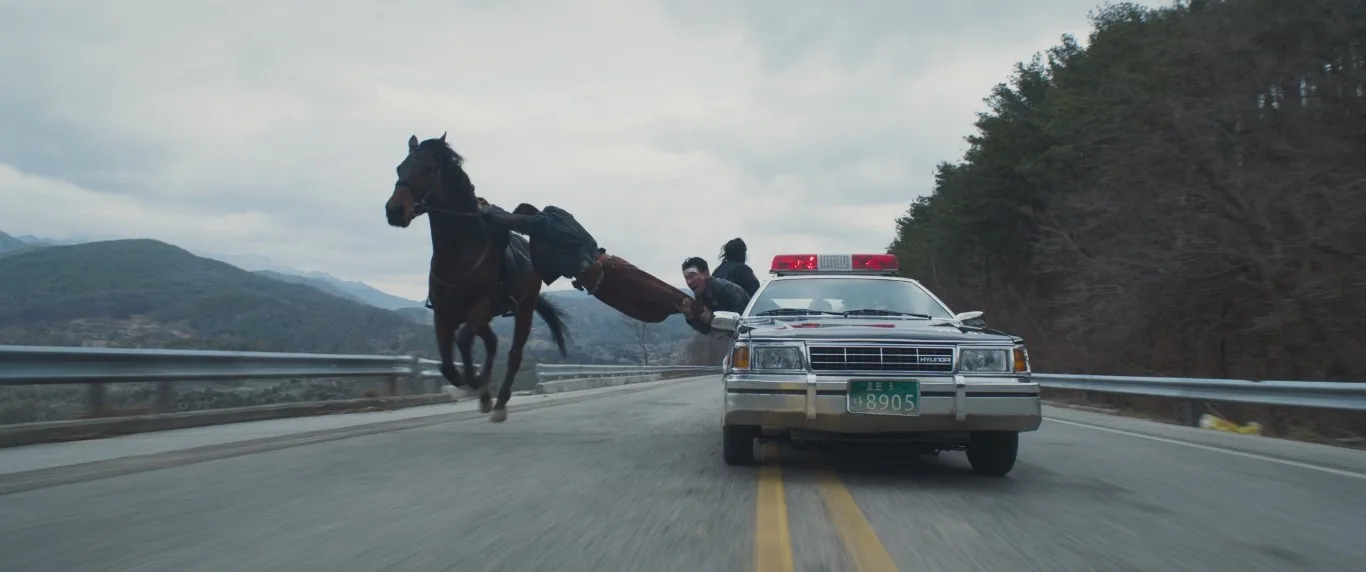
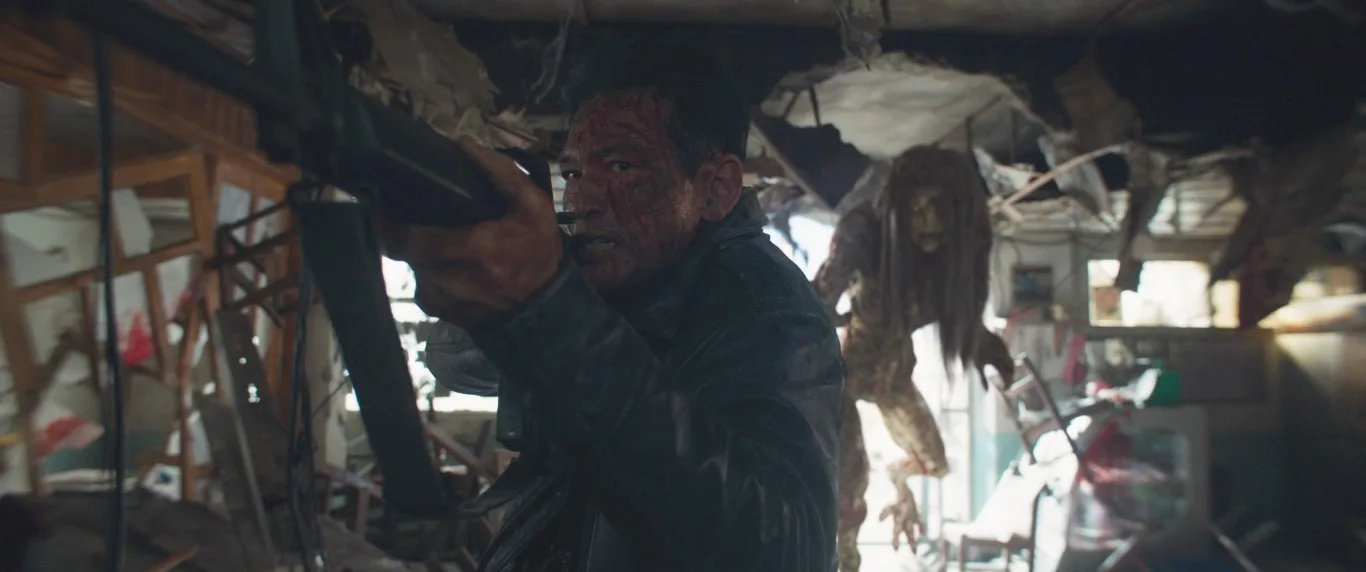
True. His hanging-off-of-horseback-while-being-chased-by-Michael-Fassbender experience outweighs how much he has to actually run. A lot of your past films, such as “The Yellow Sea,” featured little to no gunplay, with that film thriving on vicious, close-quarters knife combat. There’s nary a character without a firearm in the film, so tell me about their incorporation, and the new opportunities they provided you when it came to expanding your horizons as an action director.
NH: You’re correct in pointing this out, and truthfully, for this film, I wanted to try my hand at using firearms for fight scenes because we used knives so extensively in “The Yellow Sea.” My desire to incorporate more action sequences with guns was also part of the impetus for setting the film in this particular time period, because I found it not only more believable that people would be using firearms in this era, but also because of the paranoia of the times, they’d be far too trigger-happy.
It made me recontextualize the film’s opening scenes, because I was struck by the way Hwang Jung-min’s Bum-seok would grip the gun; the way he held it made it feel like the gun was its own living organism he was trying to control. Did you talk with him about how he should grip it?
He’s an actor who has been allowed to shoot guns in lots of the movies he’s been in. We’ve all had to serve in the military for our mandatory service, so between us, at least, there weren’t specific conversations about how he should hold it. What is worth noting, though, is that there are scenes where actors believe they’ve made a mistake and thought those scenes wouldn’t be included in the movie, but I saw those “errors” as a way to flesh out the characters more.
For example, there’s that scene where, as Bum-seok is racing through the town, he drops his bullets in his pursuit. I’m sure he considered it a mistake and didn’t think it would make the cut, but I thought it was perfect. It was the perfect portrayal of the character because I wanted this character to be someone who is holding a gun and using it, but is actually very scared of doing so.
It made me reflect on the ways you visually frame our “hero” characters’ shifts throughout the film; they are presented to the audience very heroically at the start, but by the film’s end, they seem smaller, more terrified, in contrast to the enormity and strength of the threat they face.
So when these humans race across the bridge, we get this final dialogue from them that is supposed to represent their situation. These human characters talk about progress and how far they’ve come, but seeing the aliens arrive also makes them reflect inward and look back. They now feel strange about what they’ve done in the past and are unsure how to behave and live in light of the revelation. I thought that dialogue was enough to represent the human perspective. They are the aggressors in the story, so I thought that conversation showed them trying to justify what they’ve done.
But the aliens are the victims, and their conversation is inverted. They talk about how, no matter what has happened to us so far, we have to move forward, not lose hope, and keep believing in the future. The film concludes by intercutting between these conflicting powers, and I thought that was the most ideal ending.
Hoyeon, at both screenings of the film at Cannes, people cheered at your first scene when you got out of the car quite literally guns blazing. I know that director Na had you do about twenty takes. Tell me more about how your approach changed over time.
Hoyeon: From the moment I stepped out of the car to the very last U-turn sequence, he was shooting it in a long master shot. Not all the takes were at the same angles; sometimes it was wider, lower, etc. Our cinematographer, Hong Kyung-pyo, and director Na put so much effort into getting that shot right, and what I didn’t know before filming was how finely you have to adjust your eye line depending on exactly where the camera is. Even if you’re looking in the same direction, your eyeline has to adjust depending on where the camera is and what it’s covering. So that’s more of a micro-level thing I had to keep in mind. It gets more complicated when you’re holding a gun, because you also have to adjust where you point it.
I’m sure by take eighteen, though, your energy level is different from take three. Did you ever feel like you were channeling your own real-time exhaustion into Sung-ae?
I was joking during dinner after I finished shooting that scene. At first, I was very focused and looked straight ahead at the intended target, exactly the way director Na wanted. After five to ten takes, I kept the same focus but also was thinking, “Okay, do you have what you need already?” Then by take eighteen, I’ll be honest, I didn’t even know what I was looking at anymore. I would just step out of the car, aim the gun wherever, rinse and repeat.
You’d have to ask director Na which take he ended up using in the final film, but he joked that he would use the second-to-last take I did, when I was at my peak fatigue.
You mentioned incorporating the gun into your choreography, and I wanted to follow up on that. I know that it’s easy to draw comparisons to characters in Western media like Sarah Connor or Ellen Ripley, but I’m wondering if you were consciously thinking about the lineage of female Korean action stars wielding big guns that you’re stepping into?
H: I think Korean cinema has been graced with many female action heroes. I think of Jun Ji-hyun in “Assassination”–she’s primarily a sniper, not the kind of gun I was using, but I digress–then you have Kim Tae-ri in “Mr. Sunshine.” I wasn’t approaching my work as “This is a completely new side of a female action hero you haven’t seen before,” but rather, I wanted to appear really focused, adept, and skilled at using the gun the same way that these women have done.
Because this was such a high-action, intense film and I’m the only female in the cast, I wanted to make sure I wasn’t the first one to get exhausted. I increased my muscle mass and stamina; I practiced shooting a lot, and I did hardcore physical training for six months before beginning shooting. I knew I’d be surrounded by people who embodied discipline, and I wanted to make sure I was up to par with that.
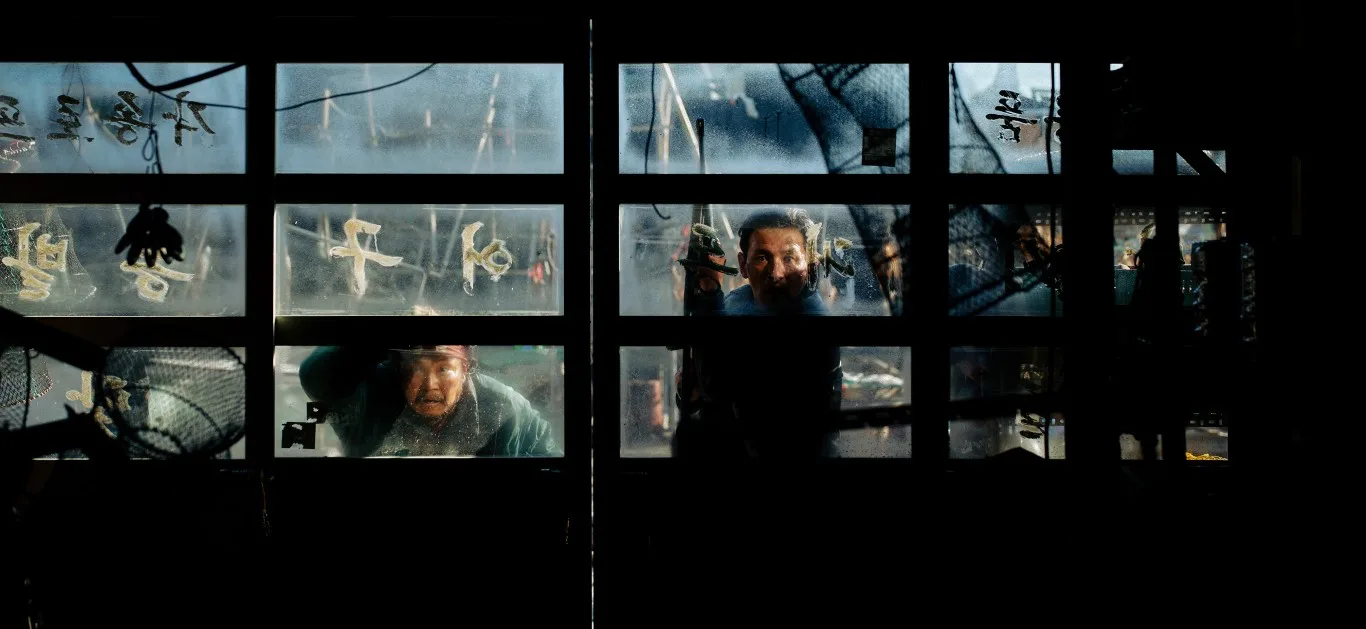
Director Na, I know you’ve described Paul Verhoeven’s “Robocop” as having a lasting influence on you as a creative and filmmaker. Given that the protagonists of this film are cops, I’m wondering if you found yourself drawing on that influence when it came to crafting the story here.
NH: At the time the movie was released theatrically in Korea, some of the really violent and graphic scenes had been edited out, such as the sequence where Murphy is executed. When I found out the version I was watching had those scenes removed, I knew I had to watch the film in its fullness. I learned you could watch those edited-out scenes through a laser disc version of the movie in Japan. So I found the laser disc, then found a friend who owned the player, and we watched it together.
I distinctly remember being so shocked when our hero was attacked and killed. In that process, we see body parts flying everywhere, and I remember being both shocked and impressed by Paul Verhoeven’s direction. When I watched this, I was an elementary school kid, so that shock stayed with me for a while. I probably couldn’t articulate it as well back then, but now, when I think about those brutal sequences and how RoboCop acts on his vengeance throughout the story, I realize how central catharsis is.
It’s not just catharsis, though, because as a whole, it’s a story that’s heartbreaking and saddening even if there’s triumph. There are so many complex emotions within that catharsis, and I think that complexity and how the film arrives there has served as an influence not just in this film, “Hope”–which I hope also makes you question the catharsis of the on-screen violence–but my other works as well.
When I look at “Hope” in conversation with “The Wailing,” so many of your characters have a preoccupation with bodies: how to dispose of them properly, how to care for the dead after they’ve passed. Can you speak about this throughline, particularly how you frame the improper care of the deceased as a kind of karmic act that will come back to haunt?
NH: From the aliens’ perspective in this story, just like the movie’s title, their only goal is to save this child, to find it, and to bring it to life. I thought it was interesting: what kind of person would find this important child, who represents a kind of salvation for the aliens? How would this child be introduced to the audience on the screen, and what is this child supposed to look like? I was drawn to explore the juxtaposition of royalty and commonality. Tying back to your opening question, there’s something almost nativity-esque in where we see the alien prince: in the muck and mire of the carpenter Yang-bae’s freezer.
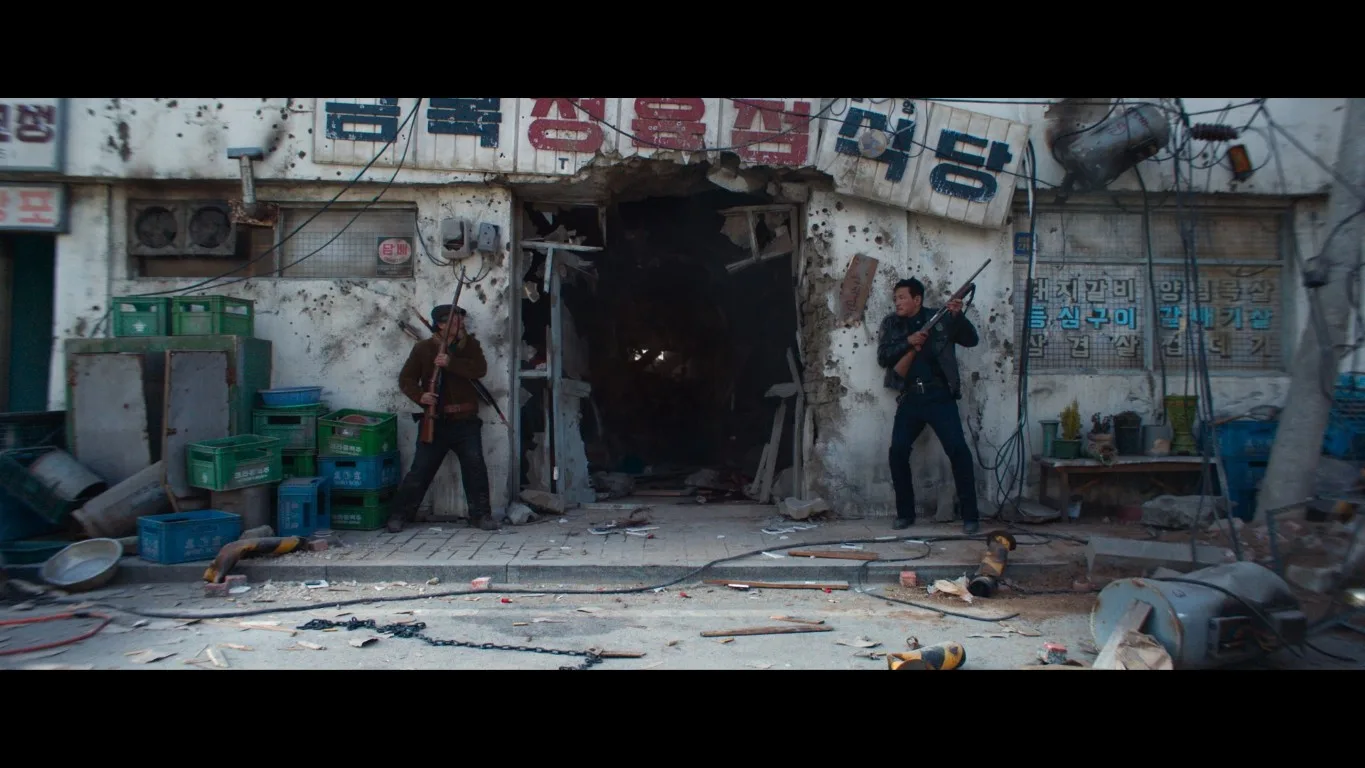
Hoyeon, in “Squid Game,” you play Kang Sae-byeok, a North Korean defector who crosses the South Korean border, while in“Hope,” you’re a police officer, enforcing the law. Throughout “Hope,” there’s this idea that’s pervasive about how we need to be wary of trespassers. Tell me more about playing characters on opposite sides, so to speak. I’m wondering if one informs the other and vice versa?
H: That is such an interesting point, I think, and honestly, preparing for this role, I wasn’t thinking about how Sung-ae and Kang Sae-byeok were inverted necessarily, but it’s something I’m going to be thinking more about, particularly in relation to the film’s themes about how we demonize “the other” to our peril.
With Sung-ae, she really tries to protect, maintain, and keep the line. Director Na has shared with me what’s at the core of my character: goodness or human goodwill. I thought it was interesting that she’s capable and someone who does so many things for the town … but what happens when a strong, clear, and simple sense of goodwill meets the reality of the real world, or at least a world of aliens? How does her conception of strength change?
I was fascinated to explore the contradictions and irony that could stem from her kindness meeting the situation she is in, because from the aliens’ perspective, she’s a destructive power. They don’t see goodwill. So I went into this film thinking Director Na really wanted to explore the themes of irony and contradiction that stem from differences in perspective.
What you’re saying is making me think about what Director Na shared with you to help you give insight into your character: “Isn’t Seong-ae the kind of person who knows how many spoons are in the village?” How did you internalize that line when it came to better understanding your character?
H: Obviously, Sung-ae is someone who does all kinds of chores and odd jobs all around the town. The reality is that in Korea, in many rural towns and smaller villages, very few, if any, young people choose to stay. There’s a large aging population but not many young people. What does it mean for someone like her to stay?
That’s the kind of character I interpreted her as. She’s someone who chose to stay there, and she’s simplistic–not in a reductive sense–in her desire for her community. I think that simplicity, or maybe purity is a better word, was important, and I think with the human characters you see in the film, director Na wanted to show how all of them as a collective, when put together, are not just a community unto themselves, but represent humanity writ large.
On one side, you have extraterrestrial aliens, and on the other, you have humans. So rather than director Na wanting to put or place multi-layered complexities to each human character, he almost gives them very simple and light characteristics so that way when all of them put together, you almost see one complex human being, one community as a whole.
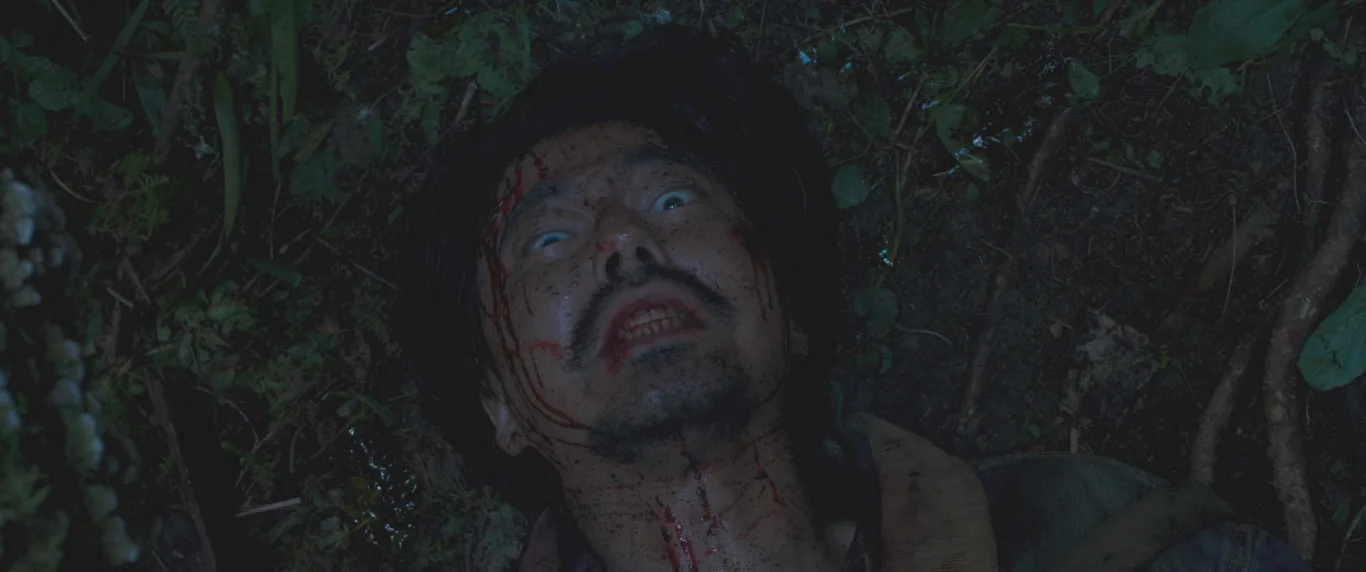
Your scene with Mr. Hae-sul–played by Im Hyun-sik–where he’s recounting his story about pooping in the woods is one of the film’s funniest scenes, and it only really works if Sung-ae takes him seriously. I’d love to hear more about filming that sequence, particularly because it acts as a microcosm of what director Na does so well: grounding humor in a foreboding ambiance.
H: (Laughs) It’s not any more secret because Director Na keeps saying this to everybody, but Im Hyun-sik is a legendary actor. He’s in his eighties, and so I was both nervous and excited to meet him. He’s a cute, adorable, and nice person, but the only thing is that he cannot memorize any lines. So we had a big monitor next to me, and we filmed that scene for two days.
It reminded me, in some ways, of your work as Jisoo in “Disclaimer*” because she has to take on a kind of confessional role.
H: You’re right; what you’re saying is making me think of my scene with Kevin Kline, because Jisoo, in that moment, is listening to a story from an elderly figure. I think the difference between Sung-ae and Jisoo is that Jisoo has duplicitous intent when listening to Stephen. She has her own ambition, ego, and sense of justice that affect her ability to be fully present and listen.
I think Sung-ae is more pure of hurt. When she’s hearing Hae-sul share the story, all of a sudden, she doesn’t even care about the monster anymore. She was so fully in it and radiated empathy.
I really love that scene in the hospital because we see the character more, even more so than when she first gets out of the car. You can see how she treats the elders in her town, which shows how, in her everyday life, she’s made being present for them a cornerstone. She’s been living her life “keeping track of the spoons in each household,” so you understand how severe her reaction is when she sees it threatened.
It’s a small moment, but in that scene where she’s tending to Hae-sul, Sung-ae doesn’t even look into his eyes until he brings up aliens. It’s one of the notes director Na gave: Sung-ae is so absorbed in trying to clean up his leg that she’s so focused on caring that she initially doesn’t even meet his gaze.
“Hope” is in theaters via NEON.