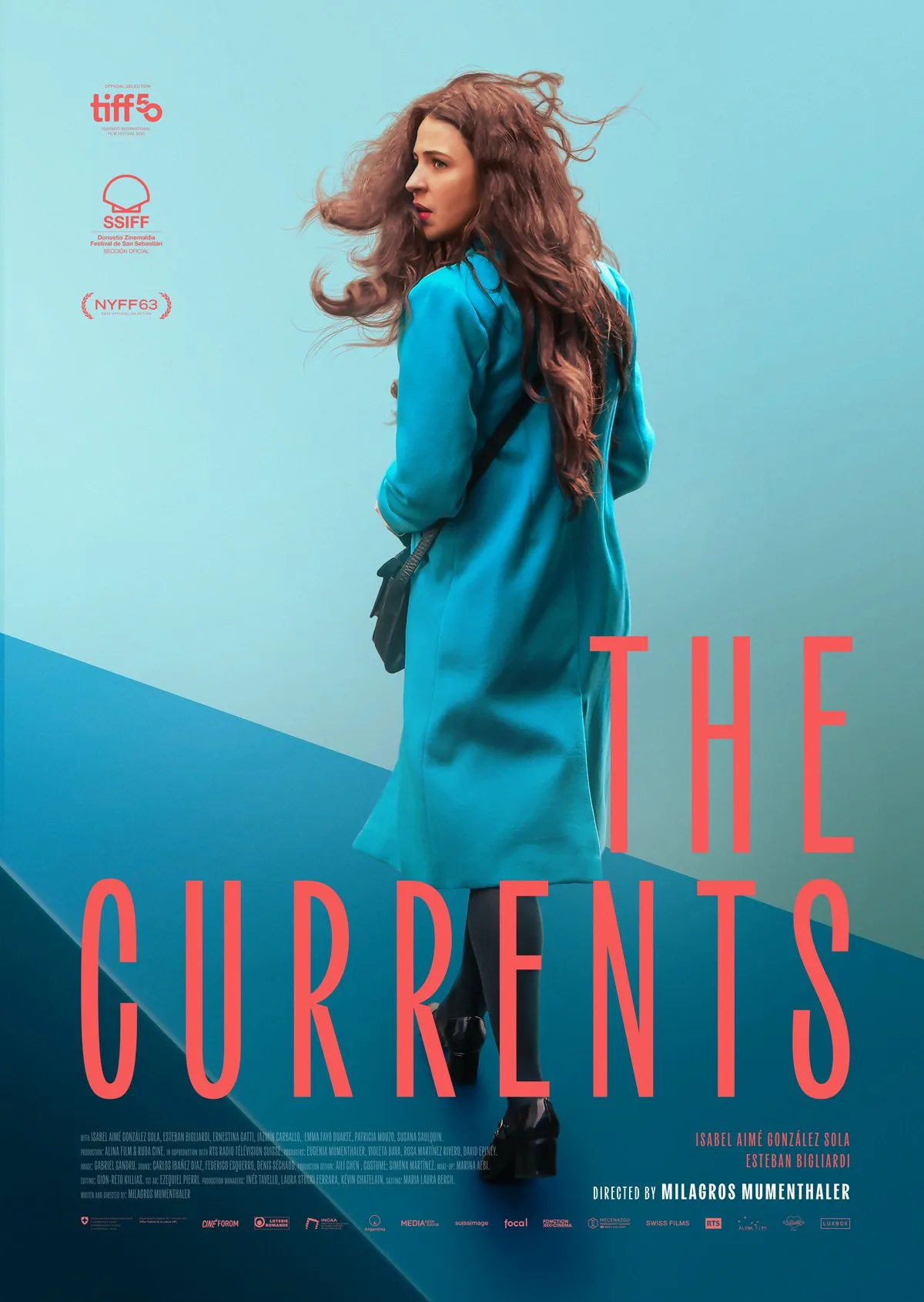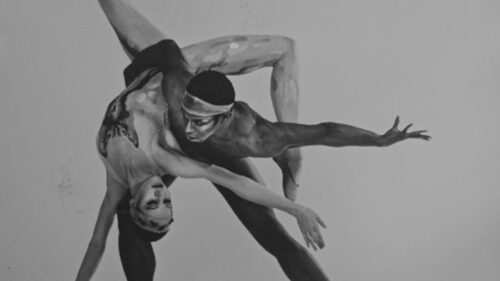
In Milagros Mumenthaler‘s “Currents,” a minor character has a small monologue about “romantic acts.” Lina (Isabel Aimé González-Sola), an artist or art director of some kind, talks with her assistant Julia (Ernestina Gatti) about an upcoming photo shoot. Lina asks Julia what a “romantic act” would look like. Julia mentions the Pre-Raphaelites and says:
“I see it as a way of being, a deep aspiration that’s necessarily mixed with frustration. And it’s in this empty space that romantic acts appear. I don’t know if they’re real. Or just an artifice to fill the void.”
“Currents” does not revisit this moment explicitly, but Julia’s words are everywhere implicitly. The locale may be Buenos Aires, but the landscape is, at times, eerily unpeopled. There’s a lot of “artifice” in Lina’s world: in fact, an entire life can be constructed only from artifice. The void, however, will not be filled; wealth and accomplishments cannot stave off the inevitable confrontation. The language for this important motif is given to a small character with barely any other lines. Mumenthaler’s oblique off-center approach makes “Currents” a strangely mesmerizing work, and up until almost the very end, its mysteries remain intact.
Lina is first seen in an extraordinary wordless opening sequence. She is seen accepting an award in a high-rise office space. Afterward, in the restroom, she throws the award in the trash. She wanders the city (Geneva). She is seen in a long shot walking on a pedestrian bridge over a surging river. Without any warning or hesitation, she climbs over the railing and jumps into the water. A bit later, she is dropped off at her hotel by the police, wrapped up in a Mylar blanket. Upon returning to her room, she turns on the shower and doesn’t step into the stall. The bottom drops out of “Currents” early.
When Lina returns home to Argentina, she does not tell her husband, Pedro (Estaban Bigliardi), what happened. Her 5-year-old daughter Sofía (Emma Fayo Duerte) is happy and oblivious. The suicide attempt in Geneva, if that’s what it was, seems like too central an experience to go unmentioned. We wonder how the woman of the first six minutes could possibly fit back into the life we see her living. She is already dangerously detached. Her ties—a loving husband and daughter—do not bind her. Even though we have no context for Lina besides the opening (and the opening is the only context that matters) we too can sense something is “off,” and Pedro’s concern is understandable. She stops showering, instead spongeing off her armpits, and dipping her long hair into the sink. Her hair gets thicker, unruly, spilling over her shoulders, over the back of the couch. Pedro notices. Sofía notices, too, in her childlike, anxious way.
The film exists in gaps of understanding. This could be frustrating for certain kinds of audiences, but for others, “Currents”‘s willingness to suggest, rather than show, to create echoes rather than draw verbal conclusions is the film’s main source of power, along with Aimé González-Sola’s performance, a marvel of depth and opacity. (The “reveal” late in the film of the potential source of Lina’s “trauma” is a disappointment. “Currents” is so strong without explanations.)
Lina’s dissolution is simultaneously a reclamation, a gathering of interior forces. Lina continues wandering, and everything she encounters seems to have a message if she could just get close enough to understand. During a photo shoot, she finds herself in a basement, first drawn to the sound of a studio percussionist, then to the sound of a sewing machine in a nearby workroom. These moments pass with no dialogue. Lina doesn’t experience these things as much as she falls into them. Any information we receive has to come from Aimé González-Sola’s solemn, unnerving face.
There are certain scenes where Lina, in repose, sitting in her window staring out at the trees, or lying back in a white chair, hair spread out around her, evokes pre-Raphaelite paintings, like Dante Gabriel Rossetti’s “Lady Lilith,” John William Waterhouse’s “The Lady of Shalott,” or John Everett Millais’ “Ophelia.” These famous soft Amazons, draped in their cascading hair, are often depicted in the act of drowning themselves. Lina’s pre-Raphaelite “affect” is a deliberate visual choice, calling back to Julia’s “romantic acts,” and operating on a subterranean level.
On the surface, Lina’s phobia of water seems to stem from her plunge into the river and the struggle to save herself. But a secret visit to a childhood friend, now a hairdresser, presents other intriguing possibilities. The working-class Amalia (Jazmín Carballo) calls Lina “Cata,” suggesting that Lina has “detached” herself from her life before by changing her name. What the two old friends do in the salon’s back room has a ritualistic quality, familiar to both of them. Lina’s avoidance of water pre-dates Geneva.
Imogen Smith wrote a beautiful piece for Criterion about women walking in cinema, examining, among other films, “Elevator to the Gallows,” “La Notte,” and “Cléo from 5 to 7.” I’d add to that Jack Garfein’s “Something Wild,” and Lili Horvát’s “Preparations To Be Together For An Unknown Period of Time”: films where a woman “cuts ties” from her life, shedding familiarity, shedding selves, wandering out into the world, context-less and unmoored.
“Currents” most closely calls to mind Todd Haynes’ “Safe,” although Lina’s “sickness” takes on a more exalted, even transcendent, shape. The currents are strong, and the water is deep.