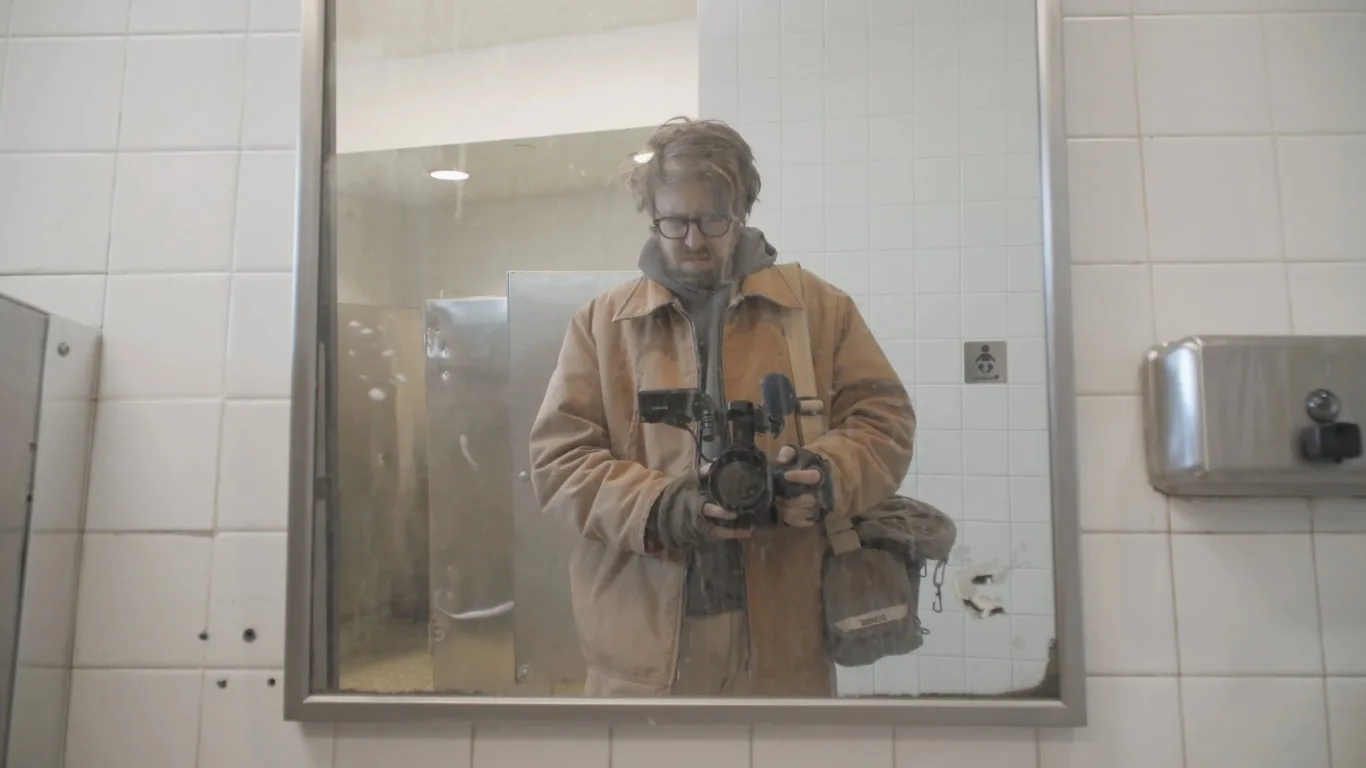
“It’s embarrassing to know so little about something that occupies so much of your visual environment.” A little over ten minutes into his film, “The History of Concrete,” director John Wilson shares these words in praise of that very material that so many of us trample on without thinking twice. His project offers that second look, a reminder that there’s no better way to move through the world than to be guided by curiosity, bolstered by the hope that stories can be found in the most unlikely places.
Wilson operates from a place of disarming honesty and, at the start of his film, admits that the success he got from the comedy docu-series “How To with John Wilson,” like the blemishes of gum on the NYC pavement, isn’t without its blemishes. In the midst of a difficult search to find a worthy follow-up project, he attends a workshop on how to write a Hallmark movie.
After watching one film called “’Twas the Date Before Christmas,” which tried to “fit a romance inside of a topic as unromantic as affordable housing,” he decides to pair the tried and true tactics of Hallmark movies with a subject that might test the limits of their effectiveness: making a project about concrete.
As is par for the course for Wilson’s projects, his work starts as one thing and quickly finds itself off the beaten path, touching on everything from the unique grieving rituals (key words: “tattooed flesh embalming”), the terrifying infrastructures (the BQE bridge) that we have made peace living with, and ultimately, about the things in life that will last and what’s worth patching up.
For Wilson, the film continues his commitment to finding interesting stories rooted in things most people would often overlook (or, in the case of concrete, just step over). “I’m a maximalist in a lot of ways, and I think being curious makes you less bored,” he shared.
As “The History of Concrete” expands, RogerEbert.com spoke with him about humanity’s penchant for creating new grieving rituals, the virtue of curiosity, and the discernment process behind a project like this, with so many footage options to choose from.
This conversation has been edited and condensed for clarity.
You port over your same “don’t show the host, only play the voice,” tactic from “How To with John Wilson.” Tell me more about your approach to narration, since when you’re recording your words, they’re divorced from where you were when you filmed the footage.
John Wilson: It can be quite fickle and dependent on mood. It’s very much a Jacob’s ladder type of process. In the case of something like my show, I usually start with a title, then try to shoot a few things relevant to the title itself.
So with something like “The History of Concrete,” I wanted to “get all the vegetables” out of the way, so to speak, which is why I included a couple of students who knew the difference between cement and concrete and could explain it. As I’m shooting, certain things will either happen to me in real life or will enter me emotionally, and I will need to write that into the script. I will look at all the footage and write a script on top of it so I’m constantly editing, writing, and shooting at the same time.
I’m wondering about how you choose to match footage with your words because the ways in which what we see on-screen contradicts what’s spoken–and when they align–are fascinating to take note of. The scene where you talk about the poor foundations of buildings like your gym is “making people really upset because the city doesn’t seem to acknowledge the problem.” You intersperse that with a humorous video of someone mollywopping an exercise ball.
That’s an example where it helps to have something as uniquely specific as that visual to build around. I started with this desire to use the shot of the gym flooding, then I was thinking, “Okay, what else do I have from this environment?” That is kind of the template I use for the sequences you see in the film going forward: I have a kernel of an idea, and then I try to either find something I already have or shoot something new that adds a punchline. I try to use the rule of threes when I can when writing certain sequences, but you don’t always need a punchline at the same time.
On that note of discernment, you talked about how, when making a feature, there are no time constraints apart from “consideration for the audience.” With your show, you were constrained by the straitjacket of twenty-eight minutes, but what guides you and editor Cori Wapnowska’s process when you have a cornucopia of footage to work with?
That first cut is really messy and has everything in it, and when I’m looking at what I’ve assembled, I am able to see the whole picture, where the actual emotional turns are and what the plot is. That version of the film also helps me determine which strong sequences, in isolation, I can build the film around and what can support the crescendo to those moments.
I try not to have any redundant revelations or ideas in the film. The temptation can be to double up, but I try to hold fast to that. If I repeat any beats, I want to reveal slightly different information in whatever comes next. For the most part, even if an interview feels like a non-sequitur, it needs to rhyme with something else in the film, or its inclusion needs to strengthen the film thematically by reinforcing a particular metaphor.
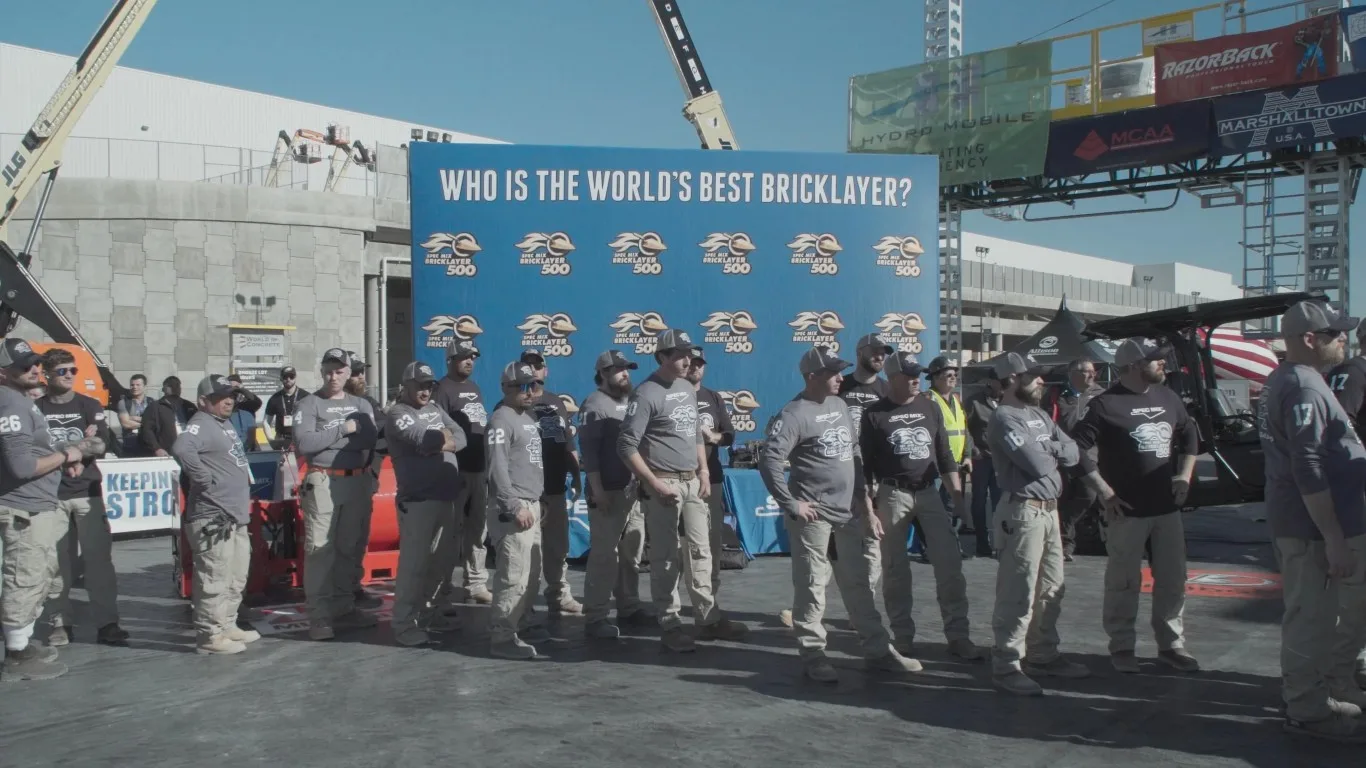
For example, there’s that sequence where I document a military exercise that takes place out of a high school at one point. You can take that as just an observation that I happened to tag on, but some of the intentionality there was to show how that fits in with this recurring theme of rule-following, our obsession with structure and order, and what it is about ourselves as a species that we feel a need to be told what to do.
Beyond those questions, one thing that felt like it unified “The History of Concrete” was your documentation of how people cannot help but use rituals to process grief and loss. It’s such a small part of the film, but I’m struck by that community that held a vigil for the fish that were killed when their pond was filled with concrete.
Yeah, I mean, we showcase Chef Boyardee’s grave here. I think death and fatality is a kind of recurring background theme in a lot of the work that I end up making. I think that there can be the death of a physical person, but I think there’s the death of civic space and these larger industries around us all the time, and we have different ceremonies for that. It feels like the new public ceremony is almost “protest for mourning.”
I feel like there are cultures that just kind of put you in a pine box, and it’s very unflashy, but then you have this industry of tattoo preservation where it feels like you’re mummifying somebody. I like, I’m constantly debating in my own life whether or not I should be sad about something disappearing or if I should be trying to figure out ways emotionally to deal with the disappearance of something. Looking at the different ways that other cultures grieve is a big part of that education.
Doesn’t it feel overwhelming, though, to know how to properly lament when it feels like the scale of things we should mourn for outstrips our ability to comprehend what we might be losing?
Yes, but this movie is dealing with a thousand-year timeline. I’m trying to acknowledge humans as grains of sand in this endless, infinite time. I try not to zoom out too far just because I need to keep the point sharpened to a degree.
It makes me think, though: what does a thousand-year city look like? How are we to live our lives on Earth knowing that we only have so much time here? It seems like many people’s answer is to engage in cyclical behavior. Is that something market forces determine and force on us, or something we naturally do to get through existing? I wonder if there’s a better way.
It ties back to that line your subject mentions about the BQE’s crumbling infrastructure: “We’re aware of a flaw but are incapable of stopping it.”
But are we really incapable of stopping it? I ultimately try to contain myself within a timeline that I can mentally comprehend, but that yields its own interesting challenges. It’s funny, because I was talking to the people who were in the tattoo preservation business, and I asked a couple of people in different interviews that weren’t in the movie, essentially, “What do you plan to do with this [business] after you pass away?” There’s no plan for that.
It becomes this act of kicking the can of preservation and legacy just further down the road. think people tend to think within a hundred years of their life, usually, or maybe even less. I think that’s mostly what you can comprehend because when you start to think about 10,000 years from now, it’s just like, “Why am I doing anything?”
When I look at your projects and the way you deploy humor, you often use it as a kind of weapon to subvert the dynamics of who holds power. By highlighting the absurdity of our existence, your humor calls into question the aforementioned market forces that shape our lives. How do you feel this idea has expanded with a project like “The History of Concrete?”
I think about that all the time. I try to be right on the razor’s edge as often as I can of what’s okay and what’s not, because I think that’s where a lot of the best comedy and art lies. I think humor can be an instrument to speak truth to power, and if I’m punching, I always try to punch up. I think there are some obvious villains out in the world that everyone can usually laugh at, whether it’s a cop doing something funny or even just the mayor, no matter how popular the mayor is. I think it’s pretty timeless to have an antagonistic relationship with the mayor in certain ways for a lot of New Yorkers.
Landlords too, which, as you’re a landlord, speaks to your willingness to fall on the blade yourself.
Yeah; I occupy a complicated place within the city that I acknowledge, and I try to lacerate myself in equal measure to a lot of the people within capital “P” politics.
I’m speaking to you in the middle of TIFF, and there’s a film that premiered, “Babies,” where a character played by Seth Rogen critiques the ways we praise babies for being “curious” when the only reason they’re curious is that they don’t know anything.
(Laughs) Yeah, I can relate.
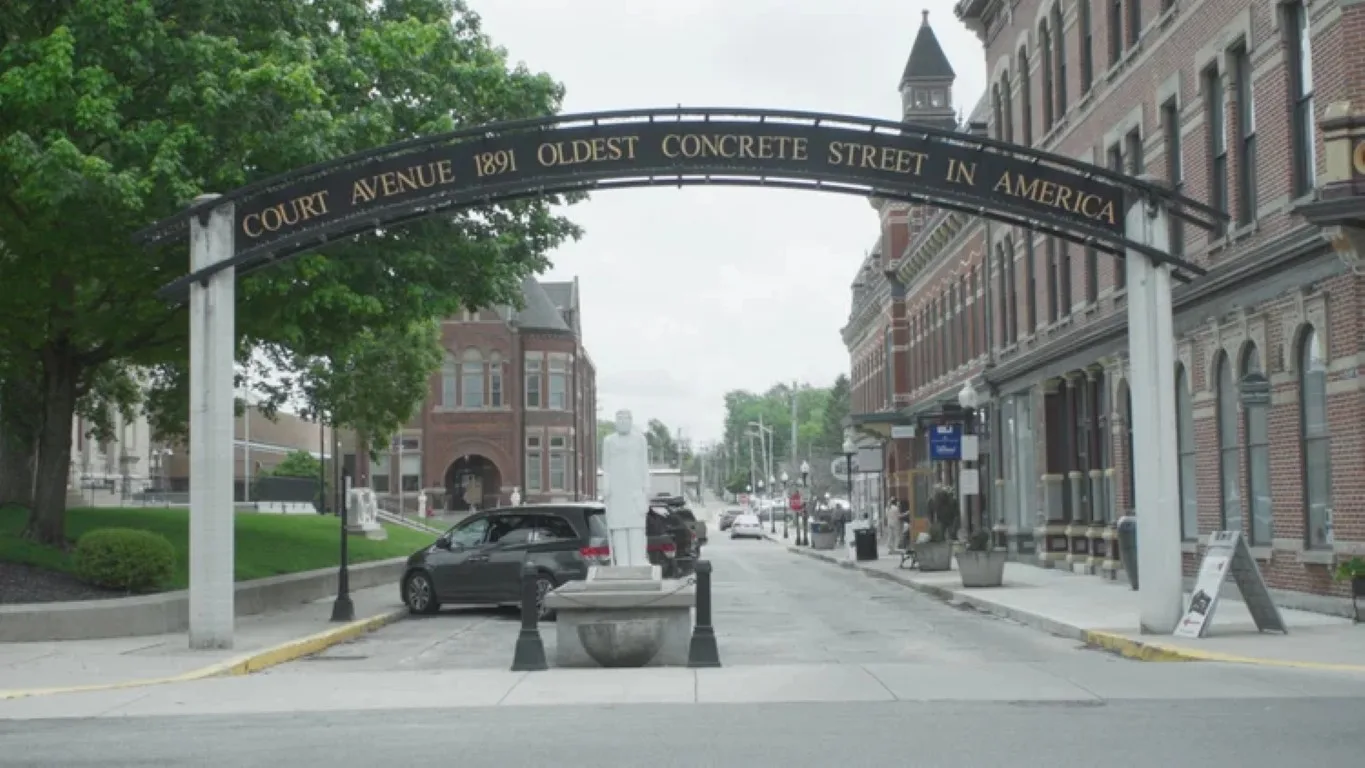
That connects in some ways to what I feel is the thematic spine of this project because you say this line. “Once you’re used to something, it becomes kind of hard to change your lifestyle without external pressure.” It’s so easy to move through the world, simply accepting things as they are, and we lose that childlike curiosity. What helps you stay curious?
I tend to try to just run in a direction that nobody else is running in. I feel like I can’t work fast enough a lot of the time. There are just so many interesting and funny things to comment on and to explore within human relationships, and humanity’s relationship with the environment. You can literally pick anything … you can throw a dart at a board of words and just pick one, and then that’s your new obsession. You can find a galaxy within any one of those things.
There are a lot of things I want to see fixed in the city. I think a lot of New Yorkers have a signature thing they gripe about, and it ends up consuming their lives. Making art about something you would like to see improved will never get old.
In so many ways, I think part of me feels like I accidentally made this movie, and other parts of me feel like it was always meant to happen. I think it’s surreal that we’re talking about it right now and that what I’ve crafted is in any condition to analyze. I’m a maximalist in a lot of ways, and I think being curious makes you less bored. It makes you actually understand your environment rather than just passively walking through it.
Waking up from the matrix can be frustrating, but it’s also cool because it connects you with other people. I don’t know; meeting the world with your curiosity renews your faith in humanity in a certain way and helps you engage in things that you weren’t engaged in before.