An early September sky was filled with delightful clouds, as if paying tribute to the Lucas Museum of Narrative Art’s design which, according to the museum’s own website, was conceived “as a sculptural, organic form shaped by light, clouds, and the surrounding tree canopy.”
Our invite came with two warnings: Don’t line up early and lightsabers would need to be checked. Stormtroopers and Darth Vaders had to sacrifice anonymity. Mandalorians had to face banishment and prepare to become outcasts (or book bath time in the sacred waters beneath the mines of Mandalore). In the fine print of the invite email, we were warned: “Masks or paint that obscure faces and costumes that trail or pose tripping hazards are not permitted.” The invite advised that the dress code was “festive,” so we attended as Han Dynasty Solo and Princess Lei Aloha.
The view from the fifth floor is lovely. You can also see the sculpture garden which I would see later in the weekend in the daylight. The snacks were relatively healthy: cheese breadsticks, nuts and M&Ms mix, and popcorn–all in individual serving packets. Of course, there were beverages, alcoholic and otherwise. There’s a restaurant on that floor, but it was closed, only serving the same snacks and drinks. We saw at least two people got past security with lightsabers and tried a mock fight which was quickly stopped.
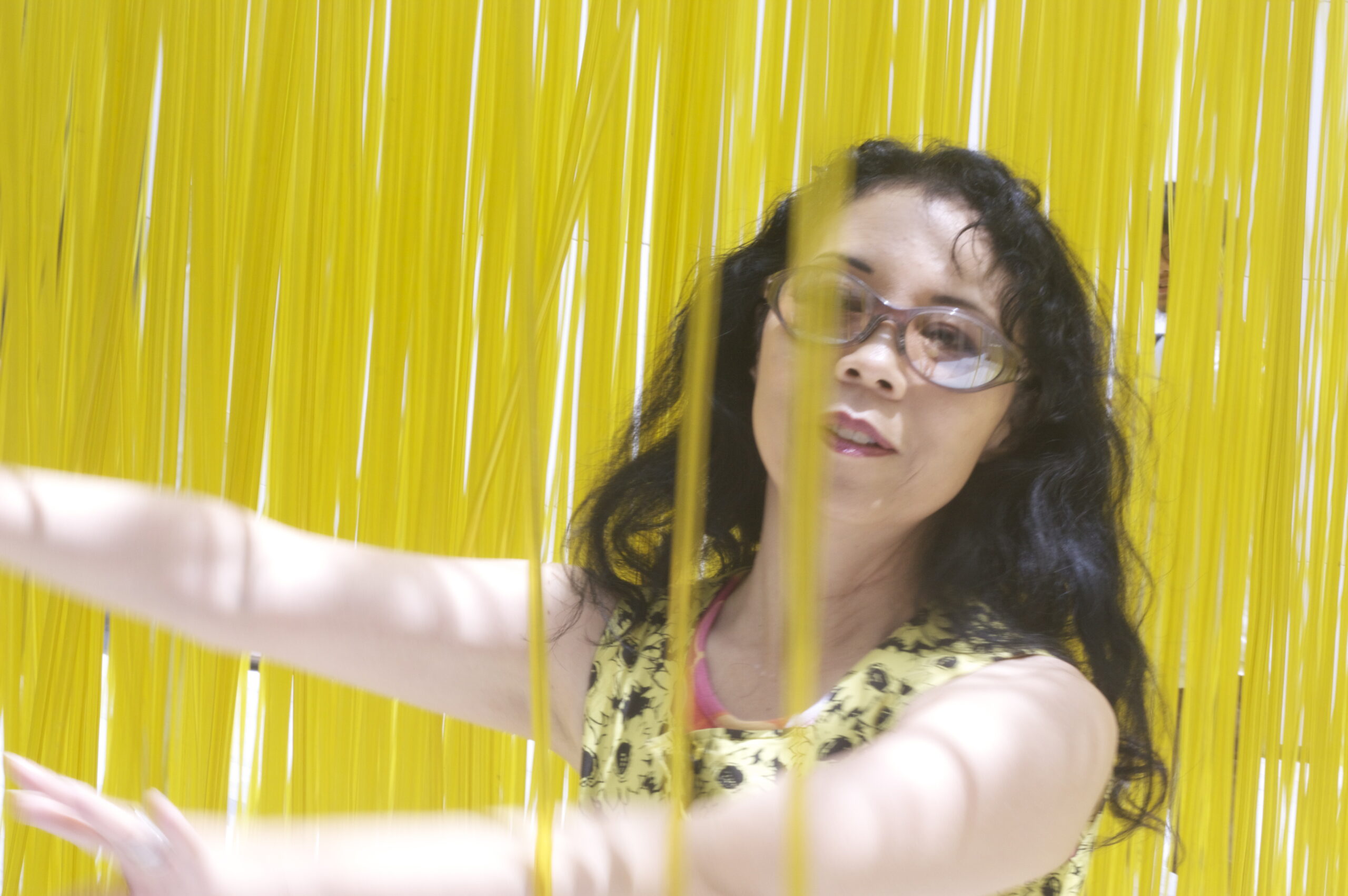
While we were there, my husband and I were the only ones dancing. We requested tango, but none was to be found. Although we were offered salsa, we left before it played, beginning our exploration in the mural gallery. We saw a good explanation of the LA River mural (artist Judith F. Baca’s “The History of California”) and some modern works including some by the mysterious Banksy. Then we took the stairs down to the fourth floor where we explored several themed groupings but then got in line for a souvenir photo that put us into one of the art pieces.
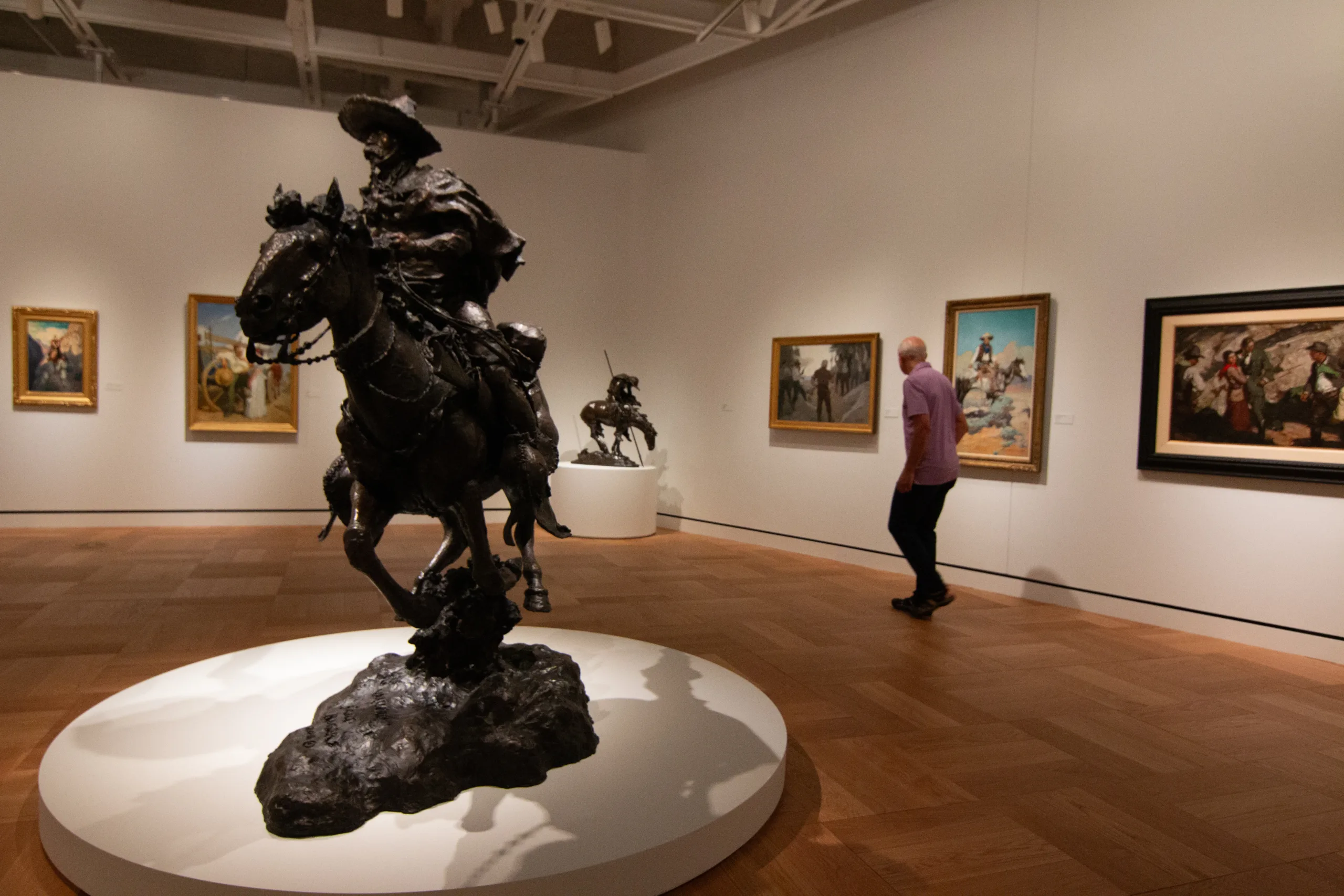
One of the best exhibits was centered around the 3D model of the Lucas Museum design. Ma Yansong of MAD Architects was the design architect, while Studio-MLA was the landscape architect. On the surrounding walls were photos of other similar buildings to contextualize the Lucas Museum design from a global perspective. Context is everything.
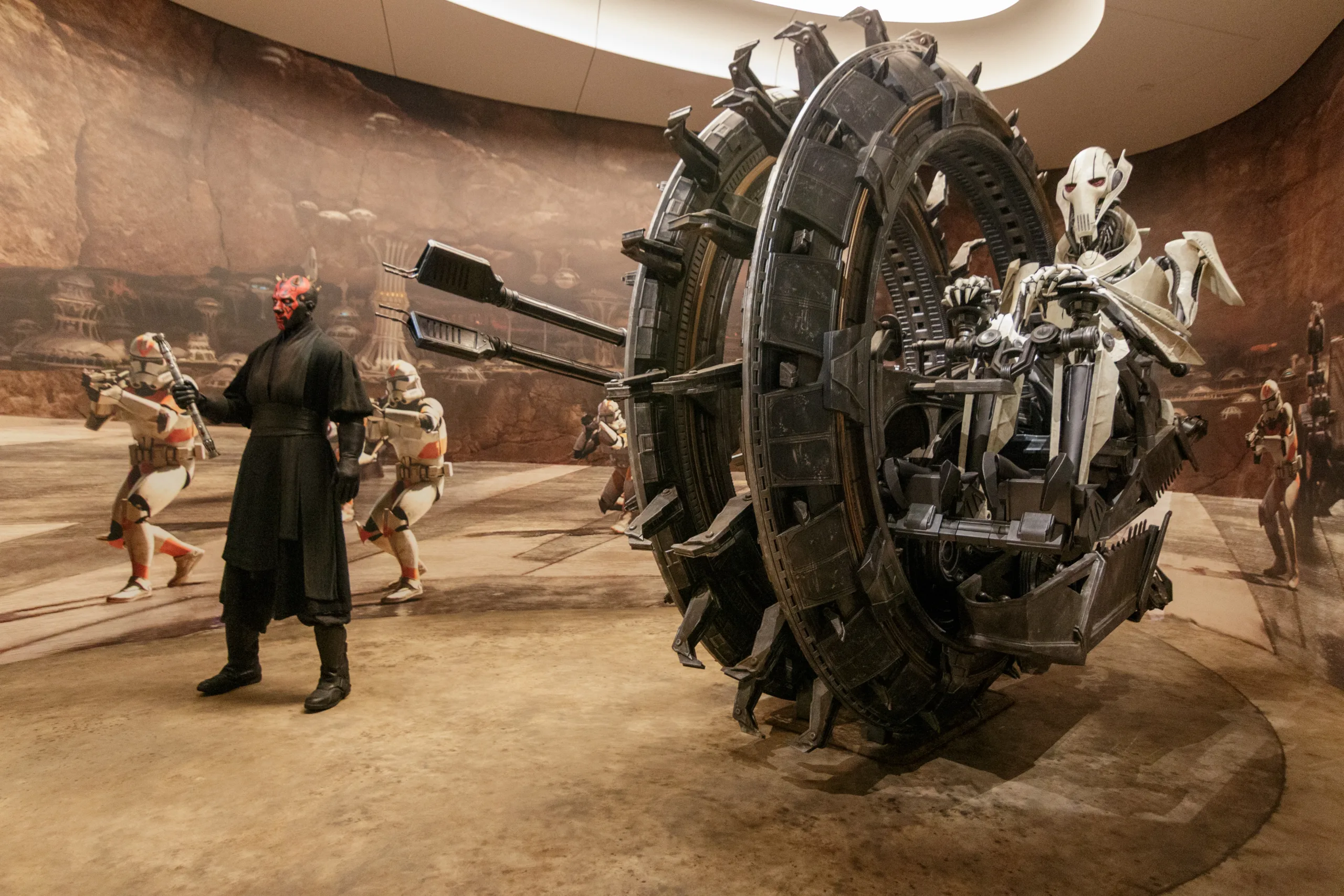
Monday morning, we ventured again to the Lucas Museum for a slower and more measured look at the displays. The biggest problem we found was a lack of perspective and contextualization. I chuckled when I heard the volunteers sending people to the “Star Wars” section which was actually labeled “Cinema.” The exhibit, “Star Wars in Motion,” features vehicle designs, props, costumes and illustrations from the first six Star Wars films.
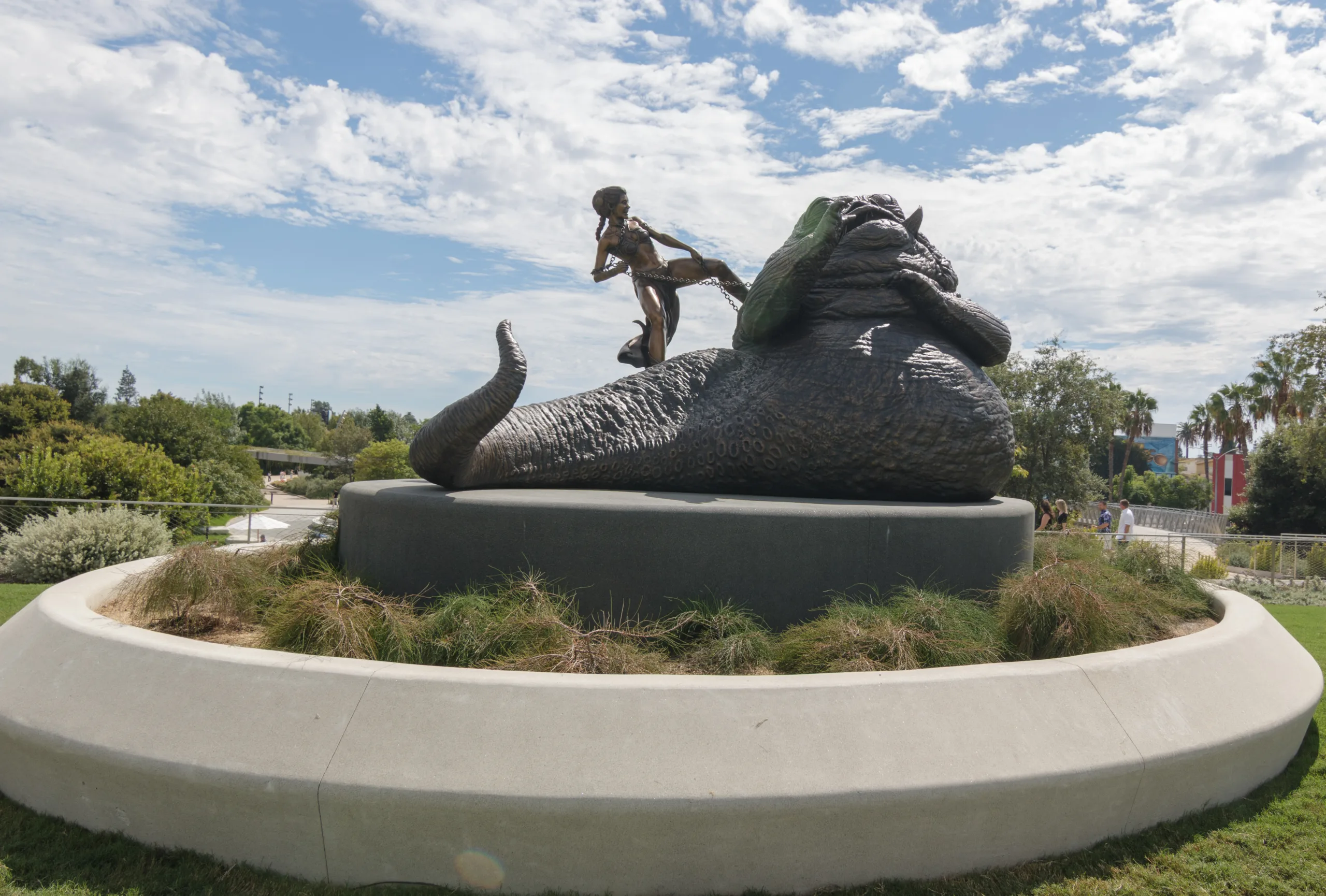
We were blessed with beautiful skies again on Monday afternoon, but it was unusually humid for this time of year in Los Angeles when we walked through the sculpture garden. The sculptures include Lawrence Noble’s “Eadweard Muybridge with Camera” (2025, Bronze) and his “Willis O’Brien” (2025, Bronze). O’Brien was the stop-motion animator who did the 1933 “King Kong.” Noble also did the 2025 bronze, “The Introduction” which portrays Yoda and Grogu. There’s also “David after the Combat” by Antonin Merciē, depicting the victory of David over Goliath as well as the 2015 “Maternity” by Fernando Botero. Yet the most photographed is the 2025 bronze by Mark Newman and Giovanni Nakpil, “Princess Leia Frees Herself from Jabba the Hutt,” commemorating a scene from “Star Wars Episode VI: Return of the Jedi.”
The Lucas Museum of Narrative Art was co-founded by George Lucas and Mellody Hobson. The original proposed site was Chicago, then San Francisco before it came to Los Angeles’ Exposition Park where, on one side, it overlooks Natural History Museum of Los Angeles County (which served as the primary exterior filming location for the fictional Jeffersonian Institute in the TV series “Bones.”). The museum is walking distance to the University of Southern California, where Lucas studied, met and became friends with fellow student and filmmaker Steven Spielberg, and earned a bachelor’s degree (1966).
Lucas remains connected to USC. He donated $175 million to the film school in 2006 to fund new buildings and endowments and the George Lucas Family Foundation continues to support student scholarships and diversity programs at USC. Being near USC makes sense in that respect.
Hopefully, the museum will find its direction and there will be gatherings of fans of different aspects of arts and even a lightsaber celebration or two in areas such as the gardens.
The Lucas Museum of Narrative Arts is currently open. For tickets or more information, visit LucasMuseum.org.