George W. Bush and Mike Tyson in “The President’s Speech”
var a2a_config = a2a_config || {};
a2a_config.linkname = “Roger Ebert’s Journal”;
a2a_config.linkurl = “http://blogs.suntimes.com/ebert/”;
a2a_config.num_services = 8;


var a2a_config = a2a_config || {};
a2a_config.linkname = “Roger Ebert’s Journal”;
a2a_config.linkurl = “http://blogs.suntimes.com/ebert/”;
a2a_config.num_services = 8;

And yet, all the same, there is much to be said for Simon’s words. I understand where he’s coming from. I’m not in sympathy with where he’s going.
The goal, I suspect, is to encompass the whole range of good movies, and despise the unworthy ones. The complete film critic must be large; he must contain multitudes.
I had completely forgotten this experience. I marked Gene Siskel’s birthday on Saturday by tweeting links all day, and that shook some new discoveries out of the branches.
Thanks for the link to Jerry Taylor.
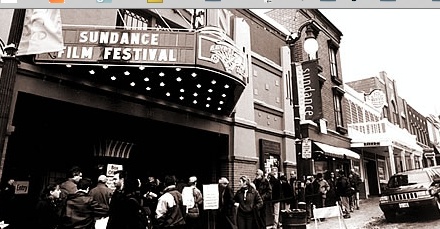
July 5th, 1981
The 1st Annual Sundance Festival
By Roger Ebert
Robert Redford’s experiment: a struggle for independents
Sundance, Utah–Up here above Provo, in the resort he has carved out of a little mountain meadow, Robert Redford is conducting an experiment that Hollywood regards with a mixture of suspicion and curiosity. He has selected 10 low-budget films that are in the middle-to-late stages of preparation and invited their directors to spend the summer at Sundance working on their scripts in the company of established directors, writers and editors.
On the surface, this seems like an admirable and uncomplicated idea, a cinematic summer camp at which you bring home a screenplay instead of a woodcarving and an Indian belt. But the movie industry is not so sure. Rumors float around that Redford is starting his own studio, that his dream is to be a major producer of independent features, that just as Francis Ford Coppola wants his own major Hollywood studio, so does Redford want his own mini-¬studio here on the mountain he is developing.
The truth is apparently somewhere in be¬tween. Redford says he has no desire to produce personally any of the movies that are under construction at Sundance. But he might hope that eventually the Sundance Institute, a non¬profit foundation headquartered here, will be¬come a clearinghouse for independent film¬makers working outside the studio system. There are countless summer writers’ workshops nestled away in the wilds of Vermont and Iowa – why not a workshop for filmmakers?
There is one difference: The filmmakers at Sundance did not pay to attend. After their projects were selected from more than 100 entries, they were invited to settle down in residence here at the expense of Redford’s institute and several foundation grants. The facilities are spartan. The filmmakers are guests in several condo-cabins squirreled away in the hills above Sundance. Meals are served buffet¬-style in the small lodge building, and movies are scrutinized in a garage that has been converted into a screening room. There are videotape facilities at Sundance, and some of the film¬makers are conducting trial runs of their mate¬rial by taping some of their scenes.
None of the footage shot at Sundance will turn up in the finished films. It’s all preparation, rehearsal and deep thought up here, reflecting Redford’s personal belief that independent fea¬tures will not make greater inroads at the American box office until they are (hold your breath) of higher quality.
This is probably true. Most independent American films are made on very low budgets (from a rock bottom of $20,000 for “The Whole Shootin’ Match”, through a middle range, of $75,000 for “Return of the Secaucus Seven”, up to a high of $1.2 million for “Heartland”). Most of them lack well-known actors, although very occasionally a famous actor will lend himself to a project. Most of them have limitations on locations, special effects, costumes, period de¬tails and scenery – because film is the most expensive art form except for grand opera.
But most of all, Redford believes, most of them could benefit from more intensive pre¬production work – things like script revision, close analysis of the story, and an occasional pointed question about the worth of it all. Because independent filmmakers are often the only people who believe in their projects (or even care about them), they are sometimes inclined to treat a film as a crusade rather than as a work in progress.
This first summer at Sundance is highly tentative. Redford and his associates say they are uncertain about exactly what they hope for from the experiment. “We started this with no rigid expectations,” Redford said over lunch in his small office at Sundance. “They say I’m starting my own studio, I’m challenging the studios… Actually, I have no idea what this will turn out to be. I know that it’s getting increasingly hard to get a movie well distributed in this country unless it has the potential to make millions of dollars. I think these projects here have a lot of promise, and I guess the idea is that they’ll turn out better if the filmmakers have the opportunity to work on them with some experienced professionals.”
Independent filmmakers got a boost here in Utah three years ago with the founding of the U.S. Film and Video Festival, which is held every January in another ski resort, Park City, and specializes in independently produced fea¬tures. Now maybe Sundance will help generate independent films to be shown at Park City.
The problem, however, is not getting a new low-budget movie shown in Park City. The problem is getting it shown anywhere else. Two weeks ago, as part of his summer-long institute, Redford held a weekend conference of most of the major exhibitors and distributors of “specialized” films – a category that includes independent U.S. features, foreign films, “art films,” cult films, revivals and almost anything else that isn’t a big-budget, first-run standard Hollywood production.
Most of the independent exhibitors and dis¬tributors accepted Redford’s invitation, and it was astonishing, seeing them all together in the same place, to realize how few of them there were. The big studios and the big movies dominate play dates on most of the nation’s movie screens, and there are only a handful of houses in most cities that will even consider booking a “specialized” film. Some 45 theater owners, bookers and distributors sat in the bright sunlight in the meadow at Sundance and agreed, almost without discussion, that:
-There are only seven or eight cities in North America in which a “specialized film” can get a decent booking and have any chance of a good run. They are New York, Boston, Washington, Chicago, Toronto, Los Angeles, San Francisco and, surprisingly, Seattle, which is the best city in the country to open a movie that’s out of the ordinary.
-College campuses used to supply large audi¬ences for foreign, art and underground movies, but these days the kids go for action blockbust¬ers like “The Empire Strikes Back”, just like everybody else.
-Big chains are completely uninterested in booking offbeat films. Like supermarkets, they’re concerned only with the turnstile. Chains with four- or six-screen multiplex the¬aters don’t even consider booking one of the screens with specialized films.
-Unless it’s a rare breakthrough like “La Cage Aux Folies”, foreign films are up against a wall at the American box office. There are only about 100 theaters in America that will book a serious, subtitled film, even if it’s by Ingmar Bergman or Federico Fellini.
-There is still a market for specialized films among local and campus film societies, but the backbone of that market, rental of movies in 16-mm. prints, is being under-minded by the widespread and illegal practice of videotaping movies and then showing them on video cas¬settes instead of renting them again. (Almost every campus in the country rips off films that way, it was agreed; even, though they’re break¬ing the law.)
-Exhibitors talked about the “strong want¬-to-see” factor that fuels blockbuster hits like “Superman II”, contrasting it with the curious “desire not to see” that handicaps specialized films. The average moviegoer is under 25. Ten or fifteen years ago, young moviegoers were more enthusiastic about offbeat, anti-establishment independent and foreign films. Now they are much more conformist. More sophisticated big-¬city teen-agers who once attended films by Jean-Luc Godard have now regressed to the level of “Friday the 13th, Part II”. Today’s young filmgoers have a herd instinct and are reluctant to take a chance. In a sense, they “wear” movies like they wear clothes, attend¬ing a movie that their fashion-sense suggests will look good on them.
The outlook, everyone agreed, was gloomy. Various alternatives looked just as, gloomy. Public television stations like New York’s WNET have attracted large audiences for prime-time telecasts of quite esoteric indepen¬dent films, but TV exposure, an exhibitor complained, removes the aura of a “special event” that a movie must have for a theatrical booking.
The brightest ray of hope at Sundance came from Seattle, where there are 13 theaters successfully showing specialized films. (By contrast. Chicago has only two first-run houses, the Biograph and the Sandburg, two showcase operations in Facets and the Film Center, occasional specialized bookings at the Three Penny, and several reper¬tory theaters.) Seattle used to be a lousy town to open an art film – everyone agreed – and the secret to its success was creative exhibition. Audiences were lovingly nurtured, leafleted, mailing-listed and cajoled. Lacking effective coming-attractions trailers, some exhibitors sim¬ply got up with a microphone and told their audiences what was coming next week, and what they thought about it.
No firm conclusions were reached at Sun¬dance. Various visionary schemes were suggest¬ed to establish a national support network for independent features – but without a steady supply of good movies in the pipeline, it would have trouble supporting itself. Success stories were recited about the few breakthrough films like “Secaucus Seven”, “A Woman Under the Influence”, “Penitentiary”, “Gal Young Un” and a handful of foreign hits. Everyone agreed that if there were more good films, there would be larger audiences. But statements like that tend¬ed to lead into winsome silences.
Meanwhile, up in the hills in their cabins, Sundance’s filmmakers-in-residence were work¬ing on their scripts. They were consulting every day with experienced professionals such as director Sidney Pollack (“They Shoot Horses, Don’t They?”), screenwriter Waldo Salt (“Midnight Cowboy”), cinematographer Caleb Des¬chanel (“The Black Stallion”) and actress Amy Robinson (“Mean Streets”). Would 10 really fine independent films come from their labors? Maybe. Maybe five. At least it is a noble experimentt

I was there before the Beginning, in January 1981, for the third annual Park City Film and Video Festval. I wrote Sundance before it was Sundance .
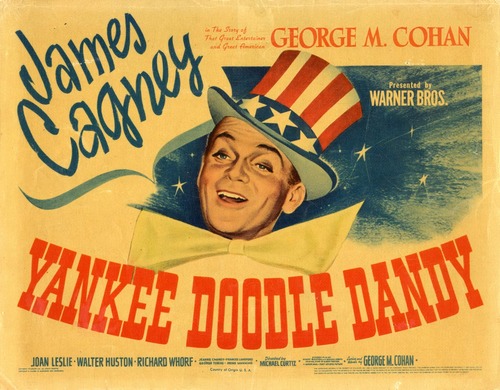
Spike Jones – I’m a Yankee Doodle Dandy by perruche
My Great Movie review of Yankee Doodle Dandy, which won James Cagney an Oscar.
var a2a_config = a2a_config || {};
a2a_config.linkname = “Roger Ebert’s Journal”;
a2a_config.linkurl = “http://blogs.suntimes.com/ebert/”;
a2a_config.num_services = 8;
When Harry Met Sally 2 with Billy Crystal & Helen Mirren from Billy Crystal
Surely one of the web’s funniest sites is Funny or Die. .
var a2a_config = a2a_config || {};
a2a_config.linkname = “Roger Ebert’s Journal”;
a2a_config.linkurl = “http://blogs.suntimes.com/ebert/”;
a2a_config.num_services = 8;
Internet Scout: Larry J. Kolb
var a2a_config = a2a_config || {};
a2a_config.linkname = “Roger Ebert’s Journal”;
a2a_config.linkurl = “http://blogs.suntimes.com/ebert/”;
a2a_config.num_services = 8;

Laserdiscs were new. Pan-and-scan was popular. The idea of watching a movie at home was catching on. Siskel & Ebert had an important influence in some areas, and we led the charge against pan-and-scan and colorization, and praised the idea of letterboxing, which has become standard. Thank you, ladies and gentlemen! Thank you very much!
Some 200 of my TwitterPages are linked at the right.
var a2a_config = a2a_config || {};
a2a_config.linkname = “Roger Ebert’s Journal”;
a2a_config.linkurl = “http://blogs.suntimes.com/ebert/”;
a2a_config.num_services = 8;

Edited by Marie Haws, Club SecretaryFrom Roger Ebert: Club members receive the complete weekly Newsletter. These are abridged and made public on the site three weeks later. To receive the new editions when they’re published, annual dues are $5. Join here.From The Grand Poobah: Reader Steinbolt1 writes in: “Mark Mayerson has been putting together mosaics of all the scenes from specific Disney
animated films, and is currently working through Dumbo. Each scene has
the specific animator(s) who worked on the film listed above it. This is
my favorite post on Dumbo, so far:
Mayerson on Animation: Dumbo Part 5
“The only humans we’ve seen previously are in sequence 3. They are all white and wearing uniforms that clearly mark them as circus employees. When we get to this sequence, the only humans we see are black. As they are disembarking from a railroad car, we know that they are also employees, but they don’t get uniforms. The roustabouts are the ones who do the heavy lifting, regardless of the weather. Why aren’t the rest of the employees helping? I guess the work is beneath them. Let’s not forget that the circus wintered in Florida, at the time a Jim Crow state.” – Mark Mayerson; animator, writer, producer, director, Canadian.
The Wrap’s full coverage of the 2013 Sundance winners.
var a2a_config = a2a_config || {};
a2a_config.linkname = “Roger Ebert’s Journal”;
a2a_config.linkurl = “http://blogs.suntimes.com/ebert/”;
a2a_config.num_services = 8;
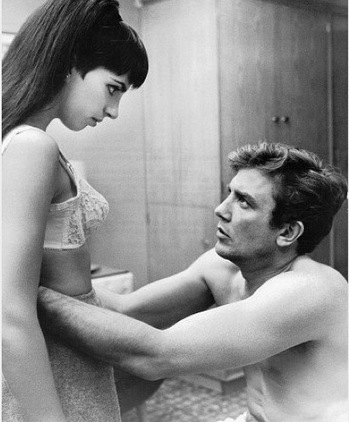
I met her so very long ago, in 1967
“You get all kinds, Liza Minnelli said. “A couple of days ago I was interviewed by a guy from the Los Angeles underground press. He didn’t exactly ask me what I ate for breakfast. He came in with this tape recorder, and the funny thing was, he kept stopping the machine every time he’d ask a question and then start it for my answer. So it must have sounded like a long speech by me, babbling away about the universe.”
What about the universe?
“A large topic,” Liza grinned. “No, what he did ask was, how could I justify appearing on the Hollywood Palace since I was a member of the Movement.”
The Movement?
“The Movement,” Liza said. “I guess my last album gave the Movement the idea I was a recruit. So he asked, in which direction is the Movement moving? So I said it’s moving toward Truth. He started his tape recorder and looked happy.
“But I really wasn’t in his bag. I’m afraid of LSD, for example – scared to death of it. I don’t particularly care what other people do, although these 14-year-old kids saying they’ve found essential reality is, well, a little frightening. I don’t want to live in a world of high. And then, suppose you took LSD and found out horrible things about yourself? Some people should keep those doors closed . . . “
Liza is a small, bright, pleasant girl with astonishingly appealing eyes. The eyes remind you of her mother, Judy Garland, and some of her singing style comes from that quarter as well. But not too much. She has nurtured her own talent since, at age 15, she played Anne Frank in a company touring Israel. She had an off-Broadway debut at, 17, won a Tony at 19, was an established concert star at the same age, and now at 22 is receiving warm reviews for her role in Albert Finney’s new movie, “Charlie Bubbles.”
She will give a concert next Saturday night in the Auditorium Theater, but that was not the reason for this Chicago visit.
She came for a long weekend with her husband, Peter Allen. He and brother Chris, arriving from Australia like two jolly swagmen a few years ago, are having a considerable success at Mister Kelly’s. So she watched their act (“Listen to this key change,” she whispered during “We’re Off to See the Wizard”) and then jumped in a cab with Peter to dance at Maxim’s between shows. “We think it’s important to be together as much as possible,” Liza said.
All the same, she confessed, there will probably never be an act featuring Peter, Chris and Liza, “We’ve tried singing together a couple of times, but our voices aren’t compatible,” she said. “We sound like the Sons of the Pioneers.”
The chance to appear in “Charlie Bubbles” was a surprise. She was singing in London a year ago and met director Karel (“Morgan”) Reisz. He recommended her to Finney who picked her for the movie “and now supposedly I’m a dramatic actor,” she said. “Isn’t that crazy? When I wanted a dramatic role, everybody kept coming up with musicals. So new I’ve finally played a dramatic part, and I want to do a musical, and everybody has more straight roles.”
What kind of a musical?
“I have an idea. Just an idea. You could do ‘The Fantasticks,’ only do it outside, out in the fields in Italy or Spain, maybe. Do it strangely, the way it’s written. Maybe steal from the style of Fellini’s ‘La Strada.'”
That makes it sound like a different breed from the MGM musicals her mother made famous: “The Wizard of Oz,” “Till the Clouds Roll By,” “Easter Parade” and all the others.
“Yes, I guess so,” Liza said, “But mother doesn’t give me any advice, all the same. She doesn’t believe in it. She says she trusts me. That’s a good feeling.”
if (WIDGETBOX) WIDGETBOX.renderWidget(‘1b397149-af9a-4c53-b8cf-a8894526dbcf’);
Get the Roger Ebert’s Journal widget and many other great free widgets at Widgetbox! Not seeing a widget? (More info)
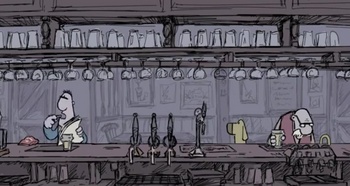
Marie Haws found this cartoon for the latest issue of the Ebert Club Newsletter. She writes: “It’s by the British cartoonist/animator behind the Daily Express’ cartoon strip “Bewley.” Ant Blades has designed a series of clever shorts for BBC Comedy and various commercial clients under the signature “Sketchy” as produced by Bird Box Studio, an indie animation house in London, England.” Marie is herself an artist and animator.
Go here to join the 6,000 subscribers to The Ebert Club Newsletter. Your subscription directly supports the Far-Flung Correspondents and the Demanders (critics of On Demand videos) on my site.
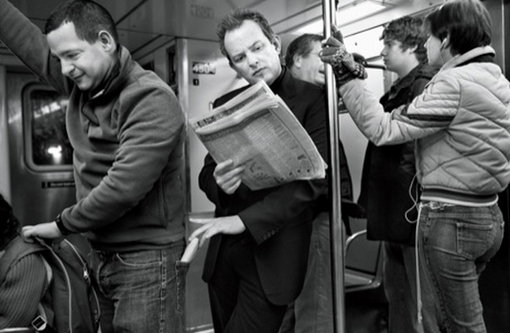
Go here for the New Yorker’s article about Apollo Robbins.
Here’s my Great Movies review of Robert Bresson’s “Pickpocket.”
Here’s my review of the 1993 James Coburn movie “Harry in Your Pocket.

Dead Wife And Kids Replaced By Miniature Horses
Two segments for an unaired pilot taped by Welles in 1979
Thanks for the links to Pablo Villaça, my Far-Flung Correspondent from Brazil.
var a2a_config = a2a_config || {};
a2a_config.linkname = “Roger Ebert’s Journal”;
a2a_config.linkurl = “http://blogs.suntimes.com/ebert/”;
a2a_config.num_services = 8;
var a2a_config = a2a_config || {};
a2a_config.linkname = “Roger Ebert’s Journal”;
a2a_config.linkurl = “http://blogs.suntimes.com/ebert/”;
a2a_config.num_services = 8;
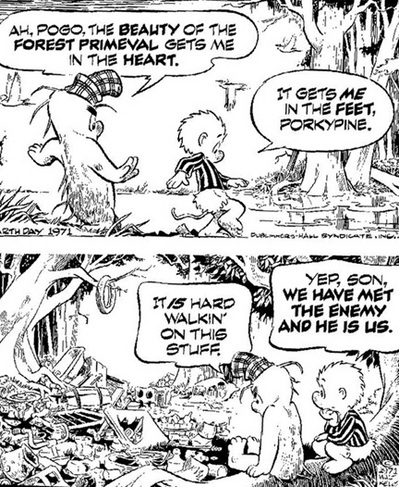
Walt Kelly remains in my mind the greatest of all creators of daily comic strips. Yes, greater than Charles Schultz, because Pogo’s Okefenokee Swamp was considerably larger than the Peanuts landscape, his characters were sometimes wicked animal versions of politicians, and his drawing was so delightful.
Pogo has become immortal for a single line:
And here’s an example of one of the many theoretical and philosophical conversations that went on in Pogo’s neighborhood. [ Click to enlarge ]
Comments are open.
var a2a_config = a2a_config || {};
a2a_config.linkname = “Roger Ebert’s Journal”;
a2a_config.linkurl = “http://blogs.suntimes.com/ebert/”;
a2a_config.num_services = 8;
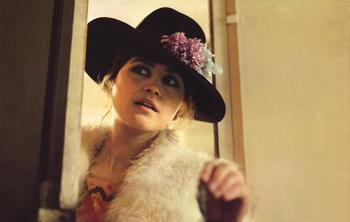
Roger Ebert / September 14, 1975
LOS ANGELES–It was, said the critic Pauline Kael, perhaps the most important artistic event since the first performance of Stravinsky’s “The Rites of Spring.” She was referring to the 1973 premiere of “Last Tango in Paris,” a film by Bernardo Bertolucci which dealt in explicit detail with a brief affair between a middle-aged man and a girl barely out of her teens. The man was Marlon Brando, long acknowledged as the finest screen actor of his generation. The girl was Maria Schneider, a 20-year-old with an innocent face, a woman’s body and an electrifying presence.
Most of the film involved just two actors, and Schneider held her own with Brando in a stunning confrontation with sex and death. It was an astonishing performance. Maria Schneider quickly became the favorite “bad girl” of the movie press. She gave shocking interviews, she walked off a movie set and had herself committed to an asylum with the woman she described as her lover, she seemed to be surrounded by scandal. And then she made a film with another of Europe’s top directors, Michelangelo Antonioni, and another major star, Jack Nicholson. The film was “The Passenger,” and this time her screen image was altogether different: She was quiet, intelligent, even sweet.
Then Schneider dropped from view. She moved to America; signed with Paul Kohner (the legendary agent who represents Ingmar Bergman, Liv Ullmann and many other Europeans), turned down several big film offers, and moved into a house in the Hollywood hills. This interview, conducted in Kohner’s office, is her first in the United States. She wore faded denims, smoked frequently, looked thinner and more intriguing than in “Tango,” and seemed ready to revise her European image.
Q. Why California?
A. The main thing was the space. It was getting hard to breathe in Europe – it’s too compact, too compressed. I lived in France about three years, traveling around a lot, and then I tried London, and about six months ago I settled on here.
Q. Americans have a thing about Southern California . . .
A. So do I. It’s hard to talk to the people here. They’re very shallow. All they talk about is their look, their hair and their screwing. But I love to act, and here is the place to come for the movies. Q. Paul Kohner said you were reading a screenplay based on “The Story of an African Farm.”
A. Yes. It’s a wonderful story. It’s about a girl growing up in South Africa a century ago, and finding herself, and learning how to rely on herself. The story’s so good, I want to make the film. I’ve had offers for a lot more money, but this project is by a director who’s young and ready and wrote the screenplay himself. He’ll care more than someone who was just paid to direct a story . . . and it’s a good role for a woman. In most movies these days, women are just decoration. I’ll never be that.
Q. So far you’ve been in two movies with two top directors, Bertolucci and Antonioni . . .
A. Six movies. Nobody knows, but I did six movies before “Last Tango in Paris.” I don’t think any of them ever played here. One was directed by Roger Vadim, after he made “Pretty Maids All in a Row.” And I did some theater, and a couple of underground French movies. I walked out on one of them when I wasn’t paid. I fought with the director, went back to Paris, and met Bertolucci. He offered me the role in “Tango.”
Dominique Sanda was going to do it, but she got pregnant.
Q. And you got a sort of immortality, because the movie’s already a landmark.
A. So much of that was because of Brando. He was wonderful to work with, for an actor like myself who was still beginning. He had just finished “The Godfather,” and now this was also part of his comeback, and you’d think he’d want the advantage in all of the scenes. Actors always try to look their best. But he gave me the advantage, the material to work with. And he was brilliant when we improvised . . . the bathroom scene was improvised.
Q. And Bertolucci?
A. He’s a great director, but . . . well, I was 20 when I did “Tango.” Bertolucci made me wear very heavy black makeup under my eyes. Makeup on a girl who’s too young gives her the wrong character, gives her a funny look. I argued with him, but with no luck. I don’t know who he thought I was supposed to be. Marlon was such a good force on the picture. We were working like dogs with an Italian crew, filming in Paris, overtime and all that, and two crew members came down with stomach ulcers. And Marlon was the one – not Bertolucci, who goes on about being a member of the Italian Communist party – but Marlon was the one who brought sandwiches and wine for the crew and worried about them.
Q. After the film was released you were suddenly famous – or infamous – all over the world.
A. And Marlon told me about that, too. He was the first to tell me about the bad parts of fame. How the press can seize on everything and make it as sensational as they can. And there the European press is worse than the American. I think they’ll print anything.
Q. There were some amazing quotes attributed to you.
A. I think I said a lot of them. After “Tango” came out, I amused myself at interviews by saying scandalous things, thinking they were funny. I talked about going out with men, women, I sounded promiscuous, I took it all as a joke. I see now it wasn’t funny . . .
Q. And then you went to Antonioni . . .
A. For “The Passenger.” It’s an interesting thing about that film. It did better in America than it did in Europe. And Antonioni is supposed to be a star in Europe. I’m glad the Americans could watch something slower and more thoughtful for a change, instead of all the violence and crime. Still, I think Michelangelo has a problem with his English. He doesn’t speak it very well, and I think some of the dialog in “The Passenger,” which was supposed to sound real, sounded falsely poetic. Like when Jack Nicholson says, “What the hell are you doing here with me?” And I say, “Which me?” You see how wrong that sounds? And in another scene he says, “I met you before – you were reading” And I say, “That must have been me.” Terrible!
Q. Are you looking at scripts from American directors now?
A. I’m looking at all kinds of scripts. Most of them are no good. Hardly any of them have interesting female roles.
Q. Paul Kohner was thinking out loud about the idea of a movie of Hemingway’s “Across the River and into the Trees,” which would be directed by John Huston and might star Robert Mitchum as the old colonel and you as the young contessa . . .
A. And be shot in Venice. I’d love to work in Venice. I lived there for a while. The light and the silence and all around the sound of the footsteps. You know, I saw Mitchum just last night in “Farewell, My Lovely.” It stayed in my mind all night. I loved Jack Nicholson playing the detective in “Chinatown,” but I much preferred this detective by Mitchum. What do you think of the . . . the chemistry if Mitchum and I were to be together?
Q. Dynamite.
A. (Laughs) And yet, you know, I always act with these men like Brando and Nicholson, who are much older than me. I wouldn’t be with a man that age in my own life. And I think there’d be a problem in filming in Venice, too.
Q. The canals?
A. No, the insurance. You know, I have a problem in Italy since my last film with the companies that insure a film. I signed myself into an asylum for a friend of mine. They locked her up, and so I had to do it out of loyalty.
Q. That was in all the papers here.
A. And all the papers everywhere. But they never printed that I finished the movie.
Q. You did? I got the impression it was closed down. A. Oh, yes, I finished it. It was called “The Baby Sitter,” it’s a thriller by Rene Clement, who did “Forbidden Games.” It’s a good thriller, well made, nothing poetic about it. They took away two-thirds of my salary to keep the insurance people happy. The producer was Carlo Ponti. He’ll come out ahead any way he can. When Clement wanted me for the movie, he wanted me to play the role that was negative. There were two girls in the movie, and one was perverse and destroyed, and of course that was the one he wanted me for. But Antonioni showed him “The Passenger,” and then I got the other role. He only knew me from “Tango.” God knows what people think I really look like and act like!
Q. After “The Baby Sitter,” did you split for Hollywood?
A. More or less. I was supposed to make a movie in Paris with Jean-Luc Godard. You know, he works in eight millimeter now. He gave a brilliant press conference about it in Cannes. He explained to me that the actor would put up $40,000, and he would put up $40,000, and then we would make the movie together. I would have, too, but I didn’t have $40,000. And I still don’t.
Q. But “Tango” made millions and millions . . .
A. Ha! You know what I was paid? Five thousand dollars! That’s all. I didn’t even get a percentage of all those profits. Jack Nicholson told me that after “Easy Rider” made so much money, they gave him something more in addition to the little he made in the first place. But no Italian producer would ever do that. I’m glad I’ve got Paul as my agent. He’ll look after things like that. I’m no good with money. Working on my own, I constantly got ripped off. I just can’t handle money.
Q. How’d you meet Kohner?
A. I walked in off the street. I’d heard he was the top agent. My doctor was in the building next door. I came out from his office, saw Paul’s sign, and introduced myself at the switchboard. “Who are you?” they asked. I said I was an actress who wanted him to represent me. They asked what credits I had – they thought l was a nut off the street. I said I’d worked with Bertolucci and Antonioni. They didn’t believe me. Finally one person in the office did recognize me. I look a little different now, I’m thinner, I’m 23, I wasn’t wearing makeup.
Q. Kohner seems sort of paternal toward you, protective.
A. Well, I don’t need too much protection. I live a simple life. And Paul tells me, let’s wait for the right role. People get lazy doing whatever is given to them. I’d rather wait and go broke than be forced to do a bad movie for money. Paul has Charles Bronson and Ingmar Bergman among his clients. He says, we can go big, like Bronson, or small, like Bergman. I’d rather go small.
Q. And in the meantime you’re keeping life uncomplicated?
A. That’s right. I don’t own anything. Well, I own a pickup truck. I don’t have any maids or answering services or any of those things. I spend my money on food and travel and cameras. I live in Laurel Canyon with some friends, including some writers. None of my friends are actors or directors or Hollywood types.
I’m not interested in that crowd. And I’ll just hold out and look for a decent role for a woman. “The Story of an African Farm” looks about the best.
Q. What else is around?
A. Paramount wants me to do “Black Sunday,” which is about terrorists, and I play a Palestinian guerrilla. That’s their idea of a woman’s role. But things are changing. Most of the members of my generation are gay, or bisexual, they have more open minds about sexuality, about what a woman’s role can be, or what the potentials are.
Q. Did you say most of your generation?
A. Most of my friends, anyway. Or maybe it’s just California.
The theme from “Last Tango in Paris:”
Theme From Last Tango In Paris (1972) by seasonwitch
var a2a_config = a2a_config || {};
a2a_config.linkname = “Roger Ebert’s Journal”;
a2a_config.linkurl = “http://blogs.suntimes.com/ebert/”;
a2a_config.num_services = 8;
Typography from Ronnie Bruce on Vimeo.
var a2a_config = a2a_config || {};
a2a_config.linkname = “Roger Ebert’s Journal”;
a2a_config.linkurl = “http://blogs.suntimes.com/ebert/”;
a2a_config.num_services = 8;
Amazon.com Widgets
• Roger Ebert / August 25, 1983
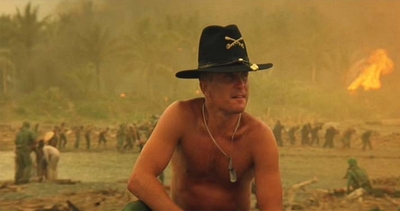
They honored Robert Duvall the other night at the Festival of Festivals in Toronto, dedicating their annual Tribute to an actor’s actor who is only now entering into stardom after two decades of great character performances.
Duvall was accompanied onstage by Gene Siskel and me, on a guided tour of clips from a lot of his best movies, and when we got to one of his key scenes in “The Godfather” (1971), you could have heard a pin drop.
The scene was the famous one where Duvall, as Tom Hagen, Don Corleone’s trusted family lawyer, goes to Hollywood to persuade a studio boss to give Johnny Fontane, the mob-connected singer, a starring role in a movie. “Godfather” fans will recall that the sequence ends with the boss refusing Hagen’s request, and waking up the next morning in the same bed with the severed head of his beloved racehorse.
Anyway, when the scene was over, Duvall got to talking about the film’s director, Francis Coppola.
“It’s not widely known that when Coppola made ‘The Godfather,’ the studio had a substitute director standing by at all times,” Duvall said. “One false move and Francis would have been replaced. That was incredible pressure for him to work under. It’s a great picture, but under the circumstances it’s a miracle he even finished it. As for Francis himself, he’s like a kid with an all-day sucker. He wants his Hollywood studio, and a vineyard in Northern California, and an apartment in Paris. He’s a great director, but he loves all his toys.”
All this could be checked out, at first hand, because Coppola himself was a surprise guest, lurking in the back of the theater. Wearing a Panama hat, he marched down the aisle, took a seat on the stage and shared his notions of acting, directing, Duvall and “The Godfather.”
“That was a strange scene to show,” Coppola said, “because in the long shot it isn’t even Bobby. We shot Bobby’s scenes on the East Coast, and for the West Coast exteriors we used a double.”
“You can tell,” Duvall said, “because he doesn’t have my bow-legs.”
Coppola and Duvall began remembering moments from “The Godfather,” especially an early rehearsal dinner.
“I assembled the whole cast for a dinner at Pearl’s restaurant in New York,” Coppola said. “There they all were — Brando eating everything in sight, and Pacino looking tragic, and Duvall doing his Brando imitations every time Marlon turned his back. It was like the Corleone family having dinner. It was that night I knew the picture would work.”
After two more clips from “Godfather, Part Two,” we viewed perhaps the most famous single scene Coppola or Duvall has ever been involved with: The beach landing in “Apocalypse Now” that begins with a flight of helicopters playing Richard Wagner over loudspeakers, and ends with Duvall’s famous line: “I love the smell of napalm in the morning. It seems like . . . victory!”
“One take,” Coppola said. “We did that scene in one take, the first take.”
That made it all the more extraordinary, because the scene is not only an exercise in logistics, but a demonstration of physical courage. While jets thunder overhead, helicopters make close passes and shells go off within yards of Duvall, he remains totally unaffected. He doesn’t even twitch an eyelash at the special effects explosions, and marches around on the sand talking obsessively about the great surfing beach he has just occupied.
“There wasn’t any time to think,” Duvall said. “I heard over the intercom that we only had the use of the jets for 20 minutes. One fly-by and that was it. I just got completely into the character, and if he wouldn’t flinch, I wouldn’t flinch.”
As Duvall reviewed his career from “To Kill a Mockingbird” (1963) to “Tender Mercies” (1983), his acting approach was clearly revealed: He believes in giving himself over to the character. He talked about spending time with homicide cops before making “The Detective” (1968), and hanging out with good ol’ boys from Texas to find his character, a country singer, for “Tender Mercies.”
“Not to brag, but I got calls from Willie Nelson, Waylon Jennings and Kris Kristofferson telling me I had the character just right,” he said.
Robert Duvall has long been known as an accomplished actor, but the range of his acting career was dramatized by the three-hour program. The scenes ranged from “True Grit” (he faced John Wayne in that great shoot-out in the mountain meadow) to “The Chase” (Duvall and Brando) to George Lucas’ “THX 1138” (Duvall as a puzzled automaton) to Robert Altman’s “MASH” (Duvall’s love scene with Hot Lips) to “True Confessions” (Duvall as a cop, Robert DeNiro as his brother, a priest) and “The Great Santini” (Duvall as a military pilot who demands perfection from his family).
Two things stood out as the scenes marched past; Duvall never plays the same character twice, and he makes other actors look good. He brings a quality to his listening, his reactions, that charges a scene even when he’s not talking.
One of the movies shown at Toronto was unfamiliar. It was “Tomorrow,” a 1972 adaptation of a William Faulkner short story. The movie was never widely released, but Duvall says his performance in it, as a poor dirt farmer that loves and loses a woman and her child, is the one he likes best. “It’s got the most of me in it,” he said.
And what, at mid-career, what has he learned about acting? “Give yourself completely to the moment.”
var a2a_config = a2a_config || {};
a2a_config.linkname = “Roger Ebert’s Journal”;
a2a_config.linkurl = “http://blogs.suntimes.com/ebert/”;
a2a_config.num_services = 8;
Amazon.com Widgets
