My drinking days, recalled in a noirish oil

The artist Marie Haws in Vancouver was drawn into a blog I wrote about the legendary O’Rourke’s Pub in Chicago, not so much by the prose as by the photograph I used, taken by my pal Jack Lane:

Marie returned to the photograph and again, finding depths in it, and was finally moved to paint this oil inspired by it:

The photo shows me at the front end of of the bar talking with the writer Tom Wolfe. Neither Jack nor I can identify the man on the left, or Mystery Woman on the right. I’ve been told that M.W. resembles my girlfriend in the 70s, but there are two problems with that: (1) Ingrid never smoked a day in her life, and (2) M.W. in the oil looks like her, but M.W. in the photo doesn’t.

Of course, camera angle can be deceptive, so I will forward this to Ingrid and her four children and see what they think. Nothing would please me more than to find out who I have my arm around.

I am quite fond on this painting, the only one I have of myself. I do have a nearly life-size bronze bust, but lest you get the wrong impression, I didn’t commission it or pay for it. I posed for the class project of an art student whose assignment was to make a recognizable sculpture of a recognizable person.

[ 4:14 p.m. Nov 21, e-mail from Jack Lane: Mystery man on left is Dick Flynn, a mate of mine from the ad days. He and I were having a quiet Sunday evening drink and discussing worldly matters when a stranger entered the nearly empty bar. Dick said, a bit excitedly, that it was Tom Wolfe. I glanced over and disagreed, pointing out that the stranger was not wearing a white suit. Dick, who had been Wolfe’s neighbor in NYC, persisted and went over to verify his assessment. And indeed, he was right. The three of us had an hour or so of pleasant conversation until a horde of noisy re revelers descended upon us and the rest, as you know, is history. Jack ]

Marie has been a treasured regular on my blog almost from the beginning. She is known for (1) recklessly inserting so many URLs into her posts that they mostly end up trapped in the Spam filter, (2) inserting “*chuckle*” every once im a while, and (3) attempted assassination of her fellow blog posters with the astonishingchocolate cake recipe published below these three examples of her wonderful work:

Girl in the Coat – 24″ x 36″ oil on canvas

Tuscan hill-top vineyard, Italy – 24″ x 108″ oil on canvas

Chianti region, Italy – 20″ x 26″ oil on canvas

…and then, on Sunday morning, Marie Haws posted this comment:

I love that we’ve discovered the name of mystery guy; it’s D*ck Flynn! For how perfect is that?! Was there ever a name more ironic and thus better suited to be in a painting showing Roger Ebert at O’Rourke’s – than one shared in the blog the very same week he runs a “limerick contest”? Smile. I regard it as confirmation from the Gods that indeed, everything is connected.

And as noted, it all started with a journal entry and Roger’s memories of a pub in the dodgy part of Chicago, a place no longer there but when it was, of questionable repute; an Irish pub called O’Rourke’s. I just want to be comfortable, you know? I just want to sit down, enjoy a Kilkenny, chat with friends, maybe play a few rounds and pretend I don’t suck at pool, while catching a nice buzz. I don’t want to have to worry about how to pay a fancy coverage charge (insert really bad word!) or navigating past stupid yuppies to reach the bar – none of that crap.

And the very week Roger posted his journal entry about O’Rourke’s, was the same week “I” discovered the fate of my favorite watering hole: the “Irish Heather”. They’d moved across the street. Seems required upgrades to the building had forced the owner to choose the lesser of two evils: close his business for one year, or move. And this is partly what was lost because of it: the back room conservatory in a photo by Stephen Dyrgas….
Arguably THE most perfect spot to drink in Vancouver.

An alley runs behind the pub and covered in red bricks. They’d simply enclosed part of it to make an extra seating area. God, how I loved that place. So I was in full empathy mode, when Roger heaved a wistful sigh as he recollected the passing of one his favorite places, too! That’s how I could relate even though I’d never been there. I knew O’Rourke’s because I’d known the Heather. It too, was also in the dodgy part of town; smile.

For that reason, my emotional attachment to the place was immediate – and then I saw Jack Lane’s photographs! And suddenly, my next painting! But I needed better reference, which is how I got a hold of Jack’s B/W photos; I pestered Roger and he sent me some. And when I saw the alternate shot of him with Tom Wolfe… BINGO! Two guys in the middle of a conversation we can’t hear, flanked either side by mysteries for being equally as ignorant of what they were thinking, too.

Why does anyone go to a pub? To drink? I suppose, but not me. I think it’s where you go to drink a “conversation” too! And what’s better than a conversation you can custom tailor – for never knowing what was actually being said? It’s a blank page on which the viewer can write whatever they want! You can imagine all sorts of things! They could have been plotting a murder. What?! Don’t look at me like that – it’s Chicago. And two writers are in a bar. Enough said. 🙂

And so I loved that shot. It was sublime. Although… true; it does look like Roger’s groping himself in the photo, but I took care of that and changed it for the painting. And I dropped Flynn’s hand as well – as it kinda looks like he’s trying to punch Tom Wolfe in the jaw. But all minor stuff and easily dealt with. It took longer to paint than I’d planned – chasing the rent can be distracting – but I eventually finished it.

Actually, Roger got to see it as a work in progress. I was sending him photos in cyber dispatches while bugging him about the spam filter and stuff. So he knew weeks in advance how things were coming along. And then the day finally arrived when it was dry and ready to go to Chicago. I couldn’t afford the shipping and so he actually picked up the tab for his own present! How nice was that, eh? (As he didn’t make me feel like a cheap basterd; chuckle!) What?! I have to pay the postage on my own GIFT?! Jeeesh, and that’s so typically Canadian, I swear, you people…”

Smile; instead he just told me how much he loved it and Chaz too. And there you have it; that’s the story of the painting and how it came to be. I love O’Rourke’s vicariously so. I love how Roger’s memories of the place, feel. I love the conversations I get to imagine and the ongoing mystery of smoking girl and that Flynn’s name sounds the way it does. And that right now, my painting is inside Roger Ebert’s house; the same critic who didn’t like Harold and Maude. What’s that got to do with anything..? Rubbing hands together with a glee. (Or maybe I’m just f-cking with ya; laugh!) One thing however is not in doubt; how sincerely flattered I was by this. It caught me totally by surprise when you suddenly asked for a few pictures and my death by chocolate recipe!

I thought you’d just show the painting to Chaz and the kids, maybe Tom Wolfe and there you go! Note: that’s why it took me so long to write that post, the one I’d lost; I was actually at a loss for words! A rare moment that and I’ve moved past it now, as you can see. 🙂

@ Roger wrote: “I informed Marie that the ghosts of the O’Rourke’s Crowd still haunt the Old Town Ale House to this day. The owner is Bruce Elliott, a regular in those days. Marie, who loves Venice, might agree that a master of the Italian Renaissance would have been drawn to the same subject, albeit expressed in a somewhat different style, in Bruce’s own painting “The Strip-Searching of Rod Blagojevich.”

Oh absolutely. Without a doubt. Those dudes totally loved a bit of unpleasant business. Caravaggio for example, would have done a lovely job of it. Or whoever painted the rape of the Sabines. A strip search would have been a walk in park, chuckle!

@ Marta Chiavacci wrote – “Marie is not only an amazingly talented artist, she’s an even more amazing friend.” Awww! What a nice thing to say, Marta! But I’m still gonna tease you about wearing FIVE inch heels. As that’s insane and what real friends would do. Roger? Marta gave me my very first Bialetti! Her parents moved to Canada in the 50’s from Lucca, near Florence. And several years ago, Marta ironically moved to Lucca to live there! She fell in love with her second cousin, whose got a house near the medieval city.

She kept her place in Vancouver though and routinely travels back and forth; currently, she’s in town. And get this – Marta Chiavacci, a female born in Canada, moves to Italy, studies wine and ends up beating all the guys and becoming FISAR’s sommelier of the year in 2007. That’s right – I know an award-winning Sommelier. The girl I met in grade 7. Naturally, Marta gets to pick the wine whenever we go out to dinner, as otherwise, I buy wine based on how well designed the labels are. At the moment, she’s in the process of setting up her own wine business; guided tours of vineyards with a sommelier.

Marta’s interesting to know in her own right, but as a relocated Canadian, I get a close-up view of another country now too, through her dispatches about daily life in Italy. The truth of things. It’s like having my very own reporter on the ground! And the story of how she got a driver’s license in Italy, is a thing to behold. It takes days to tell, as it’s that serpentine a journey through their bureaucracy. Chuckle! And now you’ve got one of my paintings too, joining the club with Marta. Awesome.

P.S. now watch, I’ll die and suddenly those paintings will be worth a fortune!

Marie Haws’ online gallery. .

The blog entry that started all this, “A bar on North Avenue.” .

I informed Marie that the ghosts of the O’Rourke’s Crowd still haunt the Old Town Ale House to this day. The owner is Bruce Elliott, a regular in those days. Marie, who loves Venice, might agree that a master of the Italian Renaissance would have been drawn to the same subject, albeit expressed in a somewhat different style, in Bruce’s own painting “The Strip-Searching of Rod Blagojevich.”

The “DEATH BY CHOCOLATE” Recipe

8 oz high-quality bitter sweet chocolate (Valhrona is best!)

2/3 cup of butter

1/2 cup of white sugar

1/2 cup of brown sugar

4 eggs

1/3 cup of sour cream

1 teaspoon of vanilla

1/4 cup dark rich Dutch cocoa

1/2 cup of flour

1 1/2 teaspoon of baking powder

1/4 teaspoon of salt

Ganache glaze:

8 oz of bitter sweet chocolate (again, BEST you can find.)

1/2 cup of heavy cream (in Canada, in the dairy section next to the milk, you can find a pint of whipping cream. Americans call THAT heavy cream.)

Inside of the cake:

Raspberry liquor (or use a brandy)

1/4 cup of Raspberry Jam (or buy some fresh Raspberries and mash them up in a bowl and add 2 tbs of sugar (in case they’re a bit tart) and use that – I do, tastes fresher!

Instructions:

In a heavy bottom pan or double-boiler, melt the chocolate and butter on low heat. While that’s melting, combine the eggs and the white & brown sugars together, on medium speed in a mixer until somewhat light; you want the sugar to dissolve and not be sandy.

Check the chocolate. Melted? Remove from heat and stir. Set aside to cool a bit (you can use the fridge.) Once cool to the touch, pour melted chocolate in with the eggs and sugar and turn on the mixer for a few minutes to incorporate everything before you add the next ingredients…

To that, now add the flour, dark Dutch coco, salt, baking powder, sour cream, vanilla. Start on low speed then you can go a bit faster, and mix everything up, etc.

Preheat oven to 350F. Get a 9″ wide, by 3 inches deep springform pan. Remove bottom from pan, wrap it with tinfoil, put it back in the springform. Lightly spray the bottom and insides with a cooking oil spray – or use some melted margarine and a brush etc.

Note: I always set a springform pan on a cookie tray in case there’s any leakage, but you can also wrap the outside with more foil. Pour batter into Springform pan. Bake for 40 – 50 min. Test it with a toothpick at the 40 min mark etc. Done? Take it out, let it cool a bit before removing the top of the springform from the bottom.

Get your Raspberry jam ready. NOTE: if you don’t want raspberry seeds, pass the berries through a strainer over a small bowl (mash them through it etc.) Add the liquor etc.

Once the cake is completely cool, trim the top. Use a thin, serrated knife. You don’t need to remove the center bit. The top edge tend to be hardest and higher than the middle – so getting rid of that helps level things off. *DO NOT throw away what you cut off it case you need it, later.

Make the ganache: and make your life easier too, use a double-boiler. Most people don’t own professional grade pots ($150 each!) Put chocolate and cream in a doubler-boiler and stir on low heat. Once melted, turn off heat.

You need to cut the cake in half now. I have a better way to do it than is shown in the video below.

Get some toothpicks (4 will do it) and stick them around the sides of the cake, half-way up. Get a LONG sewing thread – a light color so you can see it. Wrap it around the cake and “above” each of toothpicks (they help keep the thread from slipping down as you make sure it’s positioned correctly. Tie your thread and slowly but steadily pull the ends. The thread will slice perfectly through the middle of the cake as you go etc. A trick I learned from a dessert chef. 🙂

Pull out the toothpicks, but stick 2 back in, on the sides: one in the top layer, another further down but right below it. This will help you when assembling the layers; a point of reference.

Get a serving plate for the cake. You’re going to transfer the TOP layer onto that.

Note: I took the lid from an ice cream bucket last year, and with an exacto knife, cut the rim off. It made a plastic circle. You can also use the glass from an 8×10 picture frame, if you like. Point is, this method tends to NOT break the cake for better supporting the entire weight of it as you move it over.

The Top layer is now the bottom layer – and if the center looks too low, build it up with some of the stuff you’d previously cut off. Pour Raspberry Jam onto the cake; spread it around. Get the ganache. Pour less than 1/2 onto the cake, spread that around too.

Get the bottom layer of the cake now. Flip it over, and place it on top of the layer with the jam and ganache. Match the toothpicks up; then pull them out. Remove the metal bottom and the tinfoil. You have a cake with a perfectly, flawless top!

Heat the ganache back up, you’re going to POUR the remaining glaze over the entire assembled cake. Use a long, wide spatula to help guide the chocolate ganache along and around the sides etc. Don’t have one? Use the longest, widest knife you own. Use a less pointy knife for the sides.

Clean any mess around the cake, and et voila; you’re done. Unless you want to decorate it too, based on what you see in the video.

Attention Helpless Males: step-by-step video instructions –

http://www.ehow.com/videos-on_687_make-death-chocolate-cake.html

And last but not least –

How to make a chocolate cake in a crock-pot:

http://www.ehow.com/how_2173304_chocolate-cake-crock-pot.html

GRIN.

Visit my website, rogerebert.com.

¶document.write(”);

April 9, 2013

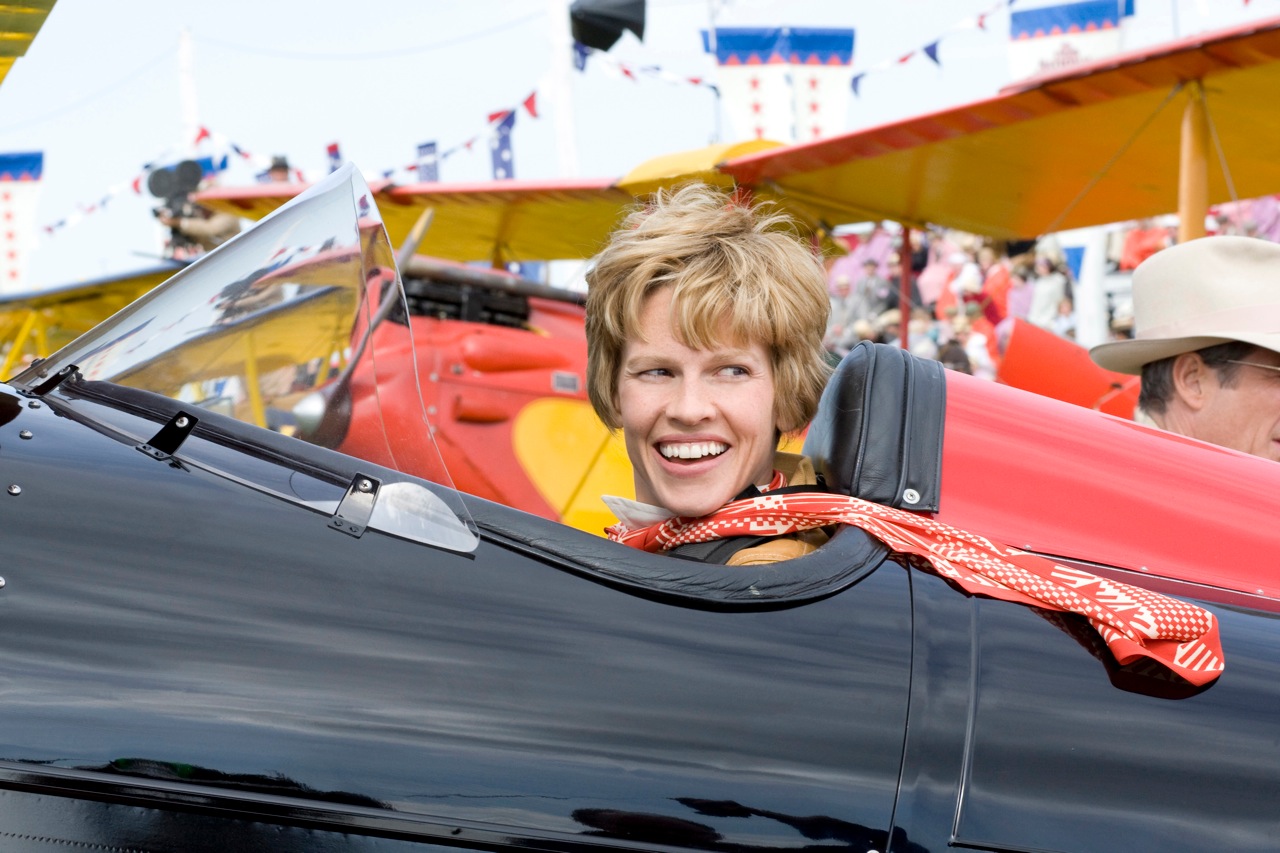
Farewell, First Lady of the Air

var a2a_config = a2a_config || {};
a2a_config.linkname = “Roger Ebert’s Journal”;
a2a_config.linkurl = “http://blogs.suntimes.com/ebert/”;
a2a_config.num_services = 8;

April 9, 2013

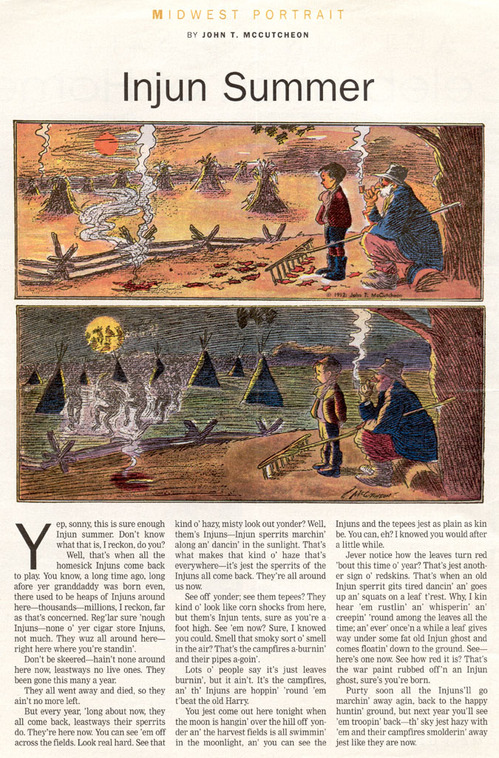
“Injun Summer,” by John T. McCutcheon

For decades, John T, McCutcheon’s “Injun Summer” appeared every autumn on the front page of the Chicago Tribune, and was reprinted around the country. It has disappeared in recent years, a victim of political correctness.
Click to expand.

April 9, 2013

He lives in Detroit, in the old Packard plant

Part of the “This Must Be the Place” series of The Atlantic. URL leads to all entries in the series. Thanks to Jana J.Monji, who writes me: “I used to live in a loft space from a former factory but that was in Pasadena and not Detroit (and my place was a bit neater) than this.”

April 9, 2013

The God Gene. A breakthrough

.

My NetPages are linked at the right.
var a2a_config = a2a_config || {};
a2a_config.linkname = “Roger Ebert’s Journal”;
a2a_config.linkurl = “http://blogs.suntimes.com/ebert/”;
a2a_config.num_services = 8;

Amazon.com Widgets

April 9, 2013

Pete Postlethwaite: 1946-2011

var a2a_config = a2a_config || {};
a2a_config.linkname = “Roger Ebert’s Journal”;
a2a_config.linkurl = “http://blogs.suntimes.com/ebert/”;
a2a_config.num_services = 8;

Amazon.com Widgets

April 9, 2013

Woody Allen interviews Billy Graham

var a2a_config = a2a_config || {};
a2a_config.linkname = “Roger Ebert’s Journal”;
a2a_config.linkurl = “http://blogs.suntimes.com/ebert/”;
a2a_config.num_services = 8;

April 9, 2013

Jack Benny, 1894-1974: The man who was funny just by standing there

In October 1974, Benny canceled a performance in Dallas after suffering a dizzy spell, coupled with a feeling of numbness in his arms. Despite a battery of tests, Benny’s ailment could not be determined. When he complained of stomach pains in early December, a first test showed nothing, but a subsequent one showed he had inoperable pancreatic cancer. Choosing to spend his final days at home, he was visited by close friends including George Burns, Bob Hope, Frank Sinatra, Johnny Carson and New Zealand crooner John Rowles. He died from the disease on December 26, 1974. Bob Hope delivered the eulogy at his funeral. Mr. Benny’s will arranged for a single long-stemmed red rose to be delivered to his widowed wife, Mary Livingstone, every day for the rest of her life.–Wikipedia

var a2a_config = a2a_config || {};
a2a_config.linkname = “Roger Ebert’s Journal”;
a2a_config.linkurl = “http://blogs.suntimes.com/ebert/”;
a2a_config.num_services = 8;

Amazon.com Widgets

April 9, 2013

Bob Hope: Thanks for the memories

• Roger Ebert / Oct. 15, 1978

Los Angeles, California – For a lot of people, doing a comedy sketch with Charo would be enough for one day. For almost anybody, doing a comedy sketch with Charo and doing a comedy sketch in bed with Cheryl Tiegs would be more than enough for one day.

But it wasn’t enough for Bob Hope. He got up early in the morning one day last week to fly in a Lear jet to San Francisco. He let me fly along. He wanted to surprise a ballroom full of Budweiser distributors with an unscheduled walk-on during a sales convention. After a standing ovation and a few quick one-liners (“President Carter didn’t invite me to Camp David, maybe because Begin doesn’t like hams…”), Hope was back on the jet and flying down to L.A. to tape his comedy special. (Budweiser, not surprisingly, is one of the sponsors for the show.)

“It’s got a great title,” Hope said. “They’re calling it Bob Hope’s All-Star Comedy Salute to the 75th Anniversary of the World Series. I’m not sure, but I think it sets a record for the longest name of a TV show.”

Hope looked tanned and relaxed and nowhere near his 75 years; he’d worked on his material – for the walk-on and the TV special – while flying up to San Francisco, and now he’d scheduled the return flight for an interview for the World Book Year Book. His schedule accounts for every hour in the day, and he’s working somewhere almost every day of the year.

“The man continues to amaze me,” says Ward Grant, who handles Hope’s public relations. “Here he is 75 years old, and he’s working harder than he ever has. We keep statistics. Last year he did 250 personal appearances. Played 39 rounds of golf for charity. Was on more than 40 talk shows. Taped a season of TV specials. Flew tens of thousands of miles…”

Hope’s schedule is simplicity itself, for Hope. “It’s a great life,” he said. “Say I’m going somewhere to do a show. I get there, I sleep late, I have breakfast, maybe I play a round of golf somewhere, or see the sights. Then I’m on at 8 p.m., I do an hour and a quarter, an hour and a half of material, and I’m finished.

“It’s a great feeling, working in front of an audience. Keeps you fresh. I love it. But when I’m finished, I’m finished. I want to unwind. That’s why I’ve never played Vegas. They want you to do two shows a night. After the first show, I want to call it a day. I’ve never liked doing a lot of shows in one day although I’ve done it, of course, during the overseas trips to entertain GIs. And once when I wanted to set the house record at the Palace in New York, so we opened early and squeezed in a couple of extra shows. I seem to remember they had a 75-minute sea epic on the screen, and to sneak in another show we cut out 15 minutes of waves…”

It’s been a good and a bad year for Hope. It started tragically with the death of his longtime friend and sparring partner, Bing Crosby. It had its high point when Hope’s 75th birthday celebration made him the toast of Washington; he was honored by a special session of Congress, during which, he recalls with a smile, no less than three congressional house rules were broken: “The rules say members can’t recognize anyone in the gallery, or tell jokes, or sing. They did all three, if you call that singing…”

Was the congressional tribute the proudest moment of his life?

“One of the proudest, yes. There was a great moment in 1963 when President Kennedy gave me the Presidential Medal. I was standing all alone in a little room opening onto the Rose Garden, waiting to be introduced, and I had the strangest memory. Maybe it was being all alone that inspired it; I remembered standing by myself in front of the Woods Theater on Randolph Street in Chicago, and looking across the street at Henrici’s restaurant, and thinking ‘They’re eating. I’m not.’

“I was trying to break into vaudeville at the time, and not doing a very good job of it. It was just about then I decided to change my first name from Leslie to Bob.”

Why Bob?

He smiled. “It sounded chummier.”

Crosby’s death brought an end to plans for them to team up once again with Dorothy Lamour for another Road movie. But now, Hope says, he’s thinking of doing a Road movie with George Burns. “It’s terrific, the success George has had recently,” he said. “And I like to stick around him because he’s the only guy out here that’s older than I am.”

Hope’s early motion-picture days were spent at Paramount, the home studio for W. C. Fields. What was Fields like? “Absolutely unique. He had this little gag he’d pull on Paramount. They’d give him a script and he’d take it home, supposedly to study it, and then he’d call up and announce that it needed work but he thought he could fix it. Then he’d just work in one of his old vaudeville routines, and charge them $50,000. On ‘The Big Broadcast of 1933,’ for example, he stuck in a golf game that had nothing to do with the movie. What Fields didn’t know was that Paramount expected him to charge them $50,000, and he was worth it, so they budgeted for it before they ever gave him the script.”

The jet landed not far from beautiful downtown Burbank, and two hours later, Hope and Charo, he in a baseball uniform, she in an astonishing variation on a jogger’s outfit, were taping their sketch before a live audience in the NBC studios.

The audience was made up of people who just happened to be taking the studio tour when Hope needed an audience, and they looked pleased with themselves for getting to see Hope in person: Their applause and laughter seemed a couple of notches more enthusiastic than they might have been for anyone else, and I remembered a short exchange on the plane.

“I don’t want to embarrass you.” I’d said, “by referring to you as an institution…”

“Go right ahead,” Hope said with a grin.

var a2a_config = a2a_config || {};
a2a_config.linkname = “Roger Ebert’s Journal”;
a2a_config.linkurl = “http://blogs.suntimes.com/ebert/”;
a2a_config.num_services = 8;

April 9, 2013

Update on the TSA breast milk incident

I posted this video a day ago, and it drew thousands of visits and a lot of comments. One of them was from the woman seen in the video, Stacey Armato, who clarifies the situation and adds the charge that the TSA was retaliating against her! She writes me:

Thank you all for your support. My brother in law compiled the video for me to speed up TSA footage I received of my very long screening process at PHX. There were a couple errors in his effort to put together the footage as quickly as possible. [Below] is the updated video.

I was not pregnant at the time (I got pregnant six weeks later), my son was 7mo at the time, and I arrived an hour before my flight (not 20 min)…but TSA erased almost 30 minutes of the second half of my screening. Also, it clarifies that I had filed a complaint against TSA the week before for not knowing the breast milk screening rules and their actions on February 1 were retaliatory because of that complaint.

It was a terrible experience but have so appreciated the kind words and support. I will do my best to give them a good fight.

Thank you. Stacey

var a2a_config = a2a_config || {};
a2a_config.linkname = “Roger Ebert’s Journal”;
a2a_config.linkurl = “http://blogs.suntimes.com/ebert/”;
a2a_config.num_services = 8;

April 9, 2013

The top 2013 winners at Sundance and their trailer

“Fruitvale” is the hands-down champ at
Sundance 2013, and its 26-year-old director, Ryan Coogler, is the toast of the town. It’s based on the story of Oscar Grant, a young black man shot in the back by Oakland transportation police on New Year’s Day 2009. Starting with actual cell phone footage of the death, it unreels into fiction to retrace the last hours of his life. Go here for a story by Entertainment Weekly.

There are many categories at Sundance. Here are the trailers for the top ones. Click here for the complete list of 2012 winners.

“Fruitvale,” winner of the Grand Jury Prize for Dramatic, and the category’s Audience Award.

“Blood Brother,” winner of the Grand Jury Prize for Documentary, and the cateory’s Audience Award:

“A River Changes Course” from Cambodia, winner of the World Cinema Grand Jury Prize for Documentary:

“Jiseul” from South Korea, winner of the World Cinema Grand Jury Prize for Dramatic:

The Audience Award, winner of the World Cinema Dramatic:
“The Square (Al Midan),” from Egypt, winner of the Audience Award for World Cinema Documentary: , U.S.A.

April 9, 2013

Finding the mysterious Vivian Maier

I have the book. This great photographer died unknown, having made an invaluable photographic record of the Chicago of her time. The rediscovery of her work was a great event in the history of photography. The director of this film is Charlie Siskel, Gene’s nephew.

Here is a story in Variety.

April 9, 2013

This is a dog

Does a dog know how it looks? It knows how another dog looks, certainly. It can tell friends from foes from strangers at a distance, aided greatly by smell. But does it place much importance on appearance? I know a smaller dog may back away from a larger one, but does that involve a mental weigh-in? I think it has more to do with the display of emotions, and I’ve seen big dogs back away in the face of small dogs in a

April 9, 2013

The world’s largest indoor photo in 360 degrees

Go here for an interactive page of the 40 gigapixel photo of the Strahov Library in Prague.
var a2a_config = a2a_config || {};
a2a_config.linkname = “Roger Ebert’s Journal”;
a2a_config.linkurl = “http://blogs.suntimes.com/ebert/”;
a2a_config.num_services = 8;

April 9, 2013

A conversation with Atom Egoyan

Atom Egoyan must be a wonderful teacher. (Photo by Roger Ebert)
Egoyan on inspiration

Egoyan on erotic scenes

&nbsp
Egoyan on Amanda Seyfried

Egoyan on Liam Neeson

Egoyan on Ingmar Bergman and the essence of cinema

Egoyan on preconceptions about actors

Egoyan on film versus video as a medium

Egoyan on the “tipping point”

Egoyan on why we’re uneasy seeing famous stars in sex scenes.

if (WIDGETBOX) WIDGETBOX.renderWidget(‘1b397149-af9a-4c53-b8cf-a8894526dbcf’);
Get the Roger Ebert’s Journal widget and many other great free widgets at Widgetbox! Not seeing a widget? (More info)

April 9, 2013

John Prine: A concert in Ireland

I’ve already posted a lot of John Prine, but I had never seen these particular videos before. The high-quality sound and picture are explained because they’re from a concert he did for Irish television. Prine is the best poet-songwriter of his generation. Period.

This is the first time I ever heard John call “Hello in There” his favorite song, but I’m not surprised. I’ve seen more people cry during this than any other song. When we were dating, Chaz and I were on the highway and I slipped in the tape, and later I looked over and saw tears running down her cheeks.

In addition to being a song, this is a short story.

An earlier post on John Prine with more songs, and the first review he ever received.

var a2a_config = a2a_config || {};
a2a_config.linkname = “Roger Ebert’s Journal”;
a2a_config.linkurl = “http://blogs.suntimes.com/ebert/”;
a2a_config.num_services = 8;

April 9, 2013

They shot horses, didn’t they?

“They Shoot Horses, Don’t They?”

Four Stars

Gloria Jane Fonda
Robert Michael Sarrazin
Alice Susannah York
Rocky Gig Young

Cinerama presents a film directed by Sydney Pollack. Screenplay by James Poe and Robert E. Thompson. Running time: 123 minutes. MPAA Rating: PG.

Review / Roger Ebert (1970)

Erase the forced smiles from the desperate faces, and what the dance marathons of the 1930s came down to was fairly simple. A roomful of human beings went around and around within four walls for weeks at a time without sleep, populating a circus for others who paid to see them. At the end, those who didn’t collapse or drop dead won cash prizes that were good money during the Depression. And the Depression, in an oblique sort of way, was the reason for it all. The marathons offered money to the winners and distraction to everyone else.

To be sure, some of the marathons got pretty grim. Contestants tried to dance their way through illnesses and pregnancies, through lice and hallucinations, and the sight of them doing it was part of the show. Beyond the hit tunes and the crepe paper and the free pig as a door prize, there was an elementary sadism in the appeal of the marathons.

Among American spectator sports, they rank with stock-car racing. There was always that delicious possibility, you see, that somebody would die. Or freak out. Or stand helplessly while his partner collapsed and he lost the investment of hundreds of hours of his life.

“They Shoot Horses, Don’t They?’ is a masterful re-creation of the marathon era for audiences that are mostly unfamiliar with it. In addition to everything else it does, “Horses” holds our attention because it tells us something we didn’t know about human nature and American society. It tells us a lot more than that, of course, but because it works on this fundamental level as well it is one of the best American movies of the 1970s. It is so good as a movie, indeed, that it doesn’t have to bother with explaining the things in my first two paragraphs; they are all there and that’s where I found them, but they are completely incorporated into the structure of the film.

Director Sydney Pollack has built a ballroom and filled it with characters. They come from nowhere, really; Michael Sarrazin is photographed as if he has walked into the ballroom directly from the sea. The characters seem to have no histories, no alternate lives; they exist only within the walls of the ballroom and during the ticking of the official clock. Pollack has simplified the universe. He has got everything in life boiled down to this silly contest; and what he tells us has more to do with lives than contests.

Sarrazin meets Jane Fonda, and they became partners almost absentmindedly; he wasn’t even planning on entering a marathon. There are other contestants, particularly Red Buttons and Bonnie Bedelia in splendid supporting performances, and they are whipped around the floor by the false enthusiasm of Gig Young, the master of ceremonies. “Yowzza!Yowzza!” he chants, and all the while he regards the contestants with the peculiarly disinterested curiosity of an exhausted god.

There are not a lot of laughs in “Horses,” because Pollack has directed from the point of view of the contestants. They are bitter beyond any hope of release. The movie’s delicately timed pacing and Pollack’s visual style work almost stealthily to involve us; we begin to feel the physical weariness and spiritual desperation of the characters.

The movie begins on a note of alienation and spirals down from there. “Horses” provides us no cheap release at the end; and the ending, precisely because it is so obvious, is all the more effective. We knew it was coming. Even the title gave it away. And when it comes, it is effective not because it is a surprise but because it is inevitable. As inevitable as death.

The performances are perfectly matched to Pollack’s grim vision. Jane Fonda is hard, unbreakable, filled with hate and fear. Sarrazin can do nothing, really, but stand there and pity her; no one, not even during the Depression, should have to feel so without hope. Red Buttons, as the sailor who’s a veteran of other marathons and cheerfully teaches everybody the ropes, reminds us that the great character actor from “Sayanora” still exists, and that comedians are somehow the best in certain tragic roles.

And that’s what the movie comes down to, maybe. The characters are comedians trapped in tragic roles. They signed up for the three square meals a day and the crack at the $1,500 prize, and they can stop after all whenever they want to. But somehow they can’t stop, and as the hundreds and thousands of hours of weariness and futility begin to accumulate, the great dance marathon begins to look more and more like life.

var a2a_config = a2a_config || {};
a2a_config.linkname = “Roger Ebert’s Journal”;
a2a_config.linkurl = “http://blogs.suntimes.com/ebert/”;
a2a_config.num_services = 8;

April 9, 2013
subscribe icon

The best movie reviews, in your inbox