There have already been so many books written about the work of David Lynch, and it seems like an industry that will only explode in the coming years now that his filmography is tragically complete. Now that writers can see the full breadth of Lynch’s output from the early short films through “Blue Velvet,” “Twin Peaks,” “Mulholland Dr.,” and beyond, it’s tempting to analyze the singular filmmaker solely through his directorial efforts.
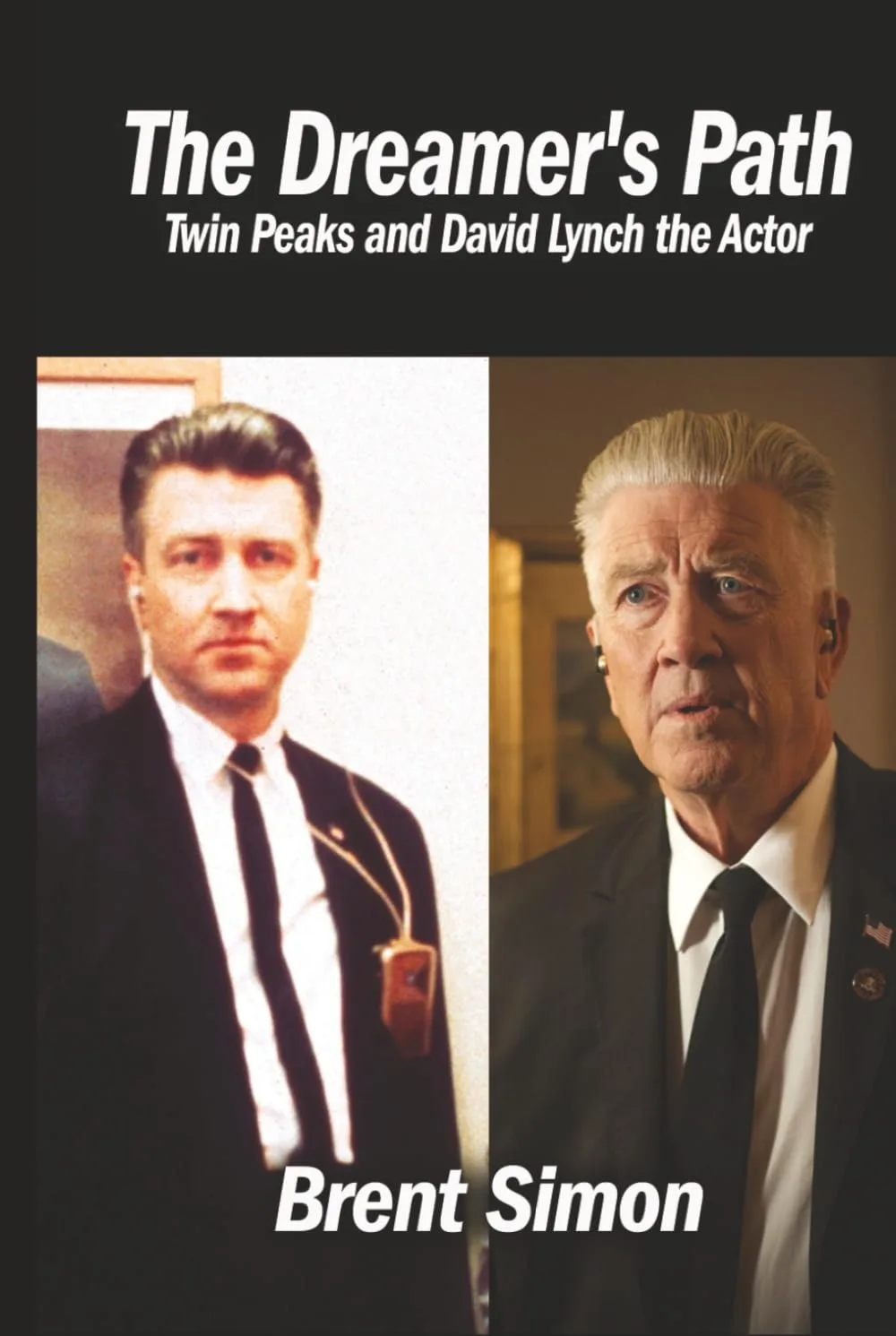
Brent Simon, the former President of the Los Angeles Film Critics Association (and, it should be disclosed, a friend of mine and former freelancer for a book I edited called Magill’s Cinema Annual), has taken a unique and rewarding approach to considering Lynch’s artistry: Examining the times that Lynch chose to get in front of the camera. The Dreamer’s Path: Twin Peaks and David Lynch the Actor is a must-own for fans of one of the best creators of his generation, an argument that Lynch’s on-screen work said as much about his interests and talents as his direction.
Simon began working on The Dreamer’s Path before the passing of one of his favorite filmmakers, expressing disappointment that a planned interview with Lynch for the book never took place. Whereas a lot of authors might have simply folded up the project when that central conversation never happened, Simon forged on, analyzing every single time that Lynch has been on screen from his early shorts through films by him and others, and, of course, his extensive work as Gordon Cole on “Twin Peaks.” That’s the acting work for which Lynch will be most remembered, but Simon spends time considering how every appearance, even early ones in which he had no lines, said something about Lynch’s growth as an artist.
Believe it or not, David Lynch had almost three dozen acting credits, according to IMDB, although some, like a reported cameo in “The Elephant Man,” are in question. While Gordon Cole is his best acting work overall, I’ll always have a place in my heart for his memorable supporting turn in John Carroll Lynch’s beautiful “Lucky” and, of course, his stunning cameo at the end of “The Fabelmans.” He had an acting career as unpredictable as his directing one, doing experimental shorts, two episodes of “Louie,” and a couple dozen voice roles on “The Cleveland Show.” You couldn’t put Lynch in a box as a director, and the same held true for his acting career.
What’s striking about Simon’s book is how many people were willing to talk to him about working with David Lynch the Actor. He spoke with over 70 people about their collaborations with Lynch, including Louis C.K., Heather Graham, John Carroll Lynch (no relation), Jennifer Lynch (relation), Michael Ontkean, and, remarkably, the legendary Isabella Rossellini. Simon marries detailed research with the humanist touch that comes from including so many collaborators. It’s not the kind of dry critical analysis that comes so often with books that dissect the influence of auteurs; it’s the kind of warm remembrances that come when people are asked to share a story about someone who is a friend as much as a colleague.
In the end, The Dreamer’s Path is a wonderful combination of underreported subject, detailed research, and passionate writing. Simon’s admiration for Lynch, not just his work but the person himself, comes through on every page. There are a lot of books out there about David Lynch, but this one is different, a must-own for fans of “Twin Peaks.” And maybe even for fans of “The Cleveland Show.”