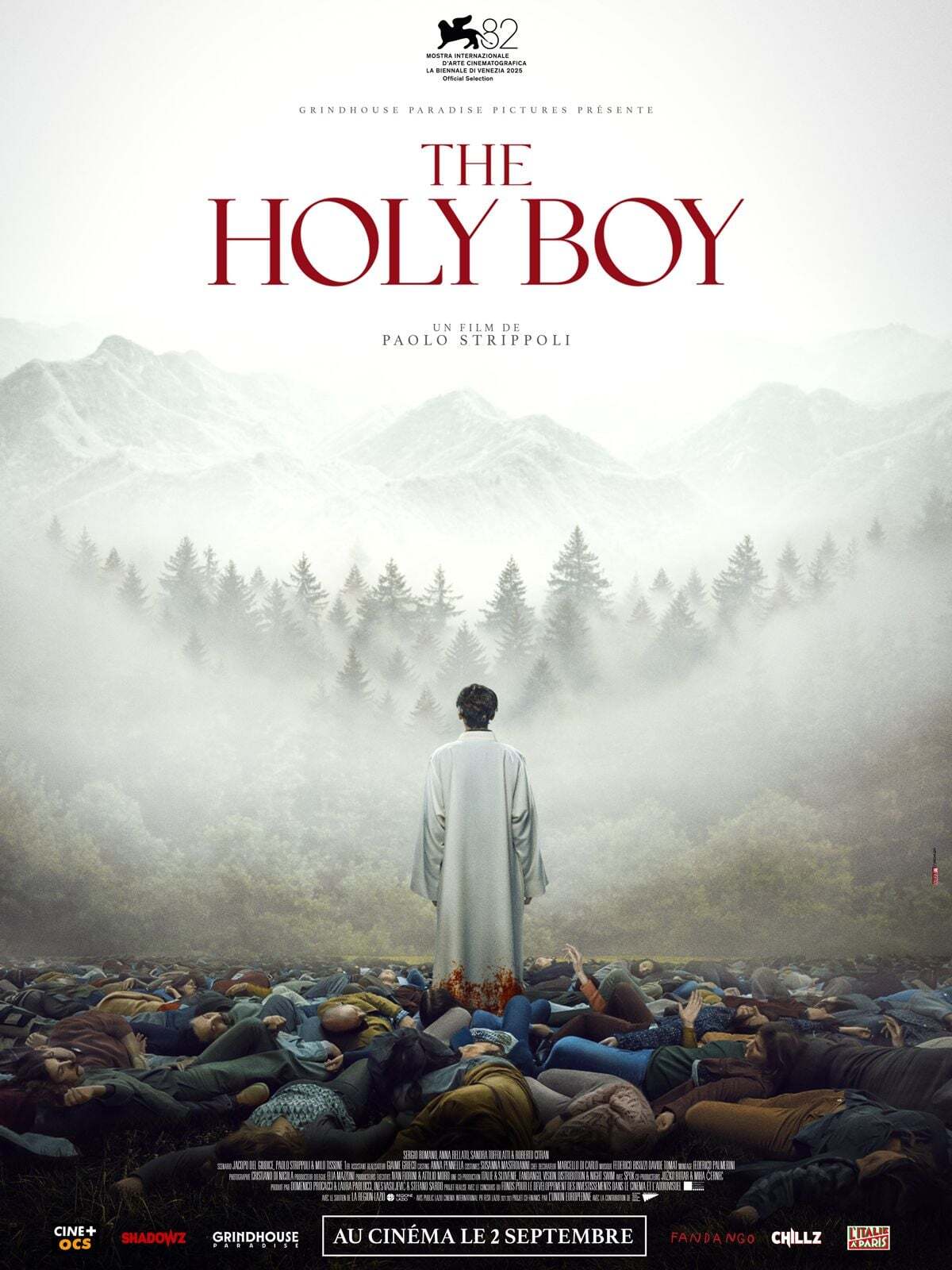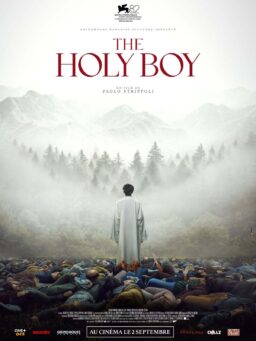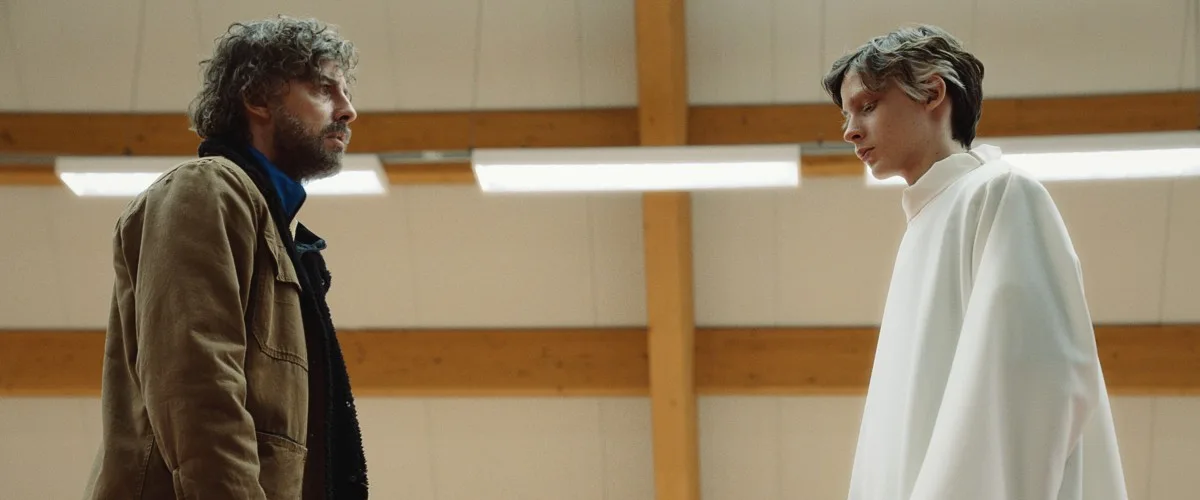
In Paolo Strippoli’s gripping, supernatural horror film, “The Holy Boy,” a small town tucked away in the Italian Alps is so serene that its motto reads: Everyone smiles here. It’s a blithe spirit Sergio Rossetti (Michele Riondino), an embittered former Judo champion arriving for a three-month stay as the substitute physical education teacher, finds disconcerting. But he also senses a hostility lurking underneath the glad handiwork and free shots he gets from these seemingly warm inhabitants. Sergio quickly learns that the town’s hopes rest in the comforting arms of Matteo Corbin (Giulio Feltri), a 15-year-old with telekinetic powers that can calm those who hug him.
Strippoli’s arresting film could be labeled as the start of his rise to prominence. While he previously co-directed the Netflix-produced “A Classic Horror Story” and solo helmed “Flowing,” “The Holy Boy” became his most notable work when it premiered at the Venice Film Festival in 2025. He followed that film up this year with “The Spiral,” which similarly bowed at Venice and is Italy’s Best International Film submission for the 99th Academy Awards. With its captivating sound design and religious and queer themes, this film offers an intriguing early signature in an already flourishing career.
Like many films in contemporary horror and cinema writ large, “The Holy Boy” is deeply concerned with how we process grief on individual and communal levels. While Rossetti, a violent alcoholic, arrives in town with his own traumatic baggage, this village is also in the throes of mourning. Back in 2009, a deadly train crash claimed the lives of 46 people. Around that same time, Matteo, an infant when the tragedy occurred, watched from his high chair as his mother took her own life. Since then, his fate has been tied to the desperate citizens of a secluded, mountainous area that literally worships him as a saint.
One could, in fact, call “The Holy Boy” a bleak coming-of-age work. Matteo isn’t treated like any old teenager. This quiet kid, with a streak of white running through his hair and across his left eyebrow, abides by a strict schedule that involves a rotating group of adults visiting him for a kind of communion and healing. Making matters worse, his severe, taciturn father Mauro (Paolo Pierobon) is in on it too. With this much attention directed at Matteo, his classmates openly show their resentment. There’s also one peer, a skater named Lorenzo (Diego Nardini), whom a smitten Matteo believes might offer a balm to his heavy duties. Their tenuous, sometimes sexual relationship is complicated by Matteo’s ability to inhabit other people’s bodies, causing questions of consent to arise from Matteo’s many explorations across town.
The only person attentive to Matteo’s feelings is Rossetti, a rueful character who, as the emotional center of the movie, is difficult to fully know. Even as he begins to grow close with Michela (Romana Maggiora Vergano), a bartender Matteo has been told needs him more than anyone else in the town, Rossetti remains distant. His tragic backstory doesn’t make him any more interesting either. When the film focuses on Rossetti, it can feel slow and one-note, because his thematic importance never rises above the basic building blocks of his character.
Rather, it’s the town’s denialist inhabitants that better draw one’s attention. They’re a mix of people living in a past they refuse to confront, upholding a reality—through banishment of non-believers and ritualistic council meetings—that doesn’t exist. Their grief-stricken verve somehow gives DP Cristiano Di Nicola’s rich sense of shadow greater depth and Federico Bisozzi and Davide Tomat’s clangy score soulful textures.
That said, sometimes Strippoli’s film can be too measured, too controlled. Nothing really happens that’ll surprise or confound you, at least not until its shocking end, causing the 122-minute runtime to feel repetitive. And yet, it’s that overcalibration, which leaves nothing up to chance, making everything go down too easily, that’s fitting for a film like “The Holy Boy,” where worship doesn’t represent salvation. It’s a toxic barrier between life and loss.