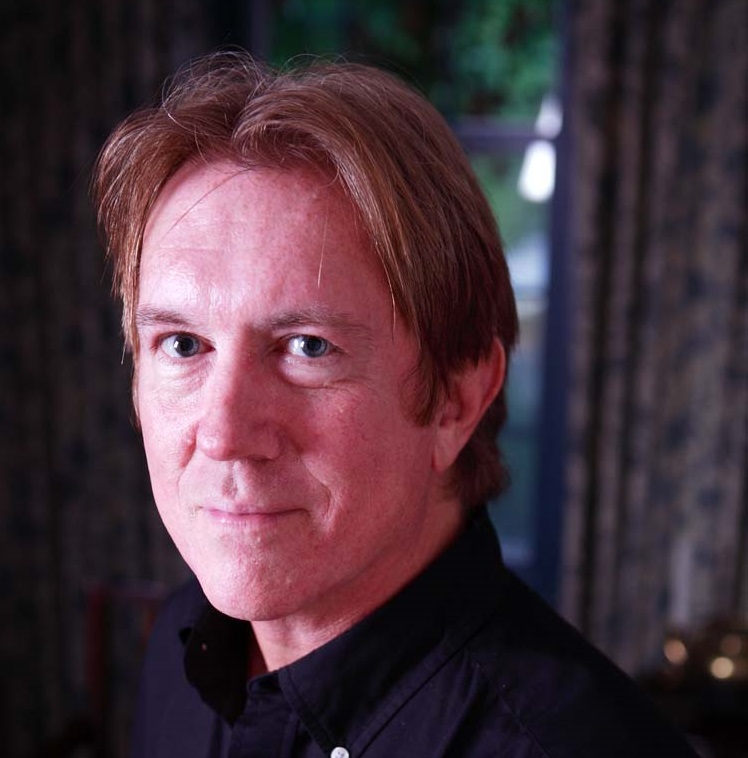
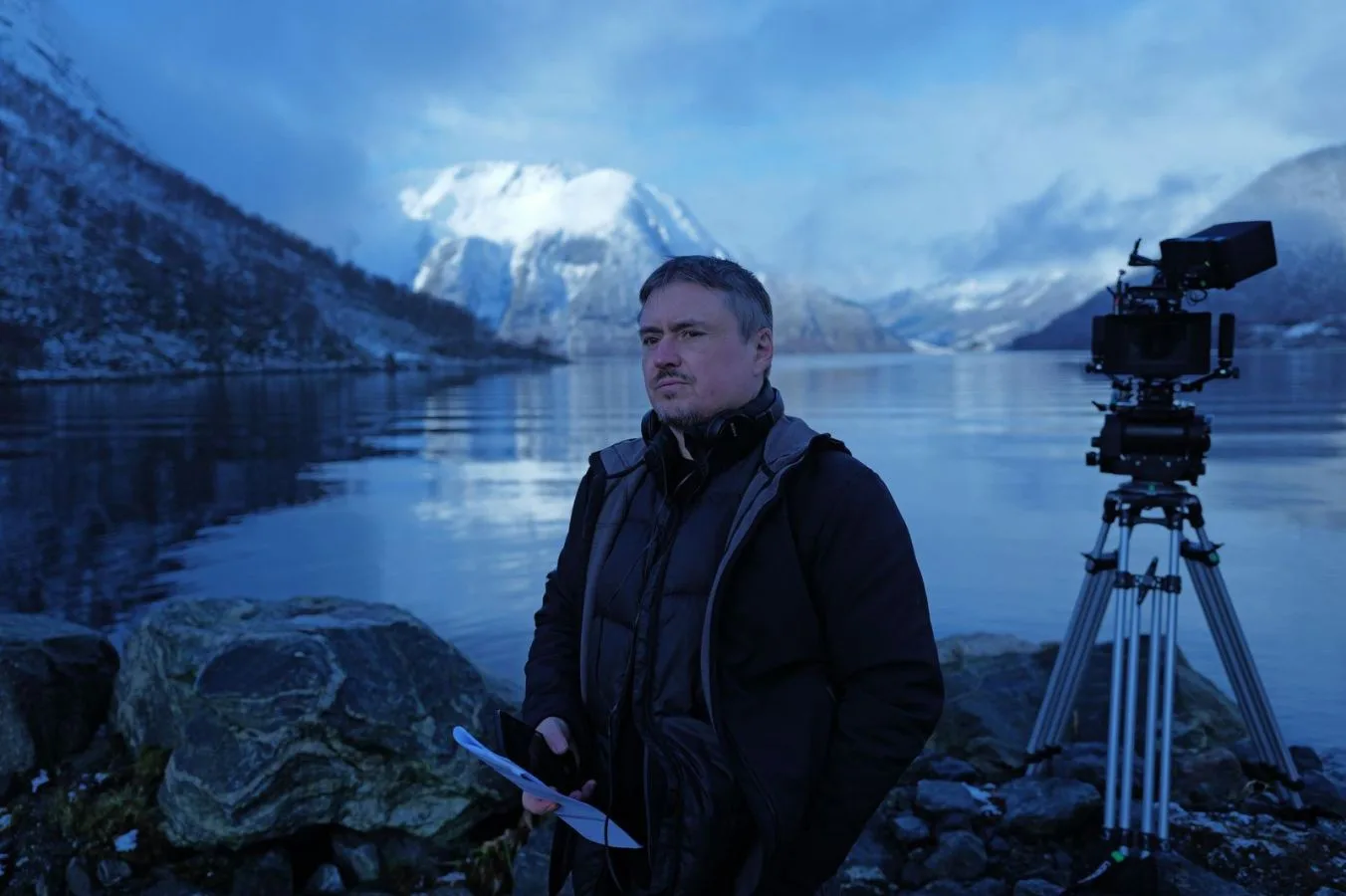
Cristian Mungiu’s “Fjord” might well be next year’s Oscar winner for Best International Film. It was on track for that award after winning the Palme d’Or at Cannes in May. But the controversy that has followed the film since Cannes could prove an impediment, even as it draws public and press attention.
Mungiu has been a leading light of the New Romanian Cinema since his second feature, “4 Months, 3 Weeks and 2 Days,” won the Palme d’Or in 2007 (he’s one of a handful of directors who’ve won the prize more than once). That film, which concerns abortion, showed his willingness to tackle tricky, challenging subjects.
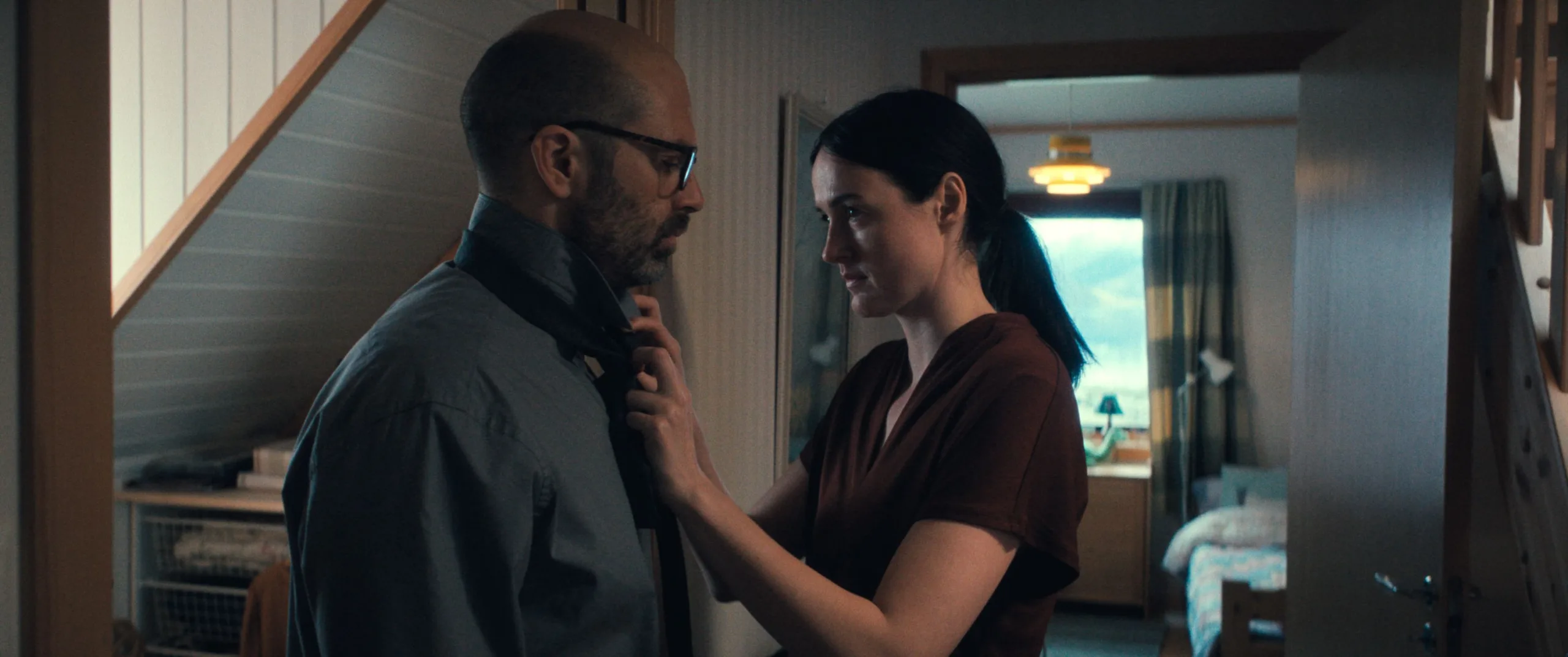
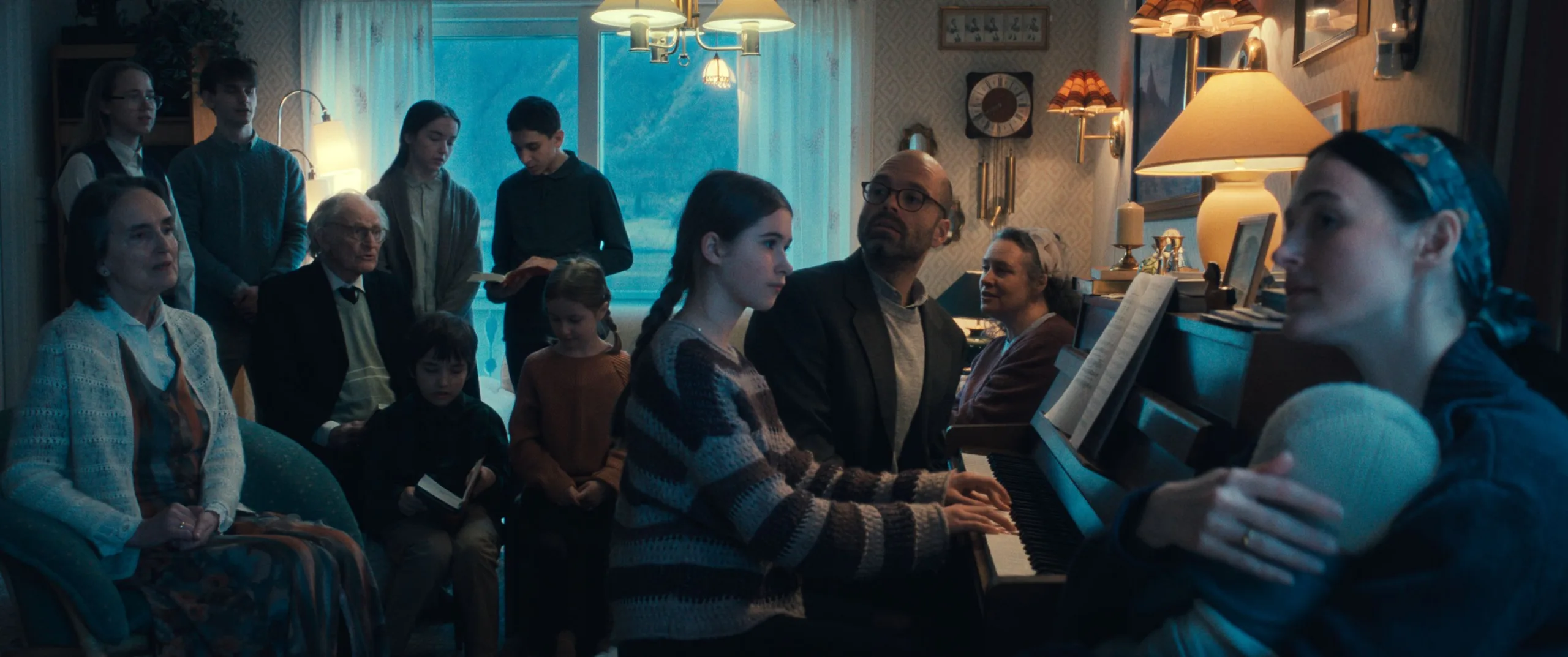
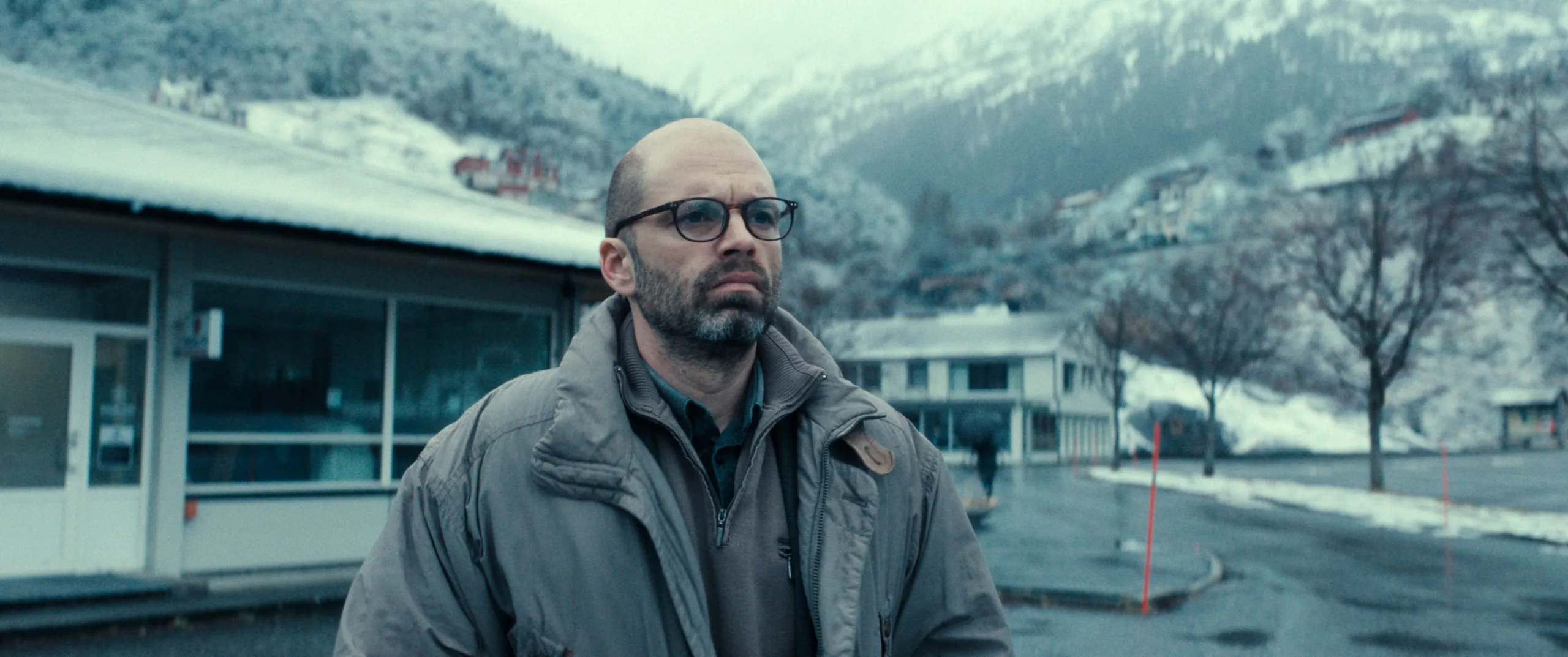
His first film made outside Romania, “Fjord,” concerns a Romanian family that moves to an idyllic town on the Norwegian coast, bringing their conservative Christian beliefs with them. Mihai (Sebastian Stan, who was raised in Romania and speaks the language) is a Romanian married to Lisbet (Renate Reinsve), a Norwegian woman. They have five children: four school-aged and an infant who is still nursing. At first, their integration into the community goes smoothly; their neighbors are welcoming, and they find like-minded Christians to worship with.
But things begin to change when someone at the kids’ school suspects they may be being physically punished at home. As a result, officials from Norway’s Child Protection Services come to the family’s home and take all five children away. This begins a nightmare for the parents in which they are put on trial and eventually threatened with prison.
Mungiu is one of the world’s great writer-directors. He usually films each scene in a single shot, a technique that focuses the viewer’s attention while producing intensely concentrated performances from his actors. There is so much subtlety–and a calculated degree of ambiguity–in “Fjord” that it repays multiple viewings.
This interview has been edited for length and clarity.
“Fjord” was inspired by articles you read about cases like this in Europe, not just in Norway, but eventually you read one about Norway.
The first article that made me realize the big scandal happened in Norway. It was 10 years ago. It drew a lot of attention to what later became a pattern of similar cases. And then, yes, I started noticing that they were not happening just in Norway. They were happening especially in Scandinavia. Whenever people from more conservative countries would move over and meet a very liberal, progressive view of the world, they had to confront different ideas about who has the upper hand when we talk about children. Because, from all these countries, you come with this idea that the children belong to me. I’m their parent; they belong to the family. There’s nothing to talk about.
In these societies, education is different, and they want to preserve the traditional view of the family. So parents might fear how their children are educated in the spirit of the new society. If you educate them at a different [more gradual] speed, they might see that the new society’s values matter more than your freedom to decide for your own children. Of course, whenever violence is involved, there’s no story—you need to act and save these children, or save the women, or whichever member is in danger.
But the film speaks about a lot of decisions that [the state] has to make without knowing precisely what the level of violence in the family is. Basically, some of the decisions are based on the fact that, given [the state’s] interpretation of violence, the families could have been violent, but at the same time, it’s a matter of the principles that [the state] wants to promote in society.
And this is the part that frustrates these families, because it’s a way of saying, well, yes, you might have been free to come here to this country, and we’re sorry that we haven’t got the time to tell you, but you need to conform. You need to conform to these values, even though you weren’t given the opportunity to check these boxes and say, “Yes, I know, I will conform.”
The answer comes with a knock at the door when you find out the hard way that this is what we expect from you. And that’s a bit tricky because it means that we expect these people to make this huge leap forward in their development. You know, Western societies reached this level of progressive values and empathy after hundreds of years of, I don’t know, wealth and development and education, after which we can be empathetic with others, because we have solved our problems. But we don’t understand that these people come from places that were like ours 100 years ago.
And it’s not fair to expect them to adapt and become “good Norwegians” or “good Americans” right away. Give them time, respect, and the freedom to be a bit different, to preserve the identity they want to pass to their children. This is the source of the conflict.
Some things in the film are intentionally ambiguous. For example, is this family targeted because of their religion or just because of how they raised their children?
Who can answer this? After investigating as much as I could, I talked to the family. I talked to several families. I talked to their children. I talked to their lawyers. I talked to the lawyer on the other side, the police, the judges, the journalists, and their translator. In the end, I can’t say that I know the truth. I know what everybody told me. And this is what’s in the film. This is the point the film tries to make: most of the time, you have to make a decision without knowing exactly what happened in the family. You don’t have this access to the intimacy of the family. But you still need to make a choice. For the benefit of the children.
You know, actually everybody claims to be acting for the benefit of the children. But a lot of wrongdoings in this world come from noble intentions. Of course, if you talk to the family, they say, “Well, it’s so obvious that these people discriminate against us.” And from what I’ve seen, it’s not exactly because they are religious, since the Norwegians are religious too. That is my great surprise after visiting the country. But these people [the Romanian family in the film] are zealous.
Are they evangelical?
Yes, yes. The film doesn’t wish to mention any cult in particular, but it’s this kind of neo-Protestant cult where people constantly try to make, how do you say… converts. They try to convert you. And they practice it in a very strict way. And it’s this strict way that became ambiguous for the neighbors, for the teachers.
So everybody was aware that there’s a lot of discipline in the family. And at some point, you can’t really tell how much it was based on the fact that they imagine that this discipline might also, you know, involve physical punishment, or the discipline itself is already a way of brainwashing the children. [But these suspicions led to the state’s involvement], in the families’ view. In the real case.
So there was a real case?
I mean, it’s very close to what you saw in the film. But finally, I fictionalized it enough to make the themes clear. But what happens to the family in the film is very close to what happened in reality. The main family I spoke to had five children and moved to Norway. He is an IT engineer. She is a nurse. They lived peacefully there for several years with their kids until this happened, and then they had to go through a very long trial. The moment they got their children back, they just left.
On the other end, the person who called Child Protection in the real case was the directress, the school director, who also happened to be their neighbor. After she saw what the effects of this were, she was trying to push away Child Protection, saying, “This is exaggerated. I just wanted you to keep an eye on or to talk to these people.” But it doesn’t mean that, you know, you have to take away their children because actually they are quite friendly people with their children.
Have you shown the film in Norway?
Yes, and it got two kinds of reactions. On one side, people who consider themselves to have been discriminated against by Child Protection were among the first spectators. They felt that some sort of, I don’t know, reparation was done. On the other side, I met their competitors, fellow Romanians, who told me after the screening that, you know, it’s possible his family was teaching the older brothers to beat the younger children to make them learn the Scriptures. And I told them, if you know this as a fact, come with me to the police tomorrow.
Watching the film, you see that the Child Protection people think what they are doing is right, for the children and the society. But their power within the society is certainly questionable.
And this is true all over. I’ve been talking, you know, in all these countries, with all the communities, the minority communities of Romanians, Poles, and Indians who came to watch the film, whom I met during my investigation. If you talk to them, they all say these people [like the officials in Child Protection] have abused their power since the ‘90s, and it’s not good to give someone so much power. It always needs to be checked.
When I was there, they told me that in the majority of the cases, the children taken from the families were from families of migrants. And it’s not likely that these families are more violent. On the other hand, what’s funny in this case is that whenever you talk about it to one of the sides, they consider that the others are fully brainwashed. There’s nothing you can talk to them about.
This is why my concern is no longer mainly about Child Protection in Norway. It’s about this problem in the societies we live in today, whether it’s Romania, the U.S., or France, where we can’t find ways to communicate with other bubbles in society that have different views than ours. How are we going to coexist with these people who are as numerous as we are? Definitely, in my mind, not by being as radicalized as they are. I think the danger is that we become as radicalized as the people we were trying to reach.
And this should never be the answer from the part of society that considers itself superior and more educated. You need to be wiser in the dialogue. We expect more from you, especially because you are more educated. Don’t behave like the people you are positioning yourself against; if you’re telling them that having a majority means you need to conform, that’s the wrong message. This is what they will do when they are the majority. They will force you to conform. So don’t give this answer. Try to be wiser.
From the time the film was at Cannes, it started getting negative reactions, right? I saw you used the phrase “left-wing fundamentalism” about this. Have you gotten the sense that this has convinced some people that they should be more inclined to listen to conservatives rather than just dismissing them or pushing them out?
I’m very surprised at the negative reaction that has come from so-called progressive people. Unfortunately, they show how hard it is to change your perspective if you think you hold the truth. You can’t doubt anything because your ideology is already right, and no other viewpoints are valid. There is only one, and it belongs to you. But how is this way of thinking different from conservative fundamentalists? How do you differ from that?
First, stop believing you can’t learn anything beyond your own attitude and ideology. Think historically: people thought for years and years that it’s okay to have slaves and it’s okay to burn witches. That was the norm then, and these people died believing that what they thought was right. Don’t be so sure that this is the end of evolution.
If you are wiser, try to find the answer in returning to a more inclusive society, because inclusiveness is part of your values. It’s not part of the values of the people you’re criticizing. So practice it. Instead of just claiming it. Be more empathetic, even when these people are in the minority.
Unfortunately, they don’t seem to be more inclusive. They seem to behave like any majority. They tell the others, “Now that we are the majority, you need to conform.”
This is what the film is about. I think it’s fair to expect more from this side of society. It’s a way of saying, be more responsible, and don’t use the same arguments you are criticizing. I was disappointed to see so many people so frozen in their beliefs that they don’t understand I took the risk of being neutral, of being a motivator, bringing these two sets of arguments for the sake of listening to the others.
One very interesting line in the film, said by one of the Romanian officials to Mihai, is about Norway. He says: “They didn’t have Communism.” That’s a really interesting perspective. Norway can have a state with real illiberal tendencies, but they don’t have the history to know what that can lead to. Do you agree with that?
I agree, but even more. I’m sorry to say this, but it’s the same thing with the U.S. There was no Communist rule here, and the same thing with France, where people are very radicalized on the Left. I wish they could come over to live [in Romania] in the ‘50s and ‘60s, when it’s not just that physical violence was used by our teachers in school. But just imagine that people could be arrested on the streets for the values that they were holding, and they could be tortured. This is our memory of Communism.
That is why, for us, it’s hard to imagine Communism as just nice principles. It’s not fair to be nostalgic about something that you haven’t lived through. For us, that’s difficult to accept.