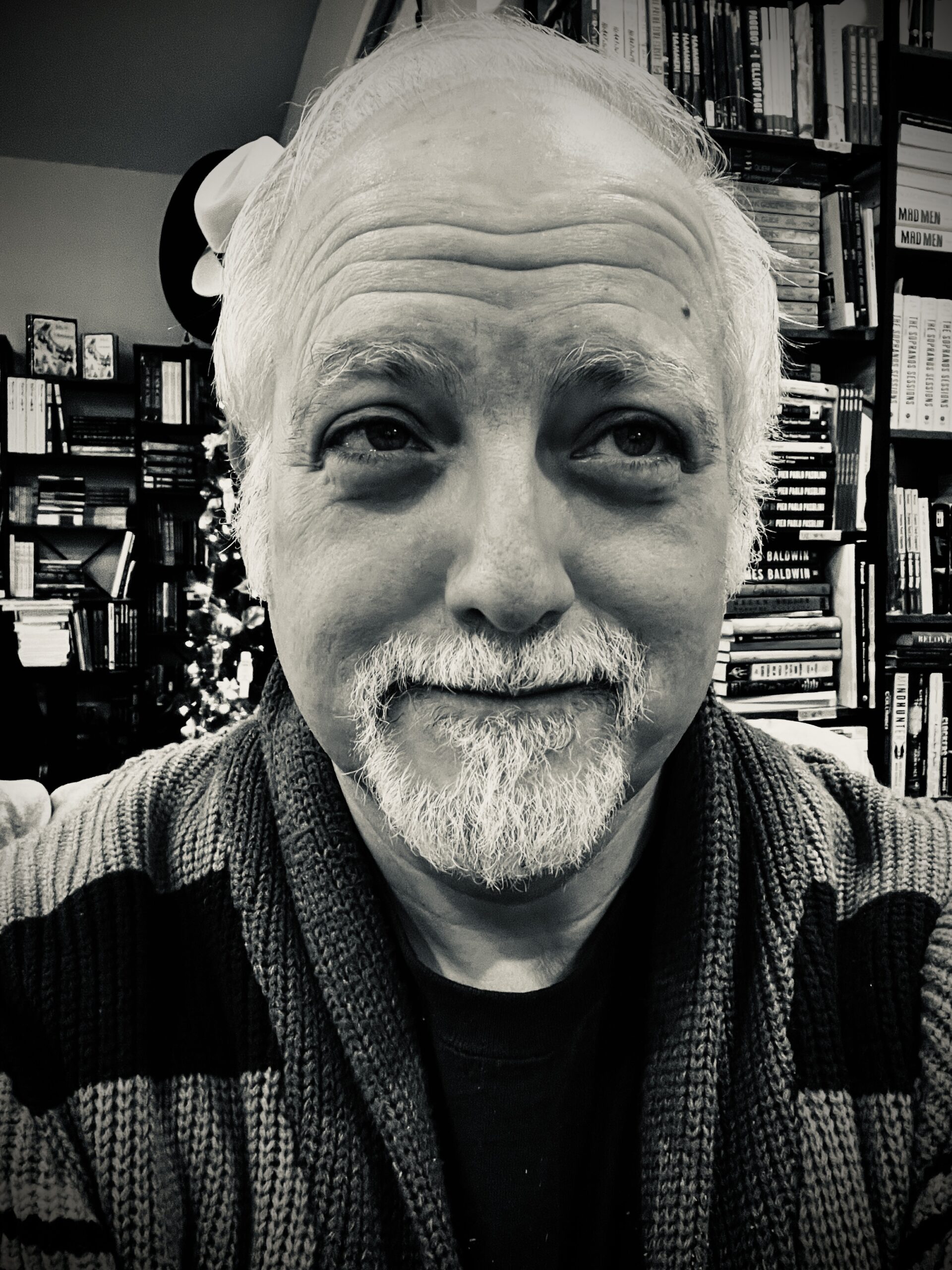
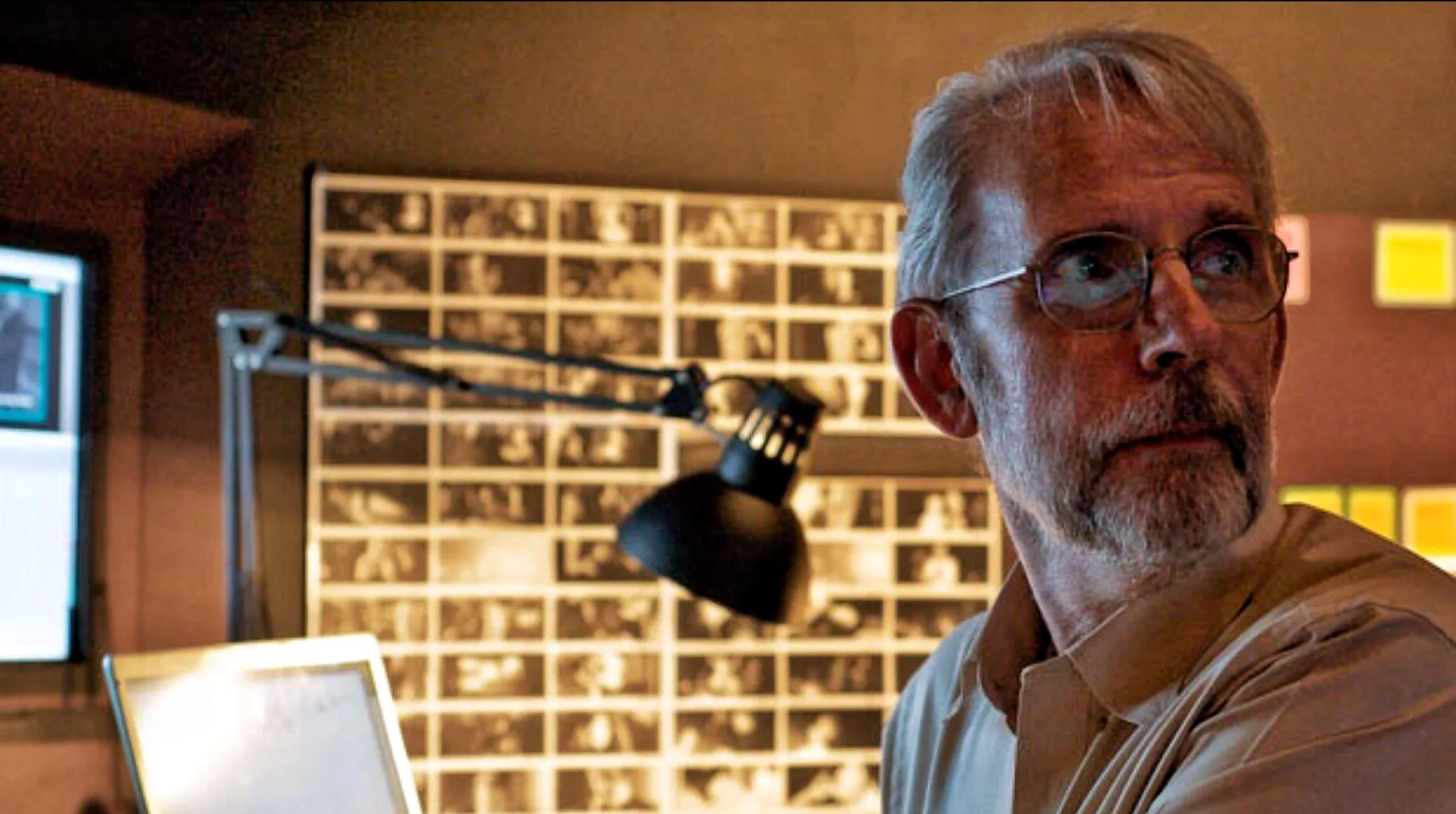
Walter Scott Murch is one of the most influential figures in film history that most people haven’t heard of.
Now 83, Murch was born in New York City and was part of the newest generation in a mostly Canadian family of artists that also included his father, painter Walter Tandy Murch, and his grandmother, Louise Tandy Murch, a music teacher who was the subject of the 1986 film “At 99.”
After studying Romance Languages and the History of Art in Italy at Perugia and at the Sorbonne, Murch drifted into the movie business through graduate film school at the University of California, Los Angeles. There, he met many future collaborators, including screenwriter-producer John Milius (“Dillinger,” “Conan the Barbarian”), the writing team of Willard Huyck and Gloria Katz (“American Graffiti,” “Indiana Jones and the Temple of Doom”), Philip Kaufman (“The Right Stuff,” “The Unbearable Lightness of Being”), George Lucas, and Francis Ford Coppola.
The latter three filmmakers were part of the Bay Area production scene, a defiant splinter of talent that spanned San Francisco, Oakland, Berkeley, and Marin County generally. Its denizens wanted to make personal art accessible within the existing commercial system. Among other culturally significant companies, the Bay Area scene birthed Lucasfilm, Pixar, and American Zoetrope, founded by Francis Ford Coppola and George Lucas.
Over the decades, Murch edited Lucas’ debut “THX 1138,” Coppola’s “The Conversation,” “Apocalypse Now,” and “The Godfather” trilogy, Fred Zinnemann’s 1977 late masterpiece “Julia,” Jerry Zucker’s megahit “Ghost,” and Anthony Minghella’s “The English Patient,” “The Talented Mr. Ripley,” and “Cold Mountain.”
The latter, based on Sri Lankan-born author Michael Ondaatje‘s same-titled novel, was released this year, thirty years after its debut. “The English Patient” is being celebrated with a live Zoom conversation between Murch and cinematographer John Seale, both of whom won Oscars for their work on “The English Patient.” It happens tonight, October 14, and the recording will be repeated twice, on Oct. 15 and 16.
Murch’s deep knowledge of sound and picture made him a kind of “one-stop shopping” collaborator for filmmakers with an adventurous, all-encompassing aesthetic. The best examples are probably Coppola’s “The Conversation” and “Apocalypse Now,” which tell their stories as much through sound effects, music, and various kinds of aural manipulation as through filmed images.
He is also an invaluable teacher to several generations of filmmakers and movie fans, not just through his editing work and interviews about it, but through a series of plainspoken books on editing technique, history, and style that he authored or co-authored.
This interview has been edited for length and clarity.
How did you end up working with Anthony Minghella on “The English Patient”?
The movie’s producer, Saul Zaentz, and I worked together on “The Unbearable Lightness of Being,” and we got along. Sal and I were all part of the San Francisco Bay Area filmmaking community, which was Zoetrope—you know, Francis Coppola’s organization—and Lucasfilm, and Saul Zaentz, who was based in Berkeley, and a few others you may know. I was all relatively small, obviously, compared to Los Angeles.
So you hadn’t met Anthony before Saul Zaentz hooked you two up?
No, I hadn’t. Anthony and I met for the first time when I was working on Jerry Zucker’s “First Knight,” which was being shot in London. Anthony and I had dinner and got along very well. He explained one of his operating procedures: when he finds a shirt he likes, he buys 15 and never has to worry about choosing another shirt. That was his way of saying, “If we get along, this will be permanent. We are going to get married.” We really got along, personally and creatively.
It’s a shame the marriage didn’t last.
At least we worked together on “Talented Mr. Ripley” and “Cold Mountain” after that. The fact that Anthony died in 2008 was a surprise and a tragedy. I really believed he was my sure thing, that I’d work with him on all his films. Fate intervened.
You know, he was a writer-director. That is a slightly different kind of director than someone who finds a script they like. The writer of a film who is also directing it knows all of the tributaries and the possibilities that were examined but didn’t find their way into the screenplay, and he’s still kind of attached to them, so sometimes those rivulets will open up again, and as a result, he’ll end up shooting things that weren’t in a version of the screenplay at some point [previously].
The effect of this is that the first assemblies of all of Anthony’s films were, like, four or five hours long. It takes a long time to find out how to get back down to [the size of the] shooting script. But you have this great fecundity of ideas to choose from along the way.
Can you give me an example of something that found its way back in, and that you had to find a way to incorporate?
There’s a scene in the book where Kip, the Sikh bomb disposal bomb expert, goes on a rampage after hearing about the news of the bombing of Hiroshima. He holds everyone at gunpoint, but everyone else guides Kip back to a place that’s more reasonable. He takes off his turban and goes silent, and nobody talks to him. The problem with the scene as it appeared in the film, rather than in the novel, is that it came out of nowhere. We cut it out. But then we had to explain Kip’s sudden silence, because even with the [Hiroshima] scene [edited out], the audience could see that he had been through something. We spent about a week looking for an alternative solution.
And then suddenly my assistant Edie said, “You know, a bomb is a bomb is a bomb.” I asked what she meant. She wouldn’t say. And then I remembered the booby trap that had killed Hardy, who was Kip’s assistant. So we transformed Kip’s mourning for Hiroshima into mourning for his friend, bringing the mourning back to all of the people we have cared for while watching the film.
It must be difficult to make decisions like that. I would imagine that you worry, at some point, “Am I betraying the source? Am I compromising the movie in some way?”
Well, you know, we do this all the time in film, because we’re trying to make the film work. But there’s that old Italian thought on translations that says, “The translator is a traitor.” You have to betray fidelity to the original work to serve the work that is emerging in translation. You have to betray the source. Adaptation is a kind of translation, especially when you’re moving from one medium to another. It’s like moving from one language to another, but even more so. Editing a film is the screenplay’s last draft, the final stage of the translation process.
It must be fascinating to go back and read an earlier movie script and realize how much changed once you started editing what was actually shot.
It is fascinating. You know, when Anthony published his screenplay for “The English Patient,” he published a script of the film in the way it had evolved, and I said, “Well, wait a minute! You know the evolutionary process of cutting a four-and-a-half-hour film down to two-and-a-half hours isn’t reflected in this published screenplay? People who read this are gonna think, ‘Well, if all the stuff in the movie was in the screenplay, why did it take them so long to make the film?”
So [in response to that] Anthony added a paragraph saying, effectively, that much of the screenplay as it appears in [the published version] happened during the editing of the film itself.
That’s a difficult concept to get across, even to movie buffs. A lot of these published, bound documents that present themselves as “The Screenplay to Such-and-Such” are actually transcriptions of a movie’s finished cut. That gives fans a false sense of artistic intentionality, at least in terms of how much of the initial plan was actually followed through.
A major exception, in my experience, is Francis Coppola. When he publishes the screenplay for a movie he wrote and directed, he publishes the real shooting script, as if to say, “This is what we went into battle with.” That’s a big service to film students, because it lets them compare the text with the finished film and see how much evolved and changed during production.
Does the cutting back and forth between different time periods in the finished movie of “The English Patient” that people saw in theaters move from one time period to another more or less the same way it did in the shooting script? Or is it different? And if it’s different, how different is it?
It’s very different, actually. The film has 46 time transitions, and only six of them were indicated in the [first shooting] script. All of those other transitions were kind of a side effect of the first transition that happened in the [script]. Anthony just did not like what he shot for that scene. But once we pulled that scene out [of the first cut of the movie], everything else fell into place like a line of dominoes. We had to reinvent many of the transitions [from the novel]. The additional 41 transitions you see in the completed film originated primarily from editorial decisions that Anthony and I came up with [during] the editing. A lot of those were my suggestions.
What’s an example of a transition that was devised during the editing process?
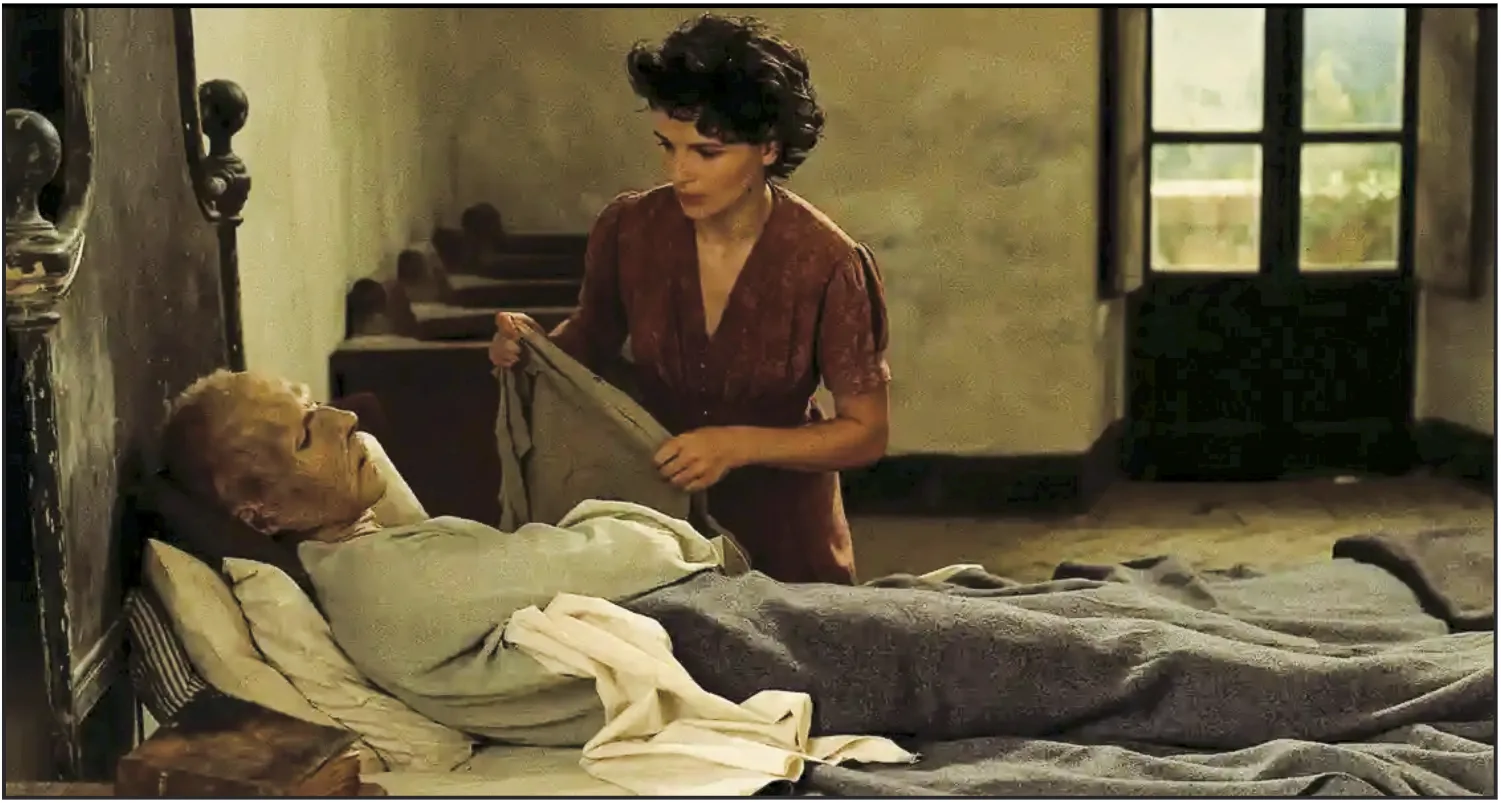
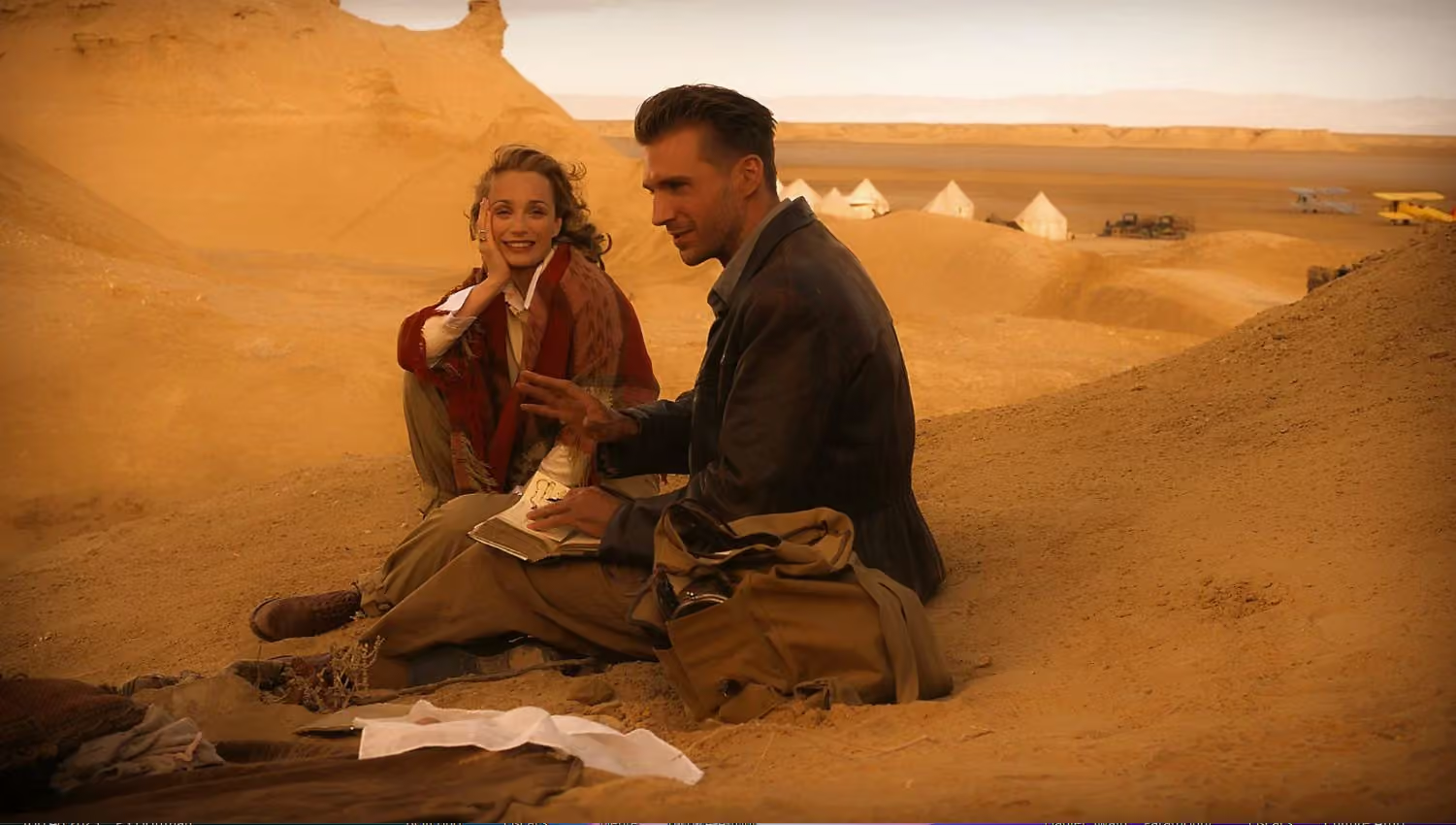
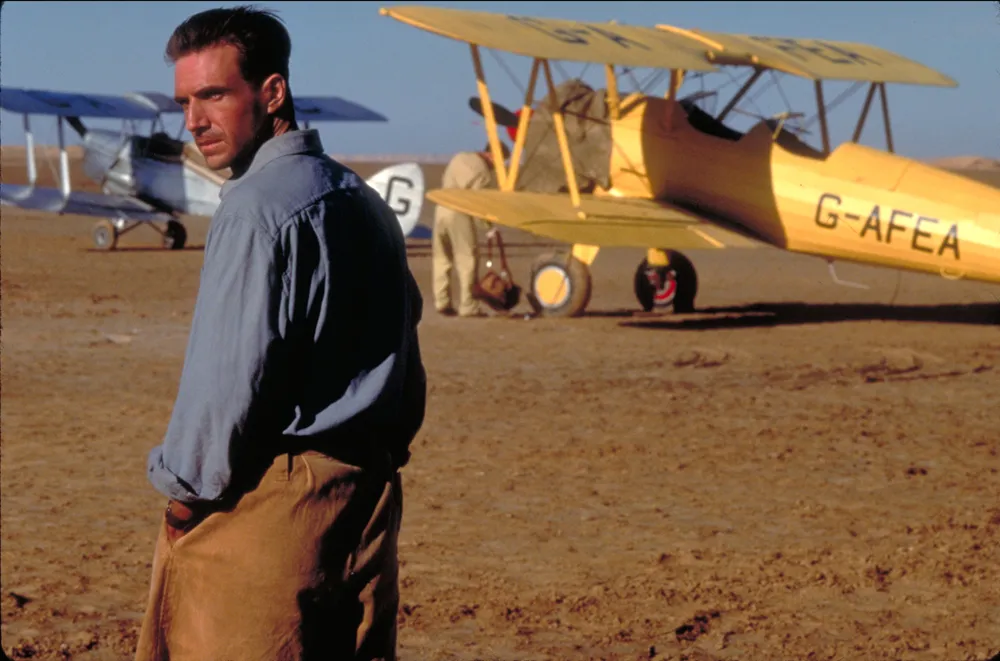
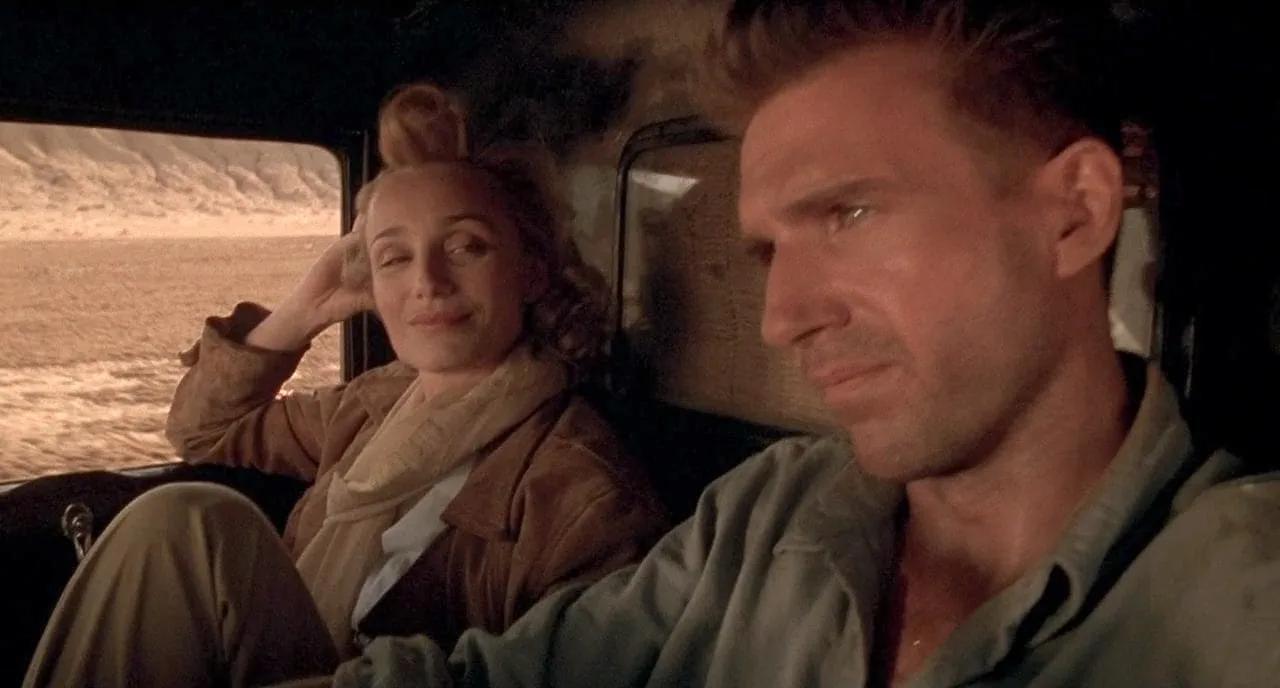
The transition where they’re trapped in the sand [in the past], and we go back to the monastery, to a very brief moment where we see Catherine Clinton brushing Laszlo’s face.
Where does “The English Patient” sit for you, in your career, in terms of needing to learn new things to get a translation right?
It’s definitely true that everyone has learning experiences. I choose what films I want to work on by asking myself, “Am I going to be moved out of my comfort zone on this project?” Obviously, something in the screenplay has to make you identify with it, but at the same time, for me, there needs to be an element of, “I don’t quite know how we’re going to do this.” Or, “I can’t quite see how this is all going to work out.” Or just, “Am I able to do it?”
And you know, while I hesitate to put the exact percentage on that, there is probably a 10% element of danger in what you just called ‘the learning experience.’
Where was the danger for you in this movie?
On ‘The English Patient,” curiously, when I read the screenplay, I said, “This would be a very good film to edit on the Avid, [Ed.: the first nonlinear, non-film-based editing system to become widely used]. This was 1995, when the Avid was not yet accepted in mainstream filmmaking,
Why did you want to cut the movie on the Avid?
The transitions. I thought, ‘This story has this many transitions, and we can do a lot of experimenting with the transitions very easily on the Avid. Whereas, if we’re editing on film, it’s much harder. When I worked on “The Godfather, Part II,” we reduced the number of transitions [indicated in the first shooting script] from 14 to 7. Here, we ended up with 46.
Was Anthony excited?
He was cautious. When I told him I thought we should try cutting this movie on the Avid, Anthony came back a day later and said, “No, I want to use film. I’ve talked to some friends in England, and they say, ‘Watch out, because Harvey Weinstein is a producer on this. If you edit digitally, he can easily interfere in the editorial process. So you should make it more difficult for Harvey by editing on film itself, not digital.’” So we started out editing on film, using the KEM editing system, a flatbed German system that I had used on “Apocalypse Now” and “The Conversation.”
Five weeks into the shooting, my wife called and said, “Our son has just been diagnosed with a brain tumor.” So I had to fly back from Rome to San Francisco. I told Anthony and Saul, “You know, you’d better find another editor, because I don’t know how this is going to end up.” And they said, “No, we’re going to stay with you; it’ll all work out fine.” And on the flight back to San Francisco, I thought, “Well, okay, the only way this is even possibly going to work out is if we switch from editing on celluloid to editing digitally. “
So we made that transition. That marked the first, and I think only, time anything like that ever happened: a production started cutting on film and then moved to the Avid. That transition created a fantastically complicated Rube Goldberg contraption for us, especially since it was all happening very early in the Avid’s evolution.
But in the end, it all worked out. I was offline for, let’s say, eight weeks during the operation and his subsequent recovery. Because we were using Avid, I was able to accelerate, catch up, and recapture those weeks during post-production. “The English Patient” was the first film edited digitally to win an Oscar for editing. And as you may know, my son, Walter Scott Murch, Jr., is still alive, all these years later.
What jumps out at me from your books is that you constantly put cinema in general, and editing and sound design specifically, into the wider context of art, language, communications technology, and history. How did someone so genuinely intellectual end up in Hollywood filmmaking rather than becoming a scholar or a professor?
At 20, I studied art history and Romance languages at the Sorbonne in Paris. That year just happened to be 1963, the height of the French New Wave. So there I was, in the hometown of modern cinema. You know, you couldn’t be 20 years old in Paris in 1963 without getting a good injection of the cinema virus, and I did!
When I came back to university in the United States, I thought, “Uh, well, hmm—What if I went on to graduate school in history of art? What would happen?” And I thought, “What appeals to me about cinema is that it simultaneously—potentially, at least—rewards fairly serious thinking about literature and structure and personality and psychology and aesthetics, but at the same time, it is also a craft, like shoemaking, that you must learn in the way that you would apprentice in a trade. You get taught, “This is what you do, and it has to be in focus, and [the sound] has to be so many frequencies per second.” That second aspect appeals to me a great deal, because it grounds the art in practicality.
And of course, in the commercial system, ultimately the movie has to make money. The film has to respond to the market. All those elements of cinema appealed to me, whereas, at that time, as a 20-year-old, the kind of things people wrote about art history seemed to me like opinion. You know: what is your opinion of this movement or this technique? I think I wanted something that was a little bit more than just opinion. Opinion is fine! But I also like the experimental side. Each film is an experiment, in a weird sense—a scientific experiment. That appealed to me at 20 and still does.
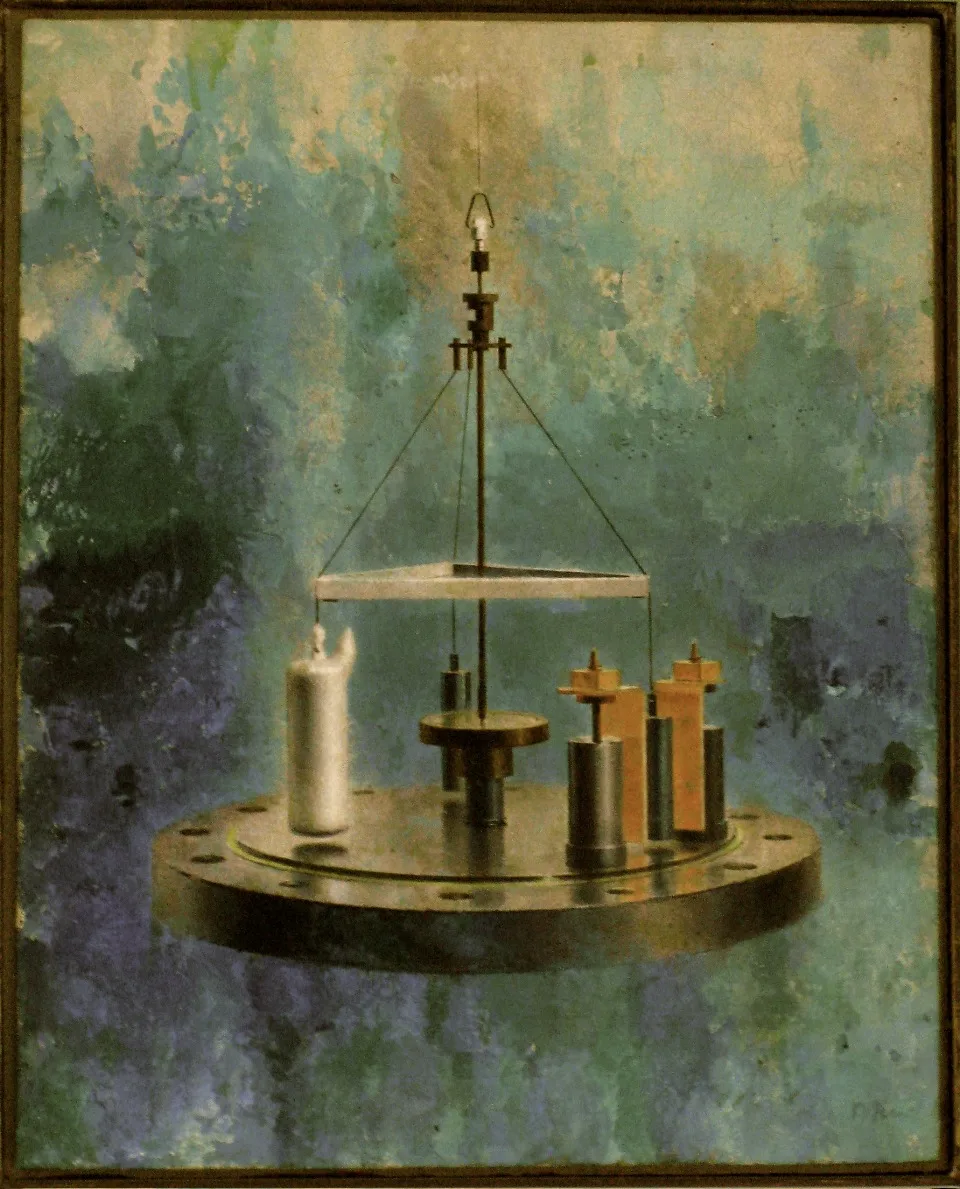
What affinities does your filmmaking work share with the work of your father, the painter Walter Tandy Murch? He was equally fascinated by the human face and body, flesh in general, and by inanimate objects, often machines and organic surfaces. While his work had a surface realism, it also had something abstract about it. Reading your writing and watching your movies makes me wonder whether you‘re not sometimes dealing with similar themes and challenges, but in cinema.
All of that is true. My father was an expert at making very exact [representational] images, like the covers he did for Scientific American. But the backgrounds of his paintings were, if you look at them, very abstract, kind of like Jackson Pollock.
About that abstraction element—it seems to me that you approach a film’s component parts with a musicality. From your writing, I know that when you’re looking for ways to move back and forth through time, you look for a movement, shape, color, or some other simple connection that will give you that springboard to jump from A to B. It reminds me of a jazz soloist deciding how to get into a solo, then figuring out how and when to get out of it. Is the process of cutting a movie that intuitive?
Yeah. It’s structured intuition, I guess. When I’m looking at the [raw] material. I take very detailed notes. You know, I type it all out, lots and lots of text about what I’m looking at as I watch the material for the first time. And then I review it all again. I add more notes when I’m actually going to start putting it all together. I also take representative images and screenshots of every setup in the film, sometimes five or more shots if it’s a complex [multiple-camera] setup. When I edit the scene, I have these [pictorial] notes on the wall, placed all around the room.
Sometimes I’ll have taped up hundreds of screenshots of iconic moments. These are what I like to call a kind of ‘emotional hieroglyph,’ hopefully answering the question, “Why did they shoot this shot? Were they after an emotion on the actor’s face, which doesn’t really have a name, but which I can see in the moment?” When I find a frame that speaks to me in those terms, that’s the frame I capture. My notes, the screenplay, and all these images I gather coalesce.
And then you have to begin somewhere. You choose an opening shot, then you have to end it at a certain point. Then the question is, “How do you decide exactly what frame to end that shot on?” The answer has a lot to do with what I’d call the musicality, or the poetry, of the shot itself. The shot has its own internal structure.
How do you discern a shot’s internal structure, then figure out where to start and stop as you choose which piece of a shot to lift out and place into a timeline alongside other shots?
My technique is to run the shot and—in a very musical sense, to pick up what you’ve said— choose to hit the stop button at a certain moment. And then I try to do it again. When I hit the stop button the first time, I note that frame’s time code. When I run the experiment again, I want to see whether, when I hit the stop button a second time, I land on the exact same frame. This tells me that if that shot is, as you suggest, a little piece of music, I am ringing the triangle at exactly the right moment.
So musicality is a big part of this? In the editing room, in a way, you are a performer who is “playing the Avid”?
You can’t edit a movie with the degree of accuracy needed unless you approach it from a musical point of view. The image that you leave people with at the end of each shot ideally should have an element of iconography to it, because the shock of the cut, and the transition to whatever the next image is—that is a poetic, musical moment. You are asking the audience subconsciously to compare this with that.
I’m talking about my own technique here, which runs directly against the original idea of what’s called “continuity editing”: obscuring the moment of the cut by cutting on action, by cutting on movement.
For readers: “continuity editing” is also called “invisible editing” because the hope is that it’s subtle enough that viewers won’t think about the fact that the movie is edited at all.
I tend to avoid those kinds of continuity editing. I do it when it’s necessary, but I prefer to celebrate the cut, not obviously, but by making the audience subconsciously aware of the compare-and-contrast moment created by juxtaposing the last image of a shot with the first image of the next.
In all the different movies that you’ve edited, to some extent it seems like when you’re going into it, there were a set of presumptions, or rules almost—like “this is the kind of film we’re making, here are some guidelines so that we kind of execute it the way I’m seeing it.” The “I” in that sentence is the director. But then you get to a certain point where you’ve got to throw all that out, right?
That’s often something that happens.
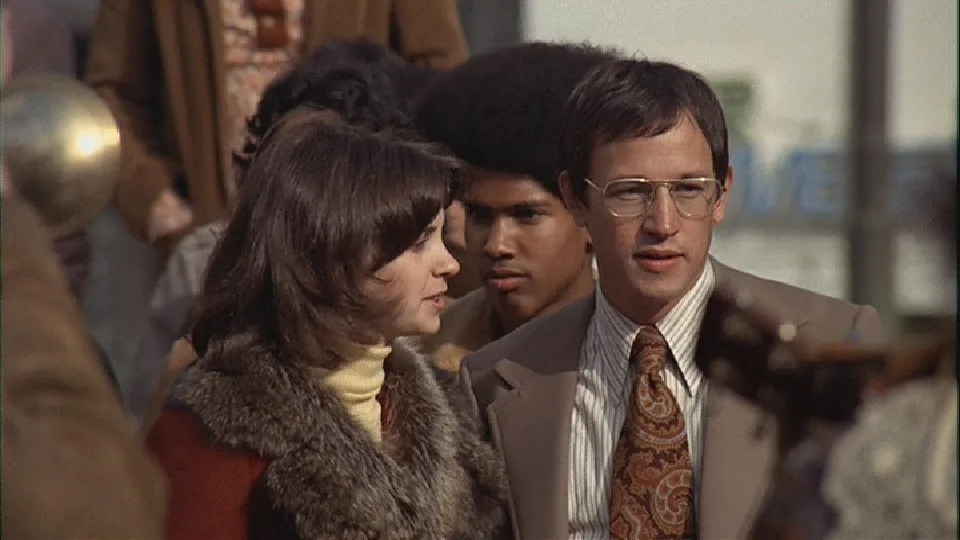
My favorite example of that is in the editing book The Conversation, the part about that line in the movie “The Conversation,” where Cindi Williams’ character tells Frederick Forrest’s character, “He’d kill us if he could.” Didn’t you struggle to find a way to help the audience realize, at the same moment as Gene Hackman’s surveillance expert, who is listening to a recording of their talk, “Wait a minute—‘He’d kill us if he could’ doesn’t mean what I thought it meant”?
That’s right, yeah! I mean, that wasn’t only not in Francis’ screenplay, but it also went against one of its central presumptions from the beginning: he wanted the conversation to be exactly the same every time Gene’s character, Harry Caul, revisited it. The hope was that—in a kind of “Rashomon” sense, because of what happened between the last time and the next time you heard that line again—you would eventually interpret it differently. My actually putting in a whole different reading of the line was a violation of one of Francis’ rules.
So you realized you had to break the most important rule, otherwise the movie wouldn’t work?
Yeah! The whole film is told from the point of view of surveillance expert Harry Caul. Every shot in the film is either on Harry or examining something that Harry is looking at or listening to. As a result, we knew we couldn’t have a “Perry Mason” scene at the end that explains what actually happened. We were trapped within a single point of view. The challenge was always, “How can you sort of make the film self-reference itself, and show Harry understanding something that he didn’t understand before, while adhering to the rules that have been laid down?”
What made the process even more complicated is that Francis wrapped production with 20% of his screenplay unshot, then left to do pre-production on “The Godfather, Part II.” His parting words to me were, “Make the best version of this that you can, and we’ll see what’s missing, and then maybe we’ll reshoot something that can help fill in the blanks.” But unfortunately, one of the big scenes we didn’t shoot was Harry realizing the couple he thought were victims in the plot were actually perpetrators. I had the sound of one hand clapping!
What anxiety that must’ve caused!
So there I was, mixing the film late at night [in San Francisco]. Francis was in New York, shooting “The Godfather, Part II.” And at, I don’t know, maybe two o’clock in the morning my time, I suddenly thought, “What if I just used a different reading of that line? Maybe that would help the audience understand that the people Harry thought were victims were actually perpetrators.” So I dug through the archive of hundreds of feet of film and found that exact different reading, which I had noted at the time as “wrong.”
The one where, instead of “He’d kill us if he could,” she says, “He’d kill us if he could”?
That’s correct. I took that “wrong” reading, put it into the scene, finished mixing the movie, and took it to New York. Before I showed the movie to Francis, I told him what I had done. I prepared him for it. And afterward, he said, “Yeah, yeah, I like it. Let’s leave it that way.”