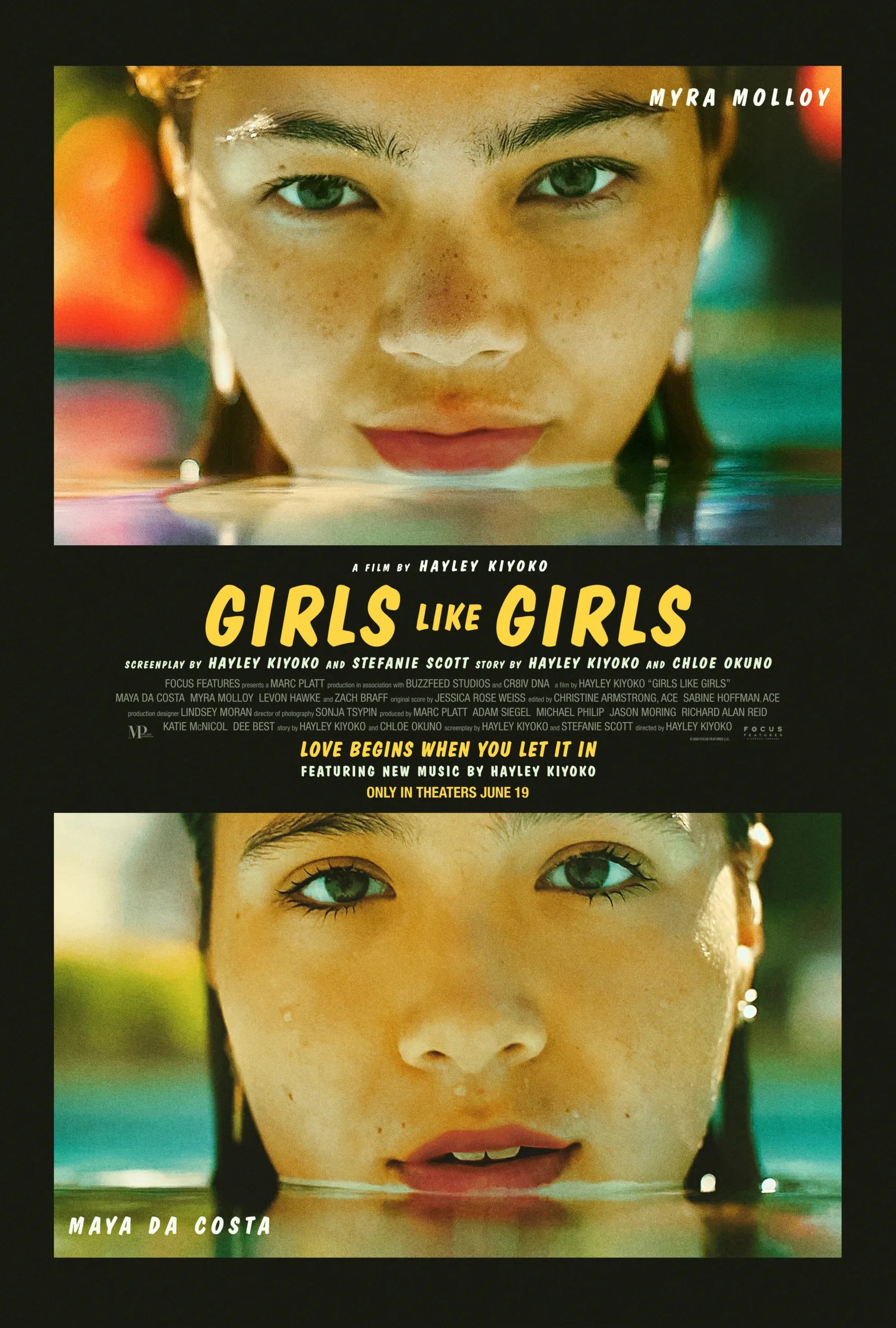

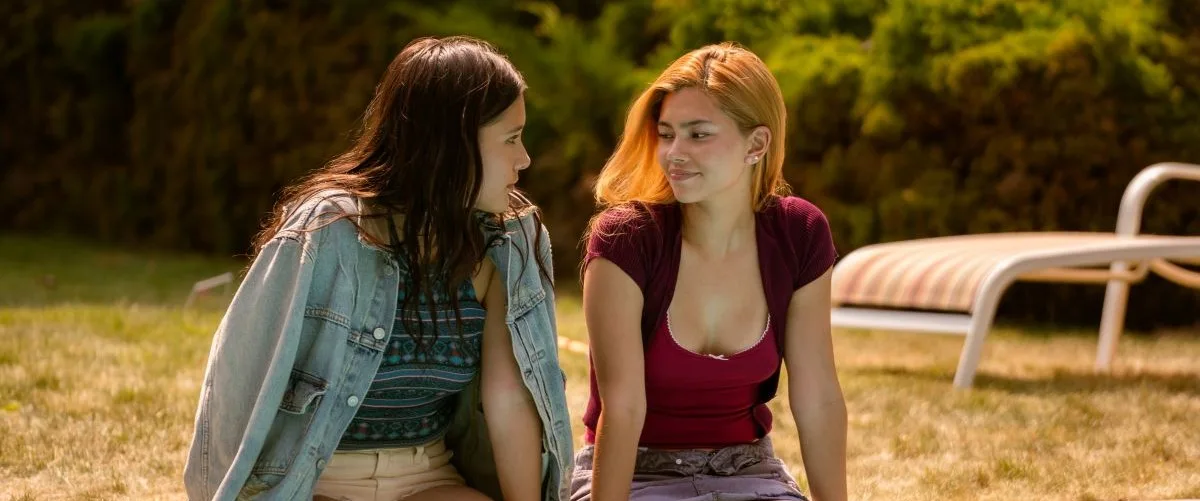
In a dreamlike version of 2006, in a town populated by sun-kissed groups of svelte teens, the grieving young Coley (Maya da Costa) meets Sonya (Myra Molloy) by chance at a shop. It’s love at first sight, but neither can admit it. Sonya quickly brings Coley into the fold, inviting her to their favorite swimming spot. Sonya sometimes acts as the group’s leader, making sure everyone is kind and welcoming to Coley. They swim, drink, ride bikes, and listen to music. It’s a normal summer—so normal that it starts to feel unreal at times. The only sign of trouble is Trenton (Levon Hawke), Sonya’s jealous and possessive boyfriend. But like most teenage boys, he tries to keep his emotions hidden for as long as he can.
It’s obvious from the very start that Coley and Sonya want to be together. Coley often looks at Sonya with longing, and Sonya takes every opportunity for body contact. She puts her legs on Coley in the car. When they have a sleepover, she rests one leg on top of Coley’s until they’re in an embrace. For young queer people, it’s all about these little moments—they’re like little paths of light in a dark, heteronormative world. Coley and Sonya chat on AOL Instant Messenger, Coley resting her keyboard on her knees as she types. When Coley’s alone, she listens to her iPod and thinks of Sonya. Nothing else seems to matter to her but this girl and their love.
Coley just recently came to town after the death of her mother, who is only seen in photographs. She ignores her father (Zach Braff), still angry at him for leaving when she was young. Coley’s mother struggled with depression, with Coley being forced to take on her mother’s pain. But she won’t talk to anyone about it, not even Sonya. And when Sonya starts to pull away—afraid of what people will think—Coley is left heartbroken and raw from her unresolved grief.
“Girls Like Girls,” based on the novel of the same name, is the directorial debut of musician, actress, and author Hayley Kiyoko. Kiyoko adapts her own novel with another actress and singer, Stefanie Scott. The script is simple and natural with dialogue that feels authentically awkward at times. Before “Girls Like Girls,” Kiyoko directed her own music videos, and the aesthetic similarities are obvious. At times, the film feels like a music video, with the performance scenes removed. In the film, Sonya is a competitive dancer, and so much of her love story with Coley is poetic and physical. In one scene, Coley dances to Imogen Heap’s “Hide and Seek,” just for Sonya.
Da Costa gives a refreshingly authentic performance, playing Coley like the quiet girl in school, lost in the vastness and possibility of summer. Molloy plays Sonya as a party girl who wants to slow down and take stock of her life. The beauty of their romance is how they seem to make time stop for each other, allowing each girl to show a different side of herself to the other.
“Girls Like Girls” is the kind of coming-of-age film that’s just quiet enough to avoid the loud, broad cliches of the genre. The love story at the center is both transformative and calm, life-changing and meditative. Kiyoko gives us a love story that changes both girls for the better, reminding us just how normal their connection really is. It’s a special little film with a warmth that feels as natural as the passage of time.