Fellow critic Cortlyn Kelly noted in her Gala Presentations dispatch an unexpected thematic arc of intergenerational, interpersonal conflict. The same could apply in to the three Gala films covered here: “The Assassin(s),” “Diary of an Old Man,” and “It’s My Time.” And yet there’s another narrative spine that connects them: these are projects that challenge our obsession with easy narratives, encouraging us not to be placated by the promise of easy answers. Sometimes, the bravest thing we can do is look at a tidy resolution and let our curiosity be the loose thread that unspools manufactured tidiness.
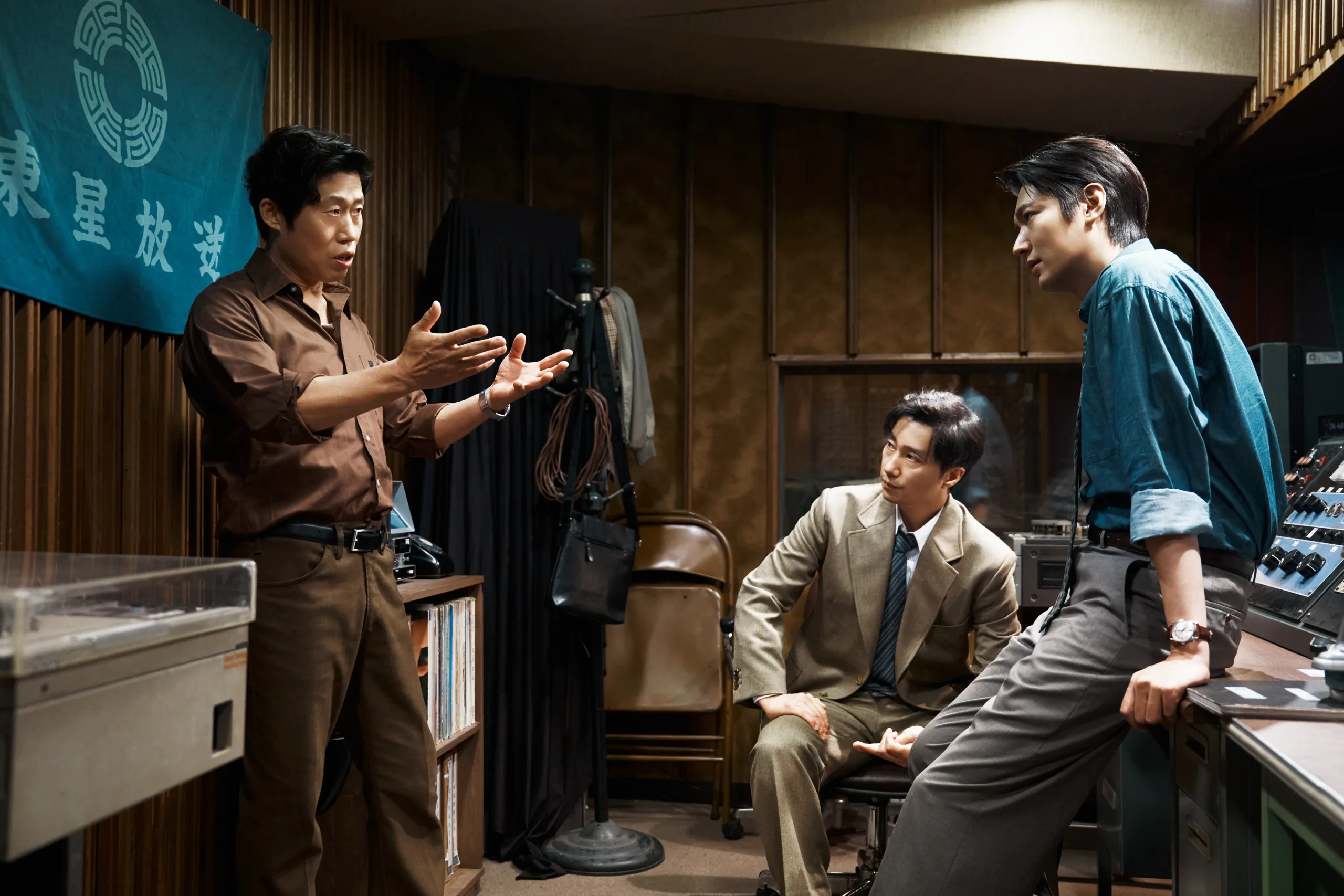
Director Hur Jin-ho delivered one of the best domestic thrillers of the past year with “A Normal Family,” and he applies the same skill of mining enjoyment from relational discord with his political thriller, “The Assassin(s).” It struggles to balance the sincerity of the story it’s trying to tell with its occasional slapstick elements, which can make it feel disjointed tonally. Still, this is a rivetingly told film about a part of Korean history that is deserving of the craft and care Hur and his collaborators have put forth. In clever and ironic fashion, by honing in on the localized elements of this story, it enables viewers to see its universal saliency: how this story about freedom of the press, the control of information by those in power, and the commitment to the truth are realities, struggles, and battles that we still have to contend with. More often than not, we’re living the histories we watch unfold on screen.
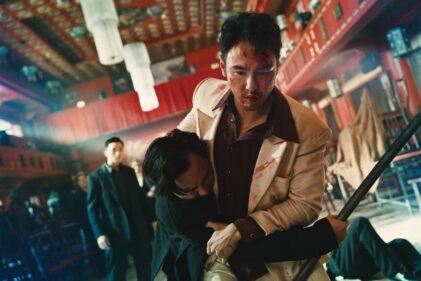
Even at over two hours, Hur wastes no time throwing viewers in the midst of the action. In 1974, South Korean prime minister Park Chung-hee narrowly survived an assassination attempt, but it led to the death of the first lady, Yuk Young-soo, and a young bystander. The security forces quickly capture and arrest Mun Se-gwang, a Korean Japanese man whose radical Maoist beliefs make him an easy scapegoat. But the more journalists in the Dong-sung Daily, such as Jae-hwan (Park Hae-il), and police detectives like Cheol-goo (Yoo Hai-jin), look closely at the situation, the more things do not add up. Six shots were fired while Mun’s pistol only carried five bullets; it is the type of discrepancy most might ignore for the sake of quick justice, but it is the journalists’ questioning that reveals a much larger conspiracy at hand.
It’s encouraging to see the vocation of journalism be framed with the reverence that it has in Hur’s film. It leads to some grandiloquent speeches, such as when editor Kim Jae-hwan impassionately says, “We also declare that the free press is the most fundamental social function to develop a free function, thus it should not be oppressed by any reason,” but in a world of muddled and mixed messaging, there is merit to stating your thesis so clearly. It is not all pontification though, as Hur delights in shifting the puzzle pieces into place for a grand reveal that feels both surprising and appointed all at once. The deeper the journalists dig, the more violent the opposition from those in power, which only bolsters their work. This creates a natural escalation of the film’s narrative, where Hur gets to flex his skills for directing close-quarters, period-accurate action scenes. Like the best journalistic story, he’s able to give us all the information we need while making the presentation of the narrative rousing and enthralling in its own right.
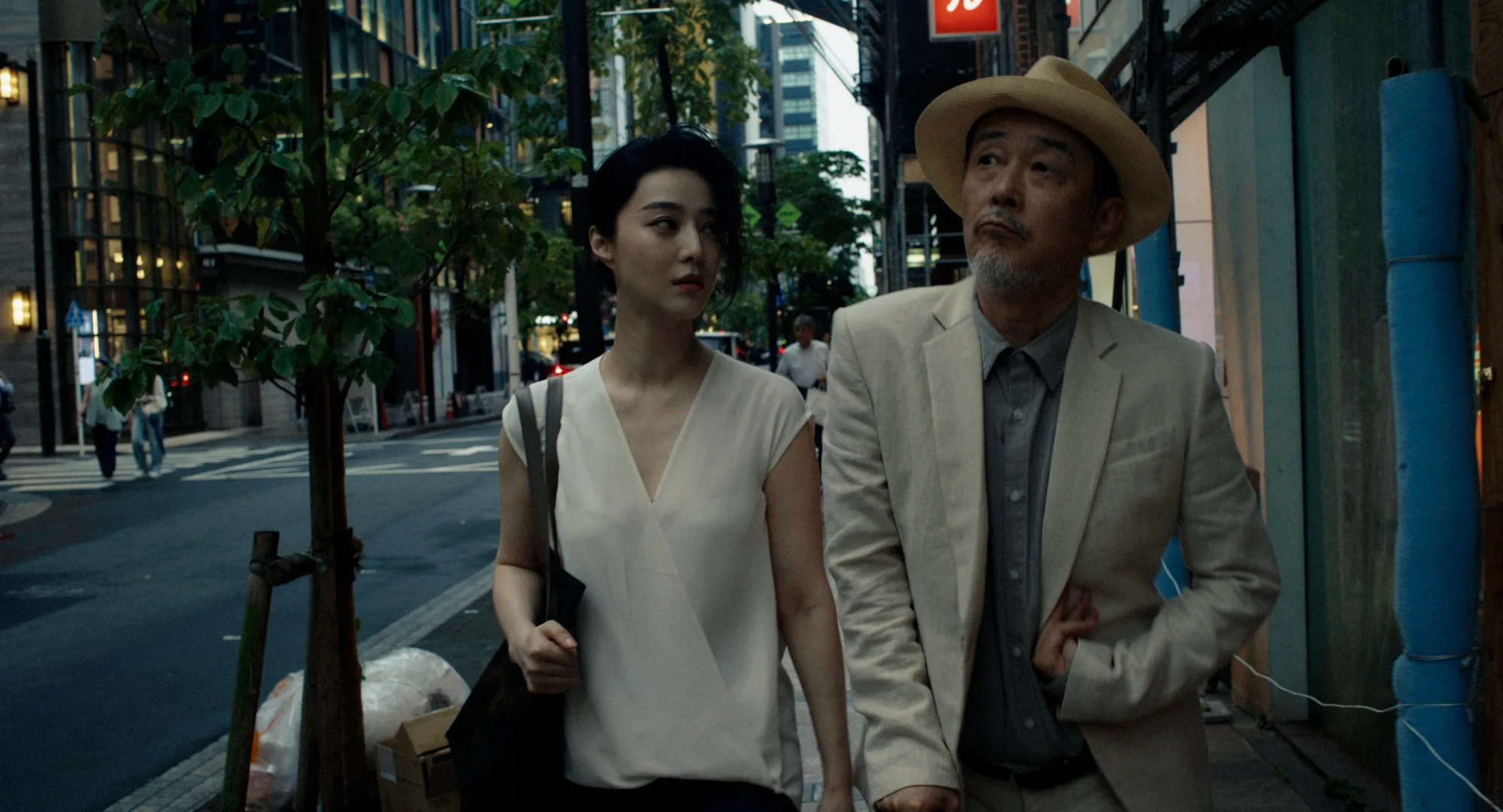
It might be easier to describe the freaky things that you do not see on screen in Wayne Wang’s “Diary of an Old Man,” but do not mistake that as an admission that the film exists solely to titillate. While the film starts with a man, Utsugi (Lily Franky), masturbating and being unsuccessful at climaxing, and somewhere in between, he fantasizes about licking his daughter-in-law’s feet and having an eel inserted into him (not necessarily in that order), it uses its taboo exploration of sexuality to point at how society is ill-equipped for the reality that yes, the elderly have desires too. Based on Jun’ichirō Tanizaki’s novel, Wang spins an intricate, challenging tale about what it means to still dream even when your body fails you, and that we push people towards an early grave the moment we put stipulations on what they can and cannot yearn for.
Seen through this lens, introducing viewers to Utsugi via a sequence of failed masturbation is a perfect encapsulation of the protagonist’s central struggle: the spirit is willing, but the flesh is weak. Right before his 69th (the entendres write themselves), Utsugi suffers a stroke that paralyzes his entire left side. The physical world seems to be closing in on him, limiting his options, and so Utsugi retreats to the only domain left: his mind. Indeed, there is nothing more terrifying than being trapped in a body you don’t recognize. His daughter-in-law, Susu (Fan Bingbing), stays behind to care for him while the rest of the family goes on vacation. He yearns for her, and for a while it seems that she returns his affections, although Wang keeps it ambiguous till a later reveal of whether their interactions are genuine or just filtered through Utsugi’s lust.
Curiously, the film I was left thinking about the most was Ti West’s “X,” which was part of a string of horror films that could chalk up their horrors to: “Isn’t it gross when old people want to have sex?” By framing the aging body as a creature of horror, it stigmatizes the idea that the elderly still have vibrant, pulsating desires. The film also challenges how society has propped up sexual experience and being desirable as being key to one’s identity. What does that mean for people like Utsugi, who is past his prime of desirability? Is he expected to simply not long for intimacy anymore? These questions do not justify the uncomfortable territory “Diary of an Old Man” steps into at times–after all, it is, at the end of the day, crudely reduced to a story of a man leering after his own daughter–in–law– but Wang’s warm lens and thoughtful framing of Utsugi are worth praising for taking a story that could have been just sickening and instead finding something touching and moving in all of its weirdness.
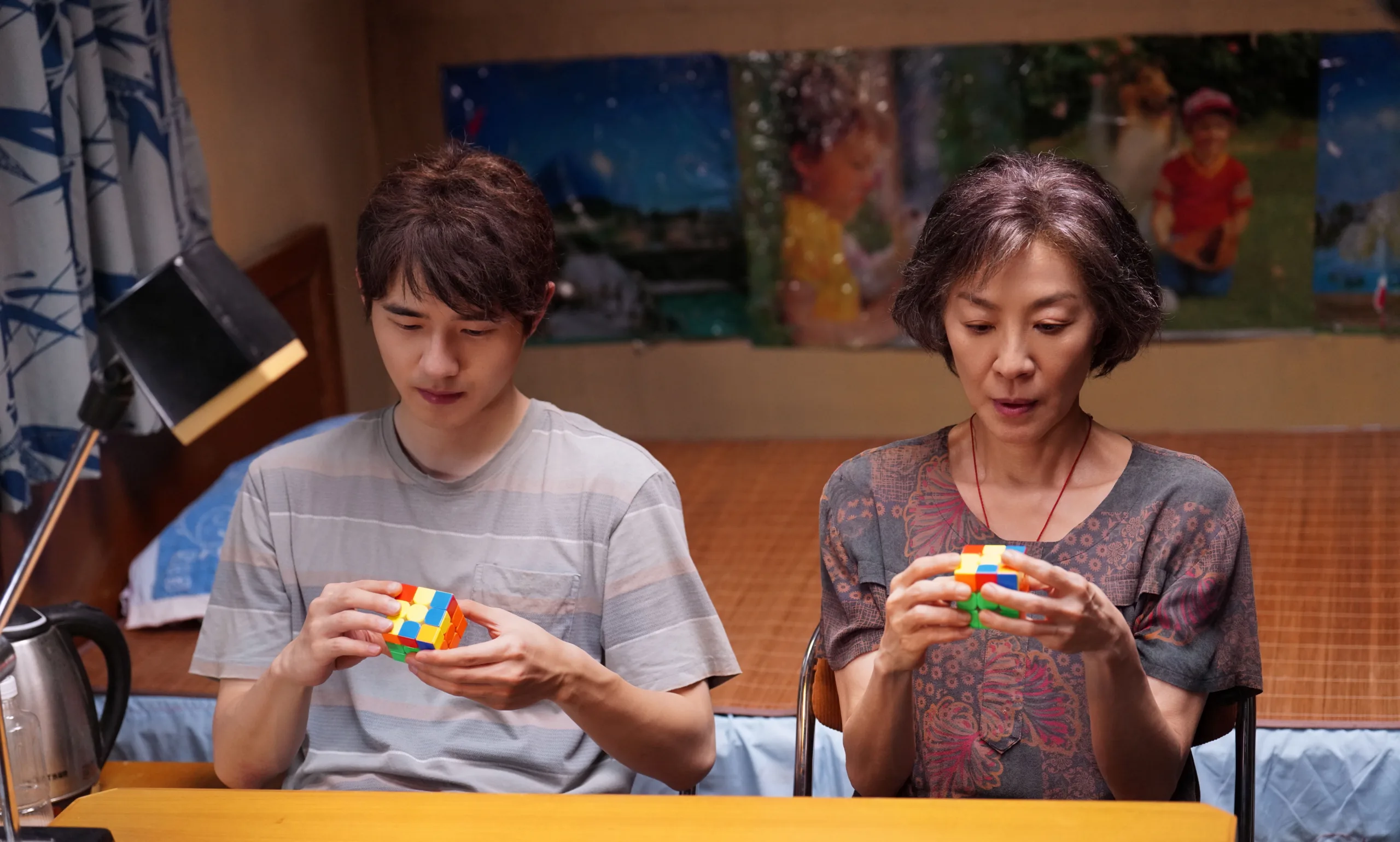
Director Bai Xue directs a different story on this similar idea of performing past one’s prime with her crowd-pleasing gem, “It’s My Time,” which is noteworthy purely for the fact that it finds a way to make solving Rubik’s cubes not only cinematic but exciting. It takes the straitjacket of a classic underdog sports story and applies it seriously to a supposedly stationary sport that reveals itself to be surprisingly kinetic. It helps to have a performer like Michelle Yeoh who commits wholeheartedly to the film’s premise and melodrama; you find yourself laughing with the characters and the drama that unfolds when a story like this could have easily served laughs by just poking fun at itself.
Xue knows that there are few more salient cinematic pleasures in life than seeing multi-generational protagonists fight and then make up, and she finds a worthy pairing to Yeoh in Liu Haoran. Haoran plays a former Rubik’s Cube champion who takes on a role as an instructor at a nursing home in order to pay off his debts. He tries to just coast, but his slacker pedagogy is quickly challenged by Yeoh’s Zhao Yanhong, an attendee who quickly proves herself to be a prodigy. The two strike up a partnership and Zhao prepares herself to compete for the World Cubing Championship.
As with any sports story, though, the sport is always secondary to what it unearths, and Zhao knows that her newfound enthusiasm for this sport is a way for her to not deal with her own interpersonal issues. It is easier to solve a problem where you know what the answer looks like even if the road to get there is windy. Xue finds ways to constantly make the actual solving of the cube feel dynamic, incorporating a mix of first-person POVs from the cube’s perspective and relying on quick editing to give a sense of urgency. The film is a powerful reminder that there’s never too late to start a new passion and that sometimes the most innocuous of hobbies can be an entrypoint for knowing ourselves better.